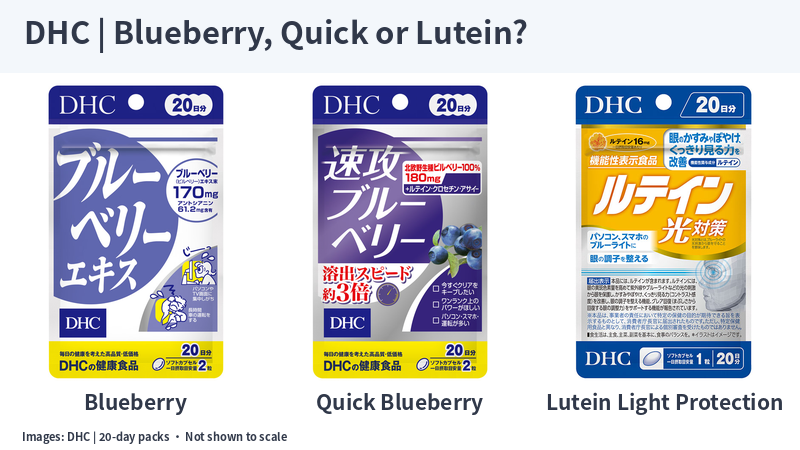
For a bilberry-extract formula, compare Blueberry Extract with Quick Blueberry. For 16 mg of lutein a day and a Japanese notified food-function claim, look at Lutein Light Protection. The daily serving is two capsules for either blueberry product and one for the lutein product. Their classifications and formulas differ, so “Quick” and milligram counts are not a ranking of results.

I’m Irene, a Taiwan-born, Japan-licensed pharmacist working in a Japanese drugstore. Supplements placed together in an “eye care” section are not necessarily interchangeable. This guide compares their Japanese labels, daily servings and overlapping ingredients so you can make a more deliberate choice.
Information checked on 13 October 2026 for three Japanese retail products: ブルーベリーエキス, 速攻ブルーベリー and ルテイン 光対策. Lutein facts use current notification J764. Quick Blueberry V-MAX and other DHC products are outside this selected comparison.
- A quick way to narrow the choice
- Match the full Japanese name on the shelf
- Compare daily quantities, ingredient by ingredient
- What else is in each formula?
- What does “Quick / about 3×” actually describe?
- Understanding the lutein food-function claim
- Soft capsules: keep the original packet
- Before taking one: check overlap and suitability
- Compare equivalent days, not capsule counts
- Official sources
A quick way to narrow the choice
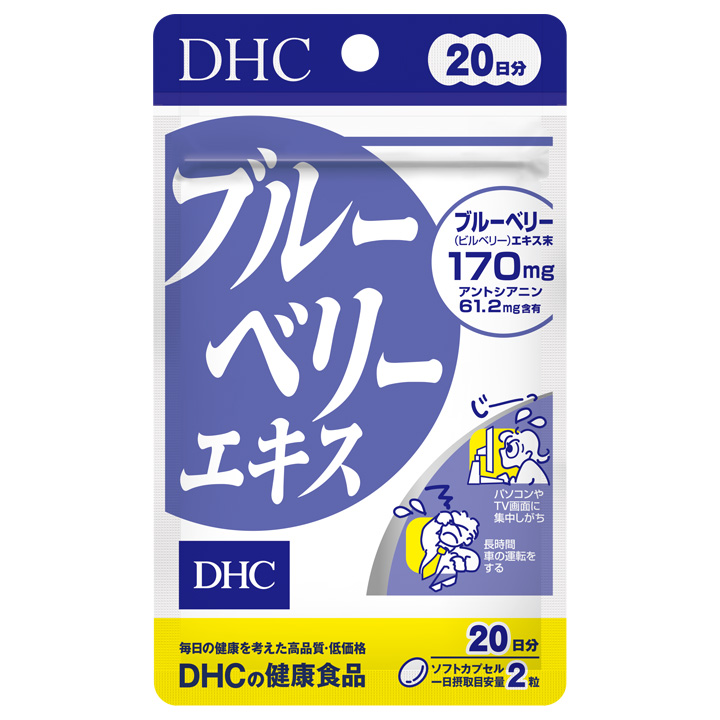
- Already looking for a blueberry/bilberry supplement? Start by comparing regular Blueberry Extract. Two daily capsules provide 170 mg of bilberry extract, with a small amount of lutein and B vitamins. Screen use alone does not establish a need to buy it.
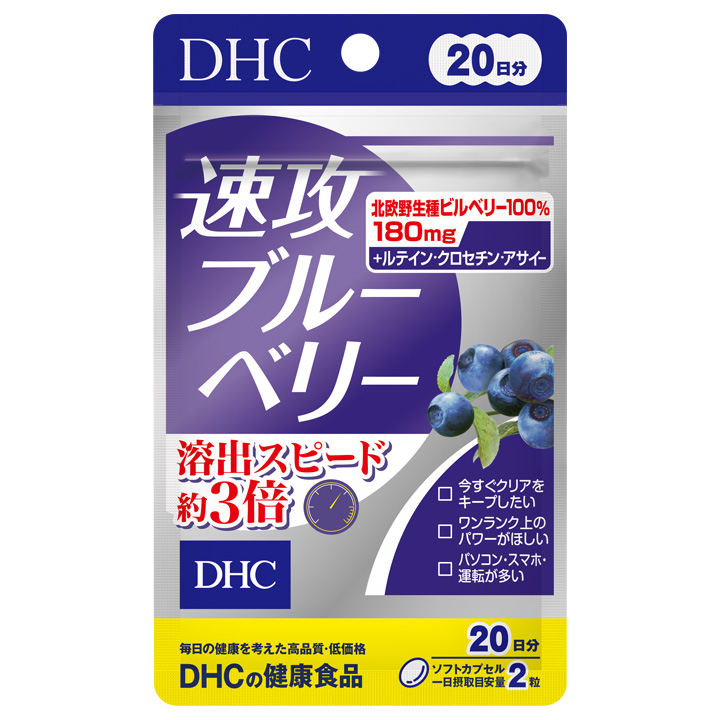
- Specifically want to compare the formula with crocetin, acai and other additions? Look at Quick Blueberry. Two daily capsules contain 180 mg of bilberry extract. Its “about 3×” wording refers to dissolution, not how quickly your eyes improve.
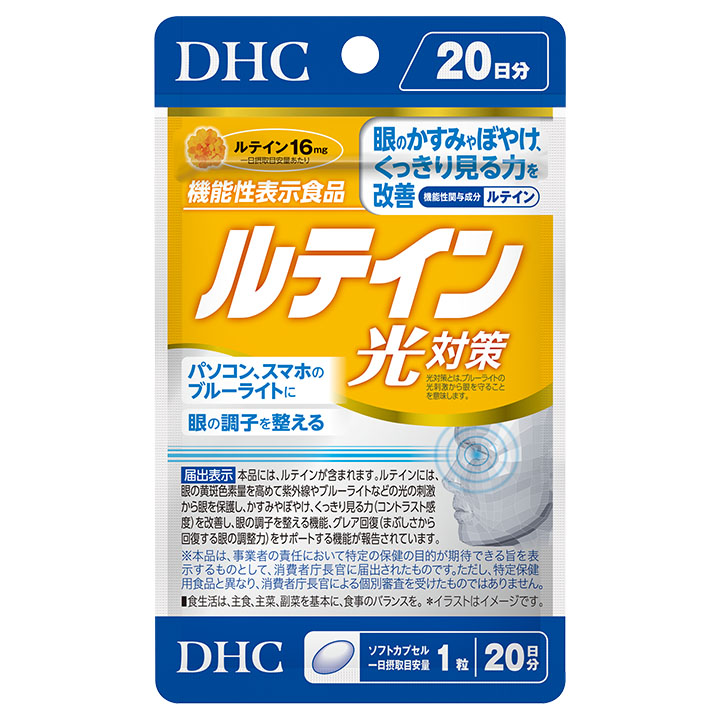
- Want a lutein product with a defined Japanese food-function claim? Look at Lutein Light Protection. One daily capsule supplies 16 mg of lutein. Its notified function does not transfer to the two blueberry products.
- Shopping because of new or persistent eye symptoms? Address the cause first. A supplement does not replace an eye examination, and buying none is reasonable when you have no clear supplementation goal.
Match the full Japanese name on the shelf
Compare daily quantities, ingredient by ingredient
All amounts below are per suggested daily serving, not per capsule. All three list soy and gelatin. The lutein product was not developed for minors, pregnancy (including planned pregnancy), the postpartum period, breastfeeding or people with an illness.
| Product | Japanese classification | Suggested daily serving | Bilberry extract per day | Lutein per day |
|---|---|---|---|---|
| Blueberry Extract | Ordinary food: bilberry-extract food | 2 capsules (620 mg) | 170 mg, with 36% anthocyanins | 0.6 mg |
| Quick Blueberry | Ordinary food: bilberry-extract food | 2 capsules (706 mg) | 180 mg, with 36% anthocyanins | 1 mg |
| Lutein Light Protection | Food with Function Claims, J764 | 1 capsule (320 mg) | Not listed | 16 mg, the functional ingredient |
Although the Japanese product name says “blueberry”, the ingredient is bilberry extract, labelled ビルベリー. “170 mg, with 36% anthocyanins” does not mean 170 mg of anthocyanins. Lutein is a different ingredient; adding or directly ranking the two milligram figures would be misleading.
What else is in each formula?
These additional differences are also per daily serving, not recommendations to add more: two capsules for either blueberry product and one for Lutein Light Protection.
| Product | Other main labelled amounts per day |
|---|---|
| Blueberry Extract | Perilla seed oil 156 mg (alpha-linolenic acid 85.8 mg); total carotenoids 2 mg |
| Quick Blueberry | Acai extract 10 mg; gardenia extract 6.7 mg (crocetin 5 mg); beta-carotene 0.9 mg; lycopene 0.1 mg |
| Lutein Light Protection | Vitamin E 13.4 mg; blackcurrant extract 20 mg (35% anthocyanins); megusurinoki extract 20 mg; gardenia extract 4 mg (crocetin 3 mg) |
The two blueberry formulas have the same B-vitamin amounts in two daily capsules: B1 2.0 mg, B2 0.4 mg, B6 2.0 mg and B12 40.0 µg. These tables compare composition; ingredient variety or quantity alone does not establish which product works better.
What does “Quick / about 3×” actually describe?
DHC describes approximately three-times-faster anthocyanin dissolution than its conventional product. Dissolution concerns release from the formulation. It is not the same as three-times-greater absorption, a three-times-stronger effect or three-times-faster improvement in vision. That statement does not promise noticeable results within a set number of hours.
Understanding the lutein food-function claim
The current J764 notification uses 16 mg of lutein daily as its functional ingredient. Its reported functions concern increased macular pigment, protection from light stimulation such as UV and blue light, improved contrast sensitivity and related blurred or hazy perception, and support for recovery after glare. These are notified food functions, not a guarantee of the same improvement for everyone.
Foods with Function Claims are notified by the business on the basis of scientific evidence, without the individual government review required for Foods for Specified Health Uses (FOSHU). None of these three products is a medicine for diagnosing, treating or preventing disease. Do not use them as treatment for cataracts, glaucoma, dry eye or myopia, or let a “Light Protection” label replace ordinary eye care.
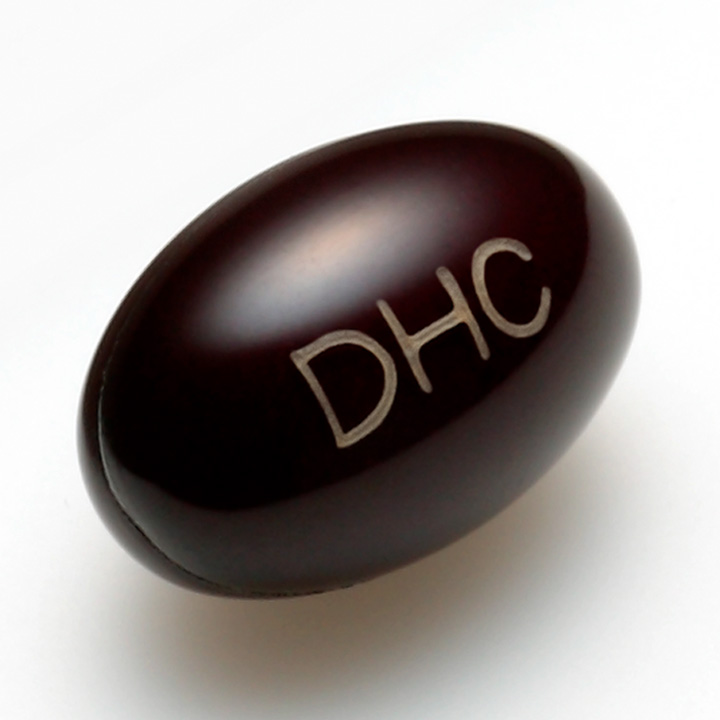
Soft capsules: keep the original packet
Before taking one: check overlap and suitability
- Check the name: the labelled daily serving is two capsules for Blueberry Extract or Quick Blueberry, and one for Lutein Light Protection.
- Take with water or lukewarm water, following the manufacturer’s directions. Do not exceed the suggested daily amount.
- Check your multivitamin, lutein and other supplements for overlapping lutein, vitamin E and B vitamins. Taking all three is not required for a “complete” routine.
All three contain soy and gelatin and are not vegan capsules. Avoid them if you are allergic to their ingredients. Consult a doctor before use if you take medicines, have an illness, are receiving treatment or are pregnant. Lutein Light Protection additionally states that it was not developed for minors, pregnancy including planned pregnancy, the postpartum period, breastfeeding or people with an illness.
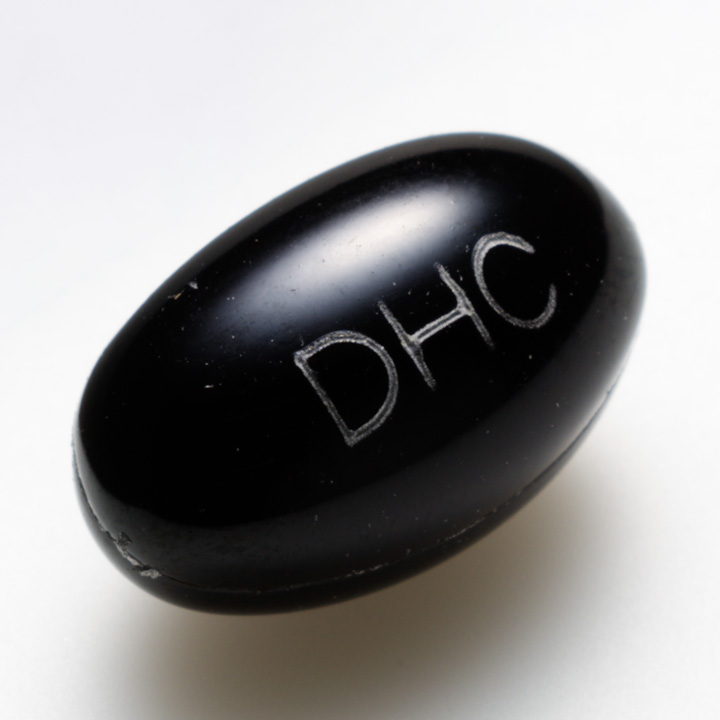
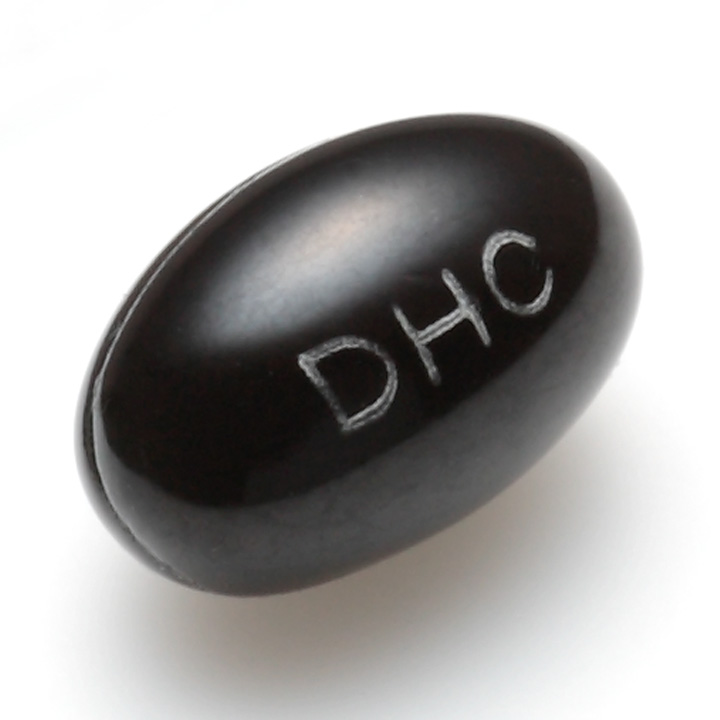
Stop taking the product and consult a doctor if you notice an unusual reaction. Store away from direct sunlight, heat and humidity; close the pack firmly, use promptly after opening and keep out of children’s reach. Keep the original packaging rather than mixing similar-looking capsules together.
If visual changes persist, straight lines look distorted or floaters increase, seek an eye examination promptly rather than waiting for a supplement to “start working”. The Japanese Ophthalmological Society advises eye assessment for distortion and prompt assessment for increased or persistent floaters.
Compare equivalent days, not capsule counts
The retail pages list Blueberry Extract in 20-, 60- and 90-day sizes, Quick Blueberry in 20-, 30- and 60-day sizes, and Lutein Light Protection in 20-, 30- and 60-day sizes. Some sizes have limited store distribution. Each pictured pack lasts 20 days, despite the blueberry pair containing 40 capsules and lutein containing 20. Compare equivalent days and the formula you actually want; prices and stock vary.
My buying order is: choose between a bilberry food and a lutein functional food, check the daily serving and overlapping ingredients, then compare prices. “Quick” should not distract from those checks, and eye discomfort should not automatically be treated as a missing supplement.