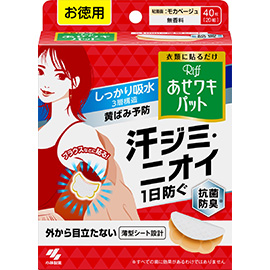
Want to protect a travel or work shirt from underarm sweat marks? First check whether Riff pads are a sensible match for that garment; then identify the body side, sleeve side and front before peeling. Japanese Riff あせワキパット absorb sweat inside clothing. They do not stop your body sweating and are not an adhesive for skin.

I’m Irene, a Taiwan-born pharmacist qualified in Japan. This guide follows official Japanese product information, not a hands-on performance test.
Before buying: can you rely on it for this shirt?
“Cotton” does not mean a secure hold. Kobayashi says adhesion may be poor on linen, cotton, blends, stretchy or functional clothing, and garments washed with fabric softener. This is not a blanket ban on those fabrics, but it is not a promise they will work either.
Check the garment’s fabric label and how it was washed. If you need a guaranteed hold for an important day, do not buy these pads on that assumption. If the fabric or finish is unclear, do not count on the pad as your only protection against sweat marks.
Find the seam: ① on the body, ② inside the sleeve
Find the lower part of the seam where the sleeve joins the body of the shirt, not the cuff at the sleeve opening. Work on the inside of the clothing. The pad spans this join: ① sticks to body fabric, and ② folds into the sleeve. “Front” means the chest side of your garment, not the left or right of a picture.
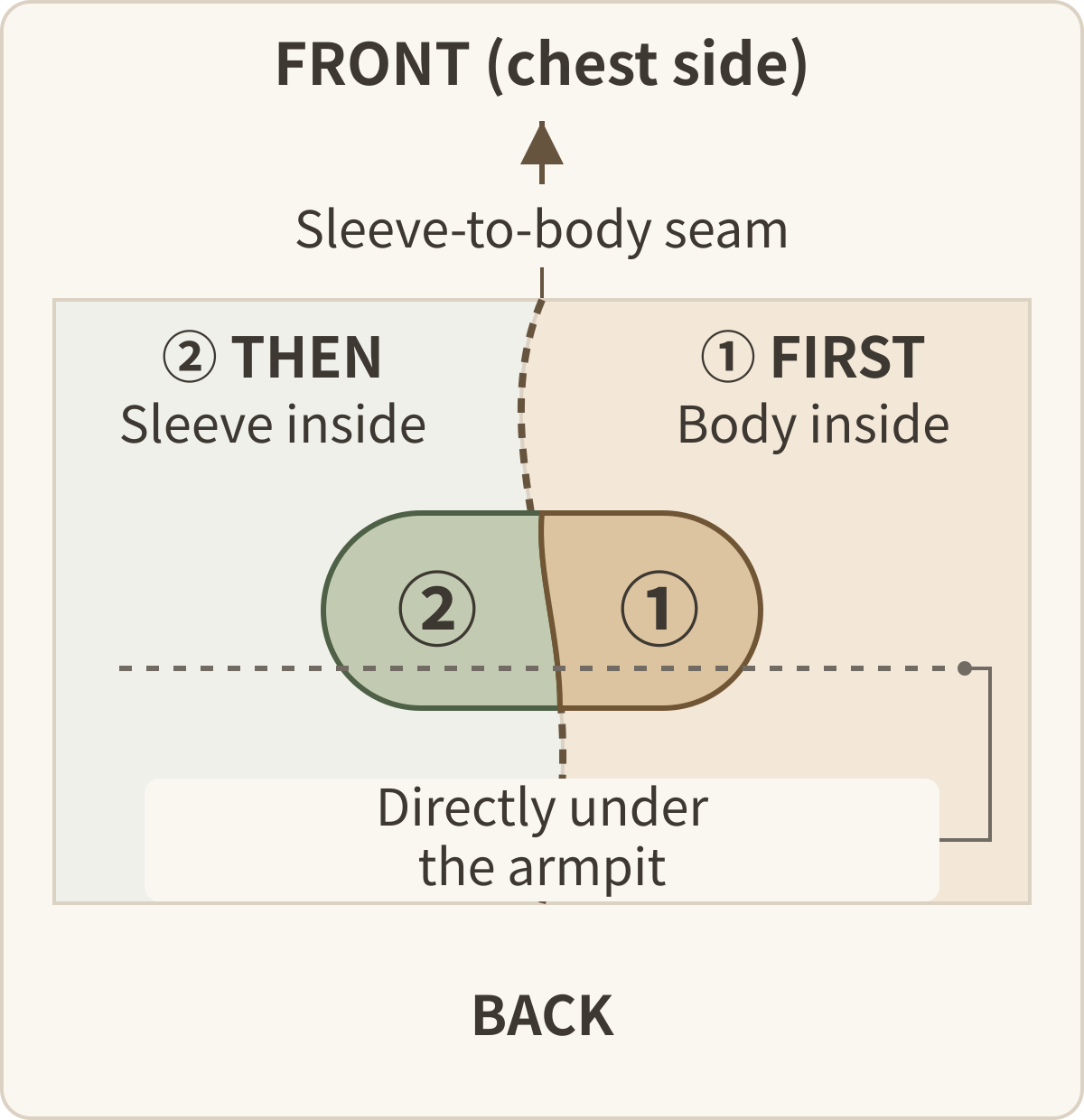
- Peel ① only. Leave backing ② in place. Spread the underarm and sleeve area flat and smooth the wrinkles.
- Attach ① to the body side. Follow the armhole curve, slightly forward of directly beneath the armpit.
- Then peel ② and fold it inside the sleeve. Keep the exposed adhesive from catching unintended fabric. Attach slowly so the garment does not bunch.
Remove it that day, before laundry
- Peel off slowly and carefully on the day you wore it. Do not wash with the pad attached.
- Do not iron, tumble-dry or otherwise heat the garment immediately before attaching the pad or while it is attached.
- Adhesive left behind? Stop before washing or heating. Ask Kobayashi how to proceed; do not improvise with solvents or heat.
- Do not reuse a pad. Stop using it if skin abnormalities appear during or after use.
Find the right pack in Japan
Look for Riff あせワキパット. This guide covers the regular, fragrance-free range (approximately 11×12 cm), not メンズRiff. The cover shows mocha-beige 40 pads = 20 pairs, not 40 pairs. Other colours and pack counts are available. Correct placement does not guarantee no leaks or secure adhesion to every fabric.
Sources and scope
- Kobayashi: Japanese Riff specifications, directions and cautions.
- Kobayashi: illustrated placement guide (body/sleeve sides and slightly-forward placement).
Checked 27 October 2026. The diagram is this site’s explanatory schematic, not a manufacturer illustration or a hands-on test. Read your own pack; the complete back label of the latest physical pack has not been verified. The unchanged official cover photograph is from Kobayashi; rights remain with the manufacturer. It is not Irene’s photograph or an endorsement of this site.