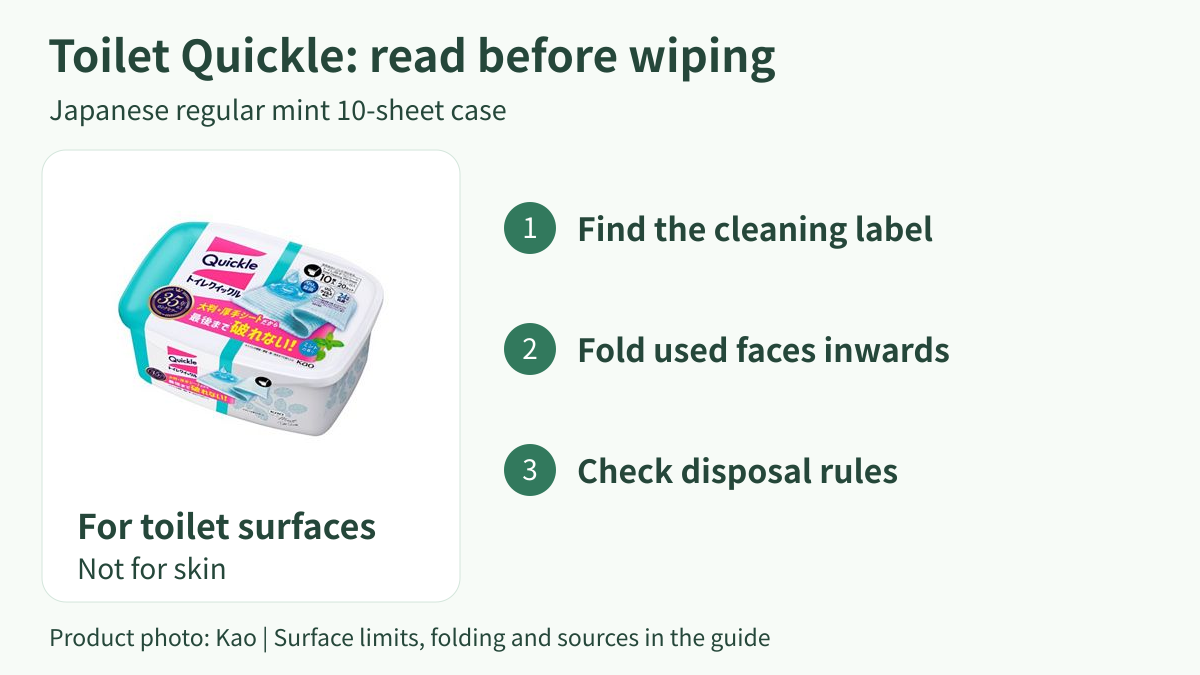
Staying in a Japanese apartment and wondering whether the box of wipes beside the toilet is for the seat or for you? Look for トイレ用掃除シート: toilet-cleaning sheets. These wipes clean surfaces around the toilet. Do not use them on your hands, body or bottom.

I’m Irene, a Taiwan-born pharmacist qualified in Japan.
In this guide, I focus on one pack: Kao Toilet Quickle, regular mint scent, 10 sheets in a case. The useful decisions are simple: buy it for the right job, expose an unused wiping face as you clean, and check how to dispose of it before you begin.
Three clues to check on the Japanese pack
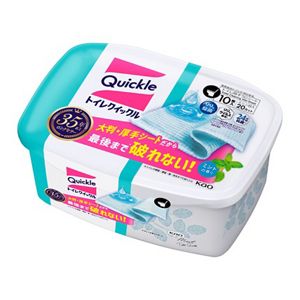
- トイレクイックル: the product name, Toilet Quickle.
- トイレ用掃除シート: toilet-cleaning sheets. 掃除 means cleaning the surroundings, not washing your body.
- 容器入 10枚入: a case containing 10 sheets. つめかえ用 means a refill, so check this if you need the case too.
For an exact match, check JAN barcode 4901301468093. Kao identifies this version as mint-scented, with pulp sheets and a mildly acidic cleaning liquid. Mildly acidic does not mean suitable for skin or every bathroom material.
If you want a body wipe or moist toilet tissue for personal hygiene, choose a different product expressly labelled for that part of the body. This case is for household cleaning. If you need wipes for hands or around the mouth, see our Silcot wipe guide to distinguish the hand-and-mouth option from wipes meant for objects.
Check the surface before opening the case
Kao lists toilet-room floors, walls, toilet seats and bowls among its intended uses. That is not permission to wipe every material in the room. Check the care instructions for the toilet, seat and surface first, and follow your accommodation’s cleaning instructions.
- Do not use on: water-based paint, urushi (Japanese lacquer), varnished or waxed finishes; unfinished wood; paulownia wood; glass; or other excluded surfaces listed on the pack.
- Test wallpaper in an inconspicuous spot first: Kao warns that staining may occur.
- Wear household cleaning gloves if your hands are sensitive, easily irritated or prone to roughness, or you will be cleaning for a prolonged period, as Kao instructs.
Kao says the wipes can be used on warm-water washing and heated toilet seats, but you still need to follow the particular equipment’s care restrictions. If you cannot identify a material or its recommended cleaning method, leave it until you can check.
Refold the sheet to expose an unused wiping face
You do not need to unfold the entire sheet as soon as you take it out. Kao’s method starts with the sheet folded as it comes in the case. As you move through the room, open and refold it so that used faces fold inwards and an unused part touches the next surface. Here, a “clean face” means a part you have not wiped with, not a sterile surface.
Start by wiping with the outward-facing face ①, keeping the fold as it comes in the case. To expose face ②, open the sheet and fold it inwards from the top as shown in step 2 of the official guide, then wipe the next group of surfaces. The excerpt below shows the subsequent change to face ③. Follow the short explanation alongside the hand movements.
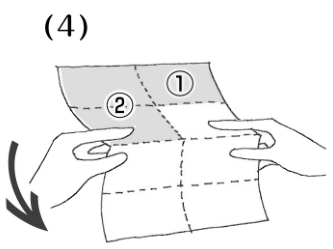
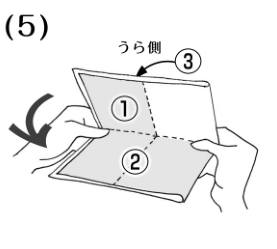
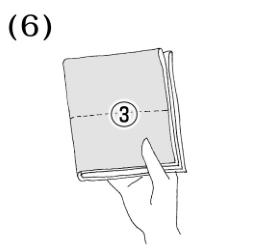
- After using faces ① and ②, unfold the sheet fully and fold it in half.
- Fold again with faces ① and ② on the inside.
- Continue with the exposed face ③. For the change to the reverse side, follow the complete official diagram from step 7.
Kao’s full guide assigns six wiping faces to these areas in order: ① door handle, door and toilet-roll holder; ② flush handle and cistern; ③ seat top, both sides of the lid and the bowl exterior; ④ walls; ⑤ floor; ⑥ seat underside, top of the bowl and its rim, including underneath. Refold as shown when changing groups. The material exclusions above always take priority: a glass panel is still excluded even if it is part of the door.
There is no need to force a whole-room clean out of one sheet. The point here is to understand how to change wiping faces, not to promise that one sheet will handle every toilet room or turn the sequence into a sterilisation procedure. For the remaining folds, open Kao’s complete folding guide (Japanese PDF) rather than trying to read all 13 steps in a tiny image.
Can it go down the toilet? Check the equipment and venue rules first
Kao describes Toilet Quickle as flushable after use, with conditions: flush only one sheet at a time, after checking that the cistern has refilled. If water drains slowly, there are unusual gurgling sounds, or the flow differs from normal, do not flush the wipe; dispose of it as burnable waste instead.
These are Kao’s product instructions, not a guarantee that every toilet, drainage system or accommodation accepts cleaning wipes. Follow the equipment instructions and venue rules. If wipes are prohibited, or you cannot confirm they are allowed, do not flush them. Kao’s product page also gives a non-flushing option: 燃やせるごみ, burnable waste. Follow the local and accommodation rules for sorting and where to put it.
The word 流せる, “flushable,” should not replace those checks. Knowing the disposal route before you start saves guessing with a used wipe in your hand.
Close the lid for next time
Press the front of the lid until it clicks to help keep the remaining sheets from drying out. Store the case out of children’s reach and away from flames, direct sunlight and high temperatures. Check the current label on the pack you buy and use.
Keep three things in mind: identify the cleaning purpose, fold used faces inwards before changing faces, and check equipment and venue rules before disposal. Reading those few Japanese words is more useful than memorising a brand name alone.
Sources and image credits
Prepared from Kao’s public information, checked on 26 October 2026, Japan time. We have not carried out a hands-on cleaning test. This guide does not promise medical benefits or compatibility with every toilet system.
- Kao: Toilet Quickle, case with 10 sheets: product identity, uses, scent, material, JAN, precautions and non-flushing disposal option.
- Kao’s Toilet Quickle range page and its currently linked complete folding guide: refolding and wiping order.
- Kao’s FAQ on Toilet Quickle and blockages: flushing conditions and what to do when drainage is abnormal.
Product photograph and folding-diagram excerpt: Kao Corporation. Images support identification of the featured product and explanation of the specific folding movement; the article’s own text is the main content. Image copyright and trademarks remain with their respective owners. This is not official Kao content, and attribution does not itself establish permission to reproduce the images or imply brand endorsement.
Cover product photo and folding illustrations: Kao. Image rights remain with their owners; attribution does not imply permission or endorsement. Full sources are listed above.