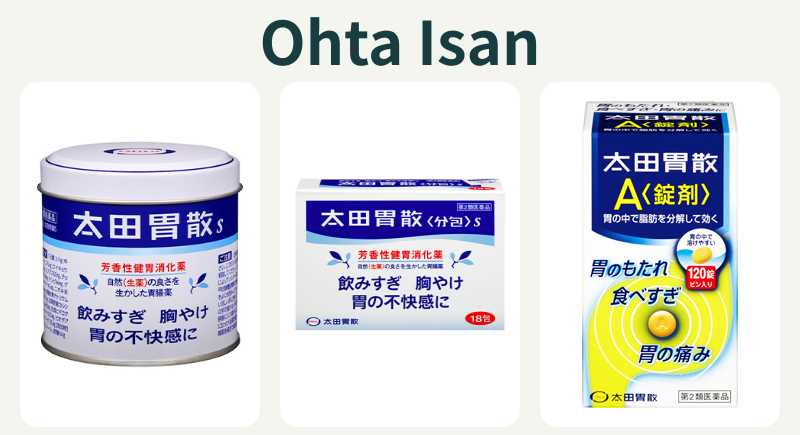
Ohta’s Isan S powder in a can and Ohta’s Isan S sachets contain the same formulation. Ohta’s Isan A tablets have a different formula, different age limits and different timing instructions. That is the most useful distinction to make before choosing a pack in Japan.

I’m Irene, a Taiwanese pharmacist working in Japan. If the extra letters on the shelf leave you unsure, let’s first check your symptoms, age, other medicines and whether you need professional advice. Then we can make sense of the formulas and packaging. I want you to feel clear about what to do when you open it at home, too.
Identify the three options on the shelf
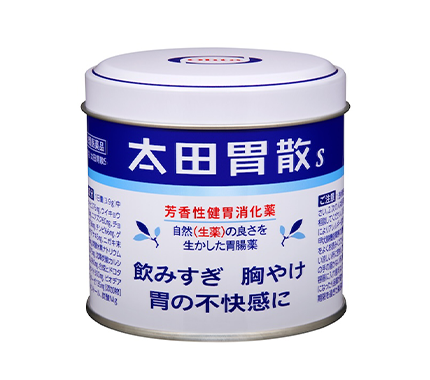
S in a can: for people comfortable measuring powder
A practical format to keep at home. You need the supplied spoon for each dose; a larger container does not mean a stronger medicine.
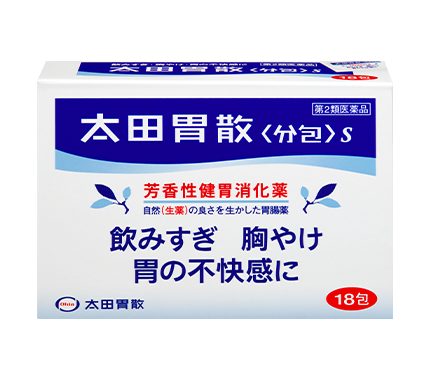
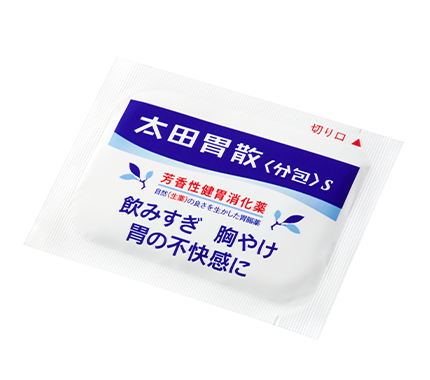
S sachets: the same powder, easier to carry
No spoon is needed for an adult dose. One sachet is one dose for ages 15 and over, but ages 8–14 take only half a sachet. A single packet is not automatically the correct dose for every person.
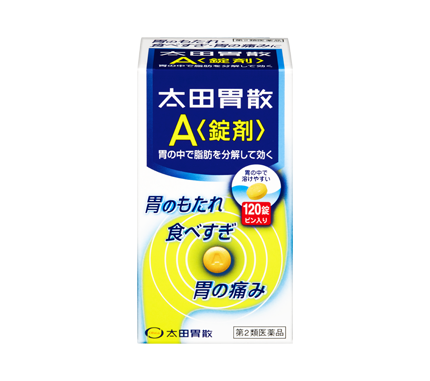
A tablets: check more than the format
The formula includes ingredients that help digest fats, proteins and starch. The manufacturer particularly highlights a heavy, overly full feeling after fatty meals and overeating. A is not S powder pressed into tablets: do not convert a spoonful into a tablet count.
What changes in the formula?
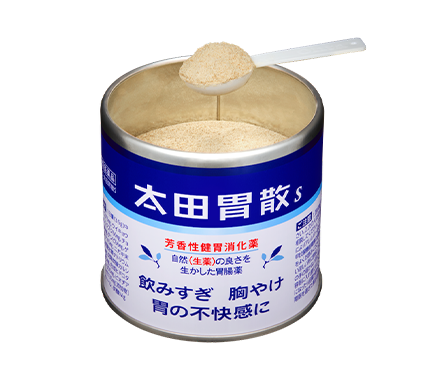
S combines seven herbal ingredients used in stomach medicines, three antacids and a digestive enzyme. The herbs include cinnamon bark, fennel, nutmeg, clove, citrus peel, gentian and quassia wood powder. This is a combination stomach medicine, rather than a probiotic or a single traditional herbal remedy.
A contains lipase, protease and biodiastase digestive enzymes, plus ursodeoxycholic acid, which helps fat digestion through bile secretion. It also contains antacids and cinnamon, lemon and fennel oils. Both products have labelled uses such as heartburn and indigestion; the letter A does not establish that one is universally stronger or better.
If you are buying for someone else, ask about the main discomfort, their age and their medicines before asking whether they prefer powder or tablets. Bring the actual pack and medication list to a pharmacist if there is uncertainty.
How to measure S powder without guessing
- Open the lid slowly and use the spoon supplied with the can.
- Use the levelling edge on the underside of the inner lid to remove excess powder. One level spoon, approximately 1.3 g, is one dose for ages 15 and over. Do not substitute a kitchen teaspoon.
- Ages 8–14 need 0.65 g, half the adult amount. If you cannot measure it confidently, ask a pharmacist to demonstrate rather than estimating.
- Take with water or lukewarm water. If powder is difficult to swallow, the Japanese instructions suggest putting some water in your mouth first, adding the powder, mixing it with your tongue two or three times, then swallowing.
The herbs have a noticeable aroma, and the powder contains menthol. A cooling sensation does not mean it can be taken dry. Both S formats require water or lukewarm water.
Dose and timing: keep the two formulas separate
S powder, can or sachets
- Ages 15 and over: 1.3 g (one level supplied spoon) or one sachet per dose.
- Ages 8–14: 0.65 g or half a sachet per dose.
- Under 8: do not use.
- Three times daily, after meals or between meals, with water or lukewarm water.
A tablets
- Ages 15 and over: three tablets per dose; ages 8–14: two tablets; ages 5–7: one tablet.
- Under 5: do not use.
- Three times daily, after meals or between meals, including bedtime. For loss of appetite, the instructions specify taking it before meals instead.
- Take with water or lukewarm water. The tablets may be chewed, but they are not a water-free chewable medicine.
“Between meals” (食間) does not mean during a meal. These Japanese labels define it as approximately two to three hours after eating. Bedtime is a permitted timing for A, not an extra fourth dose.
The 45-tablet A pack contains three tablets in each small sachet, an adult dose. Children must not automatically take the whole packet. A parent or guardian must supervise children’s use, and S and A age limits must not be interchanged.
Before buying: who should pause and ask?
- People receiving dialysis must not take S powder, S sachets or A tablets.
- Consult a doctor or pharmacist before use if you are under medical treatment, have kidney disease or thyroid dysfunction, or have had an allergic reaction to a medicine or another substance.
- A additionally requires consultation if you are pregnant, might be pregnant, or have had asthma triggered by medicines or other substances. For S, the manufacturer also advises telling your doctor before use during pregnancy.
- If you take other medicines, including another stomach medicine, have a pharmacist check the combination. Do not simply take S and A together.
Do not use any of these products continuously for a prolonged period. Stop immediately and consult a doctor or pharmacist if a rash, redness or itching develops. If symptoms have not improved after about two weeks, stop and consult with the leaflet in hand. You do not need to wait two weeks if symptoms are worsening or causing significant distress.
What should you do with half a packet?
Keep the medicine cool, dry, away from direct sunlight and out of children’s reach. Keep cans tightly closed and do not transfer the medicine into another container. For a partly used S sachet or a three-tablet A sachet, fold the opening closed and use the remainder within two days. Do not take extra medicine merely to finish it. Do not use expired medicine.
Common questions
Can I follow this dose for Ohta’s Isan bought outside Japan?
Check the market, full product name and your own leaflet first. The doses here apply only to the Japanese S powder, S sachets and A tablets described above, not automatically to older or overseas versions.
Are S sachets the best choice for travel?
Both formulas have portable packs. Check symptoms, age and precautions first, then consider whether powder suits you. S packets contain powder; the 45-tablet A pack has three tablets per packet. Keep the product name visible when carrying them.
Can I take it every day to keep my stomach healthy?
These are medicines for labelled symptoms, with dose limits and a warning against prolonged use. If you repeatedly need stomach medicine, seek advice about the cause rather than simply buying a larger pack.
Still unsure whether you need a stomach medicine, a medicine for bowel symptoms or something else? The Japanese pharmacy guide finder is a place to start with the problem you want help with.
Official sources and review date
2026-10-10
- Ohta’s Isan S: Japanese product information
- S sachets: Japanese product information
- A tablets: Japanese product information
- S can: Japanese package insert
- S sachets: Japanese package insert
- A tablets: Japanese package insert
- Japanese manufacturer FAQ
- S range launch announcement
Product photographs: Ohta’s Isan official website.