
Hi, I’m Irene, a Taiwan-born, Japan-licensed pharmacist working in a Japanese drugstore. Dent Health has both medicines and everyday oral-care products. With R and Bb, the first useful distinction is how you apply them: R goes on a clean finger after brushing, while Bb goes on a toothbrush. Their labelled uses also differ.
The quick choice
- Dent Health R: a gel applied directly to the affected area with a finger. Its gum indications include pain and bleeding as well as redness, swelling and other symptoms. It also has a separate mouth-ulcer indication and schedule.
- Dent Health Bb: a brushing-type medicine for redness, swelling, pus and bad breath associated with gingivitis or periodontitis. Apply it with a toothbrush to massage the gums gently. It does not have R’s mouth-ulcer indication.
- Dent Health medicated toothpaste, such as DX Premium: a separate product category. Do not substitute its toothpaste directions for these medicines.
Both R and Bb are Japanese Category 3 OTC medicines. They relieve specified symptoms; neither replaces a dentist’s assessment and treatment of gum disease.
Recognize R and Bb on the shelf
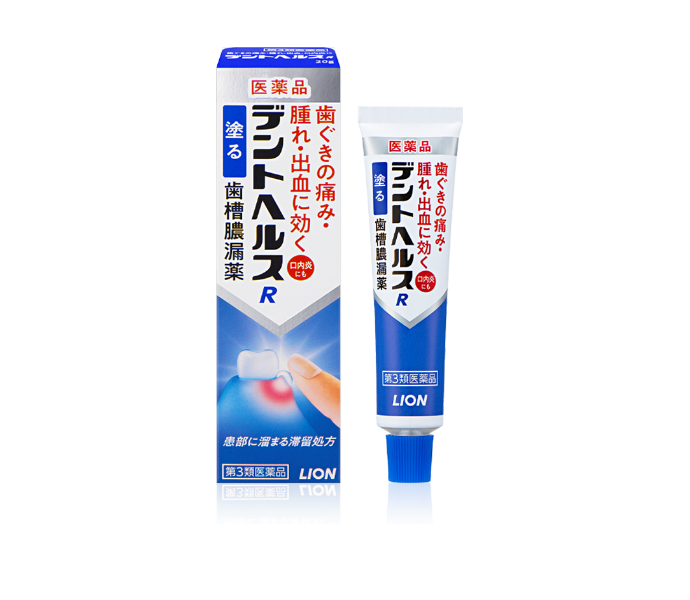
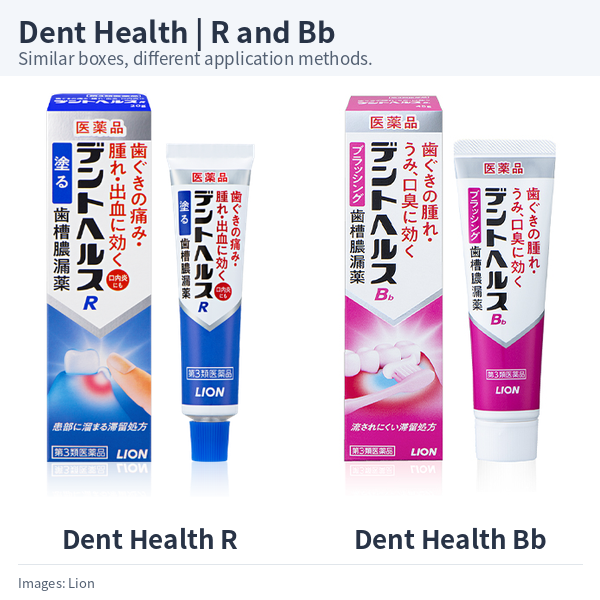
Look for デントヘルスR, the blue-accented package and the finger-application illustration. R comes in 10 g, 20 g and 40 g sizes.
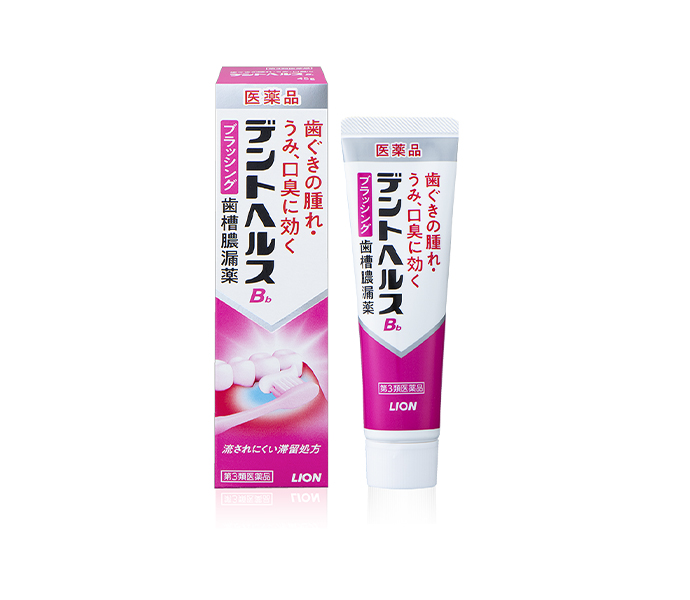
Look for デントヘルスBb, the pink-accented package and the toothbrush illustration. Bb comes in 45 g and 90 g sizes. The letter after the capital B is a small b.
| What to compare | Dent Health R | Dent Health Bb |
|---|---|---|
| Application | Clean finger, after brushing | Toothbrush, gently massaging the gums |
| Gum-symptom dose each time | About 0.3 g, approximately 1.5 cm | About 0.3 g, approximately 0.6 cm |
| Gum-symptom frequency | Twice daily, morning and evening | Twice daily, morning and evening |
| Labelled gum symptoms | Bleeding, redness, swelling, pus, pain, itching, sticky mouth and bad breath associated with gingivitis/periodontitis | Redness, swelling, pus and bad breath associated with gingivitis/periodontitis |
| Mouth ulcers | Labelled use: appropriate amount to the affected area 2–4 times daily | Not a labelled use |
| After application | Avoid eating, drinking and rinsing for a while | Light rinsing with water after brushing is allowed |
The same 0.3 g has a different strip length. Use the measurement for the exact tube: 1.5 cm for R’s gum application, 0.6 cm for Bb. A longer strip does not mean R provides a larger prescribed mass.
The formulas are different too
The quantities below are per 100 g of medicine, not per application. Both have four active ingredients, but only the cetylpyridinium chloride hydrate amount is shared.
| Active ingredient | R per 100 g | Bb per 100 g |
|---|---|---|
| Dipotassium glycyrrhizinate | 0.4 g | Not listed as an active |
| Allantoin | 0.3 g | Not listed as an active |
| Hinokitiol | 0.1 g | Not listed as an active |
| Cetylpyridinium chloride hydrate | 0.05 g | 0.05 g |
| Tocopherol acetate, vitamin E | Not listed as an active | 2.0 g |
| Glycyrrhetinic acid | Not listed as an active | 0.3 g |
| Panthenol | Not listed as an active | 0.3 g |
R combines anti-inflammatory, tissue-repair, astringent and antibacterial ingredients in a gel designed to remain on the affected area. Bb combines vitamin E for local blood circulation, an anti-inflammatory ingredient, an antibacterial ingredient and panthenol for tissue repair in an emulsion base.
Those different functions do not create a simple stronger-versus-weaker ranking. R has a refreshing peppermint-type flavor; Bb has a wintergreen flavor. Flavor is a preference, not a measure of how well gum disease is treated.
How to use R for gum symptoms
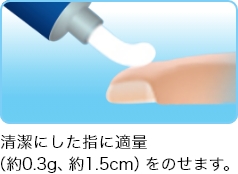
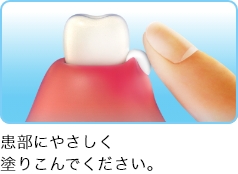
- Brush first and clean your hands. For the labelled gingivitis/periodontitis symptoms, use R twice daily, morning and evening.
- Put about 0.3 g, approximately 1.5 cm, on a clean finger. Gently work it onto the affected gums. This is the gum-symptom amount, not a fixed mouth-ulcer dose.
- Leave it in place. Lion recommends avoiding food, drink and rinsing for a while after application. The leaflet does not give a fixed number of minutes.
For mouth ulcers, R’s separate direction is an appropriate amount applied to the affected area 2–4 times daily. Do not transfer this schedule to Bb or assume that every unexplained mouth lesion is suitable for self-treatment.
How to use Bb
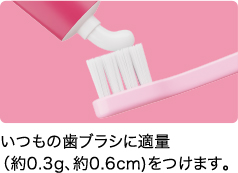
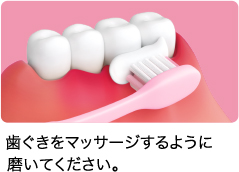
- Put about 0.3 g, approximately 0.6 cm, on a toothbrush. Use the amount for Bb, not R’s longer strip.
- Brush gently as though massaging the gums. Do this twice daily, morning and evening; do not scrub painful tissue forcefully.
- Rinse lightly with water if desired. The manufacturer permits light rinsing after brushing. Bb remains a gum medicine with its own directions, even though it is applied with a toothbrush.
Who should check first, and when should you stop?
For either product, consult a doctor, dentist, pharmacist or registered salesperson before use if you are receiving medical or dental treatment, or have had allergic symptoms from medicines or other substances. Both are for dental use only. Children must use them under a parent’s or guardian’s supervision; the leaflets do not specify a numeric minimum age. Ask a pharmacist or dentist before selecting one for a young child.
Lion’s pregnancy/breastfeeding FAQ says these gum medicines can be used, while recommending consultation with a doctor because physical condition can change during these periods. Do not treat this as a guarantee that a particular symptom needs no assessment.
Stop immediately and seek advice if a rash, redness or itching develops. R also lists altered taste as a possible adverse reaction. If symptoms do not improve after using either product for a while, stop and consult with the leaflet. The leaflets do not set a specific day count; do not keep buying another tube instead of arranging a dental review.
Bleeding gums, painful or swollen gums, and persistent bad breath deserve a dentist’s assessment. Very painful or markedly swollen gums, loose teeth, or ulcers/red patches in the mouth warrant urgent dental advice. These general dental-care warning signs are separate from the Japanese medicine directions.
Keep tubes tightly closed in a cool place away from direct sunlight and children. Do not transfer the medicine to another container or use it after expiry.
Irene’s takeaway
Choose by the labelled symptom and the way you will apply it: R for direct finger application, with its separate mouth-ulcer use; Bb for gentle toothbrush application to its narrower gum-symptom list. Keep up daily plaque removal and regular professional dental care. Relief from a tube does not tell you whether the underlying gum disease has been treated.
Official sources and image credits
Checked on 14 October 2026. Follow the leaflet in the Japanese package you buy. Package and application images: Lion Corporation.