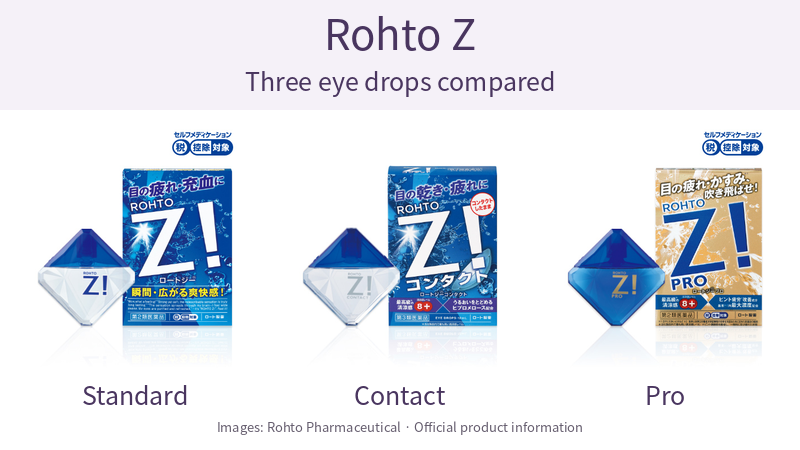
For dryness or use while wearing soft contact lenses, start by looking at Contact. For tired, red eyes when you are not wearing lenses or wear ordinary clear hard lenses, compare Standard and Pro. Pro’s formula targets fatigue associated with focusing, with a stronger cooling sensation, but that does not make it the right choice for everyone.

I’m Irene, a Taiwan-born, Japan-licensed pharmacist working in a Japanese drugstore. All three feel strongly cooling. Your symptoms and lenses are the more useful starting points; choose a product you can use before deciding whether you like its cooling effect.
Product information checked: 11 October 2026 · Japanese-market versions.
This guide covers the current products sold in Japan. Ask a doctor or pharmacist before use if you have severe eye pain, are under medical treatment, have a history of allergic reactions to medicines or other substances, or have been diagnosed with glaucoma.
Compare the purpose before the cooling level
Feature
Standard
- Starting point
- Tired, red eyes; prefer cooling drops
- While wearing ordinary clear soft lenses
- No
- While wearing coloured or circle lenses
- No
- While wearing ordinary clear hard or oxygen-permeable hard lenses
- Yes
- Manufacturer’s cooling rating
- 8
- Tear supplementation for dryness
- Not a listed use
- Redness and itching
- Listed uses
- Japanese category / size
- Class 2 OTC / 12 mL
Contact
- Starting point
- Dryness or discomfort while wearing lenses
- While wearing ordinary clear soft lenses
- Yes
- While wearing coloured or circle lenses
- Yes
- While wearing ordinary clear hard or oxygen-permeable hard lenses
- Yes
- Manufacturer’s cooling rating
- 8+
- Tear supplementation for dryness
- Listed
- Redness and itching
- Not listed uses
- Japanese category / size
- Class 3 OTC / 12 mL
Pro
- Starting point
- Fatigue associated with focusing; prefer stronger cooling
- While wearing ordinary clear soft lenses
- No
- While wearing coloured or circle lenses
- No
- While wearing ordinary clear hard or oxygen-permeable hard lenses
- Yes
- Manufacturer’s cooling rating
- 8+
- Tear supplementation for dryness
- Not a listed use
- Redness and itching
- Listed uses
- Japanese category / size
- Class 2 OTC / 12 mL
All three list tired eyes and blurred vision such as when there is excess eye discharge among their uses. The table helps narrow the choice; it does not mean only one variant can be used for tired eyes. Cooling ratings are descriptions of sensation, not effectiveness scores. These drops are not a way to overcome drowsiness or fatigue while driving.
Identify the three current products
Standard: blue box without Contact or PRO
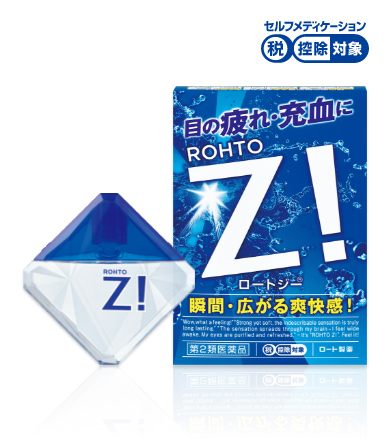
Official Japanese name: ロートジーb. JAN: 4987241150175.
Look for the large Z! It has labelled uses including tired eyes, redness and itching, but must not be applied while wearing soft lenses.
Contact: blue box with コンタクト
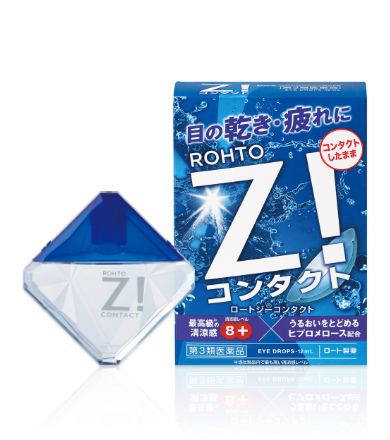
Official Japanese name: ロートジーコンタクトb. JAN: 4987241165117.
Its uses include tear supplementation, dryness and discomfort while wearing soft or hard lenses. The current manufacturer FAQ also allows use while wearing coloured or circle lenses; follow the lens manufacturer’s instructions too. It can also be used without lenses. Keep the box: the precautions are printed inside it.
Pro: gold box with PRO
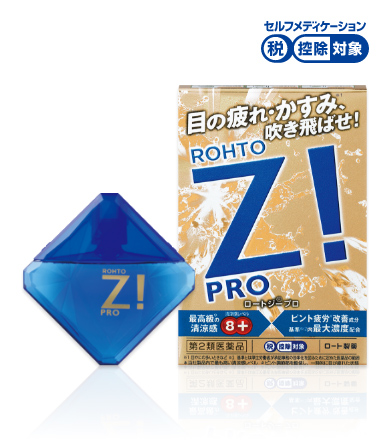
Official Japanese name: ロートジープロd. JAN: 4987241165100.
Pro and Standard have the same range of labelled uses, but different formulas. Pro is not simply Standard with a colder sensation.
Check the full name, including the ending b or d, and the JAN barcode. Instructions for the older Contact a or Pro c should not be assumed to apply to today’s products. Packaging may differ by batch or limited edition, so confirm the product name and instructions.
What changes in the formulas?
Standard and Pro: more than a cooling difference
These are the labelled concentrations. Percentages describe concentrations, not ingredient amounts per 12 mL bottle or per dose.
| Active ingredient / main role | Standard | Pro |
|---|---|---|
| Tetrahydrozoline hydrochloride / redness relief | 0.05% | 0.05% |
| Neostigmine methylsulfate / focusing adjustment | 0.003% | 0.005% |
| Zinc sulfate hydrate / anti-inflammatory action | 0.05% | 0.1% |
| Chlorpheniramine maleate / itching relief | 0.03% | 0.03% |
| Vitamin B6 / metabolic support | 0.1% | 0.1% |
| Potassium L-aspartate / metabolic support | 1% | Not included |
| Allantoin / anti-inflammatory and related action | Not included | 0.2% |
| Sodium chondroitin sulfate / corneal protection | Not included | 0.5% |
Pro contains higher concentrations of some ingredients and ingredients absent from Standard. Standard, meanwhile, contains potassium L-aspartate, which Pro does not. Ingredient counts and individual percentages alone cannot tell you which is the better fit.
Contact: three ingredients for tears and lubrication
Contact contains potassium chloride 0.08%, sodium chloride 0.44% and hypromellose 0.21%, supporting tear supplementation and lubrication. It is not a lens-compatible version of Standard’s redness- and itch-relief formula: those symptoms are not among Contact’s labelled uses.
If persistent redness or itching is the main problem, do not choose Contact simply because you wear lenses. Have the cause checked; lens wear may need to stop while an eye professional assesses the problem.
Dose: Standard needs a different number of drops
| Product | Drops per use | Times per day |
|---|---|---|
| Standard | 2–3 | 5–6 |
| Contact | 1–3 | 5–6 |
| Pro | 1–3 | 5–6 |
Do not increase the amount or frequency for extra cooling. Standard and Pro specifically warn that excessive use may cause abnormal sensitivity to light or worsen redness.
- Wash your hands, check the product and dose, and confirm it is suitable for any lenses you are wearing.
- Do not touch the bottle tip to your eye, eyelid or eyelashes. Do not use liquid that has become cloudy.
- Close the cap firmly and do not share the bottle. All three are eye drops, not solutions for rinsing, disinfecting or storing lenses.
Children must use the drops under a parent’s or guardian’s supervision. The leaflets do not specify a numerical minimum age. The manufacturer advises considering use once a child can communicate symptoms and how the drops feel. Young children may find the cooling too strong; a non-stinging product intended for children may be more appropriate. Ask a doctor or pharmacist if you are unsure what to choose.
When to ask first or stop
For all three, ask before use if you are under medical treatment, have a history of allergic reactions to medicines or other substances, have severe eye pain, or have been diagnosed with glaucoma.
Stop immediately if you develop a skin rash, redness or itching, or eye redness, itching, swelling or painful stinging after use. Take the product instructions to a doctor or pharmacist for advice; for Contact, keep the box with its printed precautions.
Persistent blurred vision calls for stopping and seeking advice with all three. The other no-improvement thresholds differ:
- Standard and Pro: symptoms have not improved after 5–6 days.
- Contact: symptoms have not improved after about 2 weeks.
These are not instructions to wait through severe pain or a reaction. Follow the earlier consultation and stopping advice when those conditions apply. Nor should blurred vision on the label be read as a treatment for short-sightedness, presbyopia or other eye diseases.
Storage after opening
Close the cap tightly and store in a cool place away from direct sunlight. Do not leave the bottle in temperatures of 40°C or above, such as in a car or near a heater. Keep it out of children’s reach. Do not transfer the liquid, add anything to the bottle or share it.
Do not use it after the expiry date on the box, and use it promptly after opening even if that date has not passed. Crystals on the tip or inside the cap can be gently wiped away with clean gauze. Do not use cloudy liquid.
The short answer
Consider Contact for dryness or discomfort while wearing soft lenses. Compare Standard and Pro for their tired-eye, redness and itching uses when you are not wearing lenses or wear ordinary clear hard lenses. All three have a strong cooling sensation; there is no need to force yourself to use drops whose sensation you dislike.
My reminder: a noticeable sensation does not prove the problem is solved. Finding the cause of persistent discomfort matters more than switching to a colder bottle.
Sources
- Rohto: current Standard product information
- Rohto: current Contact product information
- Rohto: current Pro product information
- Current Standard leaflet
- Current Contact carton precautions
- Current Pro leaflet
- Rohto: Contact b lens compatibility
- Rohto: Standard lens restrictions
- Rohto: Pro d lens restrictions
- Rohto: eye drops for children
- Rohto: background on eye-drop ingredient roles