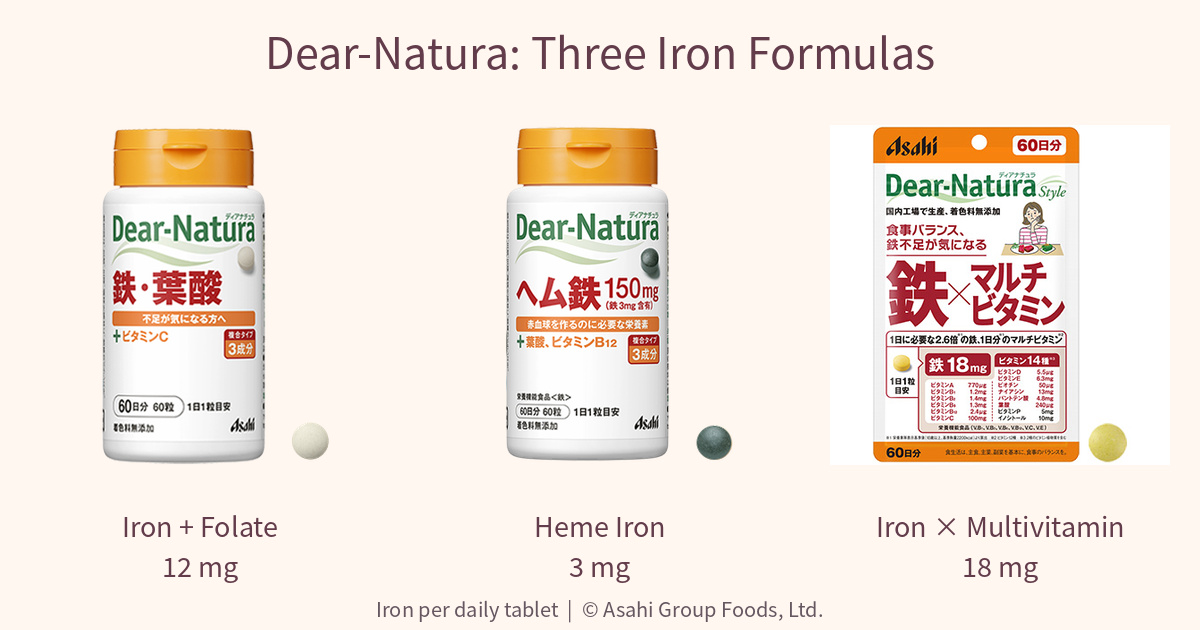
These three Dear-Natura products all use one tablet daily, but provide 12 mg, 3 mg and 18 mg iron. Compare Iron + Folate for iron with folate and C, Heme Iron if you specifically want that iron form, and Iron × Multivitamin only if you also need the vitamin combination. The largest number is not a buying goal.

I’m Irene, a Taiwan-born, Japan-licensed pharmacist working in a Japanese drugstore. A shopping-list entry saying “Dear-Natura iron” leaves three questions: which daily iron amount, whether you specifically want heme iron, and whether you need a vitamin blend as well.
Sources checked on 19 October 2026, Japan time. This guide covers the current Japanese bottles and Style pouch, not similarly named overseas products or other heme-iron pouches.
All three official pages say under-18s should avoid use and list people receiving treatment in their avoid-use section. Do not start or add one during treatment on your own. If you take medicines, show the exact label to your doctor or pharmacist. Suspected anemia needs assessment; food supplements cannot replace diagnosis or prescribed iron treatment.
Separate the three shopping needs
- Iron with folate and vitamin C: Iron + Folate supplies 12 mg iron, 200 μg folate and 80 mg C per day, without the broad multivitamin formula.
- A specifically heme-iron formula: Heme Iron supplies 3 mg iron, 200 μg folate and 2 μg B12. Consider the form and amount separately; the word “heme” does not make it suitable for everyone.
- Iron plus a vitamin blend: the Style pouch supplies 18 mg iron with vitamins including A, B vitamins, C, D and E. If you already take a multivitamin, check the overlap before buying.
- No established reason to add iron: buying none is a reasonable option. Tiredness or appearance alone cannot establish iron deficiency through a shopping comparison.
Match the full names: two bottles and a pouch
Iron + Folate: 鉄・葉酸
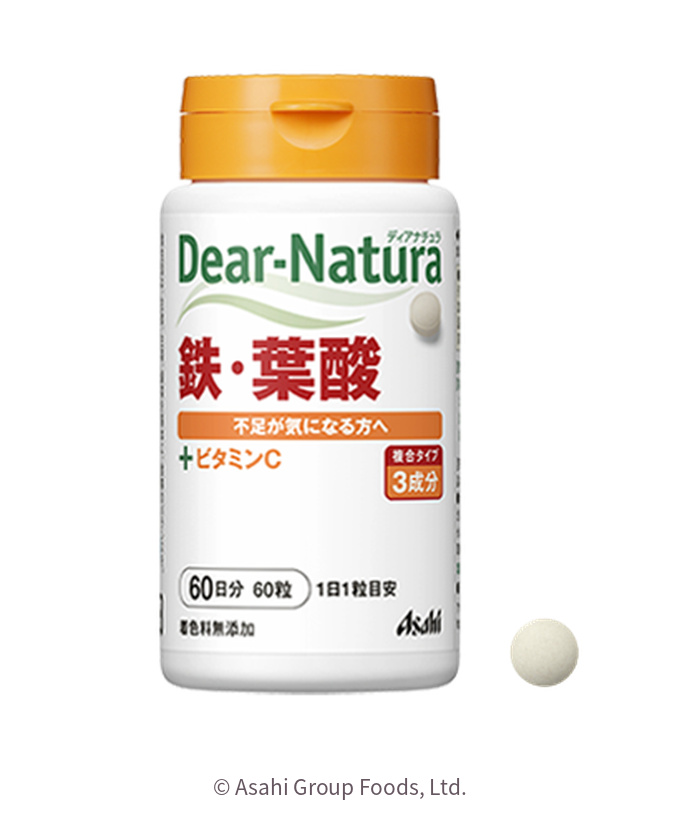
Look for the white bottle with orange cap and the name 鉄・葉酸. The pictured bottle contains 60 tablets for 60 days and also says “+ vitamin C.” Match the name as well as the bottle color.
Heme Iron: ヘム鉄
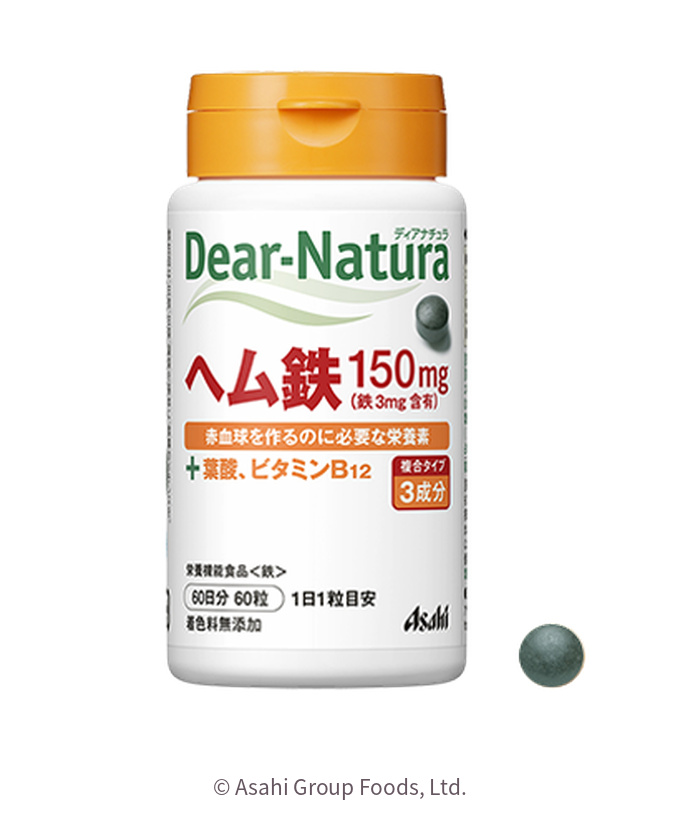
This also has a white bottle and orange cap, so look for ヘム鉄. The pictured bottle contains 60 tablets for 60 days; the official page also lists 30 tablets for 30 days. The large “heme iron 150 mg” on the front is not 150 mg elemental iron. The smaller line specifies 3 mg iron. Ingredient weight and the iron amount in the nutrition panel are different measurements.
Dear-Natura Style Iron × Multivitamin: 鉄×マルチビタミン
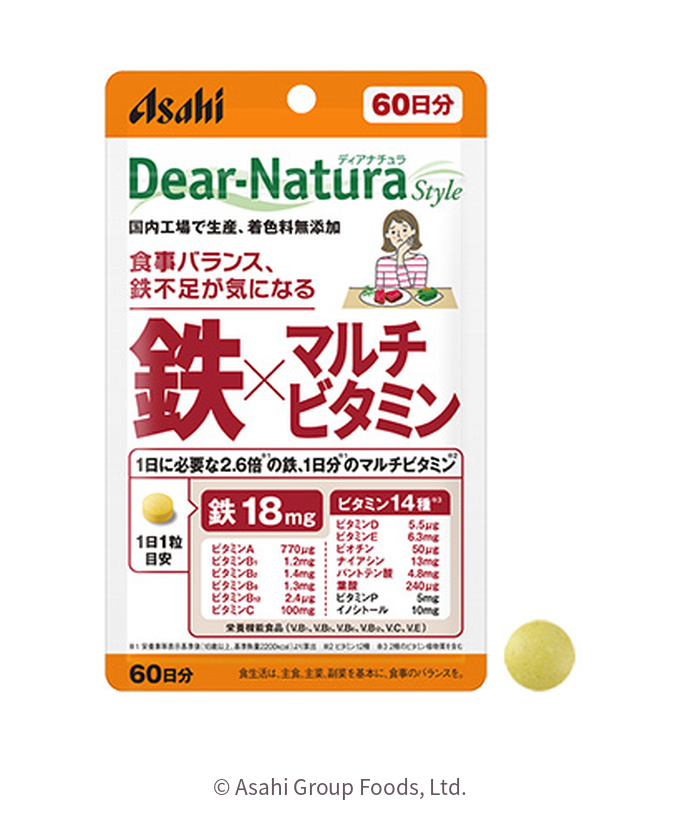
The pictured resealable pouch contains 60 tablets for 60 days. The current page also lists 20 tablets for 20 days and a 90-tablet, 90-day version sold by selected online retailers. This is a different formula, not a refill pouch for either bottle.
The complete official packs are shown for identification, not at a shared physical scale. Asahi is phasing in a pouch redesign, so older and newer appearances may coexist. Check the full name, serving and back label rather than color alone. The pictured tablets are not actual-size measurements or swallowing tests.
What is in one daily tablet?
| Per daily tablet | Iron + Folate | Heme Iron | Iron × Multivitamin |
|---|---|---|---|
| Daily serving | 1 tablet | 1 tablet | 1 tablet |
| Iron | 12.0 mg | 3.0 mg | 18.0 mg |
| Folate | 200 μg | 200 μg | 240 μg |
| Vitamin C | 80 mg | Not listed | 100 mg |
| Vitamin B12 | Not listed | 2.0 μg | 2.4 μg |
| Vitamin A | Not listed | Not listed | 770 μg |
“Not listed” means the nutrition panel does not list that supplemented nutrient; it is not a laboratory guarantee of zero content. Milligrams (mg) and micrograms (μg) are different units.
The 12, 3 and 18 mg figures are daily iron amounts, not personal targets or treatment-effect rankings. Iron + Folate and Iron × Multivitamin list ferric pyrophosphate; Heme Iron lists heme iron. The manufacturer describes heme iron as iron bound to protein. That structural distinction does not let us convert this bottle’s 3 mg into an equivalent number of milligrams of either other product, or promise a better result.
“14” does not mean 14 essential vitamins
The pouch’s count includes vitamin-like substances: vitamin P at 5 mg and inositol at 10 mg daily. Its remaining listed nutrients are B1 1.2 mg, B2 1.4 mg, B6 1.3 mg, E 6.3 mg, D 5.5–10.0 μg, niacin 13 mg, pantothenic acid 4.8 mg and biotin 50 μg, alongside the A, B12, C and folate in the table.
Switching to this pouch therefore changes much more than iron intake. Its “2.6 times” iron statement uses Japan’s nutrient-labeling reference value; it is not an instruction to supplement your own needs by that multiple, and it is not an effectiveness multiplier.
Heme Iron is a Japanese food with a nutrient function claim for iron. Iron × Multivitamin carries nutrient function claims for B1, B2, B6, B12, C and E. Both explain that they have not undergone the individual Consumer Affairs Agency review used for Foods for Specified Health Uses. None of these three products is an anemia-treatment medicine.
Pregnancy planning, pregnancy and breastfeeding
- Iron + Folate: Asahi explicitly includes pregnant and breastfeeding people among its suggested users. That does not establish that every person in those groups needs this iron amount or that it replaces an individual prenatal nutrition plan.
- Heme Iron: it also contains 200 μg folate, but this guide does not turn that into a prenatal recommendation.
- Iron × Multivitamin: each daily tablet contains 770 μg vitamin A. The maker specifically cautions against excessive vitamin A intake during the first three months of pregnancy or when planning pregnancy. Folate content is not a reason to combine it automatically with a prenatal supplement.
Both bottle pages caution against exceeding 900 μg folate intake per day. This is the manufacturer’s precaution, not a target to reach. If pregnant, planning pregnancy or breastfeeding, bring the full labels of this product and your existing supplements to a healthcare professional for an individual check.
Put all your labels together before starting
- Age: all three expressly exclude under-18s. Do not create a child’s serving by halving a tablet.
- Treatment and medicines: all three display an avoid-use restriction for people receiving treatment. The pouch’s detailed text additionally says people receiving treatment or taking medicines should consult a doctor before use. The practical approach is not to start independently: have your doctor confirm the plan. Do not replace prescribed iron or rearrange medicine timing on your own.
- Allergies: all three official allergen fields say no applicable items. This does not mean that nobody can react to any ingredient, or that the products are certified vegan. Heme Iron also lists prune extract powder, with 7 mg added during manufacture. Check the actual ingredient list.
- Overlap: include prescribed iron, iron gummies, folate, B vitamins and multivitamins in your list. Different names can hide the same nutrients. These are alternatives to assess, not an automatic three-product combination; do not increase servings to match another product’s iron figure.
- Feeling unwell: stop if a product does not agree with you and seek medical advice when needed. Do not assume new symptoms mean that iron is working.
Daily count and storage details
Each product’s daily guideline is one tablet. Follow your own pack and do not increase the amount. Keep all three out of children’s reach. Iron + Folate and the pouch caution against water droplets or handling tablets with wet hands because discoloration can occur. Close the pouch firmly after opening and use promptly.
Heme Iron may have its characteristic smell, and B2 in the pouch may turn urine yellow. These are manufacturer-described features, not reasons to ignore every change or symptom. I have not taste-tested these products, and the photographs cannot establish which is easier to swallow.
One final shelf check: 12 mg, 3 mg and 18 mg are the daily iron amounts. Are you looking for a particular form, a particular amount or the whole vitamin combination? Check your need, restrictions and existing supplements before choosing one.