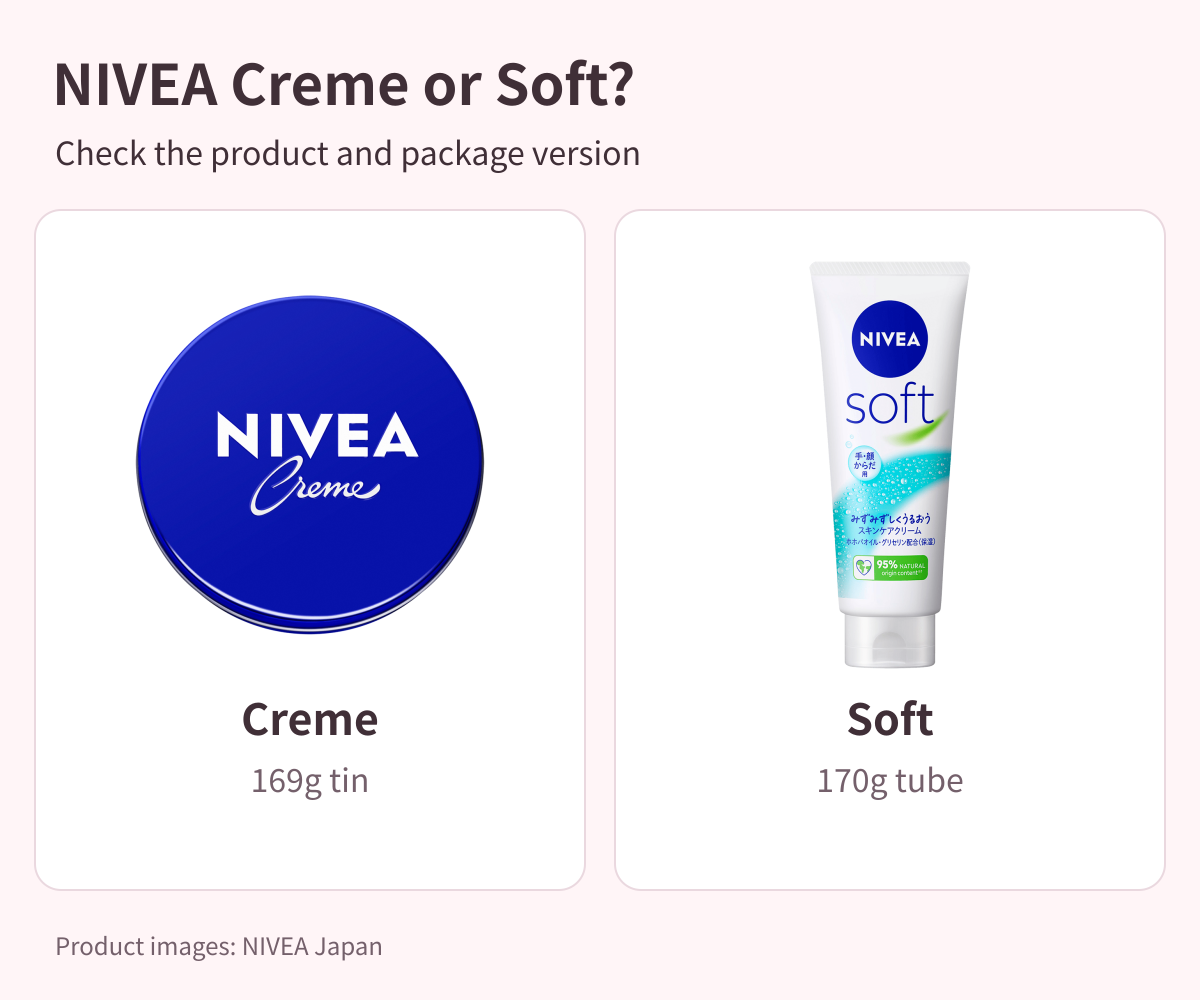
The useful difference is Cream versus Soft—not large tin versus small tube. Japanese NIVEA Cream has a richer, oil-based feel; NIVEA Soft is a water-based cream with a lighter, fresh feel. Both are intended for the face and body.

I’m Irene, a Taiwan-born, Japan-licensed pharmacist working in a Japanese drugstore. This guide compares Japanese product labels and formats; it is not a personal wear test.
Japanese official information checked: October 22, 2026. Standard Japanese Cream and Soft only; not NIVEA MEN, body milk or UV products.
Choose the texture first, the container second
NIVEA Cream: the blue-tin formula
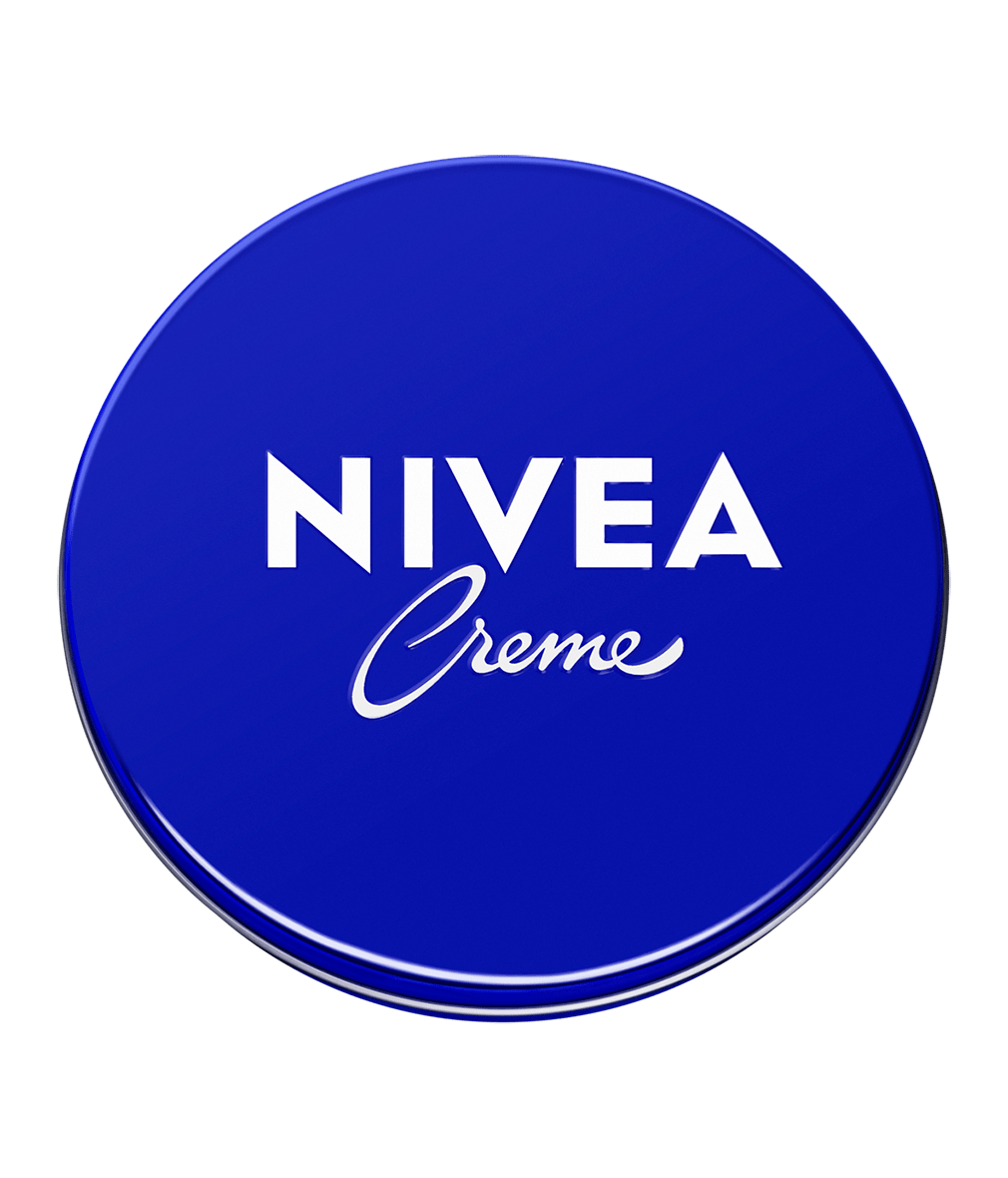
The brand describes Cream as rich and moisturising. Its water-in-oil structure has an oil-based continuous phase; this does not mean it contains no water. The Japanese range includes a 50g tube, 56g tin and 169g tin.
Kao confirms the same Cream is filled into the tins and tube. A small tube is therefore a container choice, not the lighter Soft formula.
NIVEA Soft: the current white tube
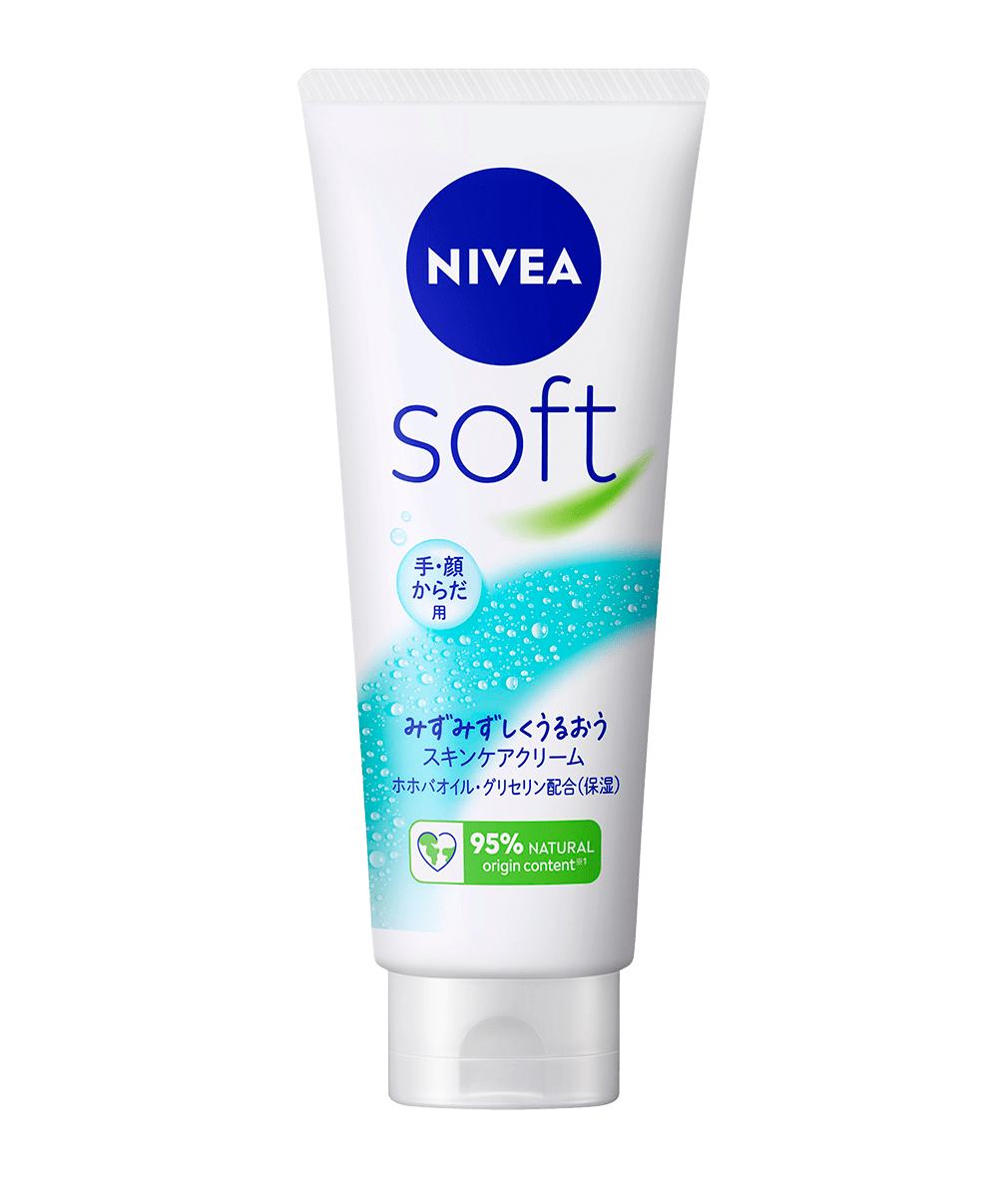
Soft uses an oil-in-water structure and is positioned for a fresh, easy-spreading feel. The current Japanese sizes are 50g and 170g tubes. Choose it to explore that texture—not because “Soft” guarantees suitability for sensitive skin.
Old white-jar reviews may describe a different Soft
Kao introduced the reformulated 50g Soft and a new 170g tube on August 31, 2024. The release contrasts them with the previous tube and jar. If an older review lists mineral oil or shows a white jar, do not assume it describes the present Japanese tube.
The current Soft label lists jojoba, canola and almond oils plus glycerin as moisturising ingredients. Its 95% natural-origin index includes water and follows ISO 16128. That is a formulation description, not a clinical safety score or a reason to ignore an ingredient you know does not suit you.
Fragrance and ingredients: neither is fragrance-free
Both Japanese ingredient lists include fragrance (香料). Soft also lists ethanol. The Cream list includes mineral oil and petrolatum; the current Soft is labelled mineral-oil-free. Those differences do not establish that one is universally safer or more effective. Compare the actual pack if fragrance or a particular ingredient is important to you, and do not substitute an overseas formula list.
There is no need to reproduce a social-media “luxury cream dupe” recipe. Kao specifically advises against mixing Cream with other products: doing so can compromise its original properties.
How to fit either into a simple routine
- Face or body: both are labelled for these areas; neither is a dedicated sunscreen or an eczema medicine.
- If you already use toner and emulsion: Kao says Cream can follow them after they have settled into the skin. Add it according to your skin’s condition rather than treating every step as compulsory.
- Choose by comfort: someone who dislikes a richer finish may prefer to consider Soft. This is a selection guide, not proof that one wins a moisturising test.
- For carrying: compare the two 50g tubes by full name. For home use, a larger size changes the amount you buy, not the product category.
When not to keep applying
Do not apply to wounds, swelling, eczema or other abnormal skin. Stop and consult a dermatologist if redness, swelling, itching, irritation, pale patches or darkening appears during use or after sun exposure. Avoid the eyes; rinse thoroughly and immediately if cream enters them. Store to prevent accidental ingestion by children or people who may mistake it for food.
A cream that stings is not “working harder.” Do not keep layering it over irritated skin to finish the container. Follow your own pack’s directions if the label has changed.
Sources and image notes
- NIVEA Cream 169g
- NIVEA Soft 170g
- Kao:Cream 成分・注意 / ingredients and cautions
- Kao:Soft 成分・注意 / ingredients and cautions
- NIVEA:Cream / Soft comparison
- Kao:2024 Soft renewal
- Kao:tin and tube FAQ
- Kao:routine order FAQ
Product images are unmodified official images, not photographs taken for this blog. Follow the current pack.