
I’m Irene, a pharmacist from Taiwan working in Japan.
If your child struggles with tablets or powders, a liquid can feel like a practical next step. Whether you are packing for Japan, standing in a drugstore or checking a bottle at home, let’s first work out what that syrup treats, then check whether it is appropriate for your child.
シロップ means syrup, not a particular kind of medicine. This guide compares selected MUHI, Pabron, Utsu and Stona products. Every formula containing a fever-reducing ingredient in the tables is a combination cold medicine. If you simply need a liquid fever or pain medicine your child can take, say that clearly to a clinician or pharmacist.
Check your child’s condition before the bottle: the Japanese labels below start at 3 months, but all say that children under 2 should receive medical care first, with use limited to unavoidable circumstances. These label ages are not advice to self-treat an infant. Older children still need the full suitability and medicine checks.
Seek urgent medical help for breathing difficulty, blue lips, a child who is hard to wake or an abnormal response. A baby under 3 months with a temperature of 38°C or higher needs prompt medical assessment. Poor drinking, reduced urination or worsening symptoms also need attention rather than simply waiting for syrup to work.
Outside Japan, follow local guidance too. The US FDA does not recommend OTC cough/cold medicines under 2, and notes US manufacturers’ “do not use under 4” labels. A Japanese age label does not override that guidance.
Fever medicine, cold medicine, cough medicine or nasal medicine?
- Fever or pain alone: ask about an appropriate single-ingredient medicine and formulation. A cold syrup may add cough or nasal ingredients your child does not need.
- Several cold symptoms: look for かぜ and read the exact indications, 効能・効果. Even within this category, current MUHI S2/P2 covers a different symptom list from the other three formulas.
- Cough and phlegm: look for せきどめ or せき・たん. The cause and severity still matter; not every cough needs a cough suppressant.
- Sneezing, a runny or blocked nose: 鼻炎 identifies a nasal-symptom medicine. These can also contain several ingredients and cannot simply be added to a cold medicine.
Within the major-brand OTC sources checked for this guide, I did not identify a current children’s liquid containing acetaminophen as its only active ingredient. That is a scoped finding, not a claim that none exists anywhere in Japan. Ask a clinician or pharmacist specifically about a suitable liquid fever medicine; medical-use liquids are outside this normal drugstore-OTC comparison. For other forms, see children’s fever medicines in Japan: chewables, tablets, granules and suppositories.
Four brands, grouped by what the medicine treats
These selected products had current official listings without a discontinuation notice when checked. This is not an exhaustive ranking or a promise of stock in every shop. Use the pictures to identify packaging, then match the complete name, including S1, S2, P2 or A. Flavour helps with administration; it does not establish effectiveness or lower risk.
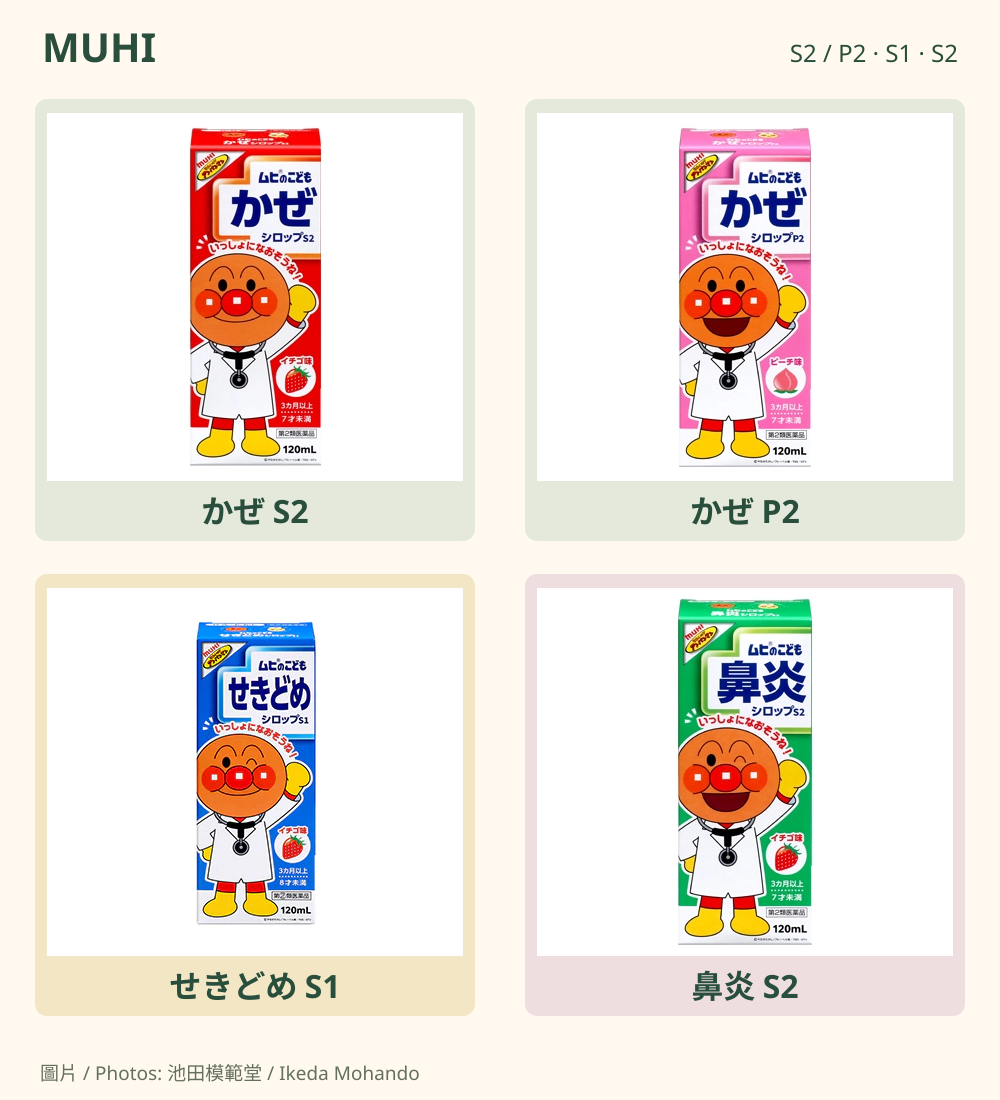
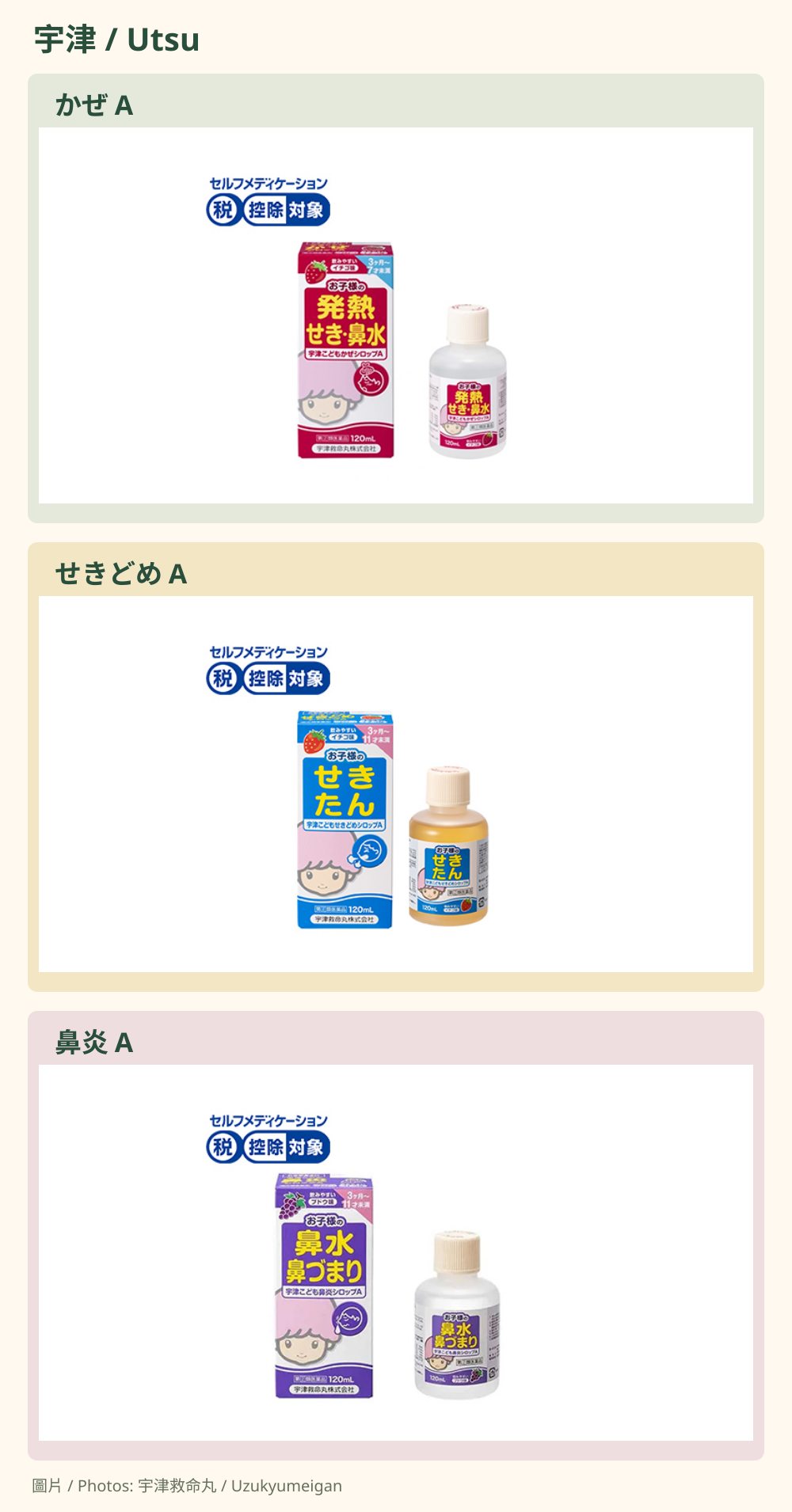
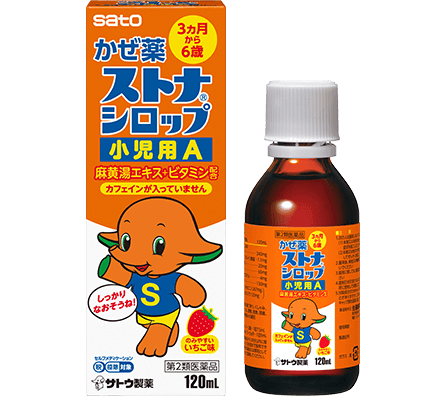
These are Japanese label ranges, not recommended ages for starting self-treatment. The under-2 medical-care warning above applies throughout. “Under 7” excludes a child who has turned 7. Do not halve an older sibling’s dose for a younger child.
1. Cold syrups: fever ingredients plus other medicines
| Product and flavour | Japanese label ages | Formula and decision points |
|---|---|---|
| MUHI: ムヒのこどもかぜシロップS2 / P2S2 strawberry; P2 peach | 3 months to under 7 years | Acetaminophen + chlorpheniramine + nandina fruit extract. The current indications do not include cough or phlegm. S2 and P2 have the same active ingredients and amounts; they are flavour variants. |
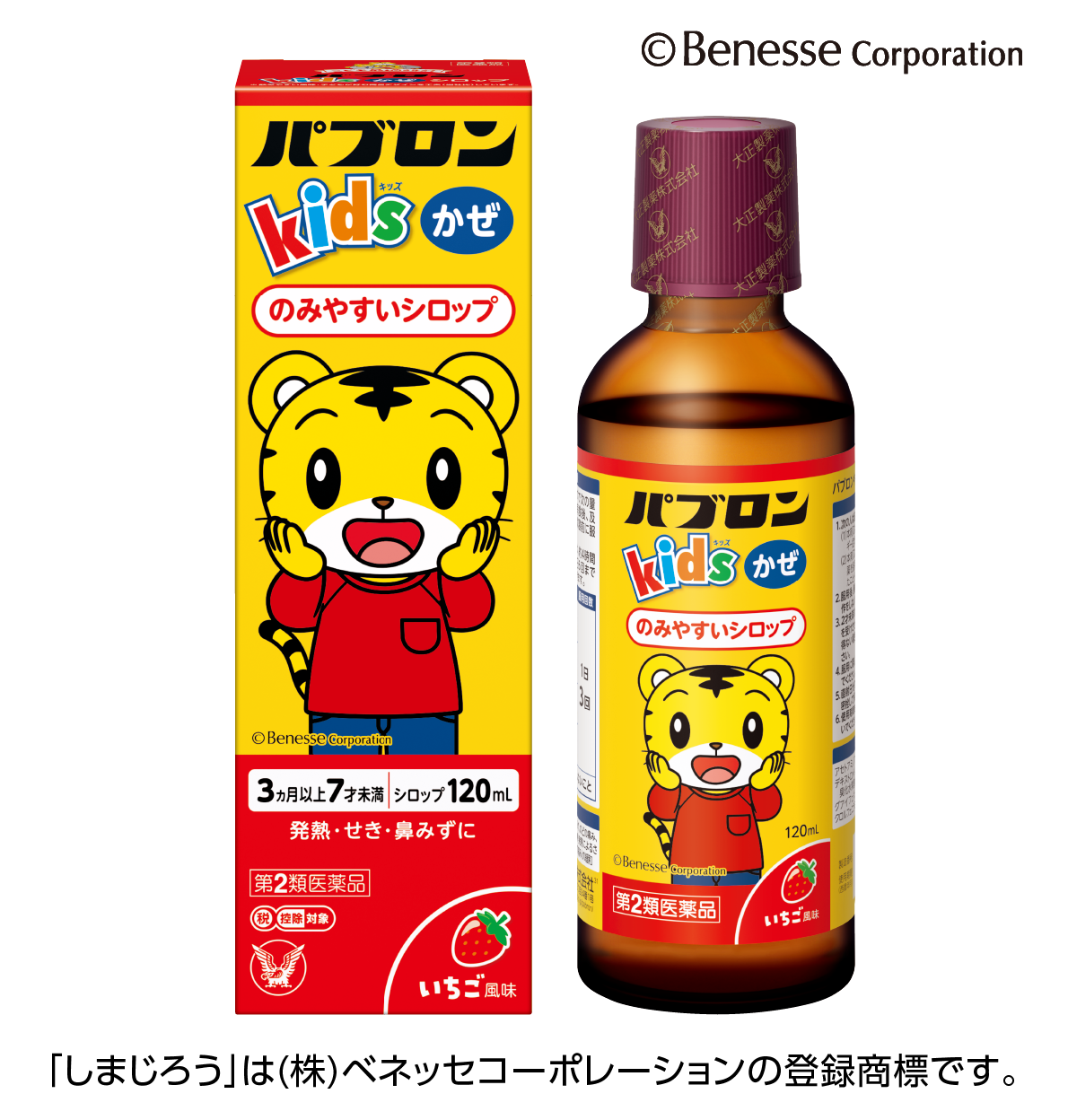
| Pabron: パブロンキッズかぜシロップStrawberry flavour | 3 months to under 7 years | Acetaminophen + dextromethorphan + guaifenesin + chlorpheniramine. Its cold-symptom indications include fever, cough, phlegm and a runny nose. No caffeine, codeine-type ingredients or dl-methylephedrine, but drowsiness can still occur. |
| Utsu: 宇津こどもかぜシロップAStrawberry; labelled sugar-free | 3 months to under 7 years | Acetaminophen + dexchlorpheniramine + dextromethorphan + dl-methylephedrine + guaifenesin. A multi-symptom cold medicine with a different formula from Pabron. |
| Stona: ストナシロップ小児用AStrawberry | 3 months to under 7 years | Acetaminophen + dexchlorpheniramine + tipepidine citrate + guaifenesin + vitamin B2 phosphate + maoto extract. This version launched in November 2025. The herbal component does not make it a simple fever medicine. |
Already considering Pabron? The Pabron Kids guide covers its syrup, granules and tablets, including product-specific directions. Do not transfer directions between those forms.
2. Cough/phlegm syrups: no fever ingredient does not mean no overlap
| Product and flavour | Japanese label ages | Formula and decision points |
|---|---|---|
| MUHI: ムヒのこどもせきどめシロップS1Strawberry | 3 months to under 8 years | Dextromethorphan, dl-methylephedrine, guaifenesin and chlorpheniramine, plus nandina fruit, platycodon root and senega extracts. No acetaminophen, but still a multi-ingredient medicine. |
| Utsu: 宇津こどもせきどめシロップAStrawberry; labelled sugar-free | 3 months to under 11 years | Dextromethorphan, dl-methylephedrine, guaifenesin and dexchlorpheniramine, plus nandina fruit and platycodon root extracts. No acetaminophen. Its age ceiling and amounts differ from MUHI’s. |
3. Nasal syrups: different ingredients and upper age limits
Both list relief of sneezing, runny or blocked nose, watery eyes, sore throat and a heavy-headed feeling associated with acute rhinitis, allergic rhinitis or sinusitis. Symptom relief is not treatment of an infection. Persistent or recurring symptoms need their cause checked.
| Product and flavour | Japanese label ages | Formula and decision points |
|---|---|---|
| MUHI: ムヒのこども鼻炎シロップS2Strawberry | 3 months to under 7 years | Chlorpheniramine + licorice extract. No acetaminophen. It has a different formula from MUHI cold syrup. |
| Utsu: 宇津こども鼻炎シロップAGrape; labelled sugar-free | 3 months to under 11 years | Dexchlorpheniramine + dl-methylephedrine + total belladonna alkaloids + dipotassium glycyrrhizinate. No acetaminophen. Its leaflet also prohibits use with gastrointestinal antispasmodics. |
Recognise the names without memorising a chemistry list
- アセトアミノフェン: acetaminophen, also called paracetamol, relieves fever and pain. A familiar name does not mean the bottle contains only that ingredient.
- クロルフェニラミンマレイン酸塩: chlorpheniramine maleate, also called chlorphenamine, is an antihistamine for symptoms such as sneezing and a runny nose. The d- form is dexchlorpheniramine. Do not compare their milligram amounts as though they were interchangeable.
- デキストロメトルファン: dextromethorphan is a cough suppressant. Stona instead uses クエン酸チペピジン, tipepidine citrate; the same symptom claim does not mean the same formula.
- グアイフェネシン: guaifenesin helps loosen phlegm. dl-メチルエフェドリン塩酸塩, dl-methylephedrine hydrochloride, acts on the airways in some formulas or helps nasal congestion. Conditions such as heart disease, high blood pressure and thyroid problems warrant particular checking.
- Herbal and other ingredients: nandina fruit, platycodon root, senega, licorice and Stona’s maoto extract have roles within their formulas. Utsu nasal A adds belladonna alkaloids for runny nose/watery eyes and dipotassium glycyrrhizinate for inflammation. Herbal ingredients and vitamins do not make these medicines casual add-on supplements.
Every formula in the tables contains an antihistamine and carries drowsiness/dry-mouth cautions. Utsu nasal A also lists constipation and blurred vision. “Caffeine-free” does not mean non-drowsy; “sugar-free” does not mean risk-free. For an allergy history, check the complete inactive-ingredient list too, not just the stated fruit flavour.
My measuring reminder:
The volume used in an ingredient table and the volume for one dose are different things. Several products here list ingredients per 60mL; that is not a single dose. The same 5mL mark can hold different ingredients or amounts when you change bottles.
Acetaminophen and paracetamol are useful names to recognise, but do not transfer the mL dose from a familiar bottle at home. Even single-ingredient liquids overseas come in different strengths. Do not calculate a replacement paracetamol dose using a Japanese combination cold syrup.
Show the pharmacist everything already taken
Record the product, amount and time, including tablets, powders, suppositories, prescribed medicines, allergy medicines and travel-sickness products. Avoiding duplicate acetaminophen is only one part of the check.
- Cold syrups in the table: their leaflets prohibit other cold medicines, fever/pain medicines, sedatives, cough/expectorant medicines and oral antihistamine-containing medicines, including nasal, motion-sickness and allergy products.
- Both cough syrups: no other cough/expectorant medicines, cold medicines, sedatives or oral antihistamine-containing medicines, including nasal, motion-sickness and allergy products.
- Both nasal syrups: no other oral nasal medicines or oral antihistamine-containing products, including cold, cough/expectorant, motion-sickness and allergy medicines. Utsu nasal A additionally prohibits gastrointestinal antispasmodic medicines (胃腸鎮痛鎮痙薬).
Do not give MUHI cold, cough and nasal syrups together simply because the front labels name different symptoms. Ask a clinician or pharmacist to review the whole plan when symptoms overlap. Switching brands is not a way around dose intervals.
What medical history needs checking first?
Ask before use if your child is receiving medical treatment, has a medicine-allergy history, high fever or difficulty urinating. Do not retry a product that has caused an allergy. The cold syrups also prohibit use in someone whose asthma was triggered by a cold or fever/pain medicine.
Depending on the product, consultation conditions include heart disease, high blood pressure, thyroid disease, diabetes, liver or kidney disease, stomach/duodenal ulcers and glaucoma. Utsu nasal A also lists swelling/oedema. These are not identical checklists for every bottle; give the professional the full history and check the exact leaflet.
Measure first, then make it easier to take
- Check the bottle every time: exact product, age band, single-dose volume, interval and daily limit. Follow that product’s directions. The comparison tables here are not dosing tables.
- Measure with that product’s supplied cup. Do not estimate with a kitchen teaspoon, another medicine’s device or a capful. If markings are unclear, the cup is missing or your child cannot drink from it, ask a pharmacist to confirm a suitable mL-marked device and demonstrate its use.
- Follow preparation instructions before measuring. MUHI’s herbal-containing syrups may form a sediment; their leaflets say to shake before use. Its brand guidance advises gentle inversion to make the contents uniform. Do not assume another medicine has the same shaking or dilution instructions.
- Supervise and give small amounts gradually. MUHI’s guidance recommends a little at a time and no drinking directly from the bottle or cap, to avoid contamination. Write down the actual time and amount when caregivers share responsibility.
- If medicine is spat out or vomited, do not automatically repeat a full dose. Note the product, amount, time and what happened, then ask a clinician or pharmacist. Do not double up to compensate.
“It is strawberry-flavoured, but my child still refuses it.”
That can happen. Ask at the pharmacy whether this exact medicine can be mixed with food and how to measure it. A flavour is a helpful design choice, not a promise that every child will like it. A whole bottle of drink can leave you unsure how much medicine was taken.
Can I mix it with juice, yoghurt or milk?
MUHI’s brand guidance allows a measured dose to be mixed immediately before use into a small amount of suitable food the child will finish, such as yoghurt, pudding or juice. It warns that taste may become bitter, advises avoiding grapefruit juice, and discourages mixing into important staple feeds such as milk or porridge because the child may then reject the food. This is MUHI guidance, not a rule for every syrup. Check other products with a pharmacist. Do not premix the whole medicine bottle for storage or put a dose into a full feed or drink.
Storage, travel and when to stop
Keep the original bottle, box and leaflet; write down the opening date
The products require tightly closed storage in a cool place away from direct sun and out of children’s reach. Do not decant into a travel bottle. Follow the product’s cup-cleaning instructions, wipe the bottle neck and close the safety cap properly. A child-resistant cap does not replace safe storage. Syrup does not automatically mean refrigeration; use the bottle’s own storage directions.
- MUHI: use promptly after opening even within the printed expiry, and wash the measuring cup after each use and store it cleanly with the medicine.
- Pabron Kids: its leaflet specifies use within 6 months of opening and within the printed expiry. That is a storage limit, not permission for 6 months of continuous treatment or a rule for other brands.
- Utsu and Stona: follow their own expiry and storage instructions rather than borrowing Pabron’s 6-month limit. Do not use expired medicine. Ask a pharmacist about uncertain storage or a change not explained by the leaflet.
Doses versus days: the stopping rules differ
- The listed cold syrups and both cough syrups: stop and seek advice if symptoms have not improved after 5–6 doses.
- MUHI nasal S2 and Utsu nasal A: stop and seek advice after 5–6 days without improvement. This is not a reason to wait if your child is getting worse.
- A rash, redness, itching, vomiting or difficulty urinating after use: stop and seek advice with the leaflet. Stop and ask if dry mouth or drowsiness persists or worsens; the same applies to Utsu nasal A’s constipation or blurred vision.
- Breathing difficulty, altered consciousness, or a widespread rash with high fever or mouth/lip sores: seek immediate medical attention. For an accidental extra dose or an unknown amount swallowed, get prompt medical or poison-service advice rather than waiting for symptoms.
These medicines relieve symptoms and should not become a long-term daily drink. No bottle’s age range, flavour or character on the box can replace checking the child, the medicine and other treatment together.
Your child’s exact age and weight; the main symptoms and duration; every medicine already given and when; allergies and medical conditions; and how your child manages a cup or tends to spit out medicine. Preparing that information before a trip makes an unplanned pharmacy visit easier.
Questions parents ask
Can a Japanese children’s cold syrup replace a simple fever liquid?
Check the ingredients first. The syrups containing a fever-reducing ingredient in this guide are combination cold medicines with nasal, cough or other ingredients. If you need a liquid fever medicine, tell a clinician or pharmacist your child’s age and needs rather than substituting a combination syrup for a familiar single-ingredient product.
Does a Japanese “3 months and over” label mean I should give it to my baby myself?
No. All listed leaflets prioritise medical care for children under 2 and limit use to unavoidable circumstances; none permits use under 3 months. These Japanese label ranges are not a recommendation for infant self-treatment. Families outside Japan should also follow local paediatric guidance.
Are MUHI cold syrup S2 and P2 just different flavours?
Current S2 is strawberry and P2 is peach, with the same active ingredients and amounts. They are treated as one formula here. Neither current indication list includes cough or phlegm; do not borrow the indications of MUHI cough syrup S1.
Can I add a cough or nasal syrup if it contains no acetaminophen?
Absence of acetaminophen does not establish compatibility. Antihistamines, cough ingredients and other effects may overlap, and the leaflets prohibit combinations with specific medicine classes. Show a clinician or pharmacist all products, doses and times. Utsu nasal A also prohibits gastrointestinal antispasmodics.
Can I use the same mL dose as a syrup from home?
No. Ingredients, concentrations, age bands, single doses and daily limits can differ. The same volume is not necessarily the same medicine amount. Follow the exact Japanese product’s leaflet and professionally confirmed directions, using its own measuring device.
Does Pabron’s 6-month opening limit apply to all syrups?
No. Pabron Kids syrup specifies use within 6 months of opening and before its printed expiry. This is a storage limit, not a treatment duration. MUHI says to use promptly after opening; Utsu and Stona require their own instructions rather than a borrowed 6-month limit.
Are Kids Bufferin syrups still current comparison options?
LION says manufacture of the Kids Bufferin syrup series ended in January 2026, so they are not in the current comparison. Discontinuation is not a recall or proof that all retail stock is gone. Check the exact name, expiry, storage and leaflet of an existing bottle.
Sources and image credits
Checked 8 October 2026 against current Japanese product pages, linked Japanese leaflets and official status notices. Recheck different country versions, older bottles and revised packaging. This guide does not replace individual medical advice.
- MUHI cold S2: current name, flavour, ingredients and indications
- MUHI cold S2 Japanese leaflet
- MUHI cold P2: peach flavour and matching formula
- MUHI cold P2 Japanese leaflet
- MUHI cough S1: current name and ingredients
- MUHI cough S1 Japanese leaflet
- MUHI nasal S2: current name and ingredients
- MUHI nasal S2 Japanese leaflet
- MUHI children’s range: administration, mixing food and combination guidance
- Pabron Kids syrup: current product and image
- Pabron Kids syrup Japanese leaflet, revised May 2026
- Utsu cold syrup A: current product and image
- Utsu cold syrup A Japanese leaflet
- Utsu cough syrup A: current product and image
- Utsu cough syrup A Japanese leaflet
- Utsu nasal syrup A: current product and image
- Utsu nasal syrup A Japanese leaflet
- Current Stona children’s syrup A: product and image
- Stona children’s syrup A Japanese leaflet
- Sato Pharmaceutical: November 2025 product launch
- LION: Kids Bufferin syrup-series discontinuation
- US FDA: children’s cough/cold medicines, measurement and warning signs
- NHS: different strengths of children’s paracetamol liquid
- NHS: fever in children and signs needing medical help
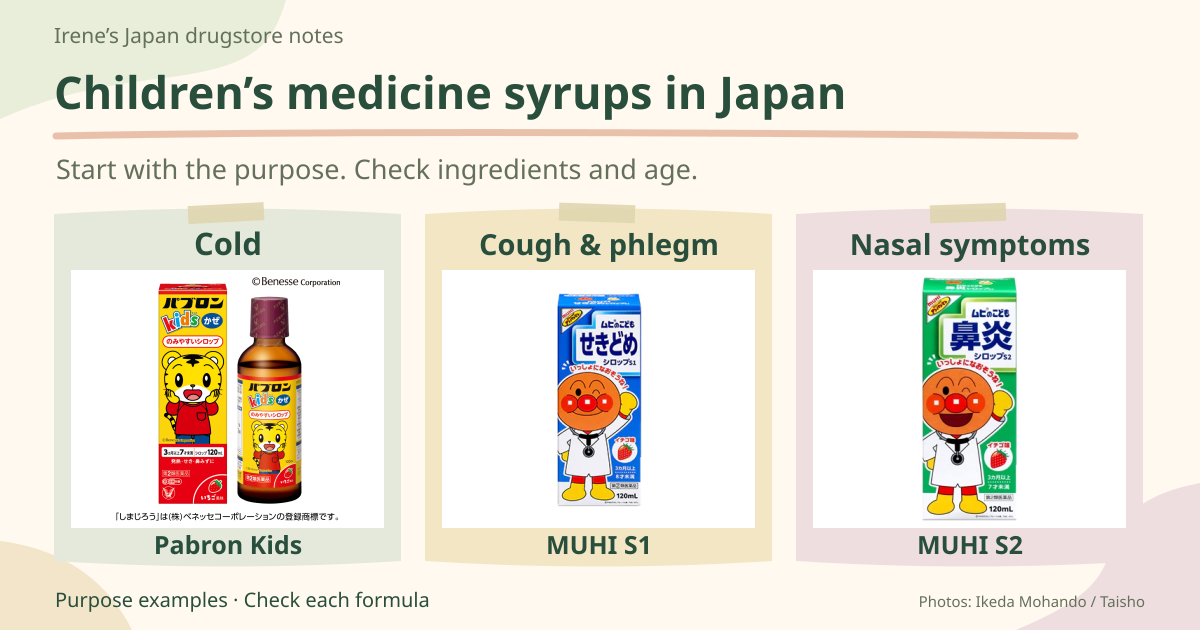
Product images come from the official pages above and are reproduced for identification and commentary. The cover shows Pabron Kids cold, MUHI cough S1 and MUHI nasal S2 as examples of three purposes. The MUHI body figure shows cold S2, cold P2, cough S1 and nasal S2 from top left. Utsu shows cold A, cough A and nasal A from top to bottom. Pabron and Stona images match the current products discussed. Original proportions and markings are retained; images are not to scale. Characters and trademarks belong to their owners.