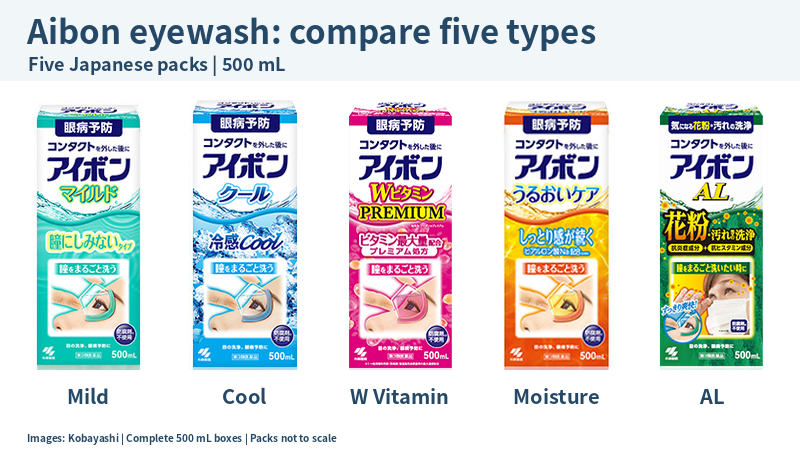
Before choosing a colourful Aibon (アイボン) bottle, identify it as an eyewash medicine, then compare cooling sensation and formula. These are neither contact-lens cleaning solutions nor dry-eye treatment drops. Seeing a “clean eyes” message does not mean you need a daily eye-washing routine.

I’m Irene, a Taiwan-born, Japan-licensed pharmacist working in a Japanese drugstore. This guide narrows five options when you have an appropriate reason to use an eyewash. Sources checked: 13 October 2026, Japanese-market products.
- Start with the purpose, then the colour
- Mild and Cool differ by more than colour
- Pink W Vitamin and orange Moisture Care: a label is not a diagnosis
- AL: pollen-washing positioning, with the same basic restrictions
- Technique matters: never reuse the same liquid for both eyes
- When should you consult first?
- Irene’s final reminder
- Official sources
Start with the purpose, then the colour
All five are Class 3 OTC medicines with the same labelled uses: washing the eyes and preventing eye disease in situations such as after swimming or when dust or sweat enters the eyes. This does not mean prevention of every eye disease or a recommendation that symptom-free people wash their eyes daily.
| Package name / colour | Maker’s cooling scale, 0–5 | Formula or feel | First consideration |
|---|---|---|---|
| Mild / アイボンマイルドc / pale green | 0 | No cooling ingredients | Dislike cooling sensation |
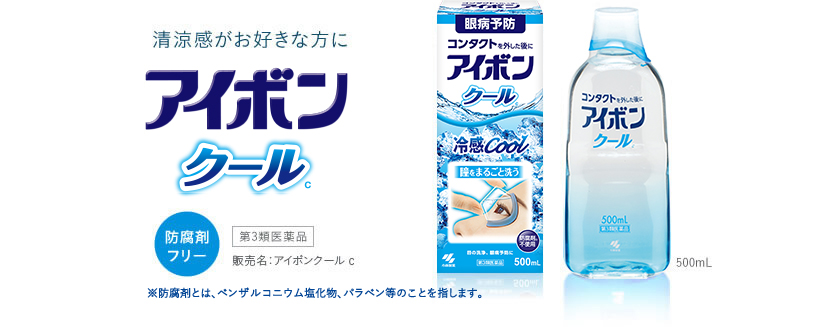
| Cool / アイボンクールc / pale blue | 5 | Cooling formula | Tolerance for stronger cooling |
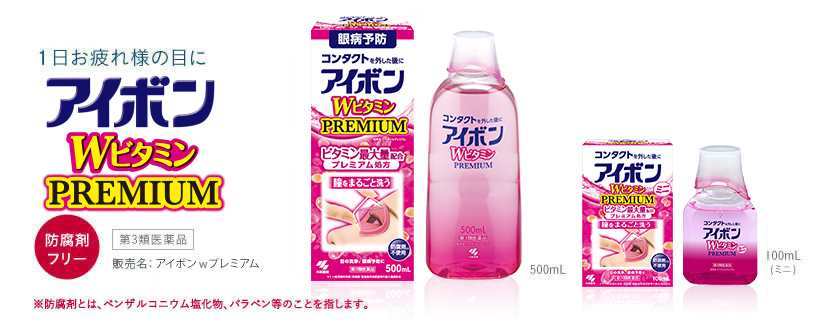
| W Vitamin PREMIUM / アイボンWビタミン PREMIUM / pink | 3 | B6, B12, E and taurine; pink liquid | Compare the vitamin formula without assuming stronger effects |
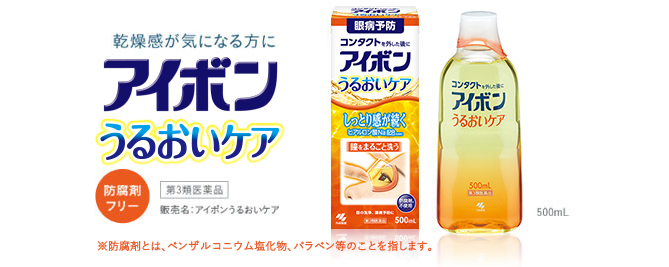
| Moisture Care / アイボンうるおいケア / orange | 2 | Sodium hyaluronate thickener; thicker liquid | Preference for a moist feel, not self-treatment of dry-eye disease |
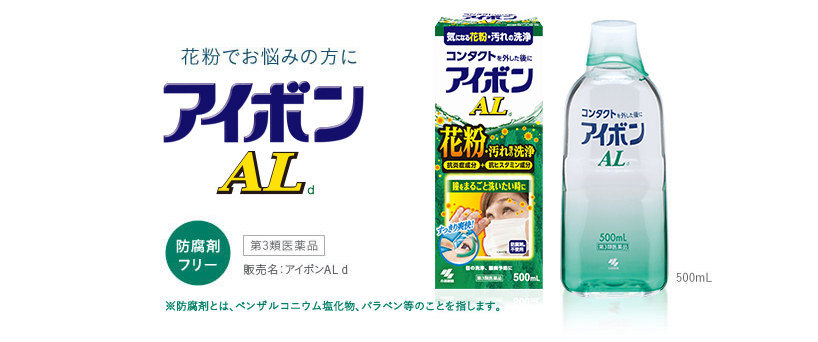
| AL / アイボンALd / dark green | 4 | Antihistamine and anti-inflammatory ingredients; pollen-washing positioning | Washing after pollen or dust enters the eyes |
The cooling number is the brand’s sensation scale, not an efficacy ranking. AL is not the only antihistamine-containing option: all five contain chlorpheniramine maleate. In the ingredient amounts below, B6 means pyridoxine hydrochloride, B12 means cyanocobalamin, and E means tocopherol acetate.
Mild and Cool differ by more than colour
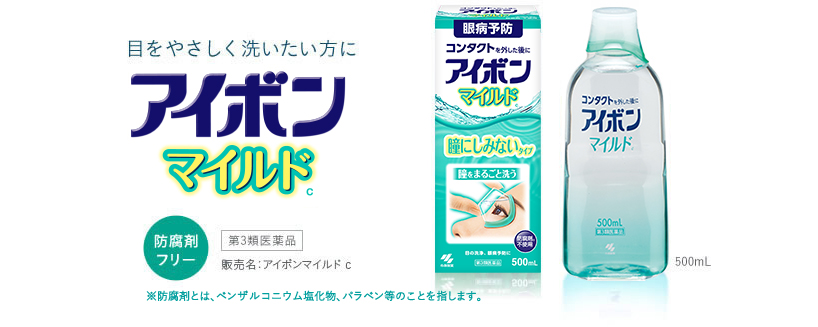
Mild’s registered product name is アイボンマイルドc, in 500mL. Per 100mL it contains epsilon-aminocaproic acid 100mg, chlorpheniramine maleate 2mg, vitamin B6 10mg and chondroitin sulfate sodium 40mg. It has no cooling ingredients, making it a starting point when you dislike that sensation.
Cool’s registered name is アイボンクールc, in 500mL. Per 100mL it contains epsilon-aminocaproic acid 200mg, dipotassium glycyrrhizinate 10mg, chlorpheniramine maleate 3mg, B6 10mg, E 5mg and chondroitin sulfate sodium 40mg. It is a different formula, not simply Mild with mint added.
Pink W Vitamin and orange Moisture Care: a label is not a diagnosis
アイボンWビタミン PREMIUM (registered name アイボンwプレミアム) comes in 500mL and a 100mL mini bottle. Per 100mL it contains dipotassium glycyrrhizinate 25mg, chlorpheniramine maleate 3mg, B6 10mg, taurine 100mg, B12 1mg, E 2.5mg and chondroitin sulfate sodium 10mg. B12 gives the liquid its pink colour; pink is not an added sign of superior quality.
アイボンうるおいケア (Moisture Care), 500mL, contains berberine chloride hydrate 2.5mg, chlorpheniramine maleate 3mg, B6 10mg and chondroitin sulfate sodium 50mg per 100mL. Sodium hyaluronate is a thickener, not an active ingredient in that panel. Berberine gives the yellow colour. If you have diagnosed dry-eye disease, consult before use rather than changing treatment because the name says “moisture”.
AL: pollen-washing positioning, with the same basic restrictions
アイボンALd, 500mL, contains epsilon-aminocaproic acid 300mg, dipotassium glycyrrhizinate 25mg, chlorpheniramine maleate 3mg and chondroitin sulfate sodium 10mg per 100mL. The pack highlights washing away pollen and dirt, but eyewash cannot resolve every cause of red or itchy eyes.
Technique matters: never reuse the same liquid for both eyes
All five specify 5mL per wash, three to six times daily. These are product directions, not a daily cleaning target for everyone. Keep each wash under 30 seconds; do not extend it because you enjoy the cooling sensation.
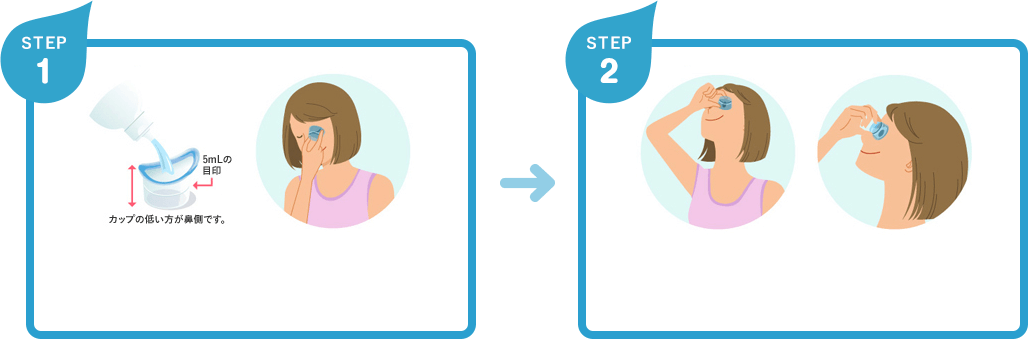
- Remove contact lenses and clean makeup and dirt from around the eyes. Do not wash with lenses in. Rinse the cup thoroughly with tap water before and after use, then allow it to air-dry.
- Fill to the cup’s 5mL line. Place the lower side towards the nose and fit the cup around the eye.
- Keeping the cup in place, tilt your head back so the liquid reaches the eye and blink several times. Keep the wash under 30 seconds.
- Discard the used liquid. Use a clean cup and fresh liquid for the other eye; never reuse the same liquid.
Wait about 10–15 minutes after washing before reinserting contact lenses. The official FAQ recommends washing first and waiting at least five minutes before eye drops if using both. Anyone receiving eye treatment should still consult their doctor or pharmacist first.
Use only as eyewash. Do not use it to soak, clean or disinfect contact lenses, or instil it like ordinary eye drops. Do not share the cup. Do not use cloudy liquid.
When should you consult first?
Consult before use if receiving medical treatment, with previous allergy to medicines or other substances, severe eye pain or diagnosed dry-eye disease. Persistent discomfort does not mean you have failed to wash thoroughly enough.
Stop immediately and consult with the box for rash, skin redness or itching, or eye redness, itching or swelling after use. Persistent or recurring eye symptoms also deserve assessment rather than repeated changes in cooling level.
Children need adult guidance and supervision. The official FAQ gives no ingredient-based age restriction, but notes that the cup’s size or shape may not fit children and recommends primary-school age, approximately seven and over, as a guide. This is not permission to wash any infant’s or toddler’s eyes.
Irene’s final reminder
If eyewash is appropriate, choose a tolerable sensation and verify the full name. If there is no need to wash, you may not need to buy one. Pain or persistent red eyes makes finding the cause more important than selecting a bottle.
All five are labelled free from preservatives such as benzalkonium chloride and parabens. Preservative-free does not guarantee no irritation or make sharing a cup or reusing liquid safe. Use within one month after opening and before the printed expiry, whichever comes first; this is a storage limit, not a daily-use recommendation. Write the opening date on the bottle. Keep the cap closed firmly, store in the box in a cool place away from direct light and children, and do not decant. Rinse pink or yellow liquid off clothing promptly with water.
Official sources
- Kobayashi: current Aibon range
- Mild / Cool / W Vitamin PREMIUM / Moisture Care / AL: directions and Japanese labels
- Official use instructions
- Children FAQ / Using eye drops FAQ