
I’m Irene, a Taiwan-born, Japan-licensed pharmacist working in a Japanese drugstore. Before choosing Lypo-C, I’d check three practical things: what comes out of the sachet, whether its taste suits you, and whether you already take vitamin C.
Sources checked: 19 October 2026. This guide uses manufacturer-published information for the new Japanese Lypo-C Vitamin C packaging; the box pictured contains 30 sachets.
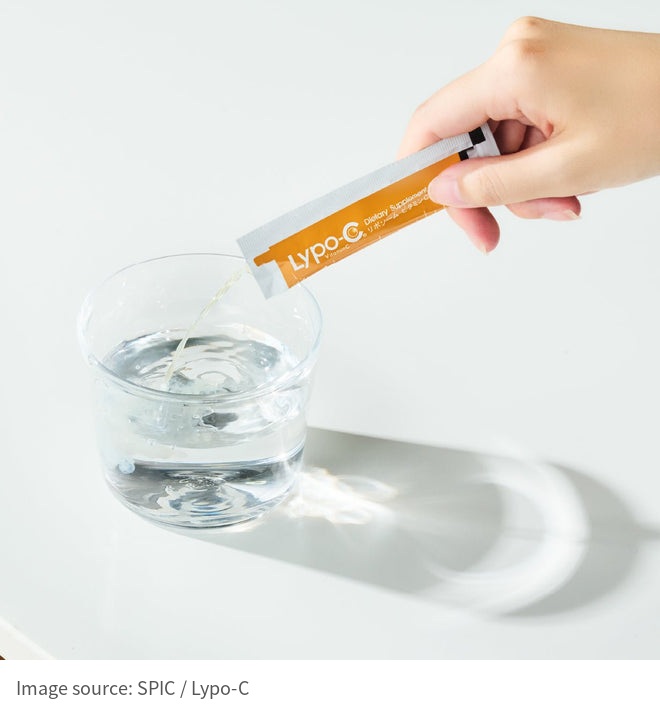
Lypo-C Vitamin C is a liquid food supplement with 1,000 mg vitamin C per sachet. The manufacturer describes a salty, seawater-like taste. You can take it directly or mix it with water or juice. Taste, storage and duplicate supplements are useful checks before buying.
What is inside the “capsule” box?
Look for “Lypo-C Vitamin C” and the Japanese name リポ・カプセル ビタミンC. “Capsule” refers to its microscopic liposomal structure. The sachet contains liquid, rather than hard capsules to swallow.
The Japanese product is labelled as a food containing vitamin C. It is not a medicine for treating illness. A liposomal delivery design does not by itself establish better skin, less fatigue or protection from colds. This guide does not turn absorption marketing into a promise of clinical benefits.
Expect a salty taste, rather than an orange flavour
SPIC says the product contains no added sweeteners, colours, flavourings or preservatives, and describes its taste as seawater-like. It attributes the saltiness to sodium used to stabilise the vitamin C and liposomes. This is the manufacturer’s description, not my own tasting experience. The orange packaging does not mean orange flavour.
If drinking a salty liquid sounds unappealing, consider whether you want to mix it with water or juice each time. For a swallow-with-water format, see the DHC vitamin C tablet and hard-capsule guide. Choose a format you can realistically use, rather than one that sounds fashionable.
Read “per sachet”: 6.2 g is the total weight
SPIC says old and new packaging may coexist during the transition. Nutritional analysis and allergen information have been updated, with no change to the formulation or quality. Check the box you are buying; the figures below use the manufacturer’s published new-package information.
Manufacturer-published new-package amounts, per 6.2 g sachet:
- Vitamin C: 1,000 mg
- Energy: 5.8 kcal
- Protein: 0.05 g; fat: 0.2 g; carbohydrate: 0.9 g
- Salt equivalent: 0.35 g
The 30-sachet box contains 186 g in total. The 6.2 g figure is not the vitamin C amount and should not be rewritten as 6.2 mL.
The Japanese shop lists vitamin C (manufactured in the UK), lecithin derived from soybeans, alcohol, sodium citrate and citric acid. It contains soy-derived ingredients and alcohol. Avoid it if you are allergic to soy. If you need to avoid alcohol completely, check suitability with the manufacturer; a small amount is not the same as zero.
“Salt equivalent” is not the weight of sodium itself. If you have been advised to restrict salt or sodium, include the 0.35 g per sachet in your review. Adding water changes the taste concentration, not the total vitamin C or salt in that sachet.
Mixing options to consider before buying
The manufacturer offers direct drinking or mixing with water or fruit juice. If the salty taste sounds unappealing, consider whether preparing a drink each time suits you before choosing the liquid format.
The current shop allows drinks at around 60°C and advises against mixing above 80°C. SPIC’s drinking guide also says to avoid black tea. Room-temperature water is easier to manage; do not use freshly boiled water.
Read the sachet count alongside your total intake
The current Japanese C-only shop suggests 1–3 sachets per day, but that does not mean everyone should routinely take several. Three sachets provide 3,000 mg vitamin C. NIH lists the tolerable upper intake level for US adults aged 19 and over as 2,000 mg per day in total from all sources, including food, drinks and supplements. This US reference is not a recommended intake, a universally safe dose or a global rule; children and teenagers have different limits. This guide does not recommend making multiple sachets a daily routine on your own.
Each sachet already contains 1,000 mg vitamin C. List your multivitamin, vitamin C tablets and fortified drinks to check for overlap. Do not add extra sachets because you slept badly, spent a day in the sun or want faster results. Too much vitamin C can cause diarrhoea, nausea and abdominal cramps; ask a doctor or pharmacist to assess your needs when appropriate.
Storage before opening
Keep it in a cool place away from direct sunlight, heat and humidity. SPIC says ordinary room-temperature storage is acceptable and recommends refrigeration if finishing the supply will take two or three months. Do not freeze it. A sunny hotel windowsill or hot car is not a suitable storage place.
Keep the box and sachets so you can check the best-before date, ingredients and exact product name. The storage information above applies to unopened sachets. Once opened, follow the handling instructions on your own packaging; do not apply the unopened shelf life to leftover liquid.
Who should check before using it?
- Taking medicines or receiving treatment: SPIC advises people prescribed medicine to consult their doctor. Include all supplements in that discussion, particularly during cancer treatment.
- Pregnancy, breastfeeding or buying for a child: ask a doctor or pharmacist first. This guide gives no children’s serving amount; do not transfer adult sachet counts or invent a “half-sachet child’s dose”.
- Kidney problems, a history of kidney stones or iron overload: seek individual advice before using high-dose vitamin C. These are nutritional risk checks, not a claim that the manufacturer lists every condition as a contraindication.
- Feeling unwell after taking it: stop and seek professional advice. Diarrhoea is not a reason to continue increasing the amount as a “detox”.
Can you simply switch to C+D?
Added vitamin D is not automatically an upgrade. C+D is a different formula requiring its own review of vitamin D intake and precautions, particularly if you already use vitamin D or a multivitamin. Do not apply this C-only sachet guidance to C+D or stack both products. This article covers C only and does not provide a C+D regimen.
Irene’s shopping check: photograph the full product name, per-sachet amounts, suggested daily serving and best-before date. Decide whether the salty liquid suits you, check for overlapping supplements, and plan where to store it before buying. The number of sachets in the box does not determine what you personally need.
Sources
- Lypo-C Japanese product information
- Manufacturer FAQ: old and new package nutrition
- Manufacturer’s 2026 packaging notice
- Manufacturer’s mixing and storage guide
- SPIC official Rakuten store: storage instructions
- NIH: vitamin C safety and medicine interactions
- NIH: kidney considerations and high-dose supplementation