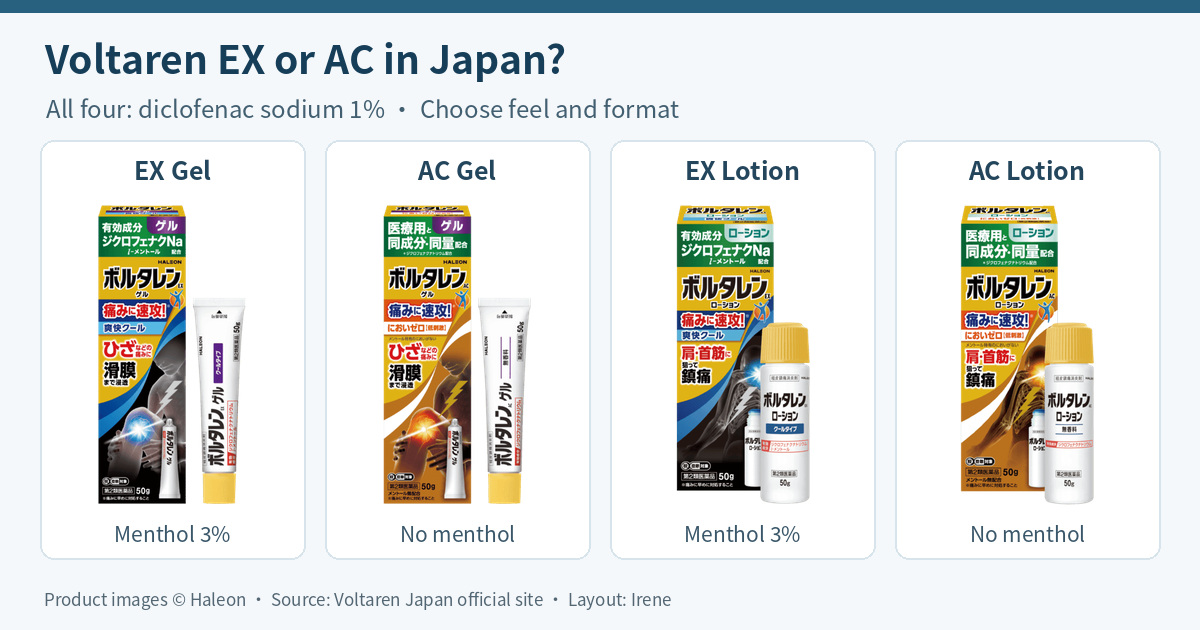
All four Japanese Voltaren products here contain diclofenac sodium 1%. EX adds l-menthol 3%; AC has no menthol. Start with whether you want a menthol cooling sensation and whether you prefer a gel tube or a sponge-applicator liquid. The letters EX and the strength of the cooling sensation do not establish a pain-relief ranking.

I’m Irene, a Taiwan-born pharmacist licensed in Japan, currently working in a Japanese drugstore. Let’s make these similar-looking boxes easier to recognise, starting with EX, AC and the Japanese words for gel and lotion.
- Prefer no menthol? Compare AC Gel and AC Lotion. The manufacturer presents AC as the less noticeable-smelling option. Menthol-free does not mean completely odourless, non-irritating or allergy-free.
- Prefer a cooling sensation? EX Gel and EX Lotion both add l-menthol 3%. Applying extra medicine to feel more cooling is not appropriate.
- Prefer to keep medicine off your hands? Lotion has a sponge applicator. Gel spreads easily by hand and lets you control where you apply it. Check the safety conditions before choosing either format.
Checked 18 October 2026. This guide covers the Japanese ボルタレンEXゲル, ACゲル, EXローション and ACローション, all Class 2 OTC medicines. It does not cover patches, spray or Voltaren sold in other countries. Japan’s OTC class is not a measure of pain-relief strength.
- Check whether you can use any of the four
- Match the complete name on the shelf
- Same diclofenac concentration, different feel and format
- How to apply them: three to four times a day
- What if you already use a patch or an oral painkiller?
- Stop and seek advice if there is no improvement after five to six days
- Official sources and image credits
Check whether you can use any of the four
Do not use any of these products if you are under 15, are pregnant or may be pregnant, have ever had asthma, or have had an allergic reaction to the product or its ingredients. The asthma restriction is not limited to asthma triggered by aspirin. Choosing menthol-free AC does not remove these restrictions.
Ask a doctor, pharmacist or registered OTC seller before use if you are receiving medical treatment, have had an allergic reaction to medicines or other substances, or are taking a new-quinolone antibacterial medicine, also called a fluoroquinolone. Tell them about any reaction to aspirin or another pain medicine rather than assuming a different brand will be safe.
Match the complete name on the shelf
ゲル means gel in a tube. ローション means the liquid medicine in a sponge-applicator bottle; it is not a moisturising body lotion. The photographs show 50 g packs. Pack size is not a single dose or a recommendation to finish a pack in a week.
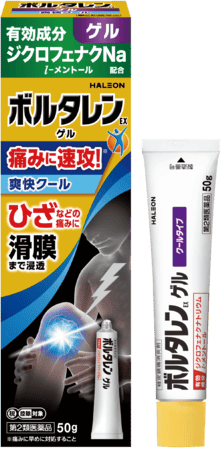
Look for EX, ゲル and the blue cooling label. Complete box and tube. Image: Haleon.
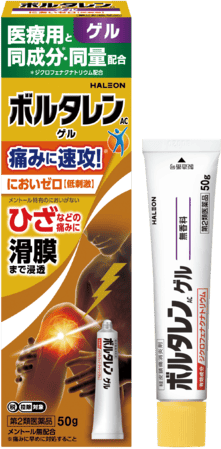
Look for AC and ゲル, rather than relying on the shared yellow brand panel. Complete box and tube. Image: Haleon.
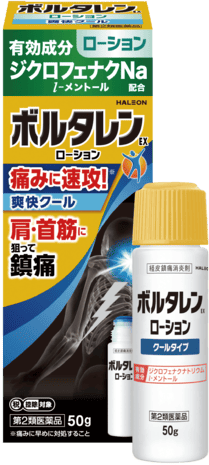
The cooling option in a sponge-applicator bottle. Complete box and bottle. Image: Haleon.
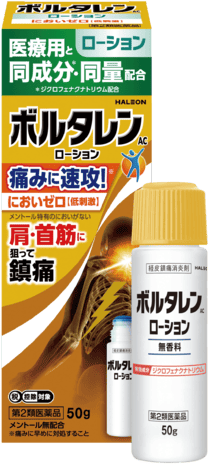
The menthol-free sponge-applicator option. Photographs are not to a common scale. Image: Haleon.
Same diclofenac concentration, different feel and format
These are the active ingredients in each 1 g of product, not instructions to apply 1 g each time. Diclofenac sodium is a non-steroidal anti-inflammatory drug, or NSAID. Menthol 3% does not mean an extra 3% diclofenac.
| Japanese product name | Active ingredients per 1 g | Feel and application |
|---|---|---|
| ボルタレンEXゲル EX Gel | Diclofenac sodium 10 mg (1%) l-menthol 30 mg (3%) | Menthol cooling; gel spread by hand |
| ボルタレンACゲル AC Gel | Diclofenac sodium 10 mg (1%) No menthol | Menthol-free; less noticeable smell; gel spread by hand |
| ボルタレンEXローション EX Lotion | Diclofenac sodium 10 mg (1%) l-menthol 30 mg (3%) | Menthol cooling; liquid applied with a sponge tip |
| ボルタレンACローション AC Lotion | Diclofenac sodium 10 mg (1%) No menthol | Menthol-free; less noticeable smell; liquid applied with a sponge tip |
All four have the same Japanese labelled uses: joint pain, lower-back pain, shoulder pain associated with stiffness, muscle pain, tendon-sheath inflammation involving hand or wrist pain, elbow pain such as tennis elbow, bruises and sprains. A list of uses cannot diagnose the cause of your pain. These medicines relieve symptoms such as pain and swelling; they do not treat the underlying disease.
The gel spreads easily and dries quickly, with no need for repeated rubbing. The liquid is convenient for areas with hair, such as the outside of the neck. Neither should be applied to the scalp, face or underarms. These format differences do not establish that one provides faster or stronger pain relief for everyone.
How to apply them: three to four times a day
For people aged 15 and over who meet the conditions of use: apply an appropriate amount to the affected area three to four times daily. None of these four Japanese leaflets gives a fixed gram amount per application, a strip length or an area in square centimetres. Do not import a dosing card, fingertip-unit instruction or daily schedule from a different country’s Voltaren.
- Check the skin first. External use only; do not swallow. Avoid the eye area, mucous membranes, delicate areas such as the face, scalp and underarms, eczema, irritated or damaged skin, wounds, fungal infections such as athlete’s foot, and infected areas producing pus.
- Gel: spread an appropriate amount without repeatedly rubbing it in. The manufacturer warns that repeated rubbing can make it pill or flake. Wash your hands afterwards.
- Lotion: gently press the sponge to wet it thoroughly before applying. The official FAQ adds two to three passes over the area per application. These passes belong to one application, not extra daily applications.
- Leave the area breathable. Do not seal it under plastic film or a poorly breathable support belt. Do not layer another topical medicine on the treated area.
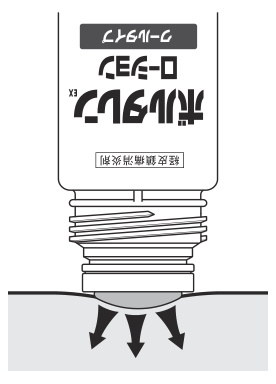
The Japanese leaflets list a 50 g weekly limit. Follow the leaflet supplied with your own pack; do not treat 50 g as a target or keep applying until a bottle is empty. If your intended use would bring you close to that amount, ask a pharmacist before continuing. Do not increase the amount to cover very large areas, treat many areas at once or increase cooling.
What if you already use a patch or an oral painkiller?
Do not use other topical pain-relief/anti-inflammatory medicines while using any of these four products. This includes medicated pain patches, gels, liquids and sticks, not just another Voltaren product. The leaflets also prohibit another topical medicine on the same treated area and another topical product containing diclofenac.
Oral medicines have a separate consultation instruction. The manufacturer’s FAQ says to ask a doctor, pharmacist or registered OTC seller before use if you are using other medicines, including aspirin or another NSAID. It does not say that every oral medicine is automatically prohibited, and it does not establish that adding a topical NSAID is always safe. Show your medicine list or packs before combining treatments.
To identify a twist-up product you already have, see the ZENOL Diclo Direct R, Xum SX and Tick E comparison. For curved-neck bottles, see Ammeltz A, EX, NEO and Ladyna. These guides help identify ingredients; they are not a suggestion to use the products together.
Stop and seek advice if there is no improvement after five to six days
All four leaflets prohibit continuous long-term use and say to use the medicine only while symptoms are present. If symptoms have not improved after five to six days, stop and consult a doctor, pharmacist or registered OTC seller, taking the leaflet with you. This is not a course that must be completed for six days. Worsening or repeatedly returning pain needs reassessment sooner.
Stop immediately and seek advice for a new rash, redness, itching, dermatitis, swelling, pain, irritation, heat, rough or peeling skin, blisters or pigmentation changes during or after use. Seek immediate medical care for severe itchy dermatitis, extensive blistering, white patches, or reactions that appear or worsen after sunlight. Sudden hives, hoarseness, breathing difficulty, palpitations or altered consciousness also need immediate medical care.
If medicine gets in your eyes, rinse immediately with water or lukewarm water; see an eye doctor if symptoms are severe. Close the container tightly and store it somewhere cool, out of direct sunlight and children’s reach, away from flames. Do not transfer it to another container. Avoid contact with synthetic resins, painted surfaces and metals, which it may damage. Do not use after expiry; use promptly after opening as instructed.
A practical order is: check safety, choose menthol or no menthol, then choose tube or sponge tip. AC still contains the same diclofenac concentration, and EX’s cooling sensation is not a reason to apply extra. The useful choice is the format you can use correctly, with the limits and stopping point in mind.
Official sources and image credits
- Voltaren Japan: current product range
- Gel products and official FAQs
- Lotion products, applicator use and official FAQs
- Voltaren EX Gel: current Japanese leaflet (2 pages)
- Voltaren AC Gel: current Japanese leaflet (2 pages)
- Voltaren EX Lotion: current Japanese leaflet (2 pages)
- Voltaren AC Lotion: current Japanese leaflet (2 pages)
Package photographs: Haleon’s Voltaren Japan website. Applicator illustration: page 2 of the Japanese EX Lotion leaflet. This guide uses Japanese product information; Voltaren sold elsewhere may have different strengths and directions.