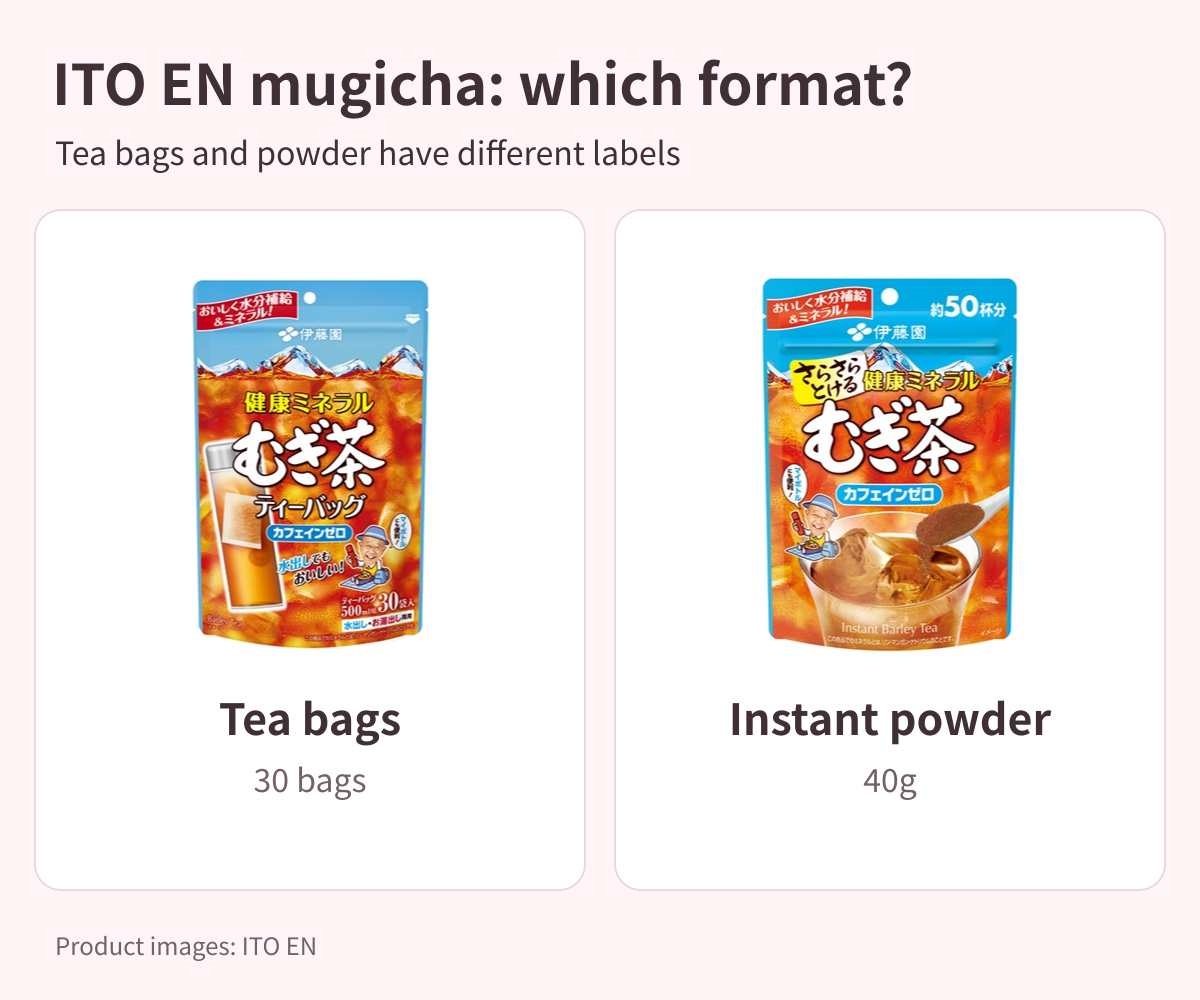
Start with the format when buying ITO EN mugicha in Japan. “ティーバッグ” means tea bags to steep; “さらさらとける” identifies the instant powder compared here. The same Mineral Mugicha branding does not give both products identical nutrition or storage instructions.

I’m Irene, a Taiwan-born, Japan-licensed pharmacist working in a Japanese drugstore. This guide explains Japanese official product labels; it is not a personal taste test.
Official information checked October 22, 2026. Scope: Japanese Kenko Mineral Mugicha 30 tea bags and Sarasara Tokeru Kenko Mineral Mugicha 40g bagged powder only. Bottled drinks, individual sticks, black-soybean tea and the separate Kaori Kaoru range are excluded.
Choose around preparation and the amount you need
30 tea bags: for planning ahead
Look for ティーバッグ. This product can be steeped in water or hot water, leaving a tea bag to remove and discard. It is a format to consider when preparing tea ahead for a household. Use the water quantity and method on your particular pack.
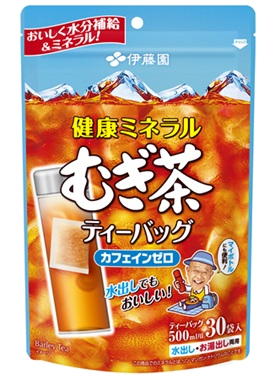
Identification: JAN 4901085196885. Matching the brand artwork alone is not enough to borrow another barley tea’s brewing directions.
40g instant powder: for a cup when you want it
This さらさらとける product dissolves in water or hot water. You can make a single cup without waiting for a tea bag to steep or disposing of one. “40g” describes the powder in the whole bag, not 40 cups or a single serving.
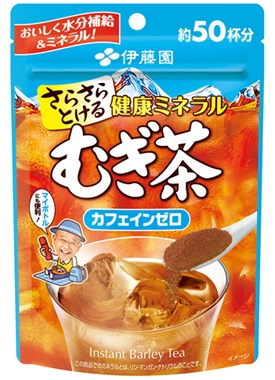
Identification: JAN 4901085168516. This is the 40g bagged powder, not an individual-stick product with a one-stick serving.
Before comparing 0 and 3 calories, check the serving basis
The official panels use different units:
- 30 tea bags: 0kcal, 0g carbohydrate and 0mg caffeine per 100mL of brewed extract. These figures describe tea measured under the stated testing conditions, not the dry bag.
- 40g instant powder: 3kcal, 0.7g carbohydrate and 0g caffeine per 0.8g serving of powder. This is the nutrition-panel serving; follow the pack for preparation.
“Per 100mL” is not automatically “per cup,” especially when your mug is a different size. Before comparing what you drink, identify the panel’s unit, the product amount used and how much you actually consume. Reading the denominator is more useful than finding the biggest zero on the packaging.
Zero caffeine does not mean zero calories
Both selected products carry official zero-caffeine information. However, ITO EN specifically excludes Sarasara Mineral Mugicha from the brand’s sugar-free and zero-calorie claims. The powder ingredients include barley, dextrin, drinking deep-sea water and vitamin C. Do not transfer an impression of bottled barley tea to the powder.
炭水化物 means carbohydrate; it should not simply be translated as sugar content. Read caffeine, energy and carbohydrate separately. The powder’s 3kcal does not by itself make it a worse choice. These are everyday drinks: this guide does not interpret the “mineral” branding as a disease-treatment claim or a substitute for an oral rehydration solution.
Storage: an opened dry pack or already-made tea?
Dry tea bags after opening
ITO EN’s general guidance for tea leaves and tea bags is to close the pack tightly and keep it in a cool, dark place away from sunlight, heat and humidity. For quality, aim to use it within about 1–1.5 months. The manufacturer does not recommend refrigerating opened dry tea, which can absorb moisture and odours.
Instant powder after opening
The Sarasara FAQ recommends closing the pack firmly and finishing it within approximately two weeks to one month, depending on storage conditions. This is guidance for the opened dry powder, not permission to store a prepared drink for that long. Consider how often you will use it before choosing a larger pack.
Tea already made with tea bags
ITO EN gives separate advice for prepared tea-bag tea: refrigerate it whether made with cold or hot water, and drink it promptly, preferably within 24 hours. A large jug is not necessarily convenient if the household will not finish it. That 24-hour advice concerns tea made with tea bags; it is not extended here into a storage guarantee for every instant drink. Prepare and store the powder product according to its own label.
A three-point shopping check
- Read the full name and format: 30 tea bags or a 40g bag of powder?
- Check the nutrition unit: 100mL of brewed extract or 0.8g of powder? Separate zero caffeine from zero energy.
- Plan how to finish the opened pack: will you prepare tea ahead for others or usually want just one cup? Dry-product storage and prepared-tea storage are different questions.
These checks offer a more useful choice than broad claims that tea bags are “more natural” or powder is “unhealthy.” Choose the format that fits your routine, then follow that product’s packaging.