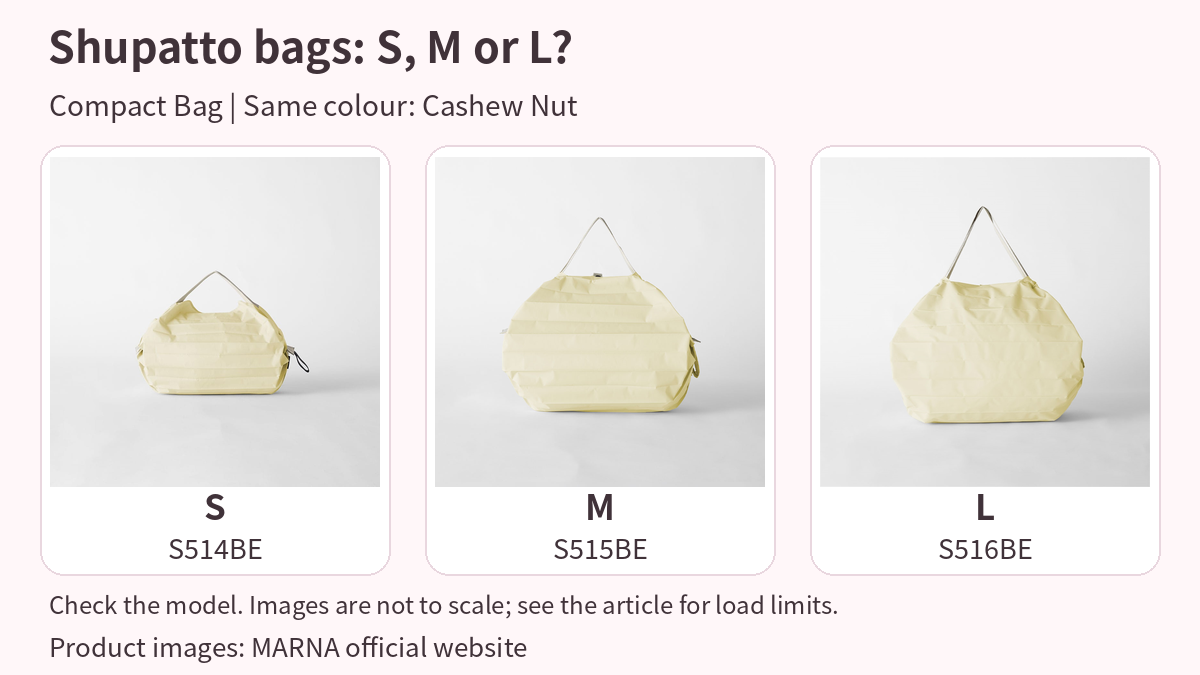
Choose a Shupatto bag for both what you will carry and how you will put it away. Volume and load capacity are different checks, and the rolled bags do not all use the same fastener. Match the three cashewnut models first, then see how the S’s elastic band differs from the button on M and L.

I’m Irene, a Taiwan-born pharmacist qualified in Japan.
Sources checked on 24 October 2026, Japan time. This guide explains product identification and labelled use for shopping in Japan; it is not a hands-on review, size measurement or load test.
Match the three cashewnut models, not just S, M or L
This comparison covers MARNA’s Shupatto コンパクトバッグ (Compact Bag) in the colour カシューナッツ (cashewnut): S514BE, S515BE and S516BE. Do not automatically apply the table to other colours, the recycled-material M, Drop, MINIMAL or other series. Match the full name, model code and JAN barcode together.
Match each cashewnut bag to its code, then check volume and weight
S: S514BE
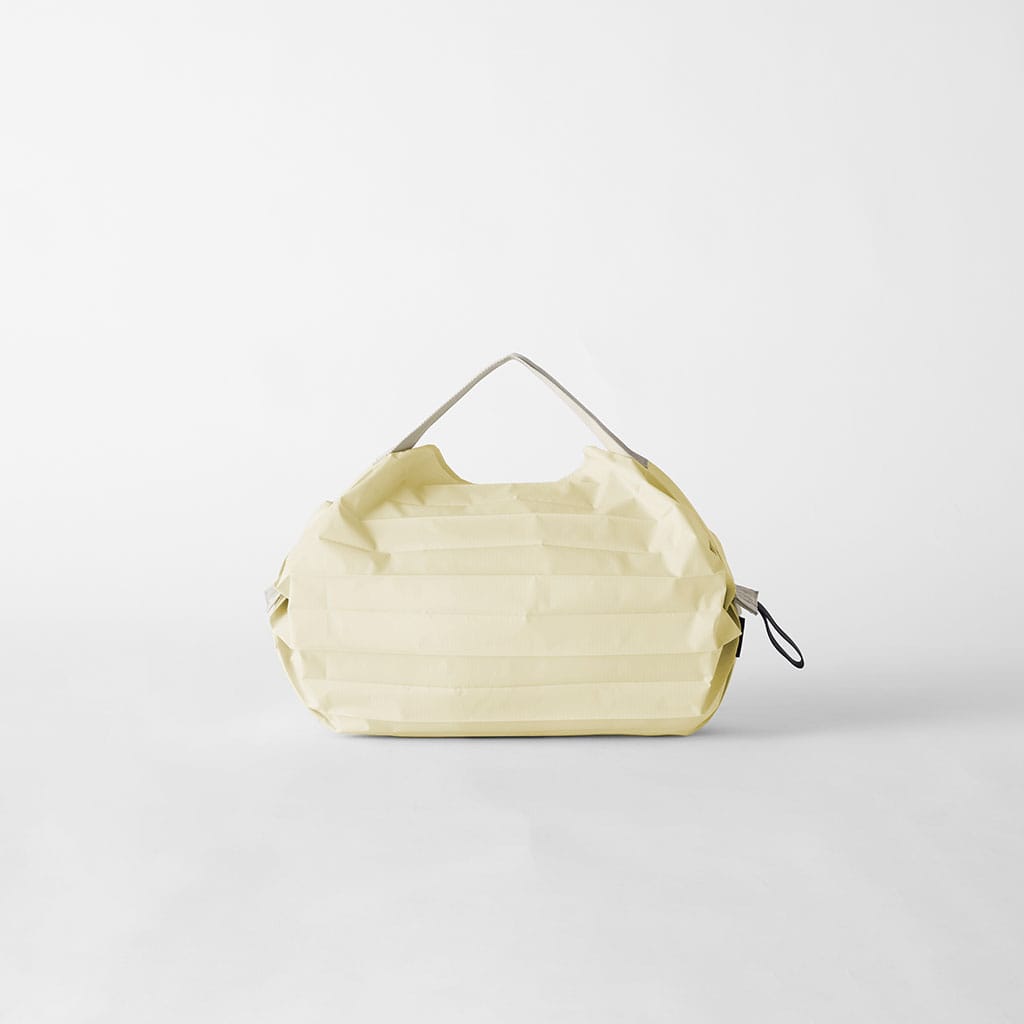
M: S515BE
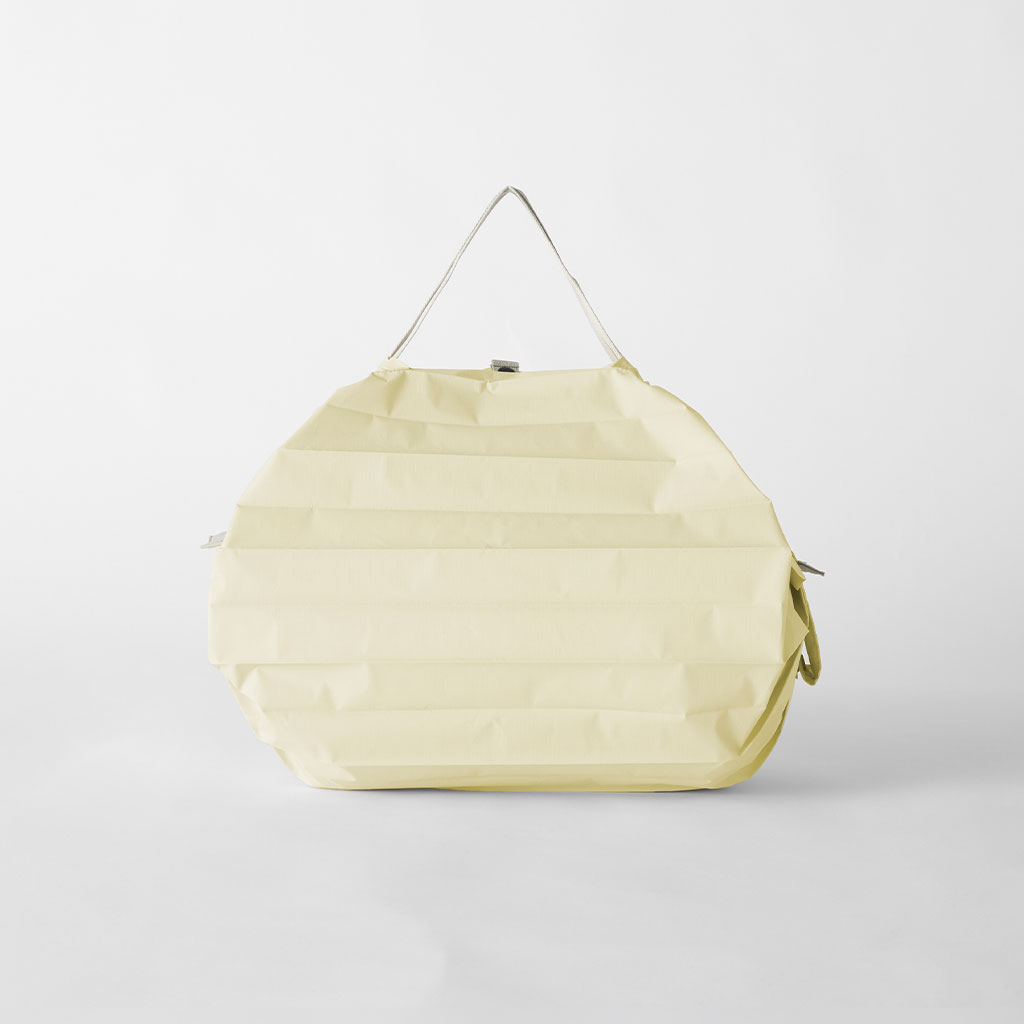
L: S516BE
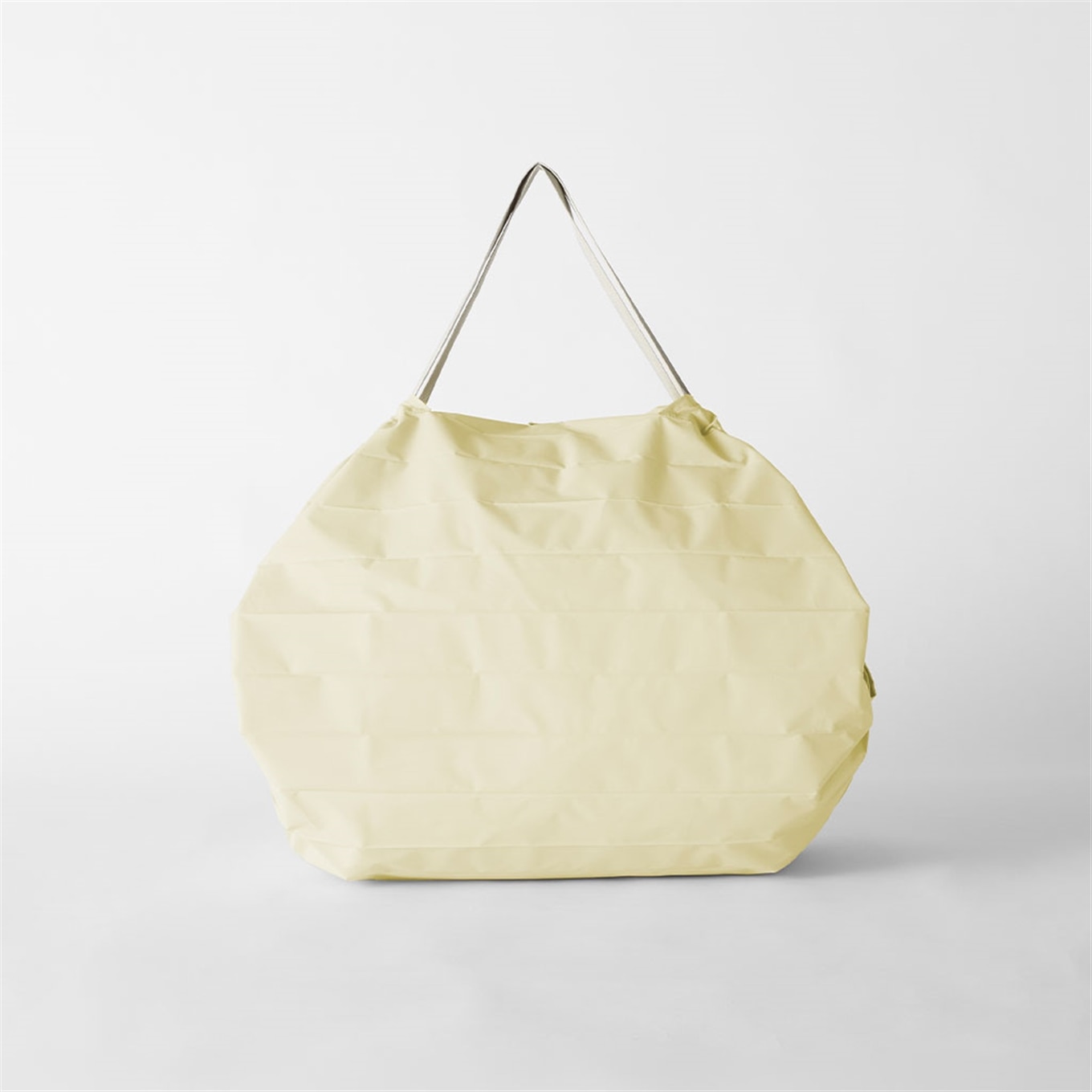
On a phone, scroll sideways inside the table. Dimension strings follow the selected official pages; they are not measurements inferred from photographs.
| Check | S | M | L |
|---|---|---|---|
| Model code | S514BE | S515BE | S516BE |
| JAN | 4976404013006 | 4976404013167 | 4976404013235 |
| Volume | Approx. 7.5 L | Approx. 15 L | Approx. 40 L |
| Stated load limit | 3 kg | 5 kg | 15 kg |
| Dimensions in use Maker’s original order | Approx. 30 × 26 cm | Approx. 35 × 30 cm | Approx. 50 × 40 cm |
| Folded dimensions Maker’s original order | Approx. 4 × 6 × 4 cm | Approx. 6 × 8 × 6 cm | Approx. 6.5 × 10 × 6.5 cm |
| Fastener after rolling | Elastic band | Button | Button |
All three pages list polyester and China as the country of manufacture: a Japanese brand does not mean made in Japan. The in-use dimensions are examples; the bag changes shape with its contents. Do not treat figures such as 30 × 26 cm as fixed internal dimensions of a rectangular container.
Enough space does not necessarily mean a suitable weight
With Shupatto S, M and L bags, check volume and load capacity separately. The three models here hold approximately 7.5, 15 and 40 litres, while their stated load limits are 3, 5 and 15 kg. Litres are not a direct conversion into kilograms.
Litres measure volume; kilograms measure mass. Items that fit inside may still exceed the stated load limit. Equally, being light does not guarantee an item’s shape will fit. Check volume, shape and total weight separately rather than reading “40 L” as “40 kg”. This is a way to interpret the specifications, not an additional load test.
The maker’s load limit is not a recommendation that everyone should carry that weight comfortably. When shopping while travelling, also consider whether you can hold the bag securely and the journey ahead. These dimensions and volumes are not an airline’s cabin-baggage rules and do not guarantee acceptance on a flight.
Roll and secure: an elastic band for S, a button for M and L
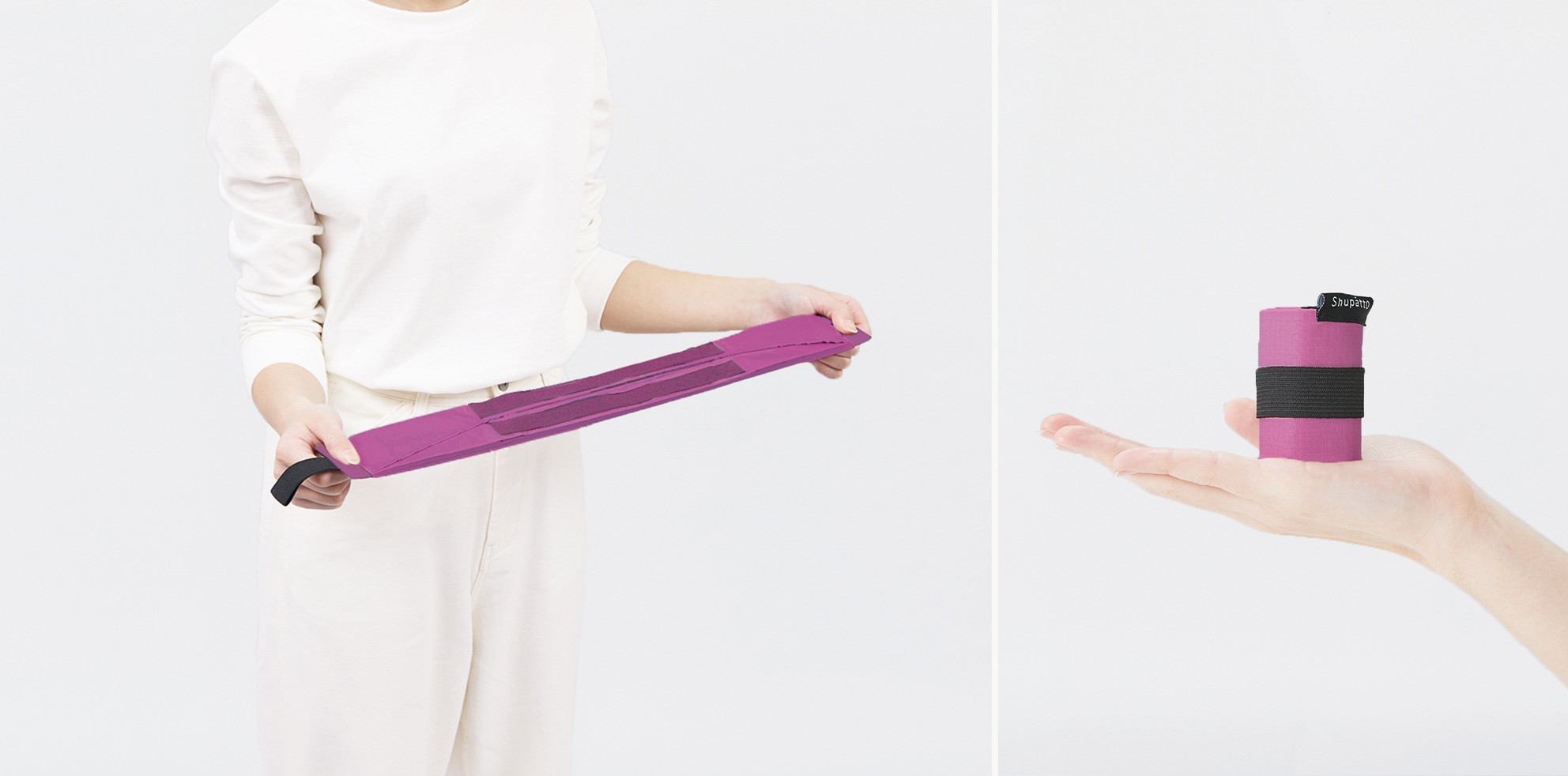
All three selected product pages link directly to the same official manual. Its folding sequence is to hold and pull the tapes at both ends into a strip, fold in half twice, then roll. Secure the S with its elastic band; fasten the button on M or L. The manual also includes a recycled-material M, but that row is not used for the materials of these three models.
Finishing the S: secure the roll with the elastic band
Finishing M and L: fasten the button (L shown)
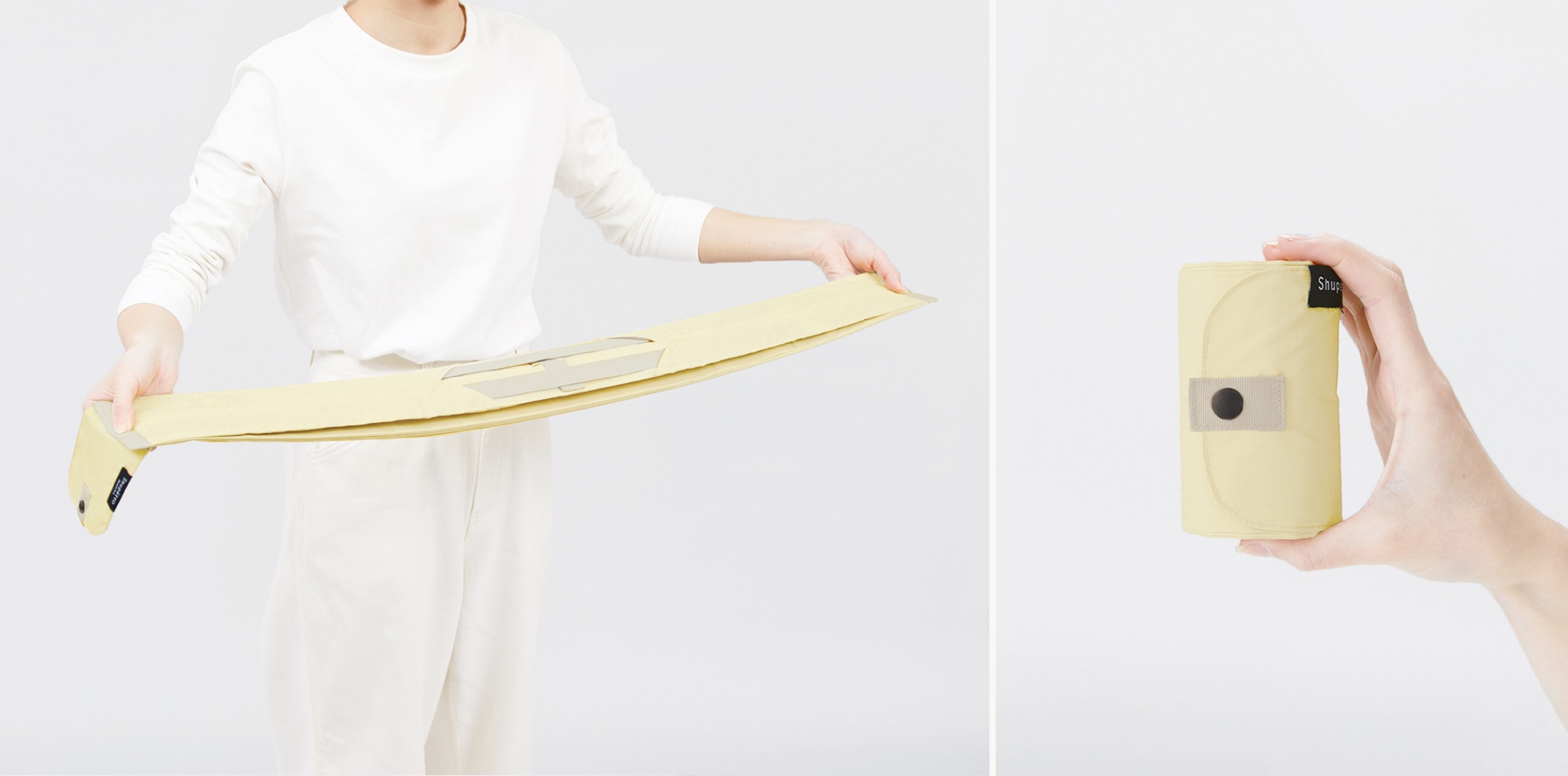
The M and L pages also describe a button at the bag opening to help reduce contents falling out. That is not a seal or a guarantee that nothing can fall out. The L is described as a large size that can be fitted over a shopping basket; this does not establish compatibility with every basket in every shop. Check the actual situation in which you plan to use it.
Check your own model’s care label before washing
The following summarises the shared precautions on these three selected current product pages and their linked manual. No physical packaging was obtained for this guide. If the code or supplied instructions on your own bag differ, check the complete label first rather than borrowing a washing programme from another colour or an older model page.
- Fold promptly after use. If the pleats do not sit neatly, straighten them along their existing lines before folding.
- Put the bag in a laundry net and wash it separately with a gentle water flow.
- Do not use chlorine bleach, fabric softener, a tumble dryer or an iron.
- Do not soak the bag.
- After washing, reshape along the pleats and dry flat in a well-ventilated, shaded place.
- Do not let children use the bag on their own.
- Do not leave it hanging for a long time while loaded with heavy items.
- Sharp objects or dragging the bag may damage it.
- Colour may come off during initial use or when wet items are put directly inside; take care.
- Do not use the bag for purposes other than its intended use.
My buying sequence: contents, specifications, then carrying and care
- Start with what you will carry. Bulk and weight are different issues; check both.
- Match the code and dimensions. Use the full name, cashewnut model code and JAN to identify the table’s model, not just its picture or S/M/L label.
- Check carrying and care. Consider the rolled size, elastic-band or button fastening and whether you can follow the washing instructions. This is not a “bigger is better” or cleaning-performance ranking.
The key check: keep volume separate from load capacity, and match the model to your actual use. Check that your contents fit, stay within the stated load limit and can be held securely before deciding on S, M or L.
Image source and rights holder: MARNA Inc. The cover and article’s three cashewnut product photos correspond to S514BE, S515BE and S516BE on the first three product pages below, in that order. Photos are not to scale. The S elastic-band demonstration comes from source 1; the L button demonstration comes from source 3. These demonstration photos are not colour or JAN identification references. The full folding sequence and precautions are in source 4, the manual directly linked by all three current product pages.