Saw Japan’s white Gekiochi-kun sponge and thought of your bathroom mirror or tap? Check the finish before you buy or scrub. This guide helps you rule out unsuitable surfaces and dirt first, then use S-691 gently only where appropriate. Its melamine foam wears away as you rub; a familiar material name is not a guarantee against scratches. If you cannot establish the finish, do not use it.
I’m Irene, a Taiwan-born pharmacist qualified in Japan. This guide explains S-691, JAN 4903320579101, using Japanese manufacturer information and package directions. It is not a hands-on cleaning test.
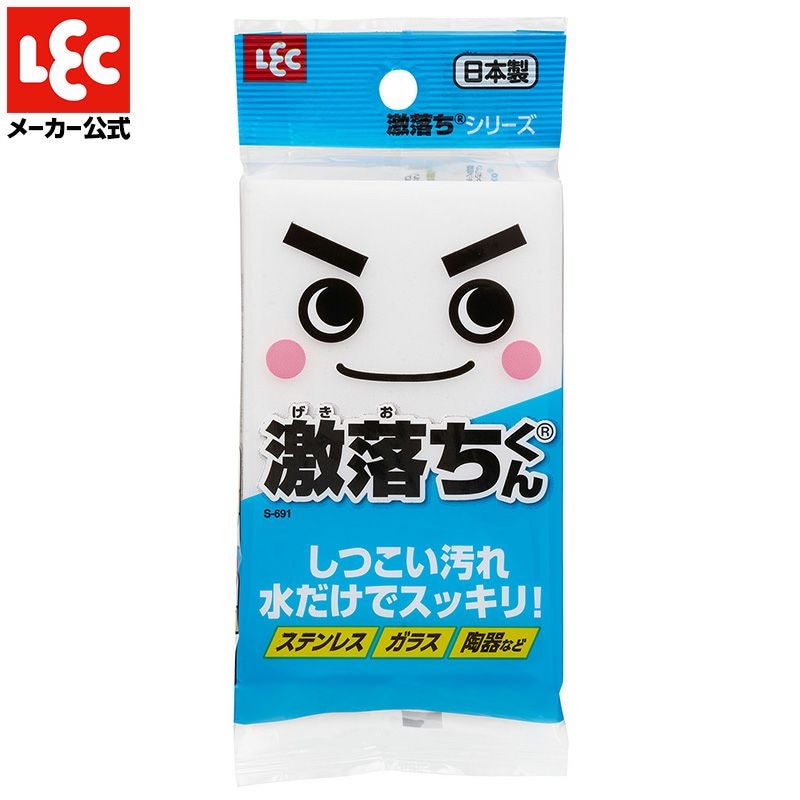
Cover identification photograph: LEC’s official product page. Image copyright and trademarks belong to LEC and their respective owners; the image does not imply endorsement of this article.
Check the finish, not just the material
Before you scrub: finish first, then dirt
Read the object’s care instructions and establish its surface finish. A familiar material name is not permission.
STOP · Unknown or prohibited
- Finish unknown, or the object’s care instructions rule it out.
- Paint, coating or stain-resistant treatment; an anti-fog or otherwise treated mirror.
- Glossy stainless steel or glossy plastic; an absorbent or uneven surface.
Do not use. A hidden-area test cannot turn an unknown or prohibited finish into an approved one.
CHECK · Only a suitable candidate
- Mirror: confirm that it is untreated.
- Stainless steel or plastic: confirm a non-glossy finish.
- Glass, ceramics or tiles: check care instructions and exclude prohibited paint, coatings and other treatments.
These conditions are not a scratch-free guarantee. Only a confirmed suitable surface can proceed to the wet, gentle hidden-area test below.
The gloss restriction above applies specifically to stainless steel and plastic, not automatically to every material. Untreated mirrors and suitable glass, ceramics and tiles remain conditional on the object’s care instructions and the absence of prohibited treatments. A bathroom mirror can look ordinary yet have a coating; “stainless steel” alone does not approve a tap.
Do not use it on lacquerware, wood flooring, car exteriors, precious metals, LCD screens, computers or smartphones. This guide also does not recommend it for electrical appliances. When finish information is missing, follow the object maker’s cleaning method rather than experimenting with a spot test or more pressure.
Buying it for hard limescale or mould? Choose a different approach
LEC says the three types of dirt in the decision card cannot be removed with this sponge. “Water only” does not mean every stain will come off. A suitable tile surface does not mean dirt inside its grout lines can be removed. Do not add other cleaners to increase the effect; this is not a mould-removal or disinfection product, and it does not guarantee limescale removal.
Once compatibility is confirmed: wet, rub lightly and remove residue
Confirmed suitable surface only: water → light rub → clear residue
First cut a manageable piece, taking care with scissors or a craft knife. Then use the four steps in order; the test in step 3 uses the wet sponge.
- Soak with water
Wet the sponge thoroughly. Do not start with dry rubbing.
- Squeeze gently
Reduce the water until it is no longer dripping.
- Test gently, then rub lightly
First try an inconspicuous area of the confirmed suitable surface. Stop if it scratches or changes; do not compensate with more pressure.
- Remove dirt and sponge particles
For suitable non-tableware surfaces, wipe away loosened dirt with a dry cloth or rinse thoroughly with water. Remove worn-off particles too.
TABLEWARE BRANCH · After use on compatible tableware, always rinse with water. Wiping alone is not enough.
Household surfaces only; never skin, teeth or other body parts. No bleach or mould-removal products, and no boiling-water disinfection.
Original schematic for S-691 / JAN 4903320579101, based on its package directions. It does not identify a coating from appearance or demonstrate cleaning results.
This is a consumable cleaner that wears down and sheds particles during use. A shrinking sponge has not simply “filled up with dirt”. Heavy pressure can tear it, and uneven surfaces can damage it. Keep worn-off pieces out of your mouth.
The same smiling face does not mean the same cleaner
This guide covers Gekiochi-kun S-691, melamine foam (メラミンフォーム), approximately 75 × 29 × 120 mm, made in Japan. Other products in the range use different ingredients or materials and serve different purposes. Do not transfer these directions based only on the face logo.
LEC’s Japanese online shop lists S-691. Matsukiyo Cocokara’s official store also lists an MK Gekiochi-kun product, but its JAN is 4903320800359, not the one covered here. That demonstrates a Japanese drugstore sales channel for the range, not S-691 stock at every branch or identical specifications for the two products.
LEC notes a packaging changeover: an older package may arrive, with the same sponge specifications. Still check the product name, model and restrictions on the pack you buy. This guide does not compare prices or claim the product is exclusive to Japan or necessarily cheaper there.
Suitable household surfaces only, never your body
Do not use it on skin, teeth or any other part of the body, or as a makeup sponge or beauty-tool cleaner. Prevent accidental swallowing and store it out of young children’s reach. LEC advises household gloves for sensitive skin or prolonged use.
Do not disinfect it with boiling water or use it with bleach or mould-removal products. Keep it away from flames. If you still have questions about an object’s material or finish, ask its maker before cleaning rather than testing with extra pressure.
Sources and scope
- LEC official shop: S-691 specifications, suitable and unsuitable surfaces, limitations and package-back directions
- Gekiochi-kun official brand page: product identification
Checked 27 October 2026 using public manufacturer information and package photographs. Scratching, cleaning performance and lifespan were not tested. Follow the current instructions for both your pack and the object you plan to clean.