Sources checked: 1 November 2026. This guide concerns carrying medicine and preventing packaging ingestion, not buying or taking a particular stomach medicine.
Only taking a few days of medicine on a trip? It may seem convenient to cut a blister sheet into individual pockets for a tiny bag. Do not cut PTP packaging into single-tablet pieces just to make it easier to carry. This is different from splitting a tablet: the risk here is swallowing the packaging along with the medicine.
If you have swallowed, or think you may have swallowed, medicine packaging, seek medical assessment immediately. Do not wait for pain. Do not try to remove it yourself with fingers or tools, which could injure your throat. The packing advice below is not a way to decide whether to watch and wait at home after swallowing packaging.
Recognise the packaging, not just the tablet
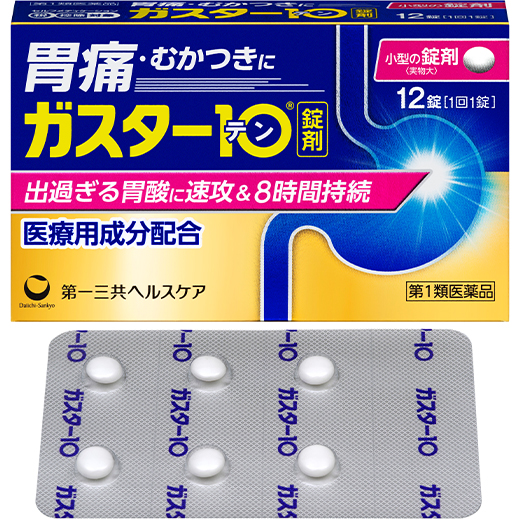
PTP is a sheet that encloses tablets or capsules in materials such as plastic and aluminium foil. Take the medicine after removing it as its instructions direct—not the small pocket around it. Opening methods can differ between products. This guide does not present one push-through technique as a universal method.
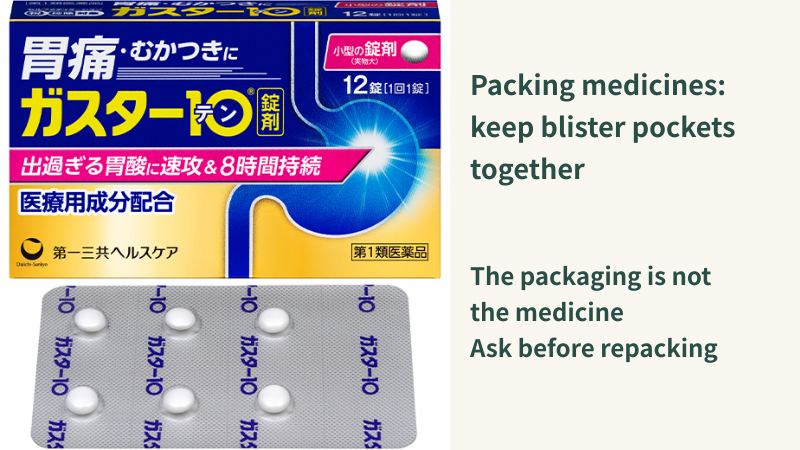
The official photograph below uses Japan’s standard Gaster 10 tablets to show a packaging example. It is not a recommendation to buy or take Gaster 10, nor does it identify the product as involved in an ingestion accident. A sheet shown in a photograph is not a dose.
Why making the sheet smaller can create a different risk
Japan’s National Consumer Affairs Center explains that cutting individual pockets creates small pieces that are easier to swallow accidentally. Their sharp cut corners can injure the body. This is not simply removing unnecessary packaging.
Some sheets deliberately have perforations in only one direction to reduce separation into individual pockets. Being physically able to cut a sheet does not make that a suitable packing method. This is not an instruction to alter individually packaged medicine already assessed and explained by your pharmacy. If you have received a single pocket or are unsure how to use it, check with the pharmacist who supplied it.
Is pushing everything out into a small box a better answer?
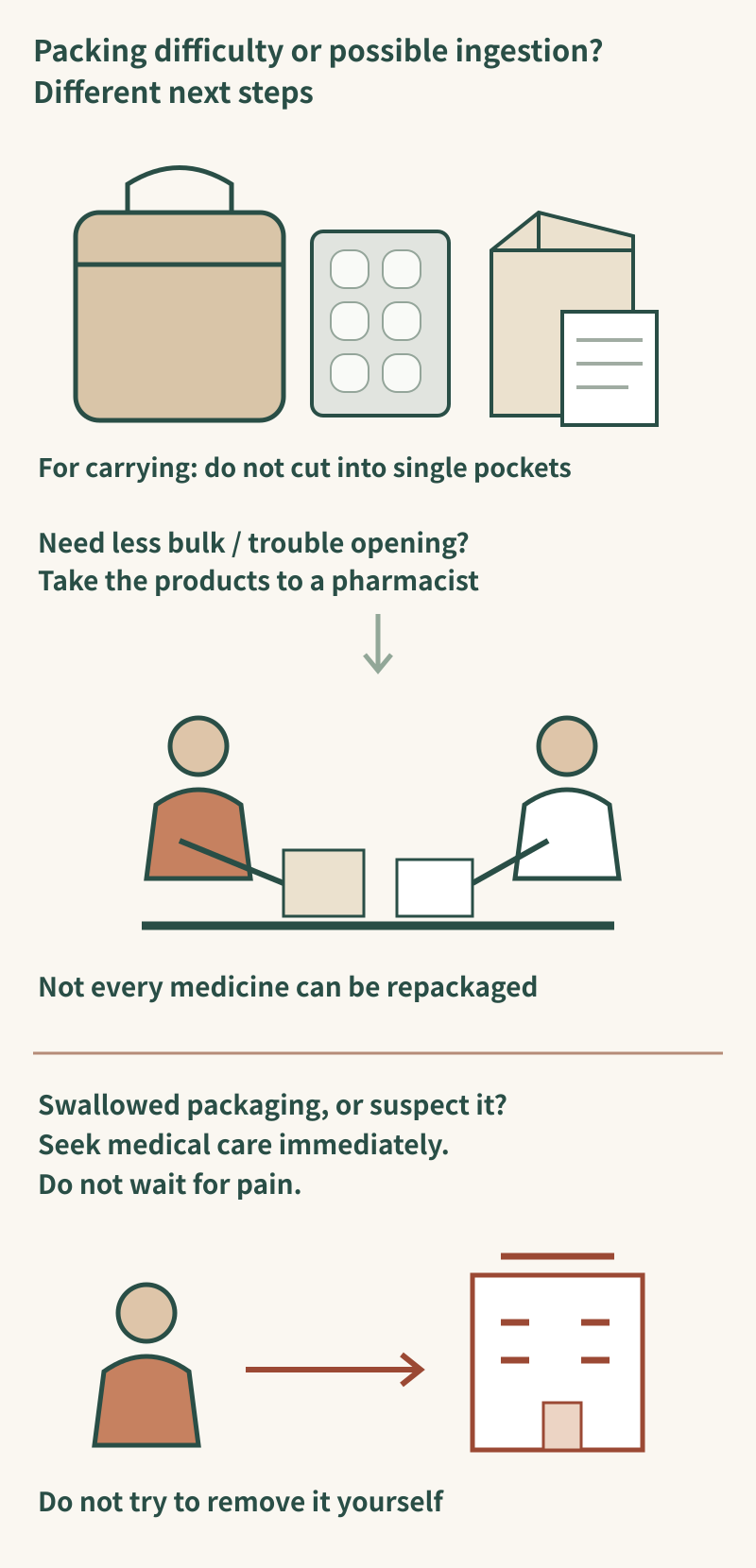
Do not treat that as a universal alternative either. Storage requirements differ, and some medicines are unsuitable for unit-dose repackaging. Packaging arranged after a pharmacist’s assessment is not the same as removing everything yourself, mixing medicines together or remembering them only by colour.
Take these three things to the pharmacy instead of asking only, “Can I cut this?”
- The actual products: the box, intact blister sheet, leaflet and your current dosing instructions—not just an unidentified loose tablet.
- Your practical need: how many days you will be away, and whether the problem is space, organising the medicine or difficulty removing it with your fingers.
- A request for an individual plan: ask what packaging this medicine should retain, whether pharmacy-arranged repackaging is suitable, and how to identify and store it. Suitability and available services vary; this is not a promise that every medicine or pharmacy can offer the same arrangement.
If the real problem is a large tablet that you want to halve, that requires a different check. See the pill-cutter and tablet-splitting consultation guide. Cutting packaging and splitting medicine are not interchangeable decisions.
Possible packaging ingestion changes the next step
You do not need to prove that you swallowed it before seeking help, and being pain-free for now is not a reason to wait. If you cannot clearly remember swallowing packaging but suspect it because of a foreign-body sensation or similar concern, seek medical assessment immediately. Do not try to retrieve it yourself. The consumer warning is about avoiding delay, not teaching you to predict whether packaging will pass through.
When helping a family member organise medicine, also check that packaging has been removed before it is taken. This is not only an issue for older people. This article does not cover customs, immigration or airline rules for carrying medicines: safe packaging and permission to cross a border are separate questions.
Official sources and photograph credit
- 2010 MHLW notices and National Consumer Affairs Center consumer report, hosted by PMDA
- PMDA patient alert: September 2015 warning about packaging ingestion
- Daiichi Sankyo Healthcare: standard Gaster 10 product photograph
These historical safety documents remain publicly available; they are not described here as newly revised notices from 2026.