Official device information and medicine-safety guidance checked: November 1, 2026. This is a pre-purchase consultation guide, not permission to split any particular tablet or a cutting tutorial.
A tablet feels too big to swallow, and a pill cutter on a Japanese pharmacy shelf looks like an easy answer. First separate three questions: Can the device cut it? May this medicine be split? Would the pieces provide your required dose? One answer does not settle the others.
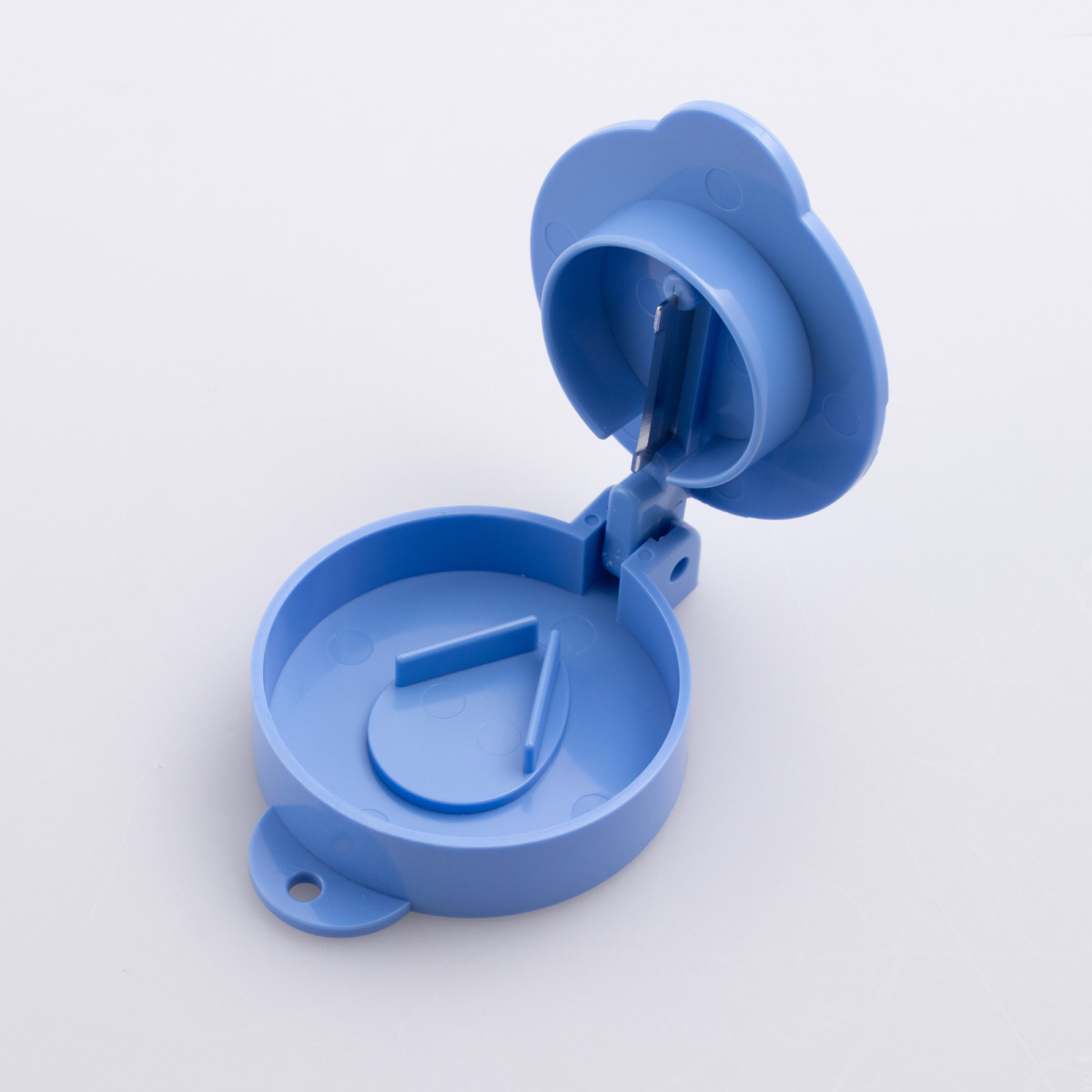
The object in the photo is a tool—not permission to split a medicine
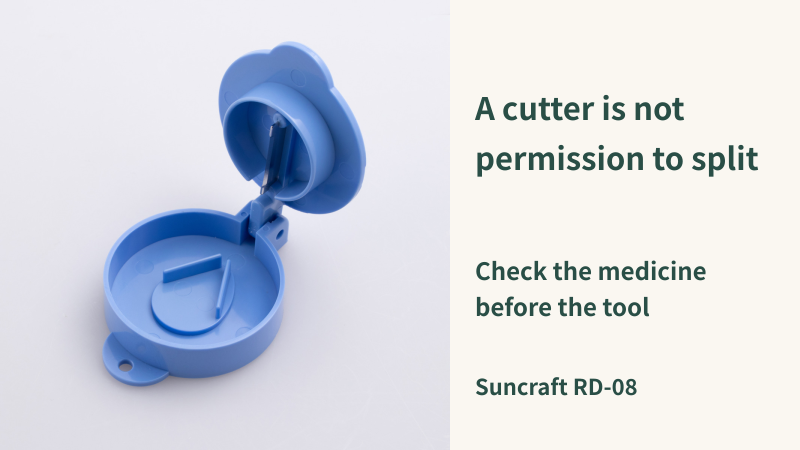
The official photograph shows Suncraft’s Japanese 錠剤カッター RD-08 as one example of a tablet cutter. It is not a medicine, and its presence here does not establish suitability for your tablets. This model lists a physical tablet diameter of about 5–15mm. Fitting inside the device is only a physical requirement. The empty cutter does not demonstrate how to cut any medicine. Individual pharmacy stock has not been checked.
Three checks—not “it has a line, so I can split it”
- Is the device suitable? Read that model’s restrictions, not just its capacity. The RD-08 manufacturer requires consultation with a doctor or pharmacist before use and excludes tablets requiring precise division.
- May this particular medicine be altered? Check the full product name, strength and current instructions. A score line, colour or size is not enough for a self-directed decision. A different brand or product needs a fresh check even if a previous one could be split.
- What dose do you actually need? Making a tablet easier to swallow is different from being prescribed half a tablet per dose. Two similar-looking pieces do not establish accurate drug amounts. Do not reduce your dose yourself or turn an adult medicine into a child’s dose by halving it.
Some medicines are designed to control when their ingredients are released; altering their form can change how they work. This does not mean every tablet must never be split, or that you can identify its formulation by sight. A doctor or pharmacist should assess the actual product and the person taking it. If you already have individual instructions to split a tablet, you can still show the proposed cutter and ask whether it is appropriate rather than changing the method yourself.
This cutter has its own exclusions, too
The RD-08 manufacturer excludes medicines whose action would be affected, capsules, coated tablets, three-layer tablets, enteric-coated tablets and tablets requiring precise division. It warns that some tablets may crumble and says to use the cutter immediately before taking the medicine. These are this model’s restrictions, not a universal suitability chart for every medicine or cutter. A tablet appearing absent from this list is not permission to cut it yourself.
Nor does a small compartment mean you should prepare a long-term supply of split tablets. Split tablets may be affected by moisture, heat and other conditions. Check whether splitting is appropriate, when it should be done and how the medicine should be stored. This article provides no knife, spoon or cutter instructions.
What to bring to the pharmacist
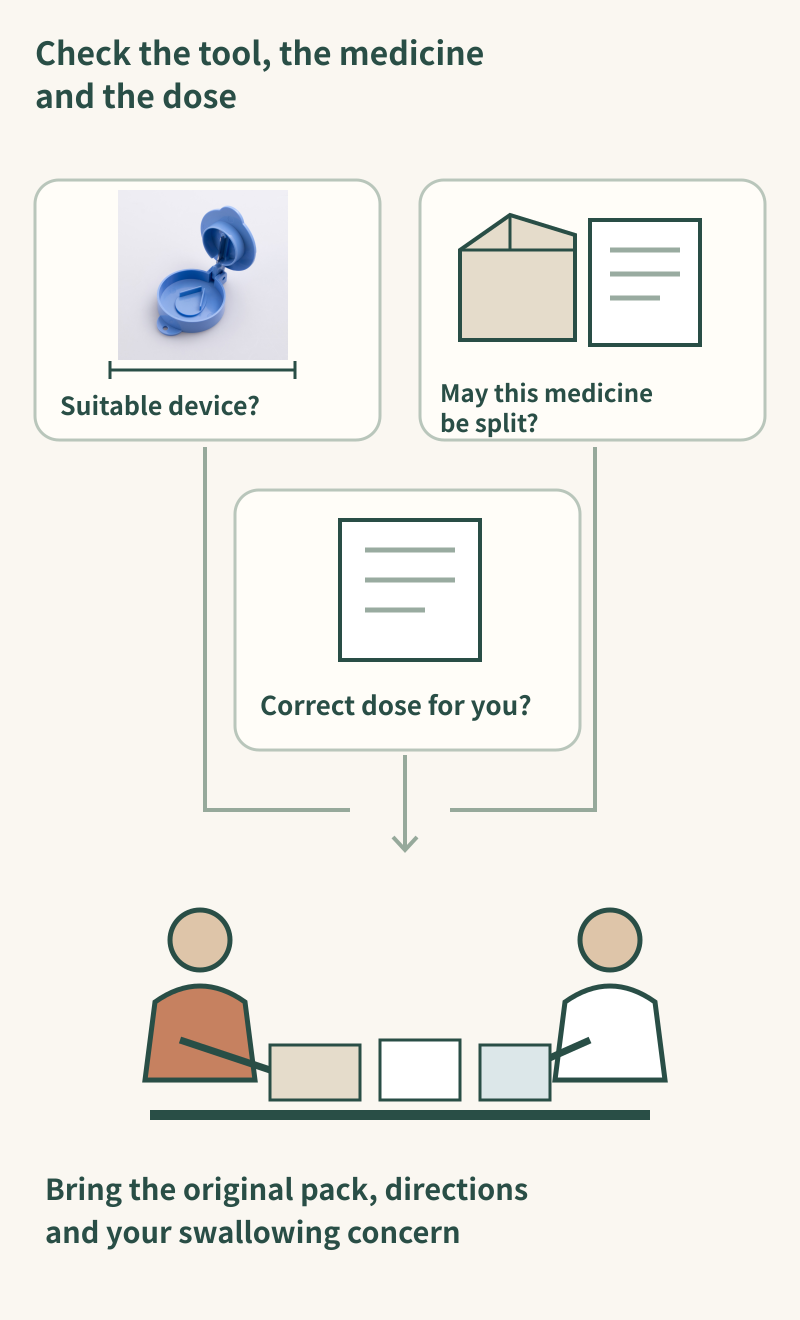
- The original medicine pack and instructions: full product name, strength, medicine label or prescribed directions. For an overseas medicine, bring the original pack or clear photographs—not just a translated brand name.
- Your reason for wanting to split it: is it too large, is only this tablet difficult, or have you been told to take half? Explain the current amount per dose and dosing schedule without recalculating them yourself.
- Who will take it and what is happening: age, whether food or water is also difficult to swallow, whether this is preventing timely doses, and other medicines being used.
- The proposed device: its exact model and warnings, so the pharmacist can check the tool as well as the medicine.
Ask whether another formulation or swallowing aid is appropriate. This does not promise that an equivalent liquid with the same ingredient and dose is available in Japan, or permit switching medicines yourself. If considering a swallowing jelly, the Japanese medicine-swallowing jelly guide explains its choices and limits; ask the pharmacist whether it suits your medicine. Jelly does not make an unsuitable medicine safe to crush.
Check the medicine before buying the tool; then check the method and dose. The aim is to solve a swallowing difficulty without accidentally changing treatment.