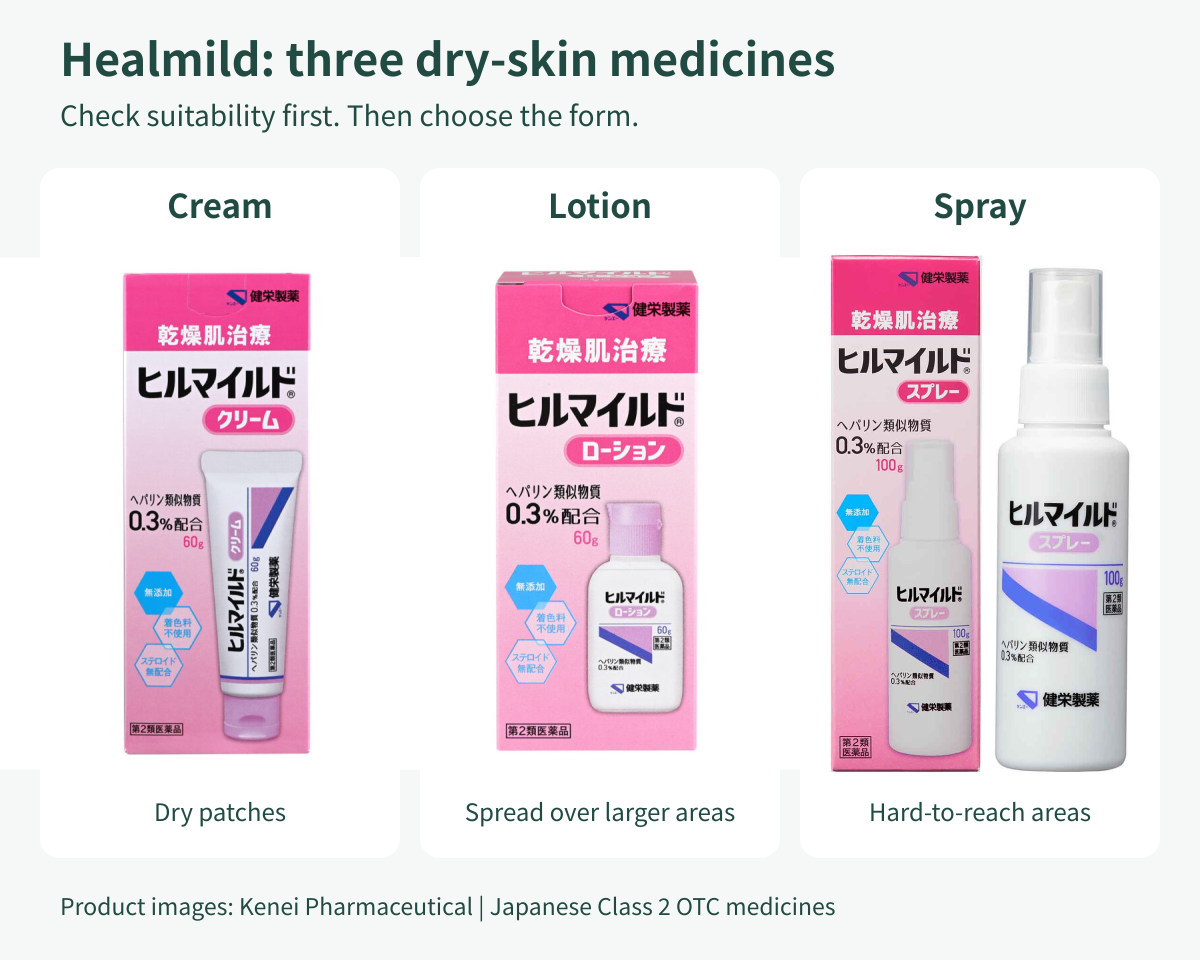
Healmild is not simply another body moisturiser. This guide compares three Japanese Class 2 OTC medicines: Cream, Lotion and Spray, each with 0.3% heparinoid. First check whether you can use the medicine. Then choose by how you want to apply it: to a small dry patch, across your arms or legs, or to a hard-to-reach area such as your back.

I’m Irene, a Taiwan-born, Japan-licensed pharmacist working in a Japanese drugstore. For these three, I separate the skin problem from the way you want to apply the medicine. Some situations need advice first, not just a different bottle.
Japanese product information checked: 20 October 2026. This guide covers ヒルマイルドクリーム, ヒルマイルドローション and ヒルマイルドスプレー. It does not extend their directions to H Cream, Foam or the Healmild Light skincare range.
- A dry-skin medicine, not the same as daily skincare
- Check these restrictions before choosing a bottle
- Cream, Lotion or Spray: application differs, not the 0.3% strength
- How to apply the three forms
- Facial dry skin is different from scars or fresh wounds
- When to stop instead of applying more
- A final shelf check
- Official Japanese sources
A dry-skin medicine, not the same as daily skincare
All three contain 0.3 g of heparinoid per 100 g. Their Japanese indications include dry skin, dry skin in children, rough hands, chapped or cracked hands and feet, and thickened skin on the elbows, knees, heels and ankles. The percentage does not tell you that a product suits everyone, and these are not direct substitutes for every anti-itch medicine.
Products labelled ライト / Light belong to a separate Japanese quasi-drug skincare range. The manufacturer describes its heparinoid concentration as 0.1% and its purpose as daily skincare. Do not mistake a Light toner or emulsion for the 0.3% medicines here. Healmild is also not the same brand as prescription Hirudoid: Kenei states that it has no affiliation with Maruho or its Hirudoid products.
Check these restrictions before choosing a bottle
- Do not use if you have a haemorrhagic blood disorder, such as haemophilia, thrombocytopenia or purpura, or if even slight bleeding could have serious consequences. Heparinoid can inhibit clotting and may promote bleeding.
- Ask a doctor, pharmacist or registered OTC medicine seller before use if you are receiving medical treatment, have had allergic symptoms caused by medicines or similar substances, or have severe weeping or eroded skin. An external medicine is not a reason to skip this check.
- Do not apply to the eyes, the area around the eyes or mucous membranes, including inside the mouth, nose or vagina. Suitability for facial dry skin does not make it an eye cream.
If you are unsure whether the problem is simple dryness, describe the skin and the medicines you use to a pharmacist rather than choosing whichever package looks strongest.
Cream, Lotion or Spray: application differs, not the 0.3% strength
Cream: a richer texture for careful application to dry patches
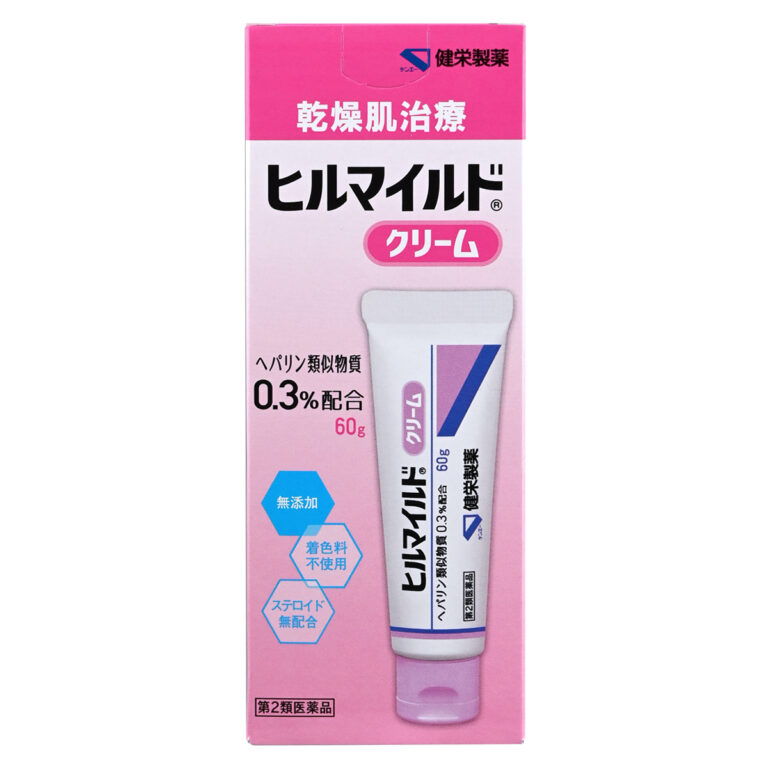
Japanese name: ヒルマイルドクリーム. Kenei describes this as a water-in-oil cream with a thicker consistency, suitable for areas such as the fingers or cheeks; it can also be spread over larger areas. Consider it if you prefer a richer cream texture. It does not contain more active ingredient than Lotion. The official range lists 30 g, 60 g and 100 g; pack size is not a strength ranking.
Lotion: a white emulsion that spreads across larger areas
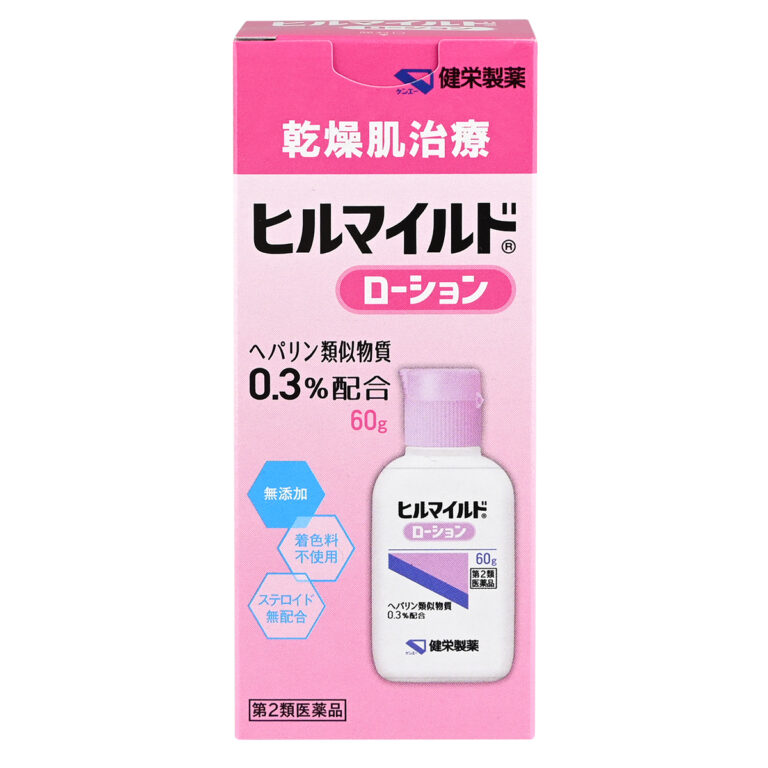
Japanese name: ヒルマイルドローション. Here, Lotion means a white emulsion, not a clear facial toner. The manufacturer describes it as lighter-feeling and easy to spread, making it a practical option for the arms or legs. Listed sizes are 30 g, 60 g and 120 g. It is worth comparing if you dislike a heavy cream feel, although texture preferences vary.
Spray: useful for the back, but never spray directly onto the face
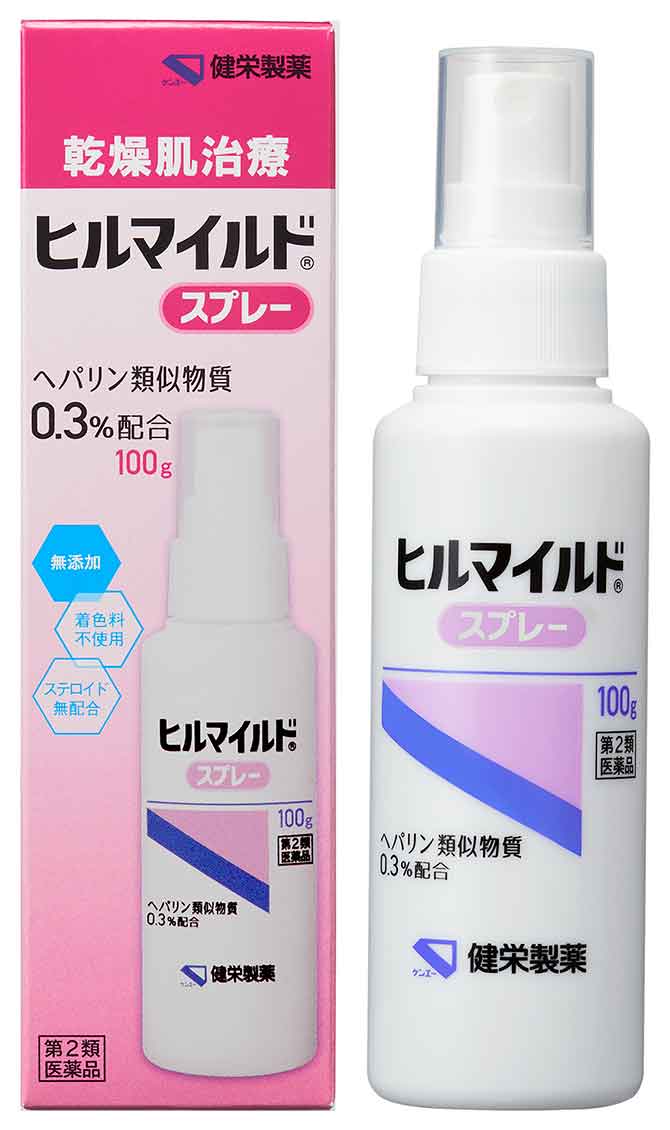
Japanese name: ヒルマイルドスプレー / 100 g. This is a liquid mist. Kenei says its pump works upside down, helping with areas that are difficult to reach. For the face, dispense a suitable amount into your hand first, then apply. Avoid inhaling the mist. A spray that reaches your back is not an all-purpose facial refreshing mist.
These texture and application descriptions come from the manufacturer, not my own product testing. The inactive ingredients differ. If you have ingredient allergies, check the complete list on your exact package rather than relying on the shared 0.3% figure. Product images: Kenei Pharmaceutical.
How to apply the three forms
- Cream and Lotion: apply a suitable amount to the affected area once to several times a day. Their directions also allow spreading the product onto gauze or similar material and applying it to the area.
- Spray: spray a suitable amount onto the affected area once to several times a day. For the face, put it into your hand first; do not spray directly onto the face or inhale it.
- For all three: use externally only and follow the labelled directions. Apply gently to clean skin, such as after washing or bathing, rather than rubbing vigorously. Children must use it under a parent’s guidance and supervision.
The three package instructions do not give a numerical minimum age, and the manufacturer says young children can use Healmild. That does not mean it suits every baby’s rash. Weeping, erosion or an uncertain skin problem needs professional advice rather than an assumption that it is dryness.
If it gets into the eyes: rinse immediately with water or lukewarm water. See an ophthalmologist if symptoms are severe.
Facial dry skin is different from scars or fresh wounds
The manufacturer permits use on facial dry skin, avoiding the eyes, eye area and mucous membranes. The complete labelled indications also include chilblains without erosion; hardened or tight skin after wounds or burns, excluding the face; and swelling, muscle pain or joint pain after bruises or sprains. Do not read “after wounds” as an instruction to treat a fresh wound, or extend that indication to facial acne scars, skin lightening or anti-ageing. This guide focuses on choosing a form for dry skin.
When to stop instead of applying more
Stop immediately and take the outer package to a doctor, pharmacist or registered OTC medicine seller if you develop a rash, redness, itching, swelling or purple skin spots; these may be adverse effects. Also stop and seek advice if there is no improvement after 5–6 days, even without those reactions. Switching repeatedly between forms is not a substitute for checking the cause.
Keep the container closed, in a cool, dry place away from direct sunlight and children. Do not transfer it into another container or use it after its expiry date. Keep the outer box for directions and consultations.
A final shelf check
- Match ヒルマイルド + the form name + 第2類医薬品, not the Light skincare range.
- Choose a form you can apply gently and comfortably, rather than the largest pack or a supposed strongest option.
- Check restrictions, resolve any need for advice before use, and remember the 5–6-day no-improvement stopping point.