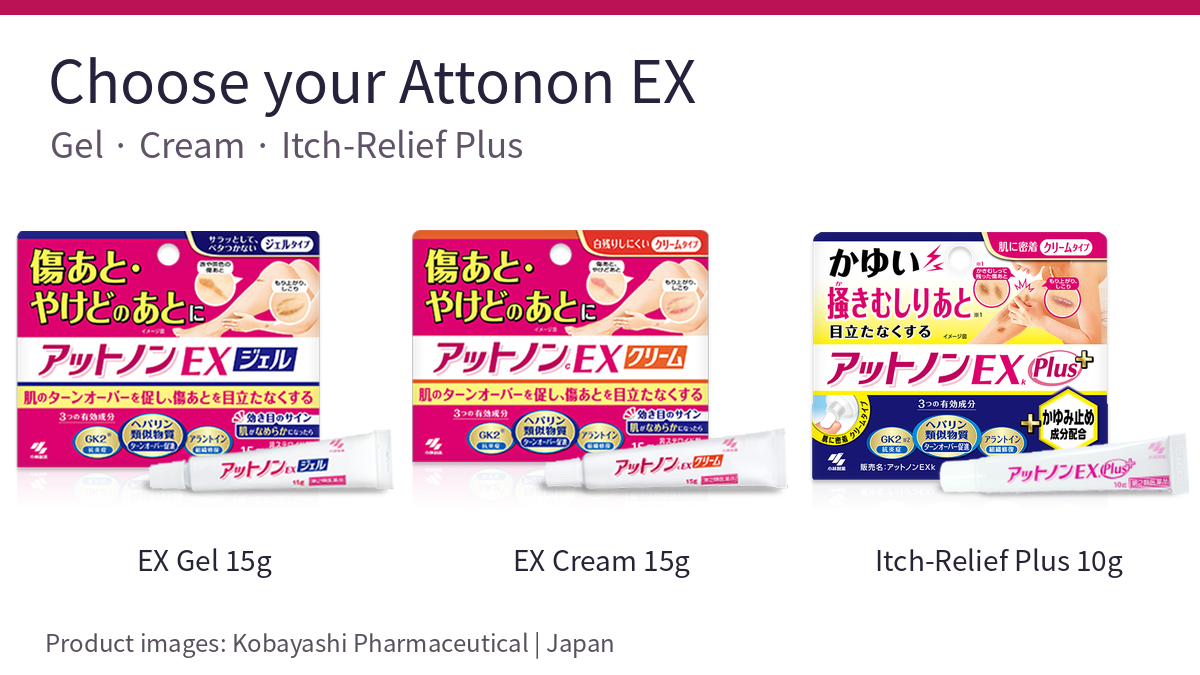
Looking at Attonon scar-care products in a Japanese drugstore? Start with whether the wound has fully healed and where the scar is. Then compare texture and whether you actually need the added itch-relief ingredient.
The scar indication for all three EX medicines covers lumps and tightness after wounds or burns, excluding the face. Do not start while the wound is bleeding, scabbed, weeping or covered only by a taut, thin pink skin film. People with blood disorders that cause bleeding, or for whom even minor bleeding could have serious consequences, must not use them. Keep them away from the eyes, the surrounding eye area and mucous membranes.

I’m Irene, a Taiwan-born, Japan-licensed pharmacist working in a Japanese drugstore. Let’s separate an active wound, a healed scar and a facial acne mark before choosing a box.
Sources checked: October 12, 2026. This guide covers products sold in Japan.
A short, safety-first shortlist
If the wound has fully healed and the restrictions above do not apply:
- Prefer a light, transparent texture? Compare Attonon EX Gel, 15g.
- Prefer a more moisturized cream feel? Compare Attonon EX Cream, 15g. Its active ingredients and concentrations match the gel.
- Have an itchy scar left by scratching? Compare EX Itch-Relief Plus Cream, 10g, only after checking its extra restrictions. People with atopic dermatitis must not use it; anyone previously diagnosed with atopic dermatitis must consult before use.
- Concerned about facial acne marks or pitted scars? These three scar medicines are not the appropriate shortlist for that purpose. The separate acne-aftercare gel below is a different product category and does not smooth acne-scar indentations or bumps.
Consult a doctor, pharmacist or registered medicine seller before using an EX medicine if you are receiving medical treatment, have had allergic reactions to medicines or other substances, or have severely weeping or eroded skin.
Recognize the three EX boxes
EX Gel, 15g: a lighter texture
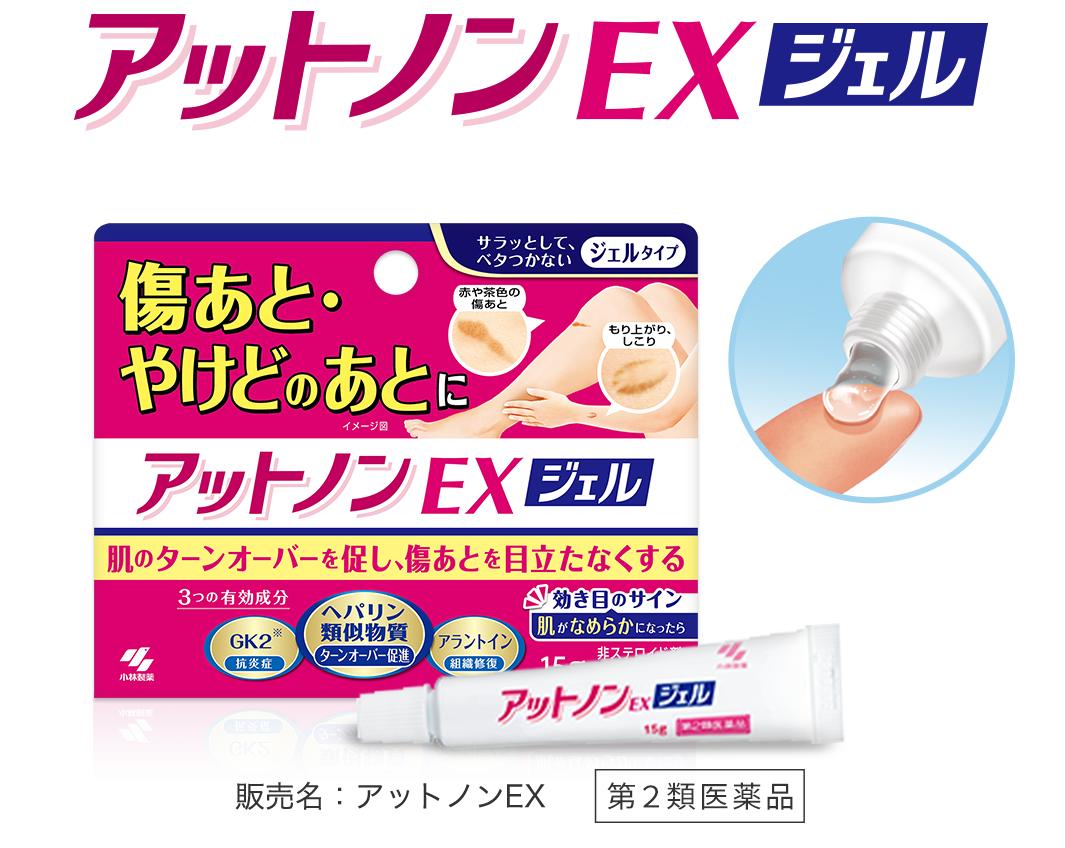
Look for アットノンEX ジェル. Its legal sales name is アットノンEX, and it is a Class 2 OTC medicine in Japan. The manufacturer describes a clear gel with a light, non-sticky feel. It is an option to compare if you dislike the feel of a cream. That describes texture, not a promise of better results.
EX Cream, 15g: a more moisturized feel
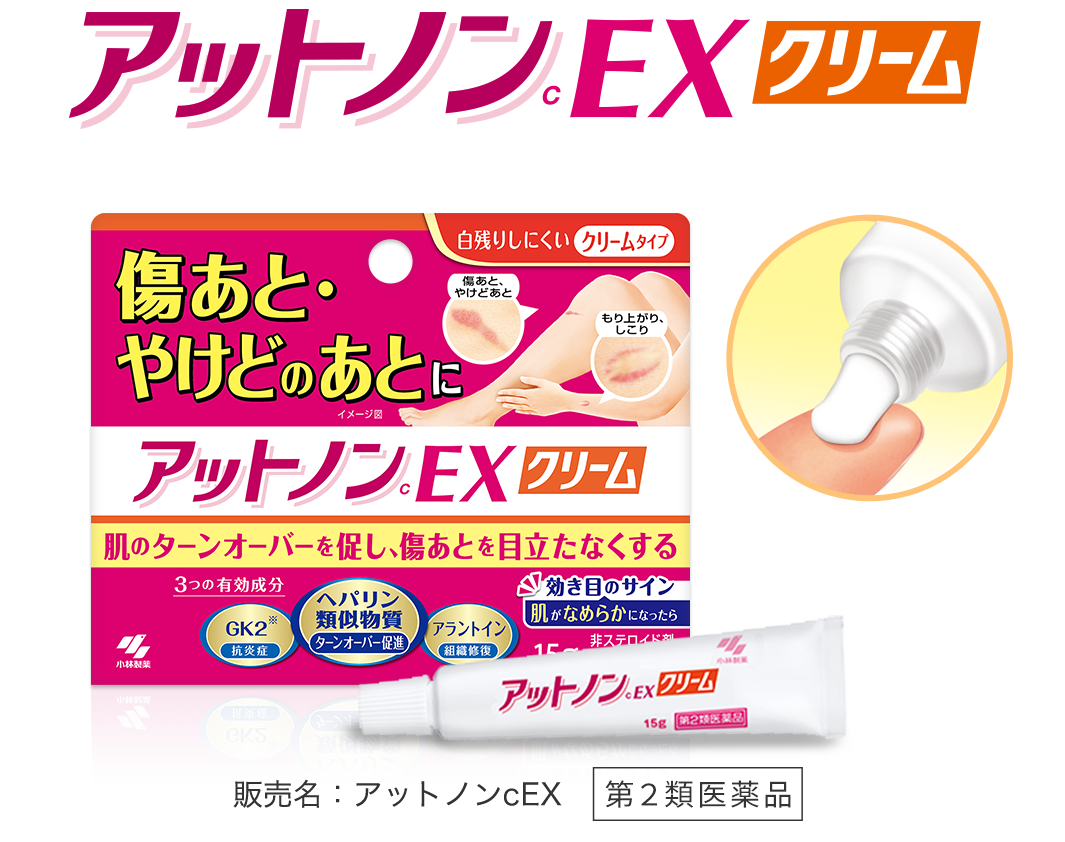
Look for アットノンEX クリーム, with the legal sales name アットノンcEX. This is also a Class 2 OTC medicine. The product is a white cream, described by the manufacturer as moisturizing and less likely to leave a white residue.
Gel and cream are not different strength levels. Each 100g contains heparinoid 0.3g, allantoin 0.2g and dipotassium glycyrrhizinate 1g. Their inactive ingredients and feel differ. Texture can help you choose, but check the full formula if you have known ingredient allergies.
EX Itch-Relief Plus Cream, 10g: an additional active ingredient
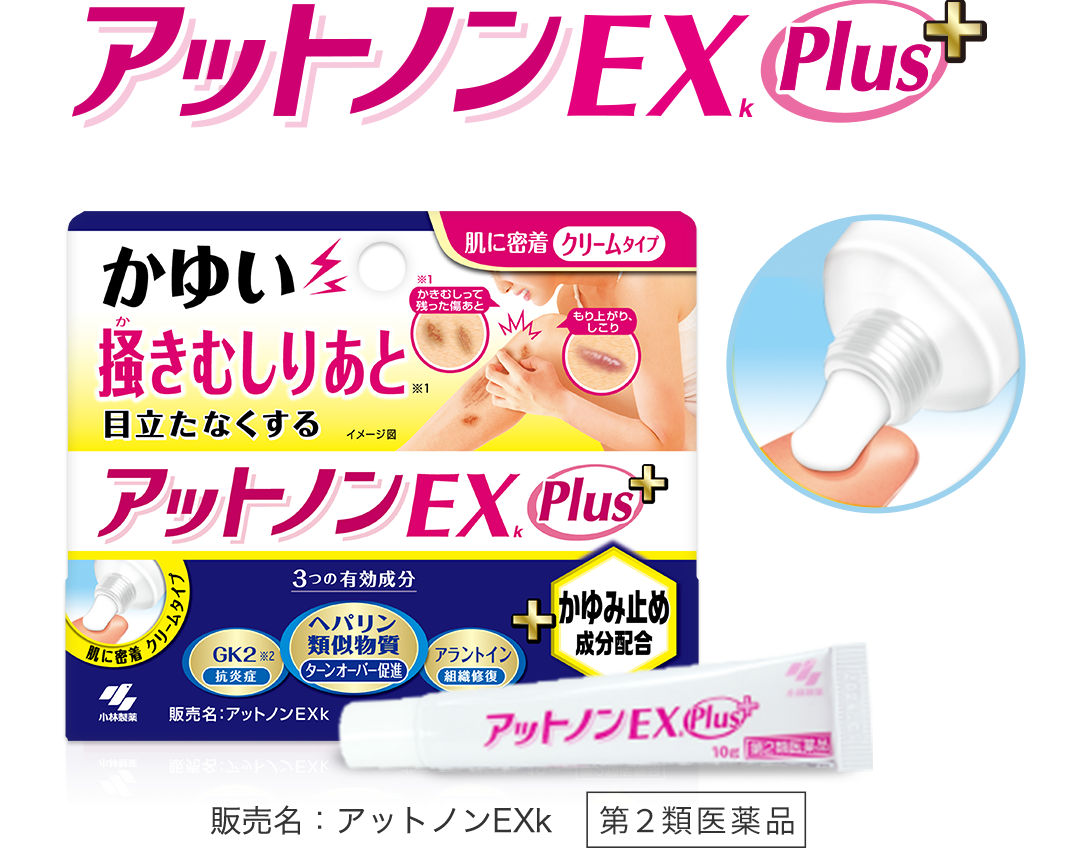
Look for アットノンEX かゆみ止めプラス, with the legal sales name アットノンEXk. This Class 2 OTC medicine is a white cream that the manufacturer describes as adhering closely to the skin.
Each 100g contains heparinoid 0.3g, allantoin 0.2g and dipotassium glycyrrhizinate 1g, plus diphenhydramine 0.5g for itch relief. The extra ingredient does not make it the default choice for every scar.
Its leaflet says people with atopic dermatitis must not use it, even with mild symptoms; appropriate medical treatment is needed. A separate instruction says people previously diagnosed with atopic dermatitis must consult before use. A history of the condition is not a reason to skip this check just because the skin currently looks calm.
When is a wound ready for scar care?
Kobayashi explains that Attonon can make blood less likely to clot. Applying it before a wound has healed can cause bleeding again. A dry-looking surface alone is not enough.
- Wait until the wound is fully healed and the scab has completely come away.
- Do not apply to remaining scabs, weeping areas or a taut, thin pink skin film.
- If you cannot tell whether it has healed, or the area stays painful or worsens, seek medical assessment.
- Stop immediately if applying it causes bleeding.
The EX leaflets also list certain dry-skin and cracked-skin conditions. Those separate indications do not extend the scar indication to facial acne scars.
How to use the EX medicines, and when to stop
The Japanese directions are the same for all three: apply an appropriate amount to the affected area one to several times a day, rubbing it in, or spread it on gauze or similar material and apply that to the area. External use only. Children must use it under a parent or guardian’s supervision. Close the cap firmly after use.
Avoid the eyes, surrounding eye area and mucous membranes. If it gets into the eyes, rinse immediately with water or lukewarm water; get eye care if symptoms are severe.
Stop immediately and consult a doctor, pharmacist or registered medicine seller, taking the leaflet with you, if rash, redness, itching or swelling appears. Also stop and consult if symptoms have not improved after 5–6 days. This is a checkpoint to reassess treatment, not a promise that a scar will disappear in a few days. Do not ignore it while waiting a month for a result.
Keep the tube tightly closed in a cool, dry place away from direct sunlight and children. Do not transfer it to another container or use it past its expiry date.
The separate acne-aftercare gel
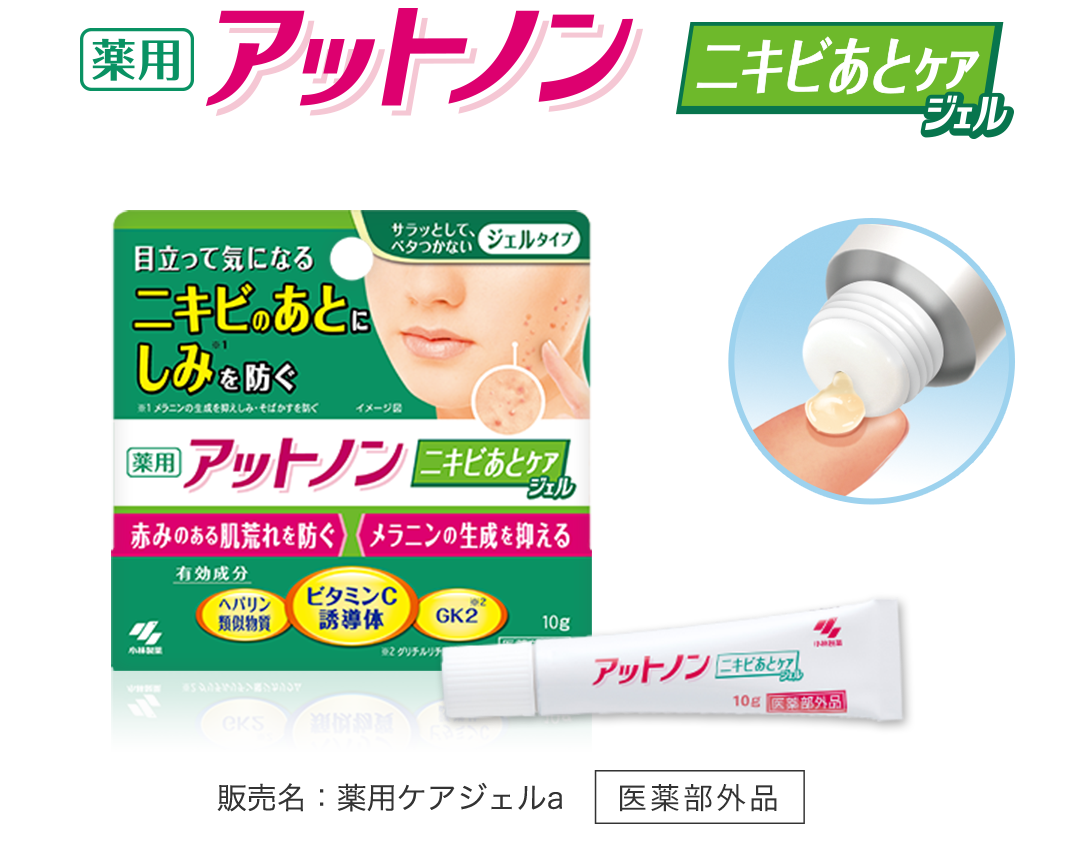
アットノン ニキビあとケアジェル, 10g, has the legal sales name 薬用ケアジェルa. It is a quasi-drug in Japan, a different regulatory category from the three EX medicines.
Its skin-care claims include suppressing melanin production to help prevent spots and freckles. That prevention claim should not be read as removal of every existing acne mark. The manufacturer explicitly says it does not reduce the unevenness of acne scars. It should not replace treatment for active inflamed acne.
Apply an appropriate amount to the area of concern after washing your face and before your other skin care. Do not use on wounds, swollen areas, eczema or other abnormal skin. Stop and consult a dermatologist if redness, swelling, itching, irritation, white patches or darkening appears during use or after sunlight exposure. Rinse immediately if it gets into the eyes. Do not transfer the EX dosing frequency or 5–6-day rule to this different product.
Common questions
Can children, pregnant people or breastfeeding people use EX?
The EX leaflets give no numerical minimum age and require adult supervision for children. The manufacturer’s FAQ suggests use from around six months of age while watching the skin carefully. This is not a guarantee for every infant; check the exact product and wound condition before using it on a baby.
The same FAQ says use during pregnancy or breastfeeding is possible and recommends consulting the treating doctor. The bleeding-related restrictions, skin-condition checks and Plus-specific atopic dermatitis restriction still apply.
Is Taiwan’s 疤脫諾 the same product?
Kobayashi Taiwan has a 14g product under that name. Do not exchange instructions based on a translated brand name. This guide compares Japan’s EX Gel 15g, EX Cream 15g and Itch-Relief Plus 10g; match the complete Japanese name and size.
What if I still have active acne?
Separate active acne from a flat mark and from a pitted or raised scar. For a different treatment question, see how to use PAIR Acne Cream W with skin care. Persistent painful acne, recurring inflammation or uneven scars deserve a dermatologist’s assessment.