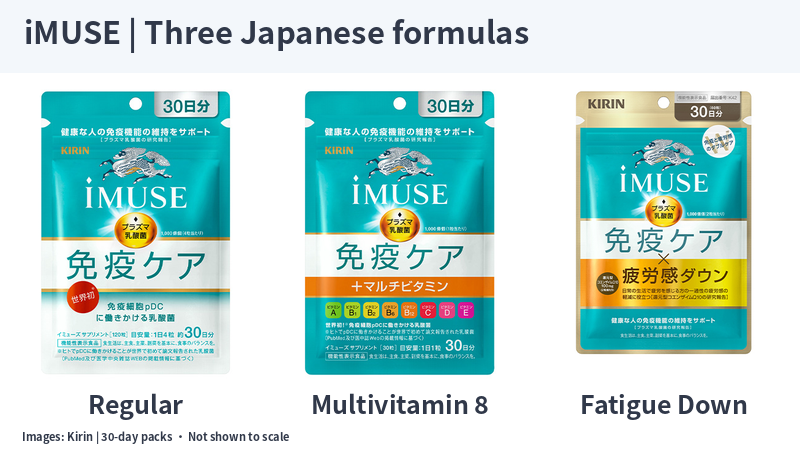
All three iMUSE supplements provide the same 100 billion Plasma lactic acid bacteria per day. Regular takes four tablets, Multivitamin 8 takes one tablet, and Fatigue Down takes two soft capsules. The useful differences are the added ingredients, daily pill count and precautions, rather than an assumption that more ingredients mean a better choice.

I’m Irene, a Taiwan-born, Japan-licensed pharmacist working in a Japanese drugstore. “Immune care” on a packet can sound like a travel essential. Let’s look at what these three foods actually offer, who needs an extra check, and why immune-function maintenance is different from preventing a cold.
Information checked on 13 October 2026 against current Japanese 30-day product information. This is a comparison of three Kirin iMUSE supplements, not a ranking of the whole range. Drinks and differently formulated products have their own labels.
- Quick choice: what do you actually want to add?
- What does “immune care” mean on the label?
- Match the full product name and daily count
- Compare the labelled daily servings
- Eight vitamins do not mean a complete day’s nutrition
- Fatigue Down adds a claim and extra medicine checks
- Taking and storing them
- Comparing packs in a Japanese shop
- Official sources
Quick choice: what do you actually want to add?
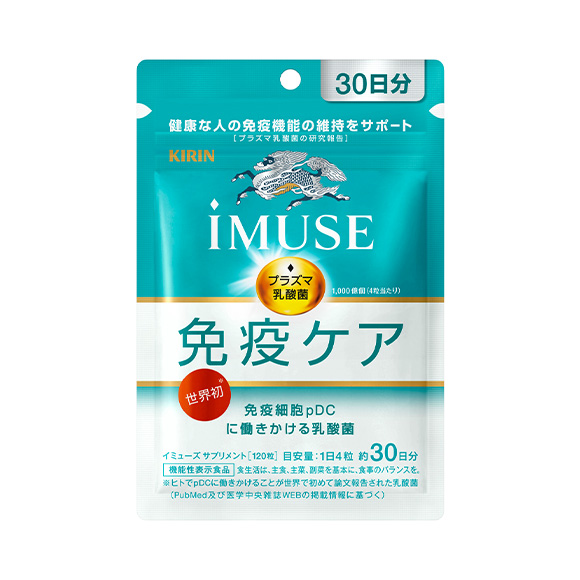
- Want the Plasma supplement without added vitamins or CoQ10? Look at Regular. Its serving is four tablets once daily, with 500 mg of isomaltooligosaccharide.
- Prefer one tablet daily and specifically want these eight vitamins? Consider Multivitamin 8. Check your existing multivitamin first. The Plasma quantity is the same as Regular’s.
- Interested in the additional food claim for temporary everyday fatigue? Check Fatigue Down. It adds reduced CoQ10 in two daily soft capsules, with specific medicine precautions below.
- No clear reason to add a supplement? Buying none is a reasonable choice. These are not travel necessities. Extra tablets cannot replace sleep, balanced meals or infection-prevention measures.
What does “immune care” mean on the label?
All three are Japanese Foods with Function Claims. Their shared notified function concerns Plasma lactic acid bacteria (L. lactis strain Plasma) being reported to help maintain immune function in healthy people. This does not mean preventing infections, treating colds or boosting immunity above normal.
The business submits the supporting evidence. Unlike Foods for Specified Health Uses (FOSHU), these products do not undergo individual government assessment of function and safety, and they are not medicines. The Japanese notification numbers are G777 for Regular, G1056 for Multivitamin 8 and K42 for Fatigue Down.
The ingredient lists specify killed and dried lactic acid bacteria powder. The number on the front is not a promise of live bacteria colonising your gut, and it cannot be used to rank effects against different strains or intestinal medicines.
Match the full product name and daily count
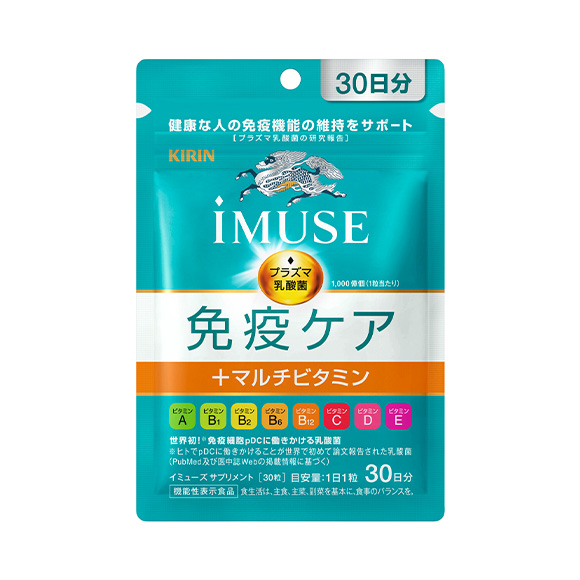
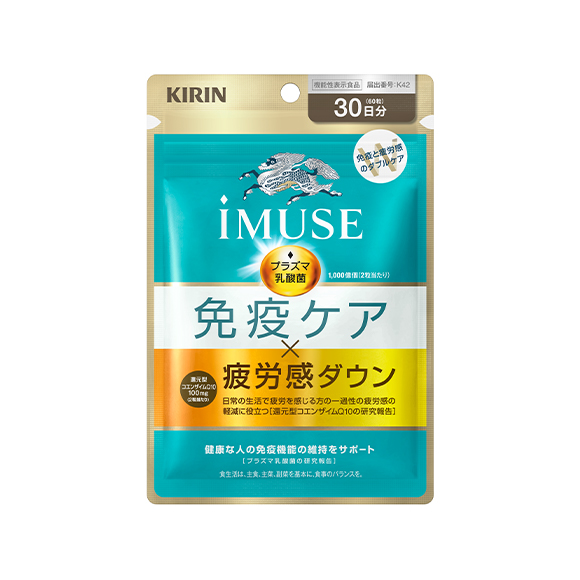
Compare the labelled daily servings
All figures below are per suggested daily serving, not per tablet. These functional foods were not developed for minors, pregnancy (including planned pregnancy), the postpartum period, breastfeeding or people with an illness; seek medical or pharmacist advice in those circumstances.
| Formula | Suggested daily serving | Plasma bacteria per day | Other main labelled components per day | Manufacturer-listed allergens |
|---|---|---|---|---|
| Regular | 4 tablets once daily (1.0 g) | 100 billion | Isomaltooligosaccharide 500 mg | None among the listed categories |
| Multivitamin 8 | 1 tablet (335 mg) | 100 billion | Eight vitamins; see below | None among the listed categories |
| Fatigue Down | 2 soft capsules (0.7 g) | 100 billion | Reduced CoQ10 100 mg; vitamin E 10.0 mg | Gelatin |
“None among the listed categories” is not a guarantee that nobody can react, or a vegan certification. If you have a food allergy, check the complete ingredients and current label on the actual packet.
Eight vitamins do not mean a complete day’s nutrition
The following current amounts are for one daily Multivitamin 8 tablet (335 mg). They do not apply to Regular or Fatigue Down.
| Vitamin | Amount in one daily tablet |
|---|---|
| A | 261.11 µg |
| B1 | 0.44 mg |
| B2 | 0.51 mg |
| B6 | 0.47 mg |
| B12 | 0.87 µg |
| C | 42 mg |
| D | 3.62 µg |
| E | 1.89 mg |
“Eight” counts the vitamin types; it does not mean the tablet meets all of your daily nutritional needs. No supplemental iron or folate amount is listed. If you already take a multivitamin, check overlapping A, D, E, B vitamins and C rather than considering each packet in isolation.
Fatigue Down adds a claim and extra medicine checks
Reduced CoQ10 adds a notified function concerning relief of temporary fatigue experienced in everyday life. That is not a treatment claim for anaemia, chronic disease or persistent fatigue. If tiredness persists, worsens or affects daily life, seek medical advice about the cause.
Kirin specifically says to consult a doctor or pharmacist before using Fatigue Down with blood-pressure-lowering medicines, warfarin, alkylating anticancer medicines or blood-glucose-lowering medicines. Do not stop prescribed treatment to take a supplement; bring your medicine list for the check.
Taking and storing them
- Check the full name and daily amount: four tablets once daily for Regular, one tablet for Multivitamin 8 or two capsules for Fatigue Down.
- Take with water or another suitable drink as directed. Do not transfer chewing instructions or counts from a different iMUSE product.
- Check other vitamin, CoQ10 and Plasma products you use. Do not combine variants or take extra for supposed additional protection.
All three caution that a larger intake does not provide greater health benefits. Discuss use with a doctor or pharmacist if you are having treatment, take medicines or have a health concern. Stop taking the product and seek advice if you feel unwell after using it.
Close the zip seal firmly after opening. Fatigue Down also specifies avoiding direct sunlight, high temperatures and humidity, and using it promptly after opening; its soft capsules may stick together under some storage conditions. Follow the packet’s storage instructions and avoid leaving supplements in a hot car.
Comparing packs in a Japanese shop
Match the full name, then the number of days marked 日分, before comparing prices. All three pictured packs last 30 days, despite containing 120, 30 and 60 pills respectively. Total pill count alone is misleading. Kirin lists selected Japanese drugstores and its direct store as sales channels; that does not guarantee every shop stocks every variant or size.
My shortcut is to establish a reason to buy, then compare 4, 1 or 2 pills per day, the added ingredients and medicine precautions. The shared daily Plasma amount is identical; a gold packet or a longer ingredient list is not automatically a better fit.