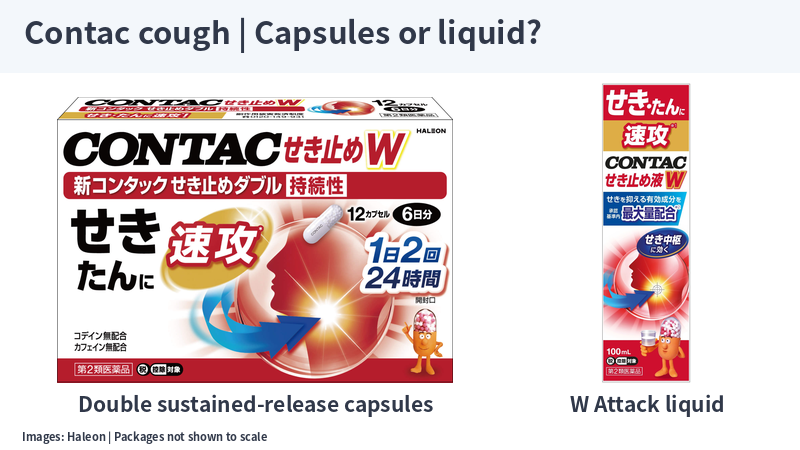
For cough and phlegm, Japan's Contac range offers twice-daily sustained-release capsules and a measured liquid with a different second ingredient. Both are for ages 15 and over, and neither allows driving after a dose. “Codeine-free” does not mean non-drowsy or suitable for everyone.

I'm Irene, a Taiwan-born, Japan-licensed pharmacist working in a Japanese drugstore. Here, the useful comparison is the dosing schedule, ingredients and safety restrictions, rather than which package looks stronger.
Current manufacturer pages and the April 2026 Japanese leaflet revisions checked on October 13, 2026. Both are Class 2 OTC medicines for cough and phlegm. This guide does not cover Contac's cold or rhinitis medicines.
Two forms, two dosing schedules
The following doses are for ages 15 and over only. Neither product may be taken by children under 15. Amounts in this table are one dose, not daily ingredient totals. Choose one product; do not combine them.
| Product and Japanese shelf name | One dose, age 15+ | Labelled schedule | Practical distinction |
|---|---|---|---|
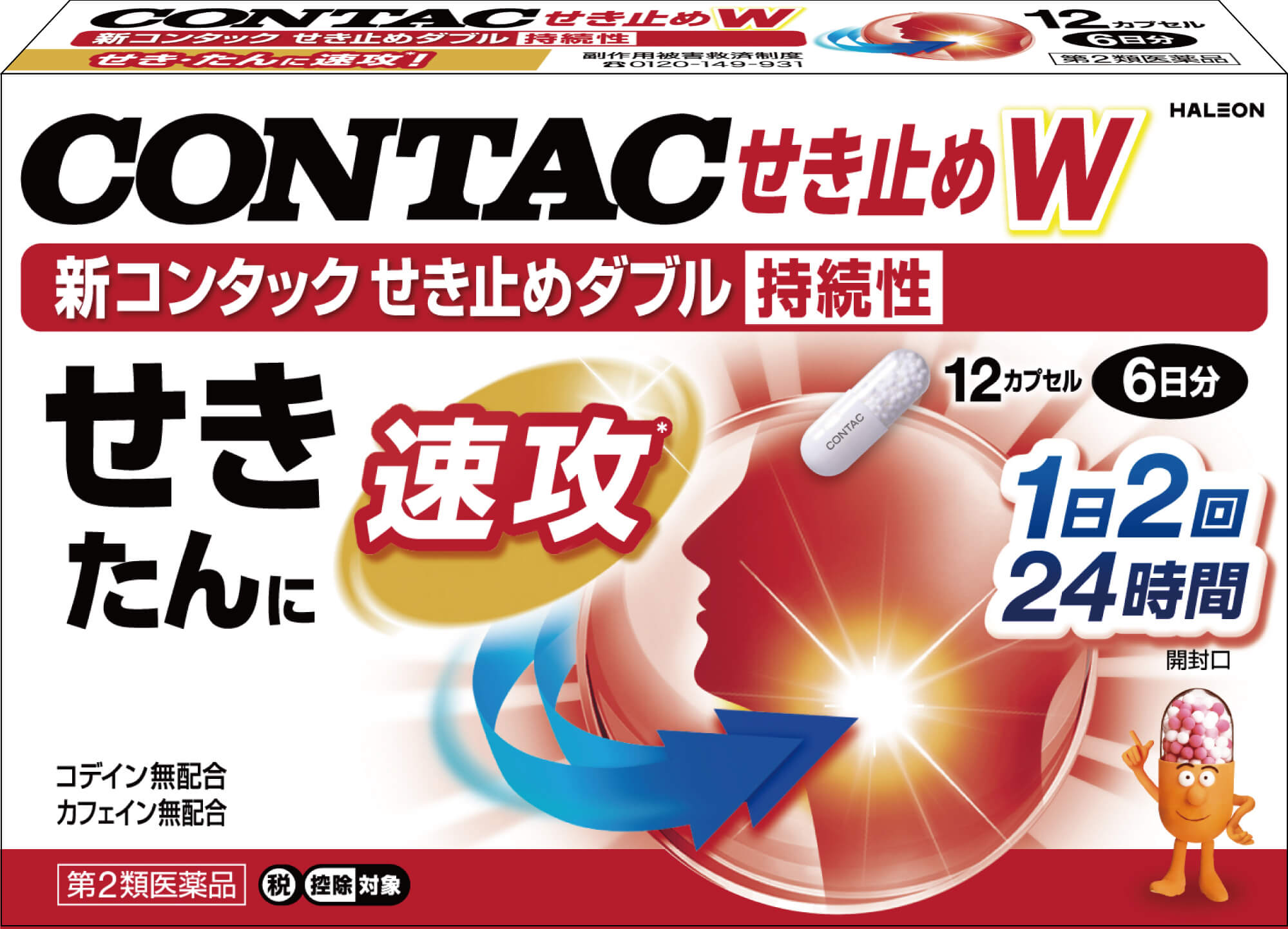
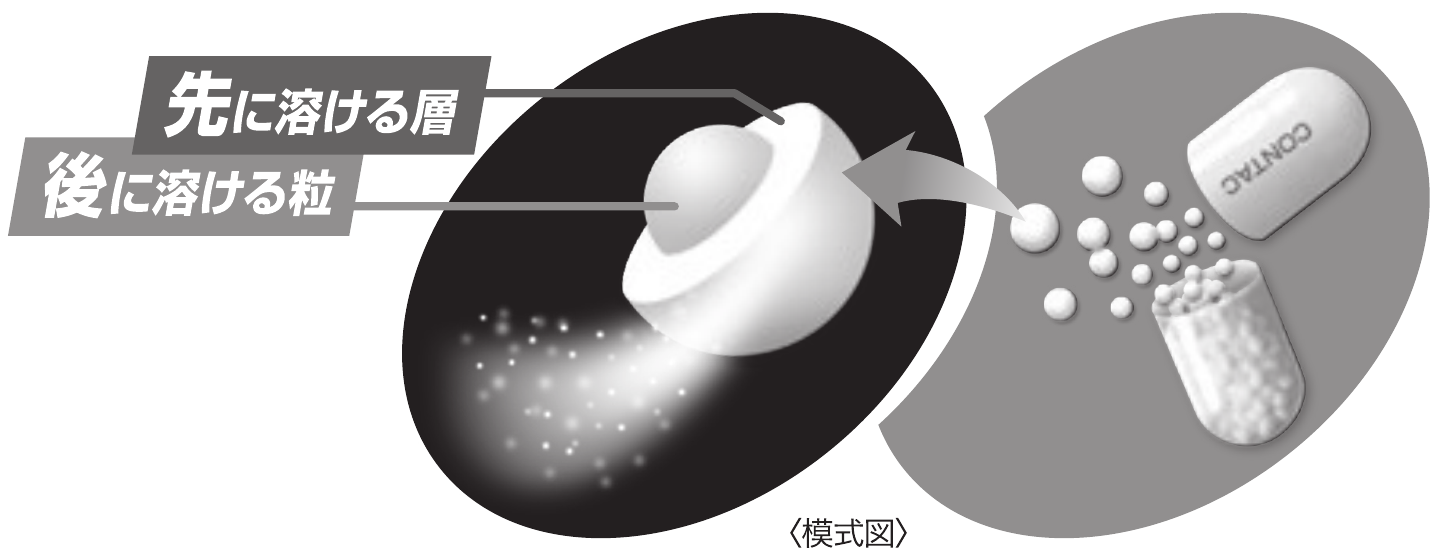
| New Contac Cough Double sustained-release capsules(新コンタックせき止めダブル持続性) | 1 capsule | Twice daily, morning and evening | Swallow without chewing, with water or lukewarm water |
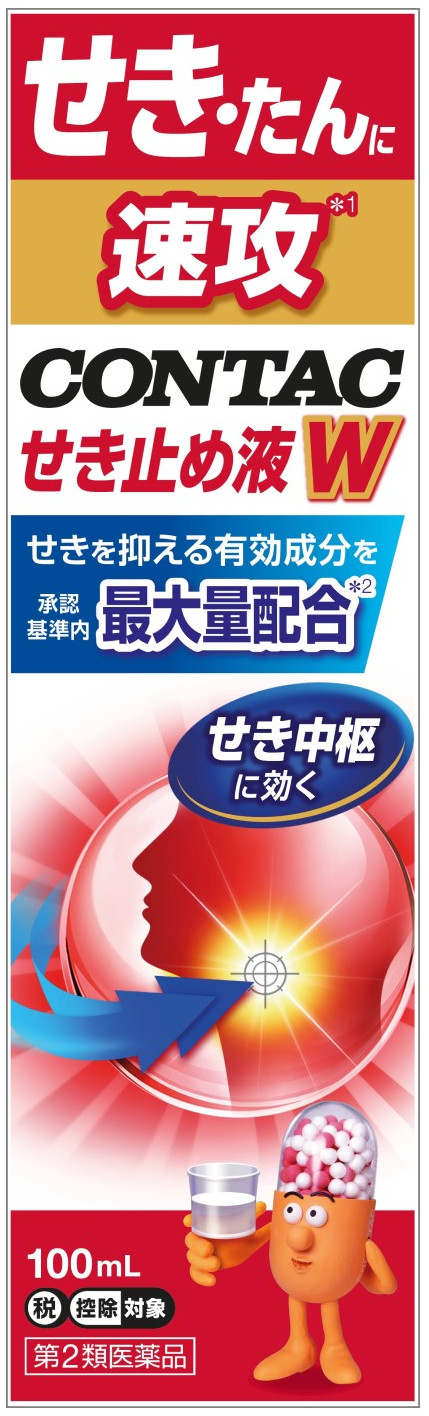
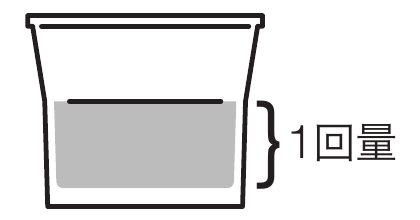
| New Contac Cough Liquid W Attack(新コンタックせき止め液ダブルアタック) | 10 mL | Three times daily after meals; when necessary, up to six times daily at approximately four-hour intervals | Measure with the supplied graduated cup; use the fewest doses and shortest duration within these directions |
The ingredient tables use different quantity bases
Below, two capsules are the full adult daily amount, while 60 mL is the liquid's maximum adult daily amount of six 10 mL doses. Neither row describes a single dose. The liquid's usual three-dose schedule totals 30 mL; six doses is a ceiling, not a target.
| Product | Quantity being compared, age 15+ | Active ingredients in that quantity |
|---|---|---|
| Cough Double capsules | 2 capsules: full daily amount | Dextromethorphan hydrobromide hydrate 60 mg; diprophylline 200 mg |
| Cough Liquid W Attack | 60 mL: maximum daily amount | Dextromethorphan hydrobromide hydrate 60 mg; guaifenesin 300 mg |
Both contain dextromethorphan to suppress cough. The capsule combines it with diprophylline, while the liquid combines it with the expectorant guaifenesin. Different ingredients and release patterns mean these numbers do not establish which works better for an individual. Both are codeine-free and caffeine-free, but both can cause drowsiness.
Take the capsule intact; measure the liquid
- Check the exact product, your age and other medicines before the first dose.
- For capsules, push the capsule out of the blister and swallow without chewing with water or lukewarm water. Never swallow the blister sheet.
- For liquid, measure 10 mL with the supplied graduated cup. Keep to the schedule above; do not take extra liquid directly from the bottle.
- Record each dose. Do not exceed the labelled amount, and do not add another cough medicine between doses.
Check medicines and health conditions before choosing
For both products:
- Do not take them if you have previously had an allergic reaction to that product or its ingredients.
- Do not combine with other cough/phlegm medicines, cold medicines, sedatives or oral medicines containing antihistamines, including some allergy, rhinitis and motion-sickness medicines.
- Do not drive or operate machinery after taking them. Never exceed the labelled dose.
- Ask before use if you are receiving treatment, pregnant or possibly pregnant, have a drug-allergy history or a high fever.
For the capsules, the leaflet also requires advice before use for thyroid dysfunction or epilepsy. Their bronchodilator ingredient does not make them a substitute for prescribed asthma treatment.
The liquid has additional explicit restrictions:
- Do not use with a lung infection, severe asthma or severe respiratory disease.
- Do not use if you take a monoamine oxidase inhibitor, such as selegiline, or have taken one within the past two weeks.
- Ask before use if breastfeeding; with a chronic or persistent cough, excessive phlegm, liver or kidney disease, known CYP2D6 poor-metaboliser status, or a history of drug misuse.
- Ask before use if taking an SSRI, tricyclic antidepressant or another antidepressant with serotonergic effects. The leaflet also advises avoiding alcohol as far as possible before and after a dose.
Do not switch to the capsules to get around a liquid warning. Both contain dextromethorphan: show a pharmacist all medicines you take, especially antidepressants and medicines for Parkinson's disease, before selecting either one.
Stop after five or six doses if it is not improving
Both leaflets say to stop and seek advice if symptoms have not improved after five or six doses, not five or six days. Stop earlier for a rash, nausea, vomiting, appetite loss, dizziness, breathing difficulty or other suspected reaction. Palpitations are also a listed reason to stop the capsules and seek advice. Persistent or worsening drowsiness also requires stopping and advice. Trouble breathing or signs of a severe allergic reaction need immediate medical attention. The liquid leaflet additionally warns of serotonin syndrome, with symptoms such as confusion, agitation, sweating, tremor or involuntary movements; seek immediate medical care.
If you exceed the liquid's stated dose, its leaflet instructs you to consult a doctor, pharmacist or registered seller immediately. Do not wait for symptoms or compensate by skipping a later dose without advice.
Keep the original product away from sunlight and children; store the capsules somewhere cool and dry, and the liquid tightly closed in a cool place. Do not transfer either product to a different container or use it past the printed expiry.
My shelf-check shortcut: can you avoid driving, and do your medicines or health conditions rule either product out? Only then compare the twice-daily capsule with the measured liquid. If five or six doses have not helped, changing form is not the next step; stop and get advice.
Official sources
- Haleon current Japanese Contac leaflets, including the April 2026 revisions for both cough products
- New Contac Cough Double sustained-release capsules
- New Contac Cough Liquid W Attack