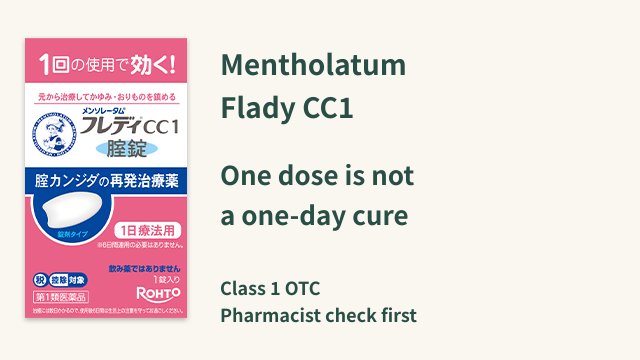
On a Japanese Flady CC1 box, “1回” or “1日療法” means a single administration—not a guaranteed cure in one day, and not another tablet tomorrow if itching remains. This guide covers only Japanese メンソレータム フレディCC1, not CC1A or other vaginal tablets used daily for six days.
Checked November 1, 2026 against current Japanese manufacturer information, its directly linked insert and purchase-check materials. This does not replace diagnosis or an individual medicine assessment.
It is only for recurrent vaginal candidiasis after previous diagnosis and treatment by a doctor. Fever, chills, lower abdominal pain, abnormal bleeding or painful urination also call for medical assessment, not this purchase. Do not delay care to reach a three- or six-day checkpoint.
Identify CC1, then read what “once” means
This is a Japanese Class 1 OTC medicine, containing 600 mg isoconazole nitrate per tablet. A pharmacist checks suitability before purchase. It is a vaginal tablet, not an oral medicine; see a doctor immediately if it is swallowed accidentally.
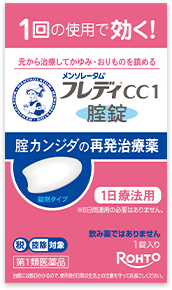
The labeled dose for eligible people aged 15 to 59 is one tablet inserted vaginally once, preferably before bed. Age alone does not establish eligibility. CC1 is used without an applicator. Read the complete enclosed instructions and ask the pharmacist to explain them; insertion technique is not reproduced here.
The tablet stays in the vagina and acts gradually before being expelled. Do not add another dose of this medicine or another vaginal tablet or suppository yourself. “One-day treatment” does not cancel the precautions for the six days after use. Do not transfer the daily dosing schedule of a different six-day product to CC1.
Give the pharmacist three groups of information
- Diagnosis and symptoms: previous diagnosis and treatment by a doctor, when this episode began and whether the symptoms match the previous episode.
- Recurrence and period dates: recent episodes, whether you are menstruating and when your next period is expected—including a period that may start within six days after use.
- Health circumstances and all medicines: age, possible pregnancy, breastfeeding, diabetes, conditions under treatment, allergies, vaginal medicines and external anti-itch products.
The official checklist supports a conversation; it is not self-clearance. You can ask the pharmacist even if you cannot print it. Do not stop a prescribed medicine yourself to make this purchase.
“Do not use” is different from “consult first”
Do not use if you have never had that diagnosis and treatment, are unsure this is a recurrence, have had one recurrence within two months or two or more within six months, have diagnosed diabetes, have had an allergic reaction to this product or an ingredient, are pregnant or possibly pregnant, are under 15 or are 60 or older. Do not use during menstruation. Seek medical advice rather than substituting a similar-looking product yourself.
Fever or chills, nausea or vomiting, lower abdominal pain, irregular or abnormal bleeding or bloody discharge, vaginal or vulval ulcers, blisters or pain, and painful or difficult urination are also reasons not to use it. Unpleasant-smelling discharge or an appearance different from your previously diagnosed episode should not be assumed to be a recurrence.
Consult a doctor or pharmacist before use if you are receiving medical treatment, breastfeeding or have had allergic reactions to medicines or other substances. These consultation conditions are separate from the prohibitions above.
Check changes—not a countdown to the last day
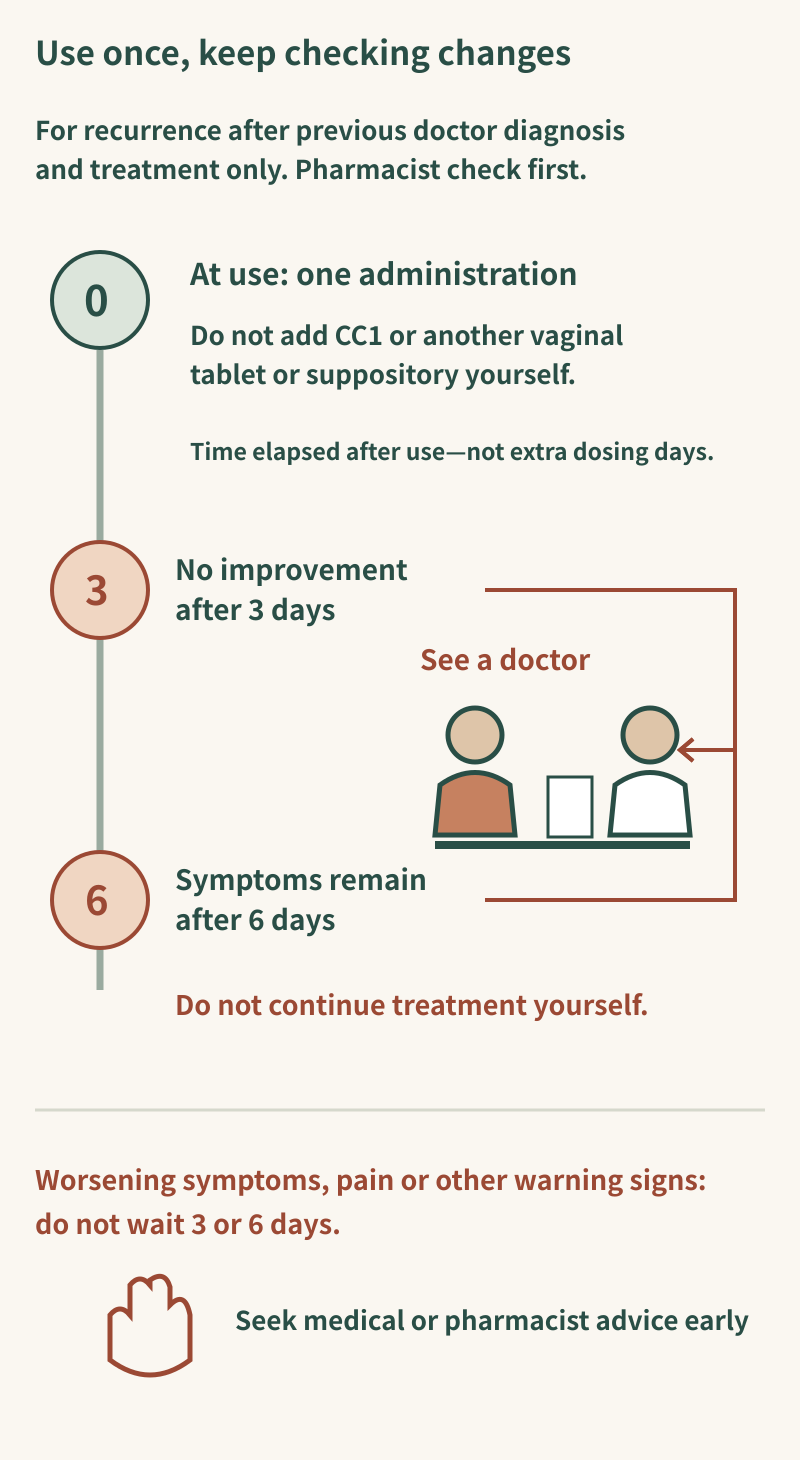
- No improvement after three days: see a doctor.
- Symptoms have not disappeared after six days: see a doctor; do not continue treatment or switch vaginal medicines yourself.
- Pain, swelling, redness, irritation, itching or a feeling of heat develops: these may be adverse effects. Consult a doctor or pharmacist with the insert. Worsening symptoms or the warning signs above should not wait for day three or six.
Do not reinsert a tablet that comes out intact. This is different from the small white lumps or paste-like discharge described in the insert as the medicine gradually leaves the body. If unsure, ask rather than deciding to add medicine from its appearance.
Do not add a general anti-itch medicine during those six days
General anti-itch medicines are not substitutes. Ask the pharmacist whether a particular candidiasis cream is appropriate. The Feminina guide explains its separate limitations. If you have another vaginal product, read its own instructions rather than borrowing CC1’s single dose.
Gently wash the vulva with warm water rather than irritating it with soap, keep it dry and follow the full enclosed lifestyle precautions. A partner with genital itching, redness or other symptoms should also see a doctor. Store the medicine in a cool place away from sunlight and children; do not transfer containers or use after expiry.
The useful choice is not simply the fewest doses. It is knowing whether the product is suitable—and when not to add medicine, but to seek care.
Official sources
- Rohto: Mentholatum Flady CC1 and its currently linked Japanese package insert.
- Brand information: single administration and precautions (source of the package photograph).
- Purchase information and official checklist and sales explanation.