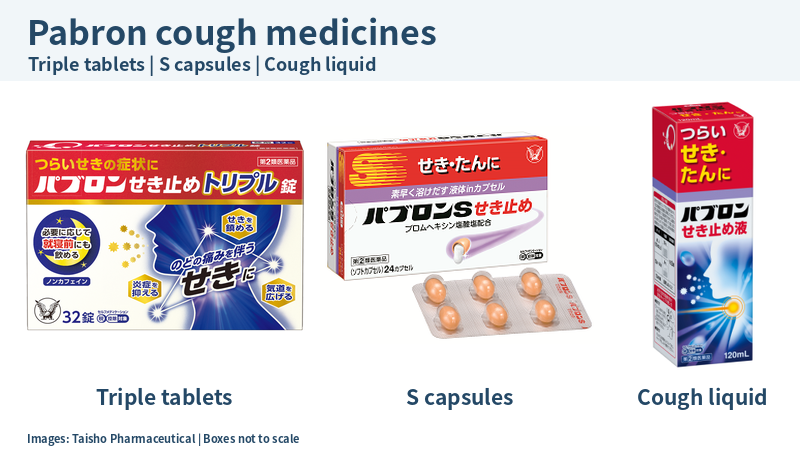
On a Japanese Pabron shelf, look for せき止め, meaning cough medicine. This guide compares three cough-specific products rather than the brand’s combination cold medicines. Sore throat, age, dosage form and driving plans matter more than box colour.

I’m Irene, a Taiwan-born, Japan-licensed pharmacist working in a Japanese drugstore. When names look similar, telling the pharmacist your symptoms and current medicines is a useful first step. Sources checked on 13 October 2026 for Japanese-market products.
A quick shelf comparison
| Japanese package name | Labelled use | Form / minimum age | Caffeine | Japanese category |
|---|---|---|---|---|
| Triple tablets / パブロンせき止めトリプル錠 | Cough and phlegm accompanied by sore throat | Tablets; 15+ | No | Class 2 |
| S cough capsules / パブロンSせき止め | Cough and phlegm | Soft capsules; 12+ | Yes | Designated Class 2 |
| Cough liquid / パブロンせき止め液 | Cough and phlegm | Oral liquid; 12+ | No | Designated Class 2 |
Do not drive or operate machinery after taking any of these. Do not combine them with other cough/expectorant medicines, cold medicines, sedatives or oral antihistamine-containing medicines, including some allergy, rhinitis and travel-sickness products. Caffeine-free does not mean non-drowsy.
Cough with a sore throat: check the full Triple name
パブロンせき止めトリプル錠 comes in 16- and 32-tablet packs. Its labelled use is cough and phlegm accompanied by sore throat. It is not a general-purpose treatment for every sore throat or the full range of cold symptoms.
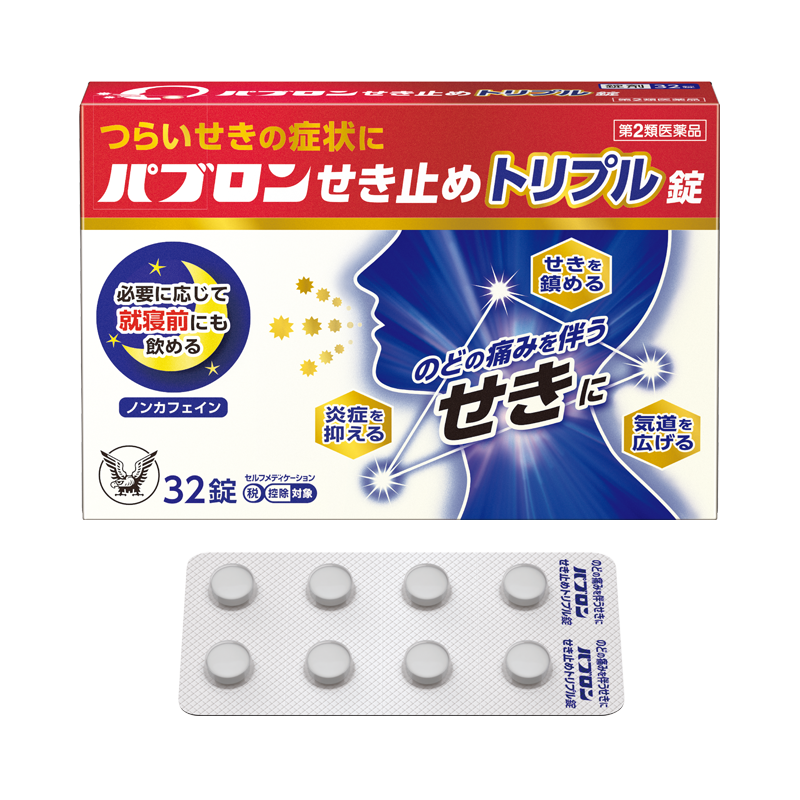
Each tablet contains dextromethorphan hydrobromide hydrate 15mg, chlorpheniramine maleate 3mg, methoxyphenamine hydrochloride 37.5mg and tranexamic acid 70mg. The formula combines cough suppression, bronchial action and treatment of throat inflammation. It contains no dihydrocodeine or caffeine.
For ages 15 and over, take one tablet with water or lukewarm water three times daily after meals; one additional bedtime dose may be taken if needed. Do not use under 15 or exceed the labelled dose.
Consult before use if receiving treatment, pregnant or possibly pregnant, elderly, with a history of medicine allergy, high fever or difficulty urinating, or diagnosed with heart disease, hypertension, diabetes, glaucoma or thyroid dysfunction. Existing thrombosis or a risk of thrombosis also requires consultation. Bring any other tranexamic-acid medicine to the pharmacist for a duplication check.
Cough and phlegm: S capsules versus the liquid
パブロンSせき止め comes in 12- or 24-soft-capsule packs. Check that the full name ends with せき止め; remembering only “Pabron S” is not enough.
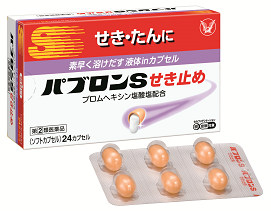
Two capsules contain bromhexine hydrochloride 4mg, dihydrocodeine phosphate 10mg, noscapine 20mg, dl-methylephedrine hydrochloride 25mg, carbinoxamine maleate 4mg and anhydrous caffeine 50mg. It combines cough suppression and expectoration; it is not simply a mucus-loosening medicine.
Ages 15 and over: two capsules per dose. Ages 12–14: one capsule per dose. Take with water or lukewarm water three times daily, preferably within 30 minutes after meals. Do not use under 12. A parent or guardian must supervise use by ages 12–14.
パブロンせき止め液 is a 120mL oral liquid for people who need a liquid dosage form. It is not a young-child cough syrup, and botanical extracts do not make it automatically safer.
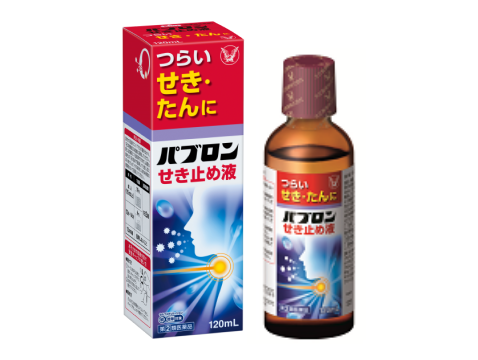
The ingredient panel is expressed per 60mL: dihydrocodeine phosphate 30mg, dl-methylephedrine hydrochloride 50mg, chlorpheniramine maleate 8mg, guaifenesin 200mg, platycodon fluid extract 0.8g and cherry-bark fluid extract 1.2g. There is no caffeine; additives include ethanol. The 60mL figure is an ingredient-panel reference, not a single dose.
Ages 15 and over: 10mL per dose. Ages 12–14: 6mL per dose. Do not use under 12. Normally take three times daily before or after meals, with an additional bedtime dose if needed. Depending on symptoms, the label permits up to six doses daily, spaced about four hours apart. Six is a maximum, not a routine schedule; do not add capsules or another cough medicine.
A parent or guardian must supervise use by ages 12–14. Shake well each time and measure with the supplied cup. Wipe the bottle mouth and close firmly after use. The safety cap opens by pushing down and turning, but the bottle must still be kept out of children’s reach.
Extra checks for S capsules and the liquid
Both contain dihydrocodeine. Do not take them while continuing to breastfeed. Discuss an alternative with a doctor or pharmacist rather than stopping breastfeeding on your own to accommodate a purchase. Do not take excessive doses or use continuously long term.
Consult before use if receiving treatment, pregnant or possibly pregnant, elderly, with previous medicine allergy, high fever or difficulty urinating, or heart disease, hypertension, diabetes, glaucoma or thyroid dysfunction. Respiratory impairment, obstructive sleep apnoea and obesity are also listed reasons to consult before using these two products.
The stopping point is five or six doses, not days
For all three products, stop and consult a doctor or pharmacist with the leaflet if there is no improvement after five or six doses. This means doses, not five or six days. Do not use a product if you have previously had an allergic reaction to it or its ingredients.
Stop and consult for reactions such as rash, redness, itching, nausea/vomiting, dizziness or difficulty urinating. Persistent or worsening dry mouth or drowsiness also requires stopping and consultation; the same applies to constipation with S capsules or the liquid. Slowed or difficult breathing, impaired consciousness, or sudden hives with swelling of the face or lips needs immediate medical attention. Respiratory depression is specifically listed for S capsules and the liquid. Triple and the liquid also list rare serious blood disorders: unexplained bruising or bleeding, or sudden high fever with chills and sore throat after taking the medicine, needs immediate medical assessment. These are selected warning signs; read the full leaflet before use.
Seek prompt medical care for coughing up blood, chest pain, difficulty breathing, rapid worsening or feeling very unwell rather than continuing to switch medicines. A cough lasting over three weeks also needs assessment; this does not permit taking these medicines continuously for three weeks.
Irene’s final check
Match the full Japanese name, then check age, sore throat, dosage form and current medicines. If you will be driving, none of these is a straightforward “just-in-case” purchase. Tell the pharmacist about your driving plans and discuss a suitable alternative.
Follow each label’s storage instructions, avoiding heat, humidity and direct sunlight. Use within six months of opening and before the printed expiry, whichever comes first. That is a storage limit, not permission to take the medicine for six months.