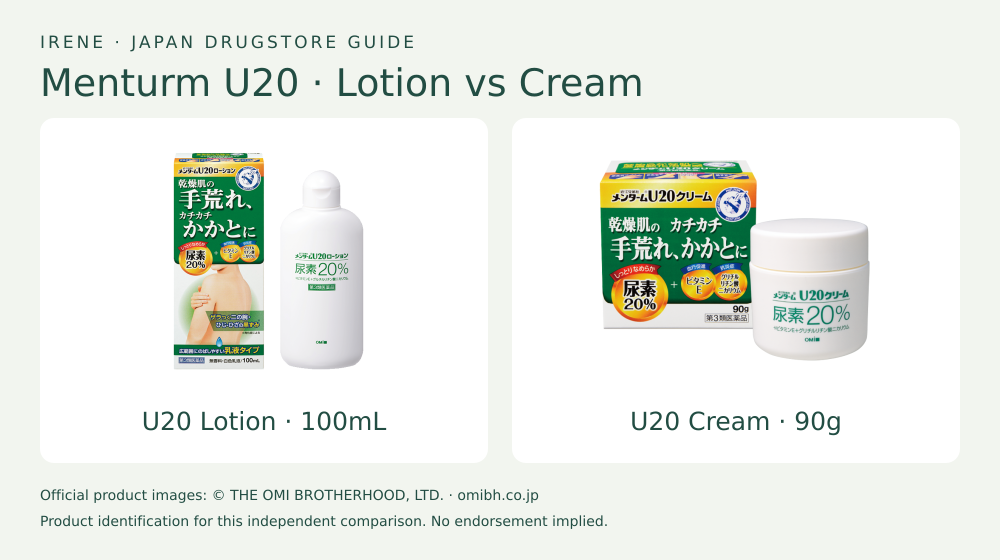
Thinking of putting 20% urea on a cracked heel? First distinguish intact, thickened skin from an actual split or wound. Menturm U20 Lotion and Cream contain the same concentrations of active ingredients, but their formats differ.

I’m Irene, a Japan-licensed pharmacist from Taiwan working in a Japanese drugstore.
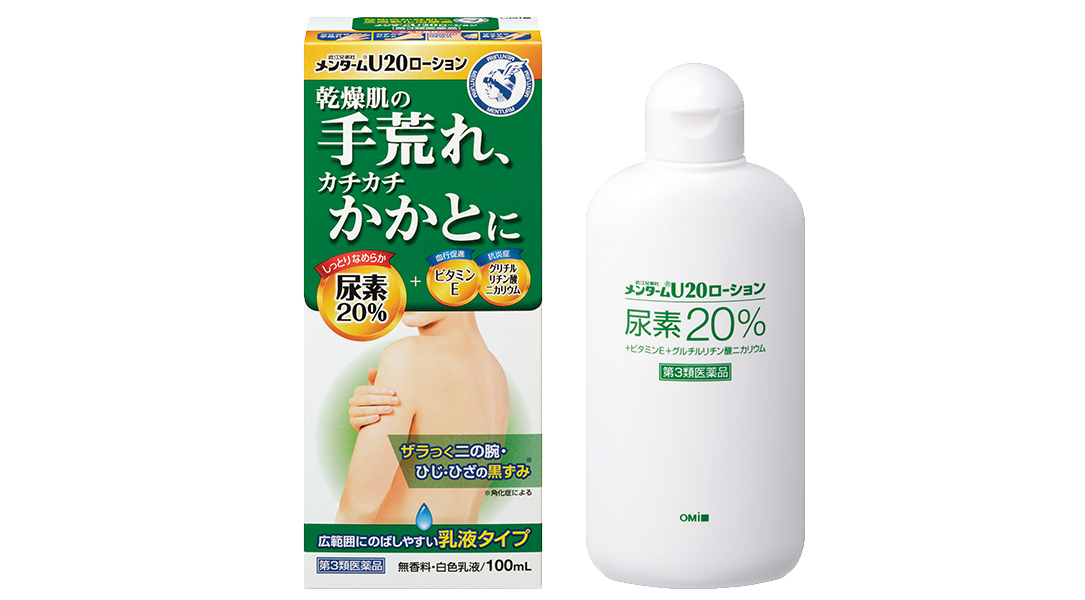
Check the full name and volume, not just the green colour.
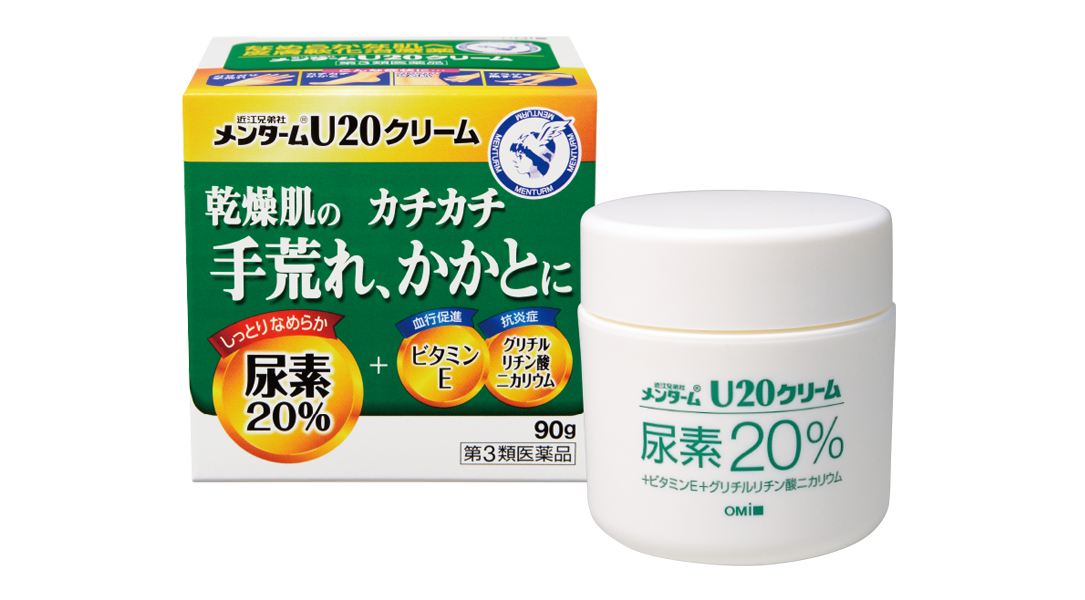
Check uses and excluded skin areas below before choosing a form.
Product images: official Omi Brotherhood materials. © THE OMI BROTHERHOOD, LTD. Used to identify the compared products; no sponsorship or endorsement implied. Lotion / Cream
What is new about U20 Lotion?
Omi Brotherhood launched メンタームU20ローション on August 21, 2026 in a 100mL bottle. The existing U20 Cream comes in a 90g jar. Both are Japanese Class 3 OTC medicines, not ordinary cosmetic moisturizers. The manufacturer emphasizes easy spreading over broader affected areas for the lotion and rough hands or hard heels for the cream. These are manufacturer descriptions, not my hands-on results or evidence that the new product is stronger.
Check the skin before choosing the container
Do not apply either product there. Switching to lotion does not remove this restriction.
After checking the labeled indication, consider the cream format.
The lotion is designed to spread easily. Use on affected areas, not as routine all-over body care.
This decision aid does not replace the full restrictions below. Ask a pharmacist or doctor if you cannot identify the problem.
The same 20% does not mean identical formulas
Each contains, per 100g, urea 20g, dipotassium glycyrrhizinate 0.5g and tocopheryl acetate 0.5g. Urea moisturizes and softens thickened skin. Their bases and additives differ. The lotion is not a “diluted version,” and the cream is not proven superior simply because it is thicker.
Both are labeled for rough fingers; thickened skin on the elbows, knees, heels and ankles; dry skin in older people; and rough, sharkskin-like skin (さめ肌). Do not extend general information about urea into claims that these products treat athlete’s foot, fungal nails or every form of eczema.
How to apply, and where not to apply
Apply an appropriate amount to the affected area several times daily. External use only, on areas covered by the indications. Do not use as basic facial skin care.
- Do not apply around the eyes, on mucous membranes, scratches, wounds or split/cracked areas.
- Avoid areas with scab-like peeling, rawness, redness or swelling.
- Consult a doctor, pharmacist or registered OTC seller before use if receiving medical treatment or if medicines or other products have caused allergy or irritation.
- Children require a parent’s guidance and supervision. The two manufacturer inserts checked do not specify a numerical minimum age; do not import another urea product’s age limit. Seek advice for young children or uncertainty.
- Avoid eye contact, including touching the eyes or mucous membranes with medicated hands. Rinse immediately with water or lukewarm water if exposure occurs; see an ophthalmologist for severe symptoms.
Stinging is not a sign to keep going
Stop immediately and seek advice with the leaflet if rash, redness, swelling, itching, contact dermatitis, pain, burning, tingling or scab-like peeling develops. Also stop and seek advice if there is no improvement after about two weeks. Do not simply increase the amount.
Keep tightly closed in a cool, low-humidity place away from extreme temperatures, sunlight and children. Do not transfer to another container. Do not use past expiry; use promptly after opening.
Irene’s shelf-side takeaway
I would check whether the skin is suitable for either product before comparing texture. Tell the pharmacist whether you mean thick, rough skin or a painful split, and show the full Japanese product name. “The strongest urea” is not a useful substitute for those details.
官方資料 / Official sources
Reviewed November 8, 2026. Read the current leaflet supplied with the product you buy. If it differs from this guide, follow that product’s current labeling and ask a pharmacist to clarify.