繁體中文 · English
Information checked: 7 October 2026
Buying cold medicine for a child in Japan brings some very practical questions: Is this the right age range? What does it taste like? Will my child manage the powder or tablets? And does “Kids” mean the medicine is mild?
I’m Irene, a pharmacist from Taiwan working in a Japanese drugstore. This guide compares the Japanese パブロンキッズかぜシロップ, かぜ微粒 and かぜ錠: syrup, granules and tablets. Start with the age range and form, then check the ingredients, dose and cautions. All three are Japanese Class 2 OTC medicines.
Check both ends of the age range, then the form
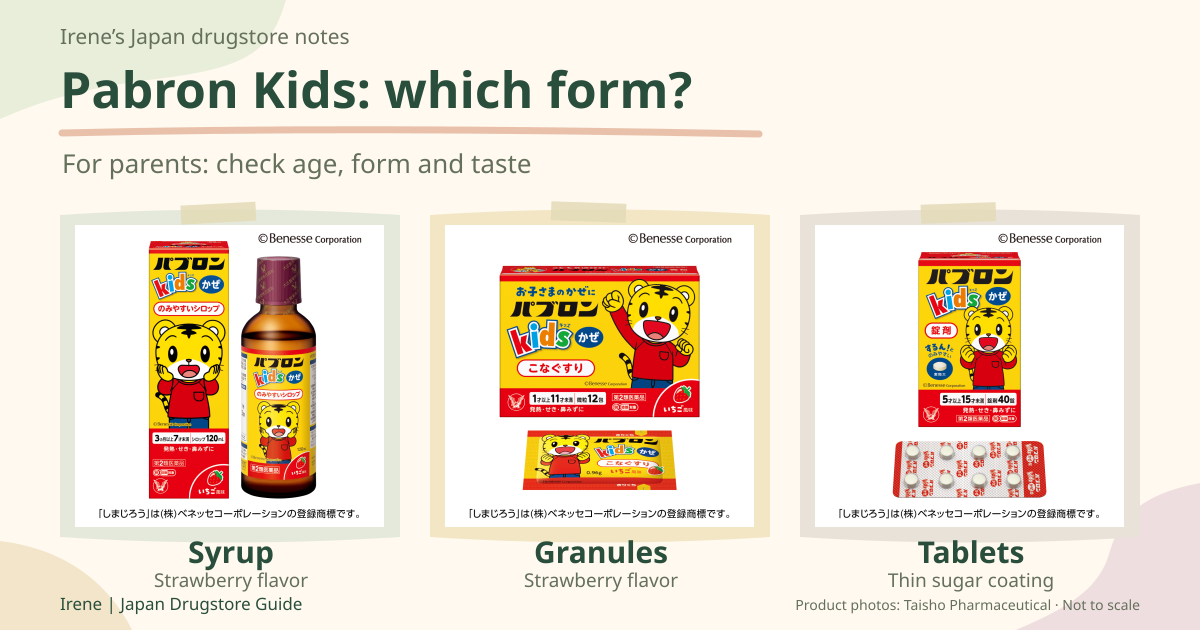
Syrup: strawberry flavor, measured with a cup
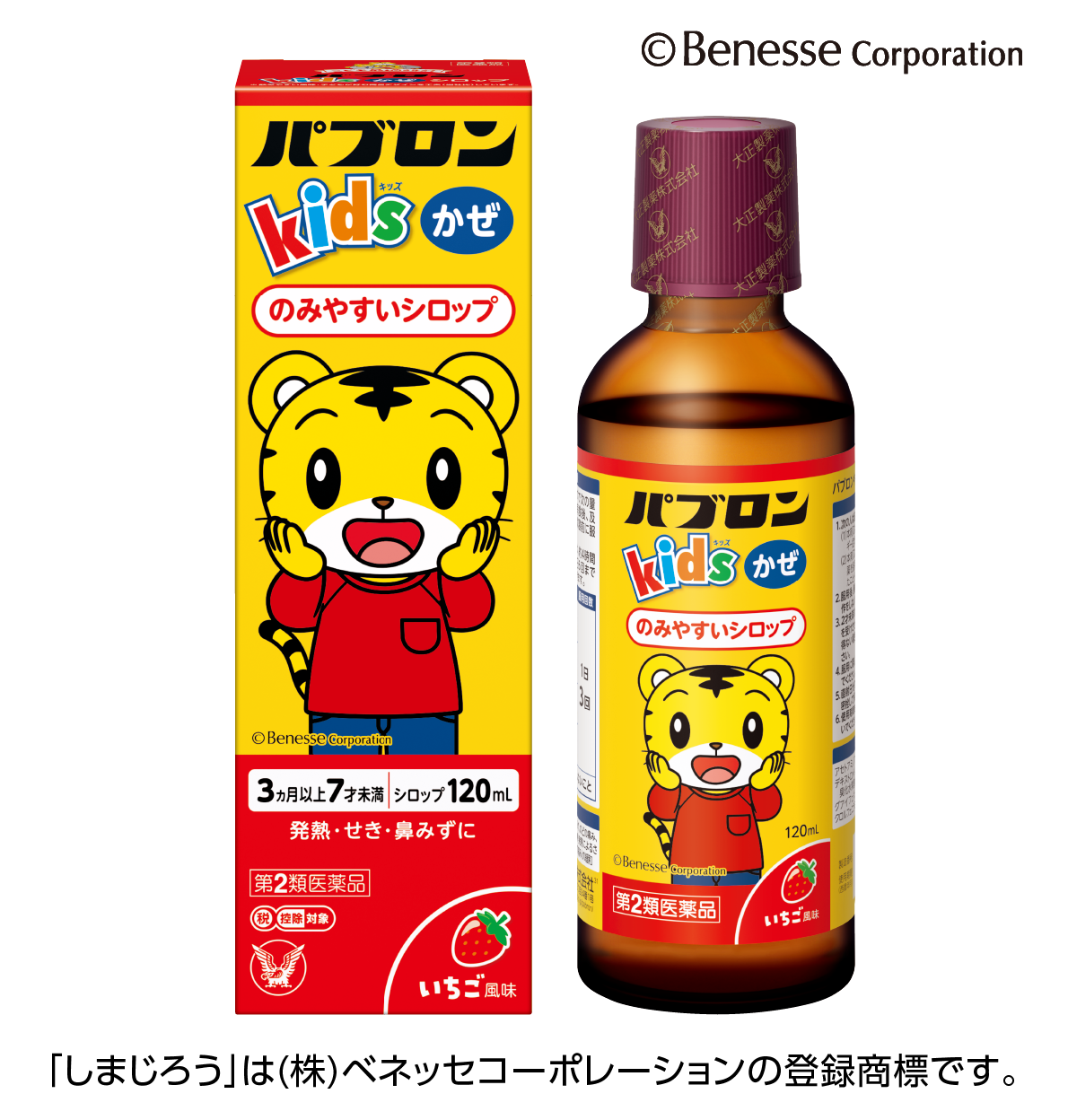
Labeled ages: 3 months to under 7 years
Look for シロップ and 120mL. Taisho describes a strawberry-flavored liquid. It is an option to compare if you are looking for a liquid form within this age range. Measure the exact dose with the supplied graduated cup; a full cup is not a standard dose for every age.
Granules: strawberry-flavored powder in sachets
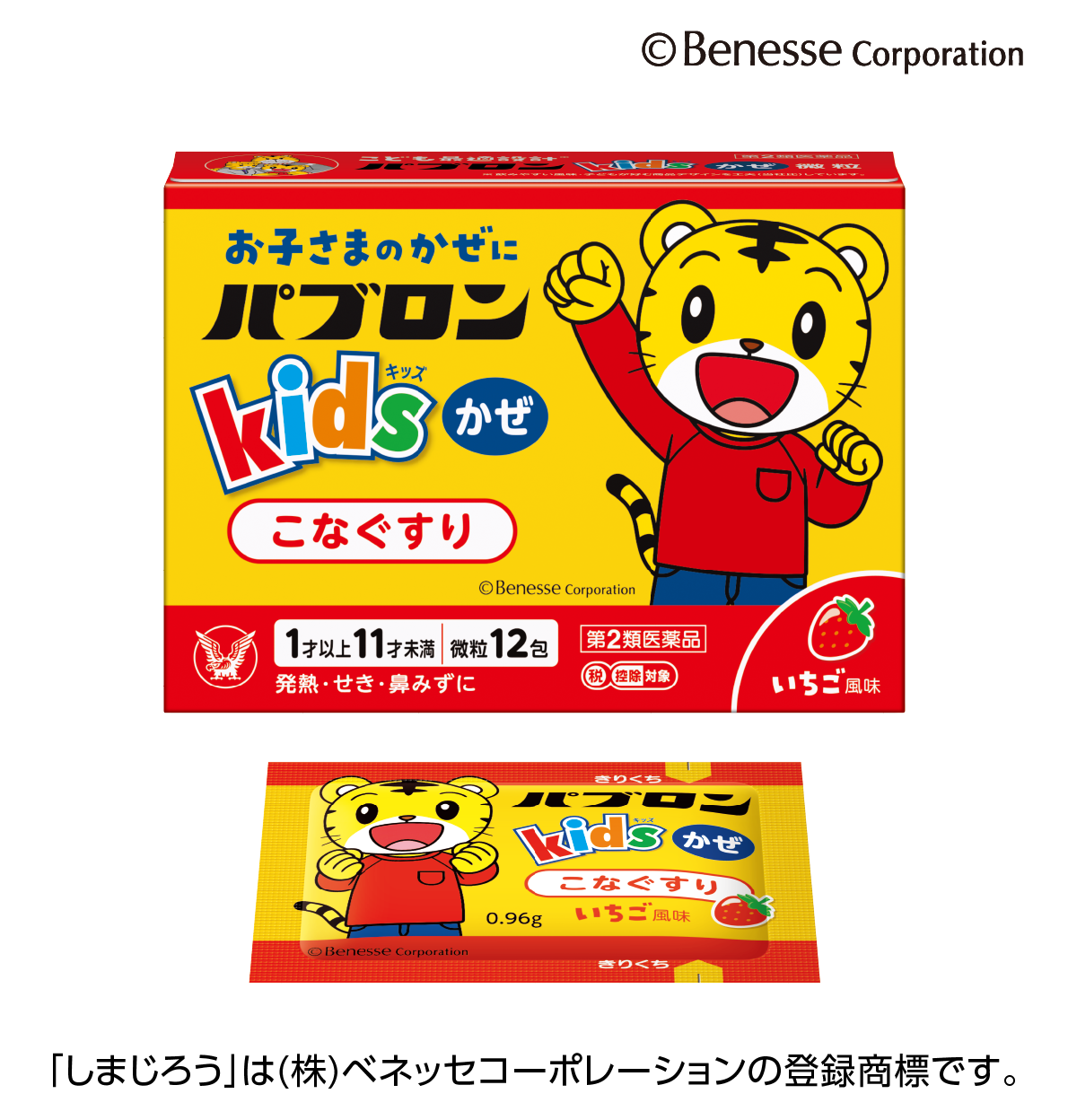
Labeled ages: 1 to under 11 years
Look for 微粒 or こなぐすり on the box. The strawberry-flavored powder comes in individual sachets you can carry in their original packaging. Children aged 1–6 take less than a full sachet per dose, so convenient packaging does not remove the need to measure a partial dose.
Tablets: small, slightly sweet and taken with water
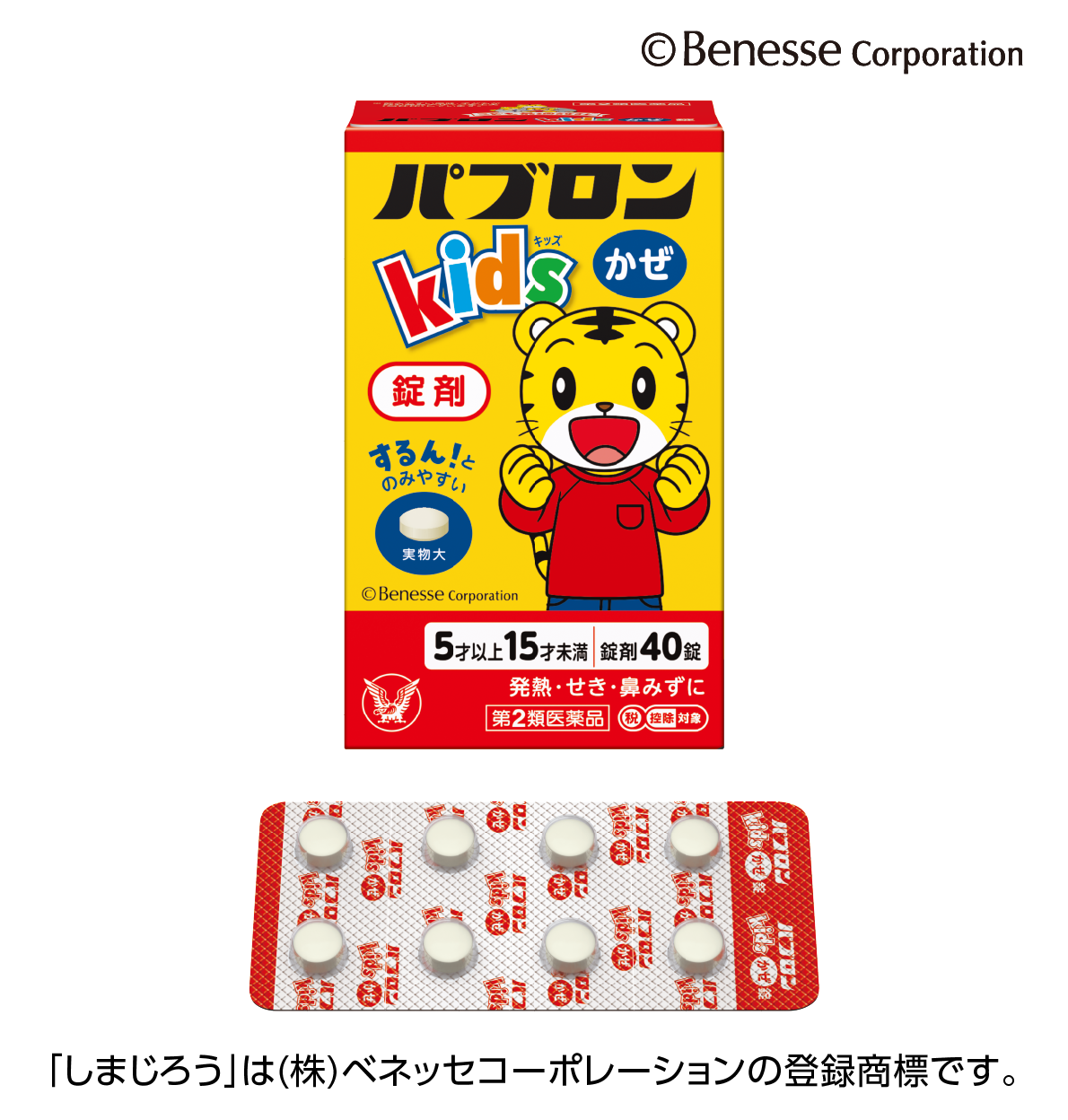
Labeled ages: 5 to under 15 years
Look for 錠剤 and 40錠. Taisho describes tablets about 7mm across, with a thin sugar coating and a slightly sweet taste. Consider the form if your child can take tablets with water as directed. A sweet coating does not change the labeled way to take the medicine.
These flavor and coating descriptions are the manufacturer’s design features, not a promise that every child will like them. On the pack, いちご風味 means strawberry flavor. The photographs are not a true-size comparison. Match the full Japanese name, form and complete age range, rather than the character or Pabron logo alone.
Worried about strength? Understand the ingredients first
All three are labeled to relieve cold symptoms: cough, runny nose, fever, sore throat, sneezing, phlegm, blocked nose, chills caused by fever, headache, joint pain and muscle pain.
- Fever and pain: all contain acetaminophen, also called paracetamol (アセトアミノフェン).
- Sneezing, runny or blocked nose: all contain chlorpheniramine maleate (クロルフェニラミンマレイン酸塩).
- Helping phlegm come up: all contain guaifenesin (グアイフェネシン).
- The cough suppressant differs: syrup contains dextromethorphan hydrobromide hydrate; granules and tablets contain tipepidine hibenzate.
The syrup is therefore not simply the same formula in a different shape. All three contain no caffeine, codeine-type ingredients or dl-methylephedrine hydrochloride. Those are verified formulation features. The labels still warn about drowsiness and other adverse effects.
Ingredient amounts and why the measuring basis matters
These are the quantities used on the official product pages. They are not every child’s single dose or equivalent amounts for the same age. Use the age-based doses below.
- Per 60mL syrup: dextromethorphan hydrobromide hydrate 16mg; guaifenesin 83.3mg; chlorpheniramine maleate 2.5mg; acetaminophen 300mg.
- Per 3 sachets (2.88g) granules: tipepidine hibenzate 37.5mg; guaifenesin 75mg; chlorpheniramine maleate 3.6mg; acetaminophen 450mg.
- Per 12 tablets: tipepidine hibenzate 50mg; guaifenesin 100mg; chlorpheniramine maleate 4.8mg; acetaminophen 600mg.
Comparing 300, 450 and 600mg directly would compare different reference quantities, not establish which product is “strongest.” Granules contain aspartame, an L-phenylalanine compound, among their additives; tablets contain lactose. If a particular ingredient must be avoided, check the complete leaflet, including additives, with a doctor or pharmacist.
How much to give and how often
A parent or guardian must supervise all doses and follow the directions. “Under” excludes that birthday: for example, under 7 does not include a child who has turned 7. Do not extend the last dose row to older ages or calculate an unlisted dose.
Syrup: パブロンキッズかぜシロップ
- 3 months to under 6 months: 5mL per dose
- 6 months to under 1 year: 6mL per dose
- 1 to under 3 years: 7.5mL per dose
- 3 to under 7 years: 10mL per dose
- Under 3 months: do not give
Measure with the supplied graduated cup. Give three times daily after meals, and at bedtime if necessary. The leaflet also permits dosing at intervals of about four hours, up to six times in one day, depending on the situation. Six is the maximum, not a routine target. Do not overdose. For children under 2, medical assessment takes priority; use only when unavoidable.
Opening the safety cap: place the bottle on a flat surface, press the cap down firmly and turn in the arrow’s direction. Before closing, wipe liquid from the bottle opening with clean gauze or similar material before closing the cap, so dried syrup does not make it hard to open. Keep tightly closed in a cool place away from direct sunlight. Use within six months of opening, and never after the expiry date.
Granules: パブロンキッズかぜ微粒
- 1 to under 3 years: 1/2 sachet per dose
- 3 to under 7 years: 2/3 sachet per dose
- 7 to under 11 years: 1 sachet per dose
- Under 1 year: do not give
Give three times daily, preferably within 30 minutes after meals, with water or lukewarm water. Taisho’s FAQ for three-times-daily cold medicines specifies at least four hours between doses; the daily frequency remains three. Under 2, medical assessment takes priority and use is only when unavoidable.
If powder is difficult to take: the manufacturer suggests using a spoon or similar utensil with a small amount of water. Fold over the sachet opening to store a remaining portion and use it within two days. If you are unsure how to measure 1/2 or 2/3 of a sachet, ask the pharmacist rather than giving the whole packet.
Tablets: パブロンキッズかぜ錠
- 5 to under 7 years: 2 tablets per dose
- 7 to under 11 years: 3 tablets per dose
- 11 to under 15 years: 4 tablets per dose
- Under 5 years: do not give
Give three times daily, preferably within 30 minutes after meals, with water or lukewarm water. Following Taisho’s FAQ for three-times-daily cold medicines, leave at least four hours between doses. The syrup’s six-dose maximum does not apply to tablets.
Remove each tablet first: press it through the foil on the blister sheet (PTP) before giving it. Swallowing the packaging can cause injury, including damage to the esophagus.
Store granules and tablets in a cool, dry place away from direct sunlight. Keep all three out of children’s reach, in the original container, and do not transfer to another container or use after expiry.
Check these cautions before buying or giving a dose
Do not use in either of these situations
- A previous allergic reaction to the product or an ingredient
- Asthma triggered by this product, another cold medicine, or a fever/pain medicine
Do not add another overlapping medicine
While taking any of these products, do not use another cold medicine, fever/pain medicine, sedative, cough/expectorant medicine, or an oral medicine containing an antihistamine, including relevant rhinitis, motion-sickness and allergy medicines. Do not combine Kids syrup, granules and tablets. If your child already takes medicine, have a doctor or pharmacist check it first.
Ask before use when any of these apply
Consult a doctor, pharmacist or registered medicine seller in Japan if the child is receiving medical or dental treatment, has a history of medicine-related allergy, has high fever or difficulty urinating, or has been diagnosed with heart, liver or kidney disease, stomach/duodenal ulcers, or glaucoma. The leaflets also carry a general precaution to consult before use during pregnancy or possible pregnancy; this does not provide an adult dose.
Drowsiness is possible. Do not drive or operate machinery after taking the medicine, drink alcohol before or after taking it, or use it continuously for a long period. These general cautions appear in all three children’s medicine leaflets.
When to stop and when to seek care immediately
If symptoms have not improved after five or six doses, stop and consult a doctor, pharmacist or registered seller, bringing the leaflet. This means doses, not days. High fever is already a reason to ask before use; do not wait simply to finish five or six doses.
Seek medical care immediately for serious reactions such as trouble breathing, impaired consciousness, or widespread rash with high fever. Stop and consult if dry mouth or drowsiness persists or worsens.
Other reactions requiring stopping or urgent medical assessment
Stop immediately and consult with the leaflet if a rash, redness, itching, nausea, vomiting, poor appetite, dizziness, difficulty urinating or an excessive drop in body temperature occurs. The syrup leaflet also specifically lists shortness of breath and breathing difficulty.
Rare serious reactions listed for all three include anaphylaxis, severe skin reactions, drug-induced hypersensitivity syndrome, liver dysfunction, kidney disorders, interstitial pneumonia, asthma, aplastic anemia and agranulocytosis. Warning signs include rapidly developing hives, hoarseness, trouble breathing or confusion; high fever with red eyes, damaged lips or widespread rash; generalized rash with swollen lymph nodes; jaundice or brown urine; reduced urine or swelling; sudden or persistent breathlessness and dry cough; wheezing; unexplained bruising, bleeding or pallor; or sudden high fever, chills and sore throat. Seek medical care immediately if such reactions occur.
Questions parents ask
Can a 7-year-old keep taking the syrup at 10mL?
The syrup is labeled for children under 7. Do not extend the last dose row after the seventh birthday. Granules are labeled for ages 1 to under 11 and tablets for ages 5 to under 15; recheck the full product name, age range and dose.
Does strawberry flavor or no caffeine mean it is safer or will not cause drowsiness?
Strawberry flavor is a formulation feature of the syrup and granules. All three are caffeine-free but contain several active ingredients and have usage restrictions. Their leaflets warn about drowsiness; taste and the absence of caffeine do not mean there are no adverse effects.
How can I give the granules if my child struggles with powder?
Use water or lukewarm water as directed. The manufacturer also suggests a spoon or similar utensil with a small amount of water when taking the powder is difficult. Keep the correct age-based amount rather than changing it to a whole sachet.
Can granules or tablets also be given six times a day?
No. Syrup is labeled for three doses daily after meals and, if needed, a bedtime dose; depending on the situation, doses about four hours apart are permitted up to six times daily. Granules and tablets are three times daily, preferably within 30 minutes after meals with water or lukewarm water, with at least four hours between doses.
How long should I wait if it is not helping?
All three leaflets say to stop if symptoms do not improve after five or six doses and consult a doctor, pharmacist or registered seller with the leaflet. High fever requires advice before use. Serious reactions such as difficulty breathing or impaired consciousness require immediate medical care.
The granules say from age 1. Can I simply buy them for my 1-year-old?
Meeting the labeled age is only one condition. Both syrup and granules leaflets say medical assessment takes priority for children under 2 and that medicine should be used only when unavoidable. Do not overlook that caution because the box says from age 1.
Official sources and product images
Checked 7 October 2026 for the products sold in Japan. Doses and safety information were checked against the current Japanese leaflets: May 2026 for syrup, January 2023 for granules and tablets.
- Syrup: official product details (identity, form, dose ages, ingredients, pack size and source of the photograph); current Japanese leaflet (contraindications, interactions, stopping rules, administration and storage)
- Granules: official product details (identity, form, dose ages, ingredients, pack size and source of the photograph); current Japanese leaflet (contraindications, interactions, stopping rules, administration and storage)
- Tablets: official product details (identity, form, dose ages, ingredients, pack size and source of the photograph); current Japanese leaflet (contraindications, interactions, stopping rules, administration and storage)
- Taisho FAQ: interval for cold medicines taken three times daily
Product photographs: Taisho Pharmaceutical, reproduced here for product identification and comparison. Original trademark and copyright notices are preserved. The linked product pages also offer English and Traditional Chinese information dated October 2023. The syrup translation does not yet include the separate “do not overdose” warning added in 2026; read it alongside the current Japanese leaflet.