Information checked: October 11, 2026 | Products sold in Japan
Choosing between Prevaline α Quick ointment and cream? Consider the ointment if you want a protective base, or the cream if you prefer a less greasy feel. Both contain the same seven active ingredients at the same concentrations. First, though, check whether the medicine is suitable for the affected area and the person using it.

I’m Irene, a Taiwan-born, Japan-licensed pharmacist working in a Japanese drugstore. When itchy skin interrupts a trip, choosing a tube from a Japanese drugstore shelf can feel confusing. Let’s check the important restrictions first, then compare the two options.
Check the affected area before choosing a texture
Both products contain a steroid and have the same restrictions.
Do not apply either product to:
- Chickenpox, fungal infections such as athlete’s foot or ringworm, or areas with pus
- The area around the eyes or mucous membranes, including the lips
Do not use over a large area of the face or continuously for a long time. If you are considering facial use, ask a pharmacist to check the symptoms and location first; a small patch is not automatically suitable.
Consult a doctor, pharmacist or registered OTC medicine seller before use if you:
- Are receiving medical treatment
- Are pregnant or might be pregnant
- Have had an allergic reaction to a medicine or another substance
- Have a large affected area
- Have severely weeping or eroded skin
Severely wet, oozing or eroded skin needs advice before treatment. Avoid choosing a product solely by a “wet rash versus dry rash” rule. If you cannot tell whether the problem is eczema or an infection, get it checked first.
What is different about the ointment and cream?
| Feature | Prevaline α Quick ointment | Prevaline α Quick cream |
|---|---|---|
| Main texture feature | Protective ointment base | Less greasy cream base |
| Active ingredients and concentrations | The same seven at the same concentrations | The same seven at the same concentrations |
| Steroid ingredient | PVA 0.15% | PVA 0.15% |
| Tube sizes | 7 g and 15 g | 7 g and 15 g |
| Japanese medicine category | Designated Class 2 OTC medicine | Designated Class 2 OTC medicine |
The Japanese labels list eczema, dermatitis, heat rash, contact dermatitis, itching, insect bites and hives as indications. The cream does not have lower active ingredient concentrations. The same precautions apply whichever texture you choose.
Match these names on the shelf
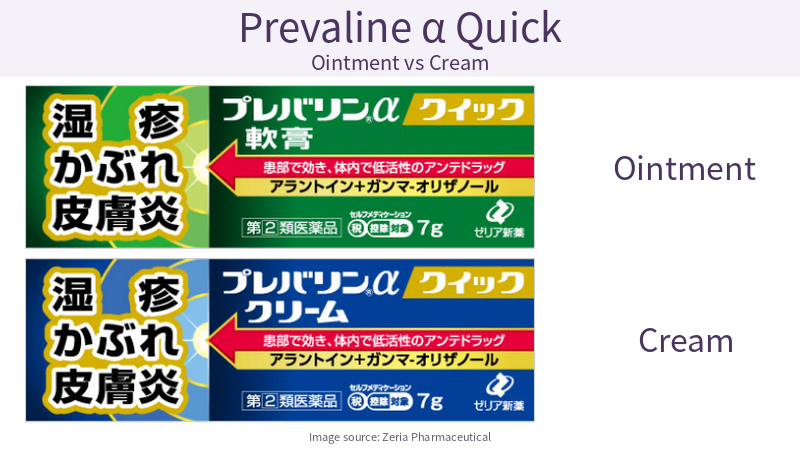
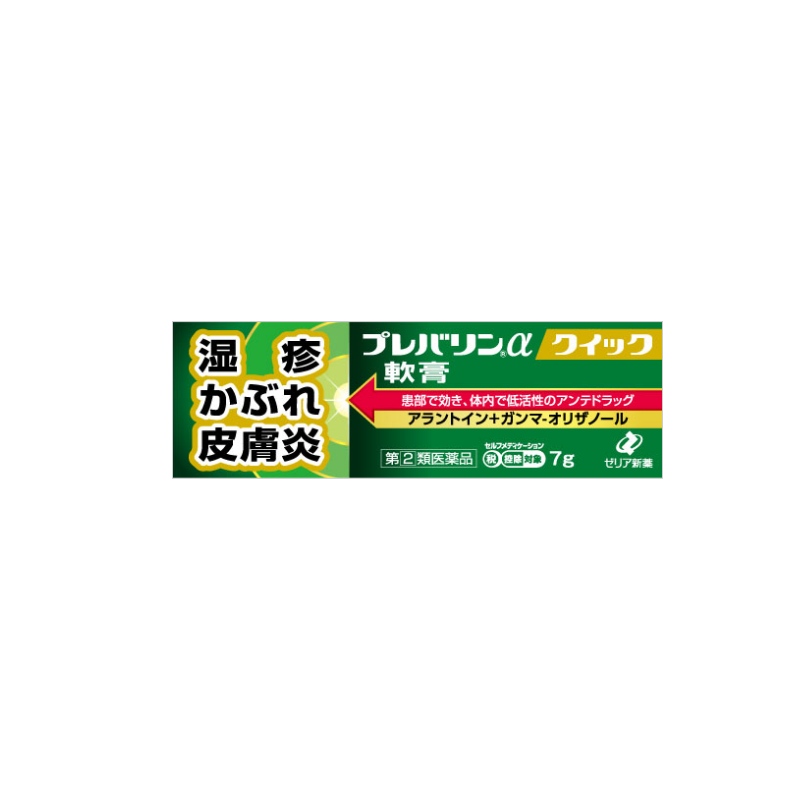
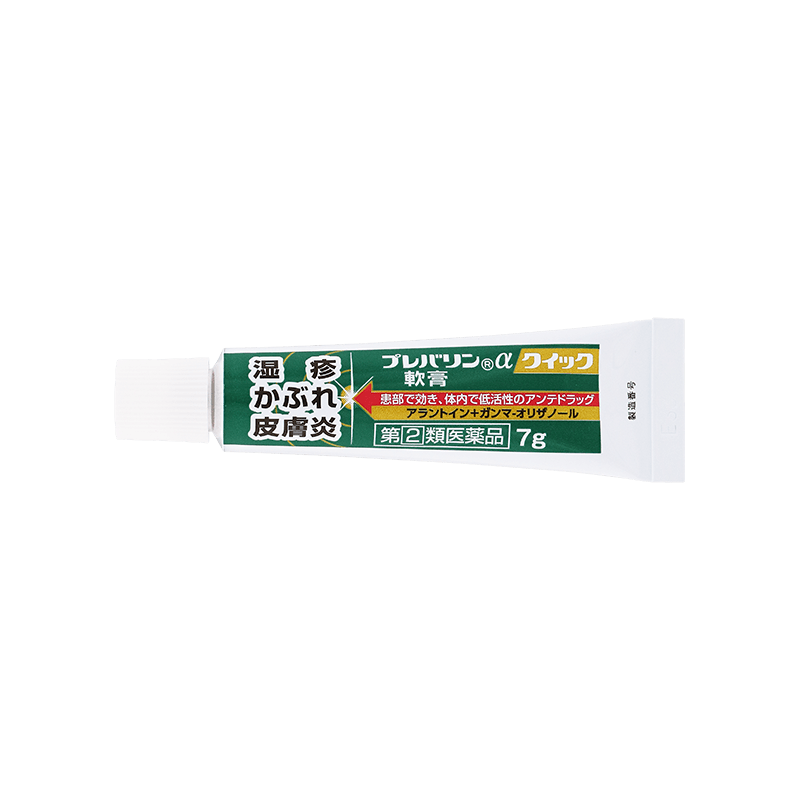
- Ointment: プレバリンαクイック軟膏
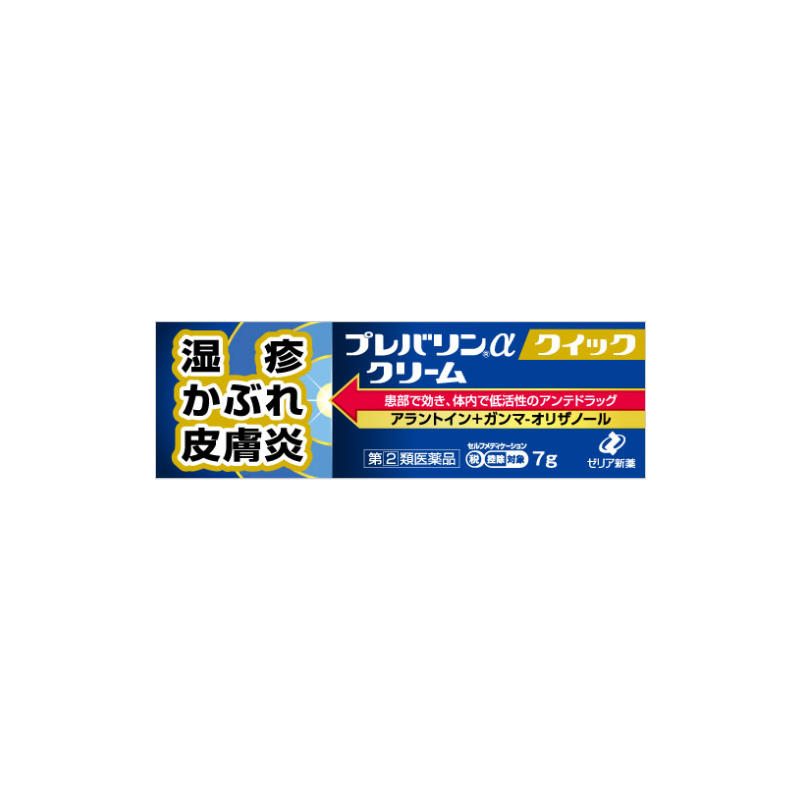
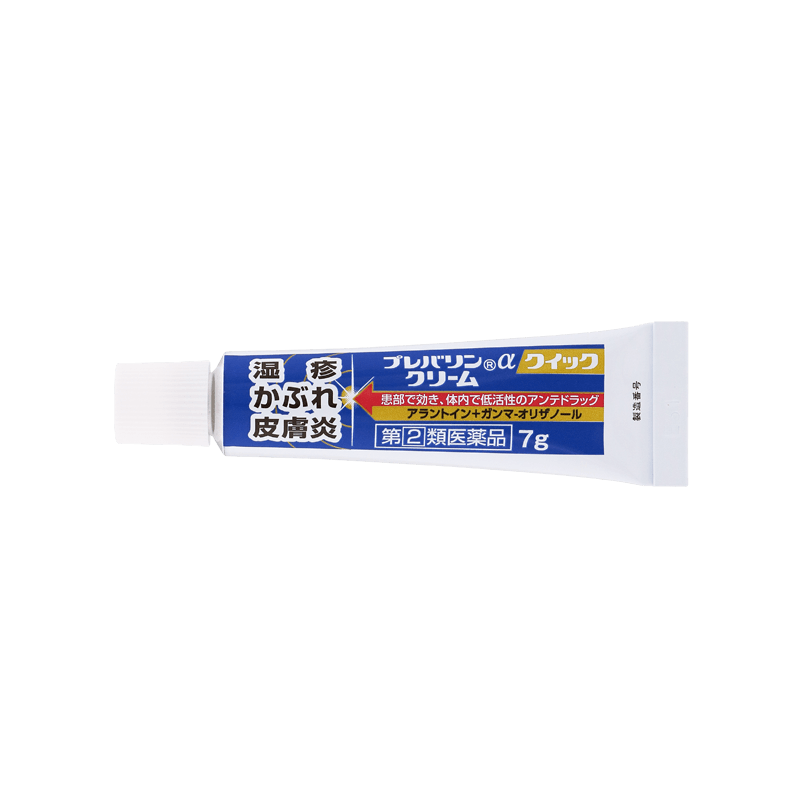
- Cream: プレバリンαクイッククリーム
The official 7 g ointment carton has a green colour scheme, while the cream carton is blue. Use colour as a clue, then check the full name. Check that you have the Quick version. This comparison covers these two Japanese-market products. Other Prevaline lines or products sold in other markets may have different formulations and instructions.
Do both contain a steroid?
Yes. Both contain PVA, a steroid that reduces inflammation. Lidocaine is a local anesthetic used for itch relief. Chlorpheniramine maleate is an antihistamine ingredient for itching.
The amounts below are per 100 g. They are identical in the ointment and cream.
| Active ingredient | Amount per 100 g |
|---|---|
| Prednisolone valerate acetate (PVA) | 0.15 g |
| Chlorpheniramine maleate | 1 g |
| Vitamin E acetate | 0.5 g |
| Lidocaine | 2 g |
| Isopropyl methylphenol (IPMP) | 0.1 g |
| Allantoin | 0.25 g |
| Gamma-oryzanol | 1 g |
The manufacturer describes PVA as an “antedrug” steroid: it acts in the skin and is rapidly broken down into less active substances after absorption into the body. Side effects are still possible. This does not remove the limits on where, how much or how long to use the medicine.
How to apply it and when to stop
Application
- Read the leaflet in your pack and check the restrictions above before starting.
- The labeled directions are to apply an appropriate amount to the affected area several times a day. Use externally only, and keep it out of the mouth and eyes.
- Do not cover the treated area with plastic wrap or another poorly ventilated material.
- Close the cap tightly and store in a cool place out of direct sunlight and children’s reach. Keep the medicine in its original container, and do not use it after its expiry date.
If it gets into an eye, rinse immediately with water or lukewarm water. See an eye doctor if symptoms are severe.
Stop and seek advice
- No improvement after 5–6 days: stop using it and take the leaflet to a doctor, pharmacist or registered OTC medicine seller. Changing from ointment to cream is not a reason to keep treating the same unresolved problem.
- A rash, redness, itching, swelling, fungal infection, acne, pus or persistent irritation develops after use: stop immediately and take the leaflet to a doctor or pharmacist. These may be side effects; do not wait until day 5 or 6.
Even if symptoms improve, do not use it continuously as an everyday skincare product.
Can children use it? Is there a minimum age?
The Japanese leaflets for both products do not state a numerical minimum age. They require a parent or guardian to supervise use in children.
An unstated minimum age does not make the medicine suitable for every child or every body area. For a baby or young child, or an unidentified rash, tell a doctor or pharmacist the child’s age, symptoms and affected area before choosing a treatment.
My suggested order is simple: check suitability, choose the texture, and know when to stop. Describing the rash and its location is more helpful than choosing a tube just because it looks stronger.