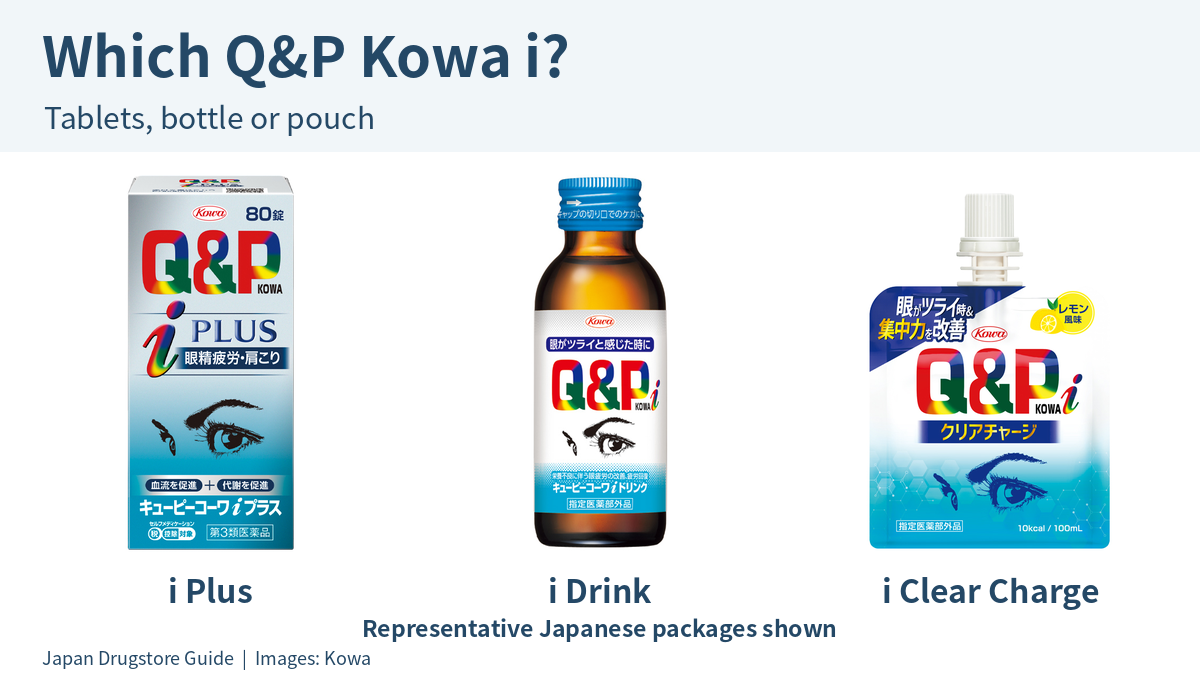
One i-series product is a tablet, another a small bottle, and another a jelly-style pouch. These are not three packages of the same formula. Q&P Kowa i Plus is a Class 3 OTC medicine; i Drink and i Clear Charge are designated quasi-drugs in Japan. Compare uses, caffeine and restrictions before choosing a form.

I'm Irene, a Taiwan-born pharmacist licensed in Japan and working in a Japanese drugstore. This guide separates the three i products so you do not have to choose from an eye-fatigue slogan or an ingredient count alone.
First: should an eye symptom be assessed instead?
Sudden inability to see from one or both eyes, or sudden severe eye pain, requires immediate emergency care. New blurred or double vision, flashes, a dark shadow, a red painful eye or light sensitivity also needs urgent medical assessment. Do not try a product for a month first; an oral product cannot replace an eye examination.
Do not take i Plus if pregnant or possibly pregnant. This restriction applies even though it contains no caffeine. All three are for ages 15 and over. The i Plus label also requires prior consultation if you have had an allergic reaction to medicines or other substances. If pregnant, breastfeeding or taking medicines, ask a pharmacist before choosing a drink instead; quasi-drug status does not mean it suits everyone.
Narrow the choice by labelled use and form
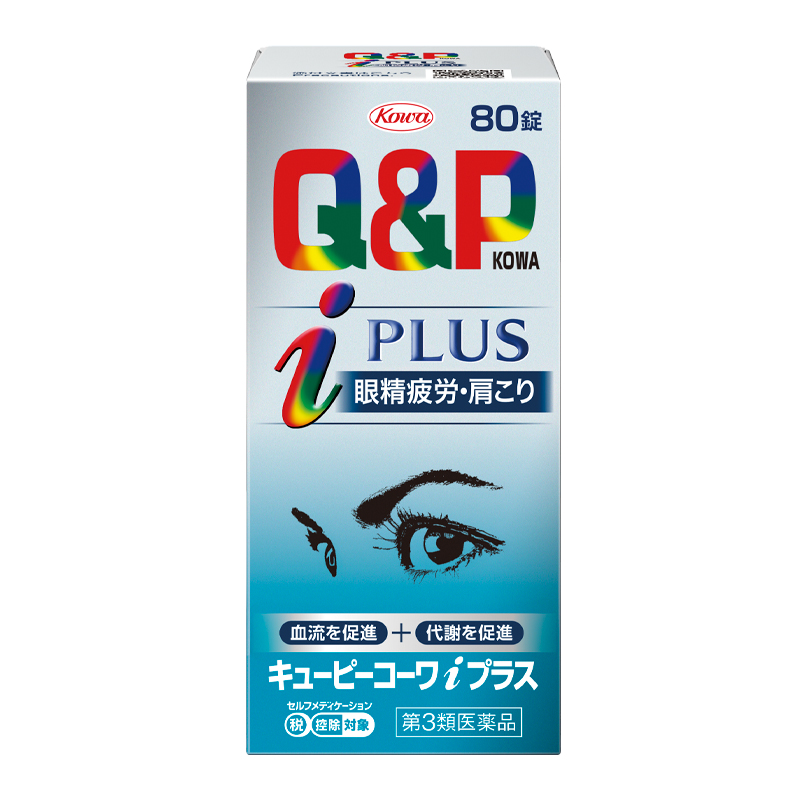
- Comparing symptom relief for eye strain or shoulder stiffness, and prefer tablets? Look at i Plus, after checking the pregnancy restriction and whether the symptoms are suitable for self-care.
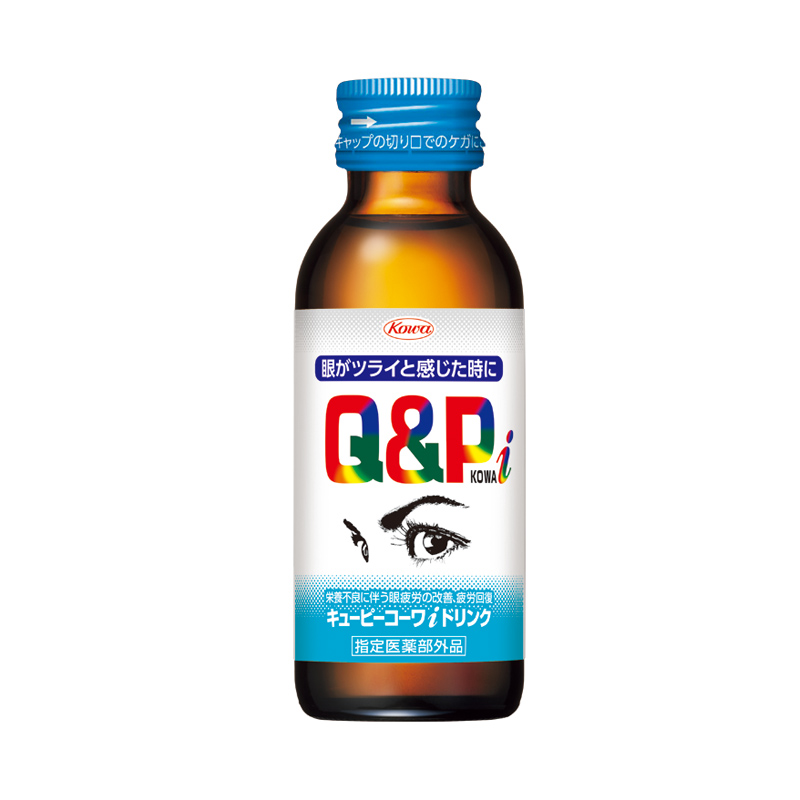
- Prefer a 100 mL bottle? Look at i Drink. Its eye-related indication is improvement and prevention of tired eyes associated with inadequate nutrition in daily life, alongside recovery from and prevention of fatigue. It is not a treatment for every cause of blurred vision or eye pain.
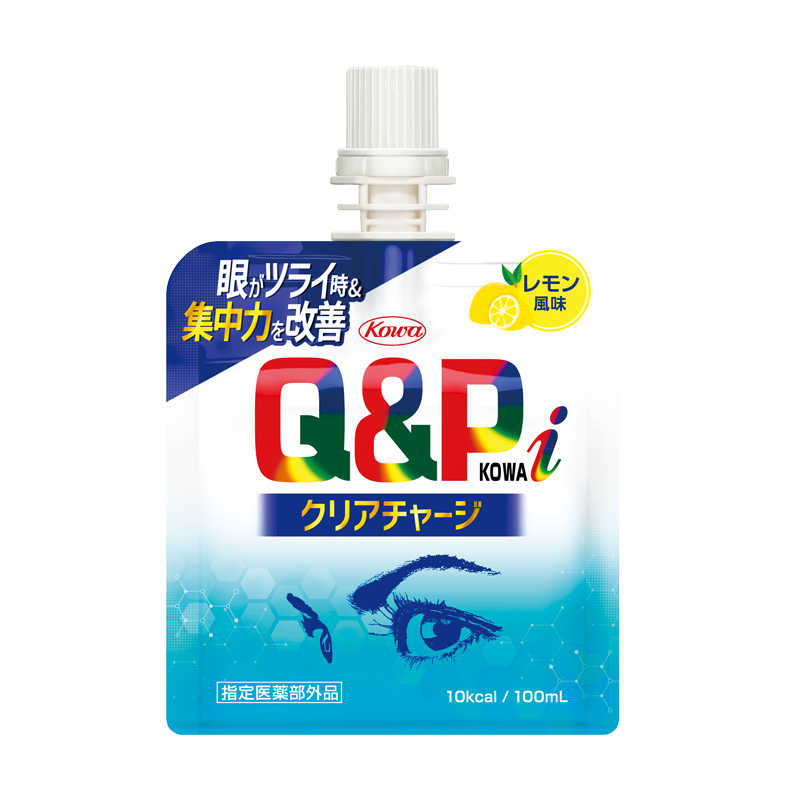
- Prefer a lemon-flavoured, jelly-style pouch? Look at i Clear Charge. It shares the nutrition-related tired-eye indication and also lists maintaining or improving physical strength, physical resistance or concentration. The concentration claim is not reassurance that you can safely drive while tired or keep going without rest.
Main differences: classification, caffeine and daily dose
| Product and Japanese shelf name | Japanese classification | Caffeine | Dose, age 15+ |
|---|---|---|---|
| i Plus/キューピーコーワiプラス | Class 3 OTC medicine | None | 2–3 tablets once daily |
| i Drink/キューピーコーワiドリンク | Designated quasi-drug | 50 mg per 100 mL | One 100 mL bottle once daily |
| i Clear Charge/キューピーコーワiクリアチャージ | Designated quasi-drug | 50 mg per 100 mL | One 100 mL pouch once daily |
The registered sales name for i Clear Charge is キューピーコーワIJ, so IJ on the label does not mean it is the wrong product. Another similarly named item, キューピーコーワi錠, is a separate product outside this comparison; do not assume it is a small pack of i Plus.
Ingredient counts do not rank effectiveness
i Plus includes hepronicate, the vitamin B1 derivative benfotiamine, B12 and vitamin E among its ingredients. Both drinks contain a B1 derivative, B2, B6, goji fruit extract and caffeine; i Clear Charge additionally contains ligustrum fruit extract. Different classifications, uses and formulas cannot be ranked by “seven versus eight ingredients” or a B1 milligram figure.
Both drink labels warn about excessive intake when used with other vitamin-containing products. My advice is to check your existing B-vitamin tablets and nutritional drinks alongside the proposed purchase. Do not treat these three as a morning, afternoon and evening set. If avoiding caffeine is important, neither drink is caffeine-free.
Timing and when to stop
Take i Plus with water or warm water. It can be taken morning, afternoon or evening, before or after food, but only once daily. Stop and consult a doctor, pharmacist or registered medicine seller with the box if symptoms have not improved after about one month. Worsening symptoms or eye warning signs should not wait that long.
With i Plus, stop immediately and seek advice for a rash, redness, itching, nausea, vomiting, stomach discomfort or pain, headache or flushing after use. Also stop and seek advice if loose stools, diarrhoea or dry mouth persist or worsen.
For either drink, stop immediately and seek advice, bringing the product, if a rash or similar reaction develops after use. Also stop and seek advice if there is no improvement after using it for a while. Their labels do not define this as one month; do not borrow i Plus’s interval. B2 may turn urine yellow, which is not a measure of effectiveness.
Storage matters when choosing a larger pack
Kowa lists i Plus packs of 27, 80, 180 and 270 tablets. For opened bottles, six months is a quality-use guideline, not a recommendation to take it for six months. Keep the original container tightly closed and use dry hands. Do not dissolve tablets beforehand; discard accidentally wetted tablets. Avoid drops and impacts, note the opening date, and keep the bottle in its outer box for protection.
Keep all three away from heat and direct sunlight, out of children’s reach. Do not transfer them to another container or use expired products; protect i Plus from moisture. Do not freeze i Clear Charge, even though it resembles a jelly drink.
My order is: rule out eye symptoms needing medical care, check classification and caffeine, then choose tablets, a bottle or a pouch. A convenient form can help, but you do not need the whole i range.
Sources
- Kowa: i Plus product
- Kowa: i Drink product
- Kowa: i Clear Charge product
- Kowa: i Plus complete Japanese box text
- Kowa: i Drink complete Japanese bottle text
- Kowa: i Clear Charge complete Japanese pouch text
- NHS: vision changes and emergency warning signs
Checked 13 October 2026. Follow the current labelling on the product you buy.