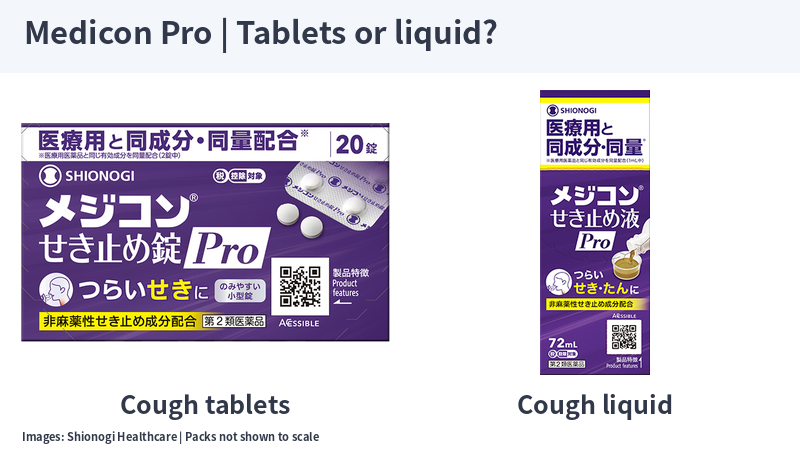

I'm Irene, a Taiwan-born pharmacist licensed in Japan and currently working in a Japanese drugstore. With Medicon Pro, the useful first question is what is inside each box: the tablets and liquid have different formulas, even though both carry the same purple branding.
Medicon Pro tablets are labeled for cough; Medicon Pro liquid is labeled for cough and phlegm. Both are for ages 15 and over. The liquid is not a dose-for-dose replacement for the tablets. Choose one appropriate product with a pharmacist, and do not take the two together.
Product pages and Japanese package leaflets checked on October 14, 2026 (Japan time). This guide compares the Japanese over-the-counter products, not prescription Medicon. Read the leaflet supplied with your purchase before use.
First, match the full product name
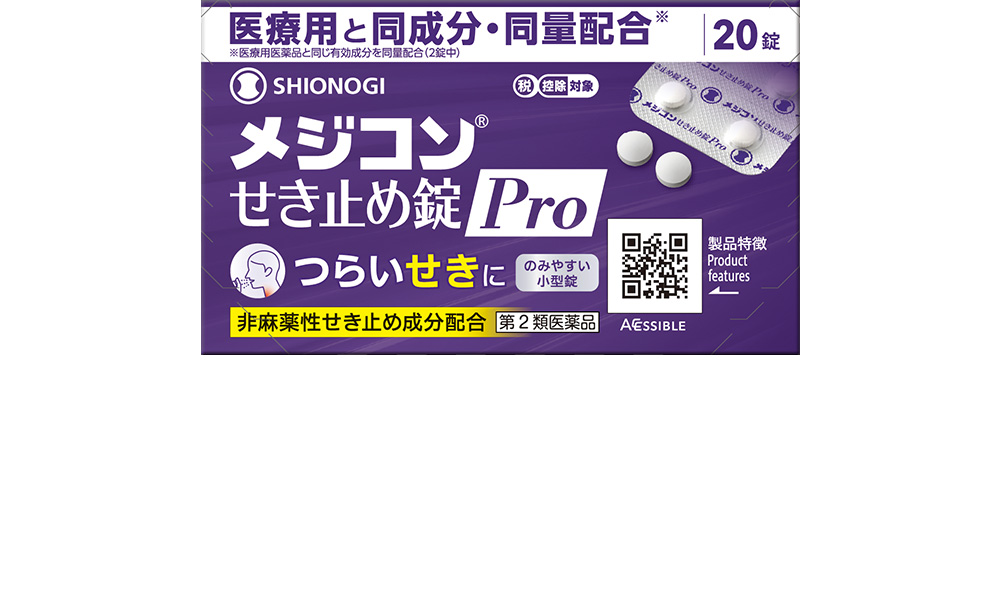
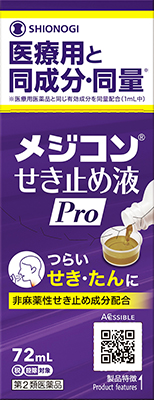
The characters 錠 (tablets) and 液 (liquid) matter more than the word “Pro.” These are nonprescription medicines with their own formulas and directions, not prescription Medicon. Do not interchange the two OTC doses. A February 25, 2026 manufacturer notice marked the 40-tablet pack as having sales suspended, so do not assume every pack shown in older shopping guides is available.
Which difference matters for your symptoms?
- Cough, without a need for an added phlegm ingredient: the tablets contain one active ingredient, dextromethorphan, a cough suppressant.
- Cough with phlegm: the liquid also contains potassium cresolsulfonate, which helps loosen phlegm. That added ingredient changes the formula, not just the texture.
- Trouble swallowing tablets: a liquid may be easier to take, but you still need to check whether its ingredients fit your symptoms and other medicines.
- Planning to drive: neither is a suitable choice before driving. Both leaflets prohibit driving or operating machinery after taking the medicine.
Ingredients: compare the same daily basis
The amounts below are the labeled total for one day at the adult dose, age 15 and over: 6 tablets versus 18 mL of liquid. They are not amounts per tablet or per bottle. A dash means the ingredient is not included as an active ingredient.
| Active ingredient | Tablets Pro: 6 tablets/day | Liquid Pro: 18 mL/day |
|---|---|---|
| Dextromethorphan hydrobromide hydrate | 90 mg | 45 mg |
| Potassium cresolsulfonate | — | 270 mg |
| Labeled symptoms | Cough | Cough and phlegm |
Do not use this table to double the liquid dose or to rank one product as universally “stronger.” Each is a separately labeled medicine. The liquid contains ethanol and sucrose among its additives; check with a pharmacist if those matter for you. The tablets contain lactose hydrate.
How to take the Japanese OTC versions
The following is the labeled amount per dose for people age 15 and over, with the frequency shown separately. Neither product may be given to anyone under 15.
| Product | One dose, age 15+ | Frequency and spacing |
|---|---|---|
| Tablets Pro | 2 tablets with water or lukewarm water | 3 times daily; at least 4 hours between doses |
| Liquid Pro | 6 mL | 3 times daily; at least 4 hours between doses |
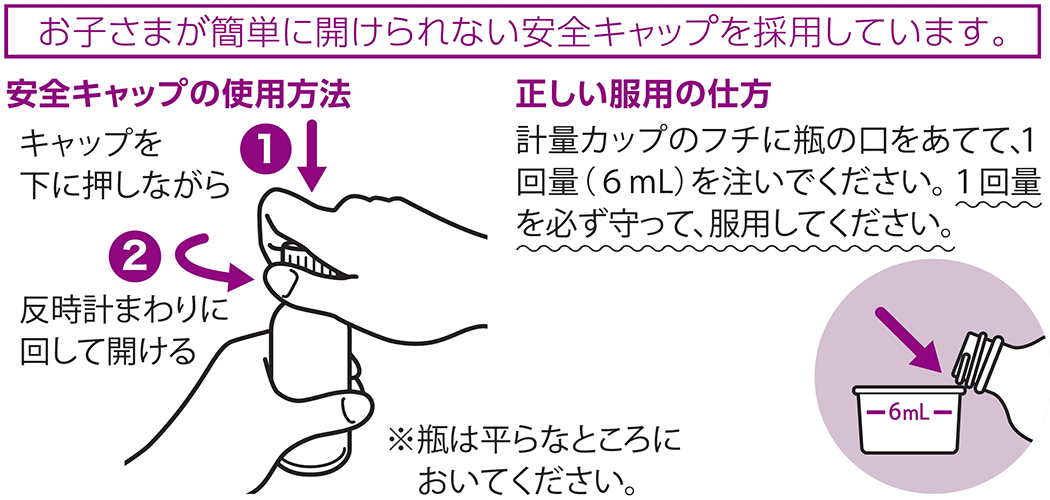
For the liquid, use the supplied measuring cup and measure 6 mL each time. The 72 mL bottle is not a single dose. Open the safety cap by pushing down while turning counterclockwise; wipe the bottle mouth before closing it. Rinse the measuring cup after use and keep it clean. Store the tightly closed bottle away from light and heat, out of children's reach. Keep tablets in their original packaging and remove them from the blister before swallowing.
Check combinations before the first dose
- Do not use either product if you have had an allergic reaction to it or one of its ingredients.
- Do not combine it with another cough/phlegm medicine, a cold medicine, a sedative, or an oral medicine containing an antihistamine, including some allergy, runny-nose and motion-sickness medicines.
- Ask a doctor, pharmacist or registered medicine seller first if you are receiving medical treatment, are pregnant or may be pregnant, have a history of medicine allergies, or have a high fever. Show all prescription and nonprescription medicines you take.
- Do not exceed the directions. “Non-narcotic” on the packaging does not mean there is no risk from misuse. If too much is taken, seek medical attention immediately.
When to stop self-treatment
For either product, stop and consult a healthcare professional if symptoms have not improved after 5–6 doses, rather than continuing through several boxes. The liquid leaflet additionally says to consult before using it for more than two weeks, even if symptoms improve; this is not permission to wait two weeks when it is not helping.
Stop and seek advice promptly for a rash, itching, nausea, vomiting, appetite loss or dizziness. Breathing difficulty, hoarseness, hives or altered consciousness after a dose can signal a serious reaction and need immediate medical attention. Stop and consult if drowsiness persists or becomes worse. A cough that keeps returning deserves assessment rather than repeated switching between OTC brands.
Irene's shelf check
- Read the full name: 錠Pro or 液Pro.
- Confirm age 15+, symptoms, other medicines and whether you need to drive.
- Follow that product's dose; never combine the two or convert one into the other by milligrams.
- Keep the leaflet and reassess after 5–6 doses if there is no improvement.
Official sources
- Shionogi Healthcare: tablets product information and Japanese tablets leaflet, May 2026 revision
- Shionogi Healthcare: liquid product information and Japanese liquid leaflet, May 2026 revision
- Manufacturer's Medicon range and FAQ
- Manufacturer notice on misuse-prevention labeling and pack availability, February 25, 2026
Product photographs are credited to Shionogi Healthcare and are shown to help identify the exact Japanese products. Packaging may change. This article supports product identification and safe label reading; it does not diagnose the cause of a cough.