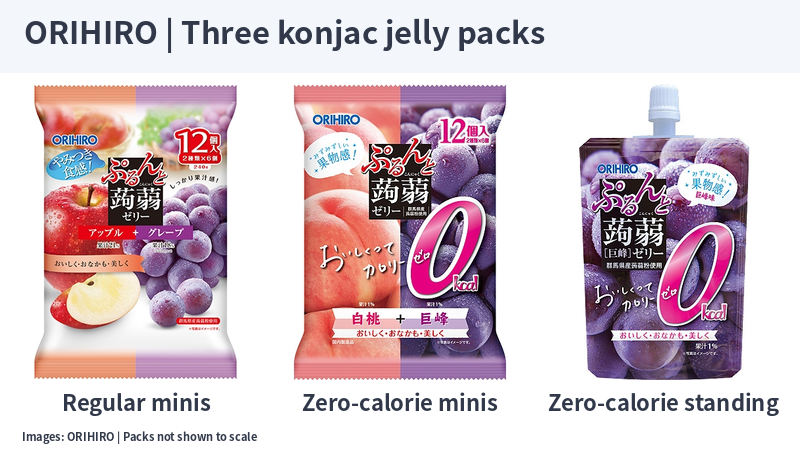
Choose mini pouches when you want separate small snack portions. For a zero-calorie option, check both the pouch size and carbohydrate panel. A 130 g standing pouch provides a larger single pack. All three need to be squeezed out slowly and chewed thoroughly; a spout is not an invitation to suck the jelly straight in.

I’m Irene, a Taiwan-born, Japan-licensed pharmacist working in a Japanese drugstore. With these snacks, I start with two easy-to-miss details: whether the figures describe one little pouch or the whole bag, and whether the fruit flavor name tells the full allergen story.
Sources checked October 14, 2026, Japan time. This guide covers three specified Japanese-market products, excluding seasonal flavors and other nutritional jellies. Check the actual package when buying.
Start with the portion you want
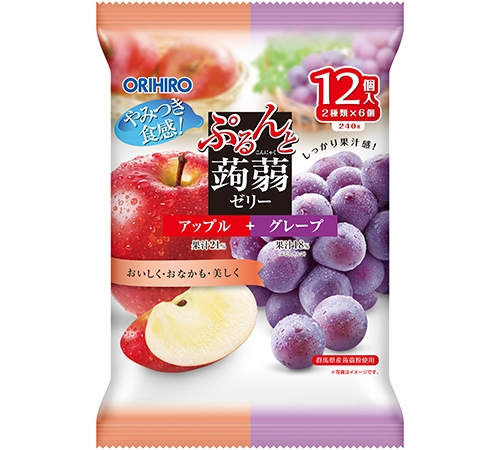
- Separate portions for your bag: Apple and Grape mini pouches, 20 g each, 12 per outer bag.
- Zero-calorie mini portions: White Peach and Kyoho, 18 g each, 12 per outer bag. Check the peach allergen carefully.
- A larger pack: zero-calorie Kyoho standing pouch, 130 g. Eat promptly after opening rather than carrying an opened pouch over several days.
Recognize the exact packs
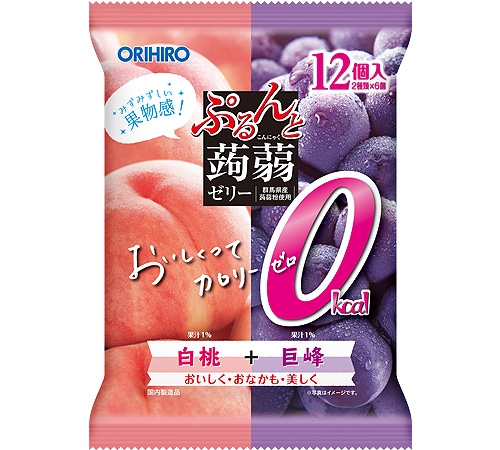
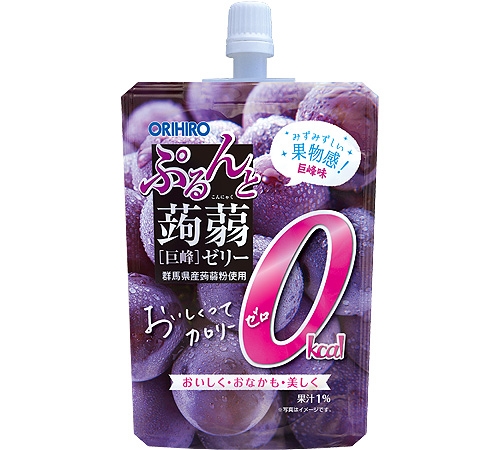
Compare the serving before comparing the numbers
The official figures below are per 20 g regular mini pouch, per 18 g zero-calorie mini pouch, or per 130 g standing pouch. These are different-sized portions, not a comparison per 100 g or a recommended daily intake.
| Exact product | Energy per portion | Carbohydrate per portion | Pack size and allergen points |
|---|---|---|---|
| Apple and Grape mini pouches | 13 kcal for either flavor | Apple 3.3 g; Grape 3.2 g | 12 × 20 g; both contain apple |
| Zero-calorie White Peach and Kyoho minis | 0 kcal for either flavor | 1.03–2.2 g for either flavor | 12 × 18 g; peach in White Peach; Kyoho: no allergens listed by the maker |
| Zero-calorie Kyoho standing pouch | 0 kcal | 5.6–10.0 g | 130 g pouch; no allergens listed by the maker |
Zero calories does not mean zero carbohydrate
ORIHIRO explains its zero-calorie declaration using a threshold of less than 5 kcal per 100 g. It does not mean every ingredient contributes literally no energy. The zero-calorie minis still list carbohydrate. Their fiber is only 0.03–0.2 g per 18 g pouch; the standing product has 0.1–0.5 g per 130 g. The word “konjac” alone is no reason to count these as a major fiber source.
The regular Apple and Grape product includes fructose-glucose syrup, sugar and sweeteners. Both zero-calorie products use erythritol and other sweeteners. Choose for flavor and portion preference; these snacks should not take the place of a meal or planned sports fuel.
Grape flavor can still contain apple
The regular Grape mini also uses apple juice. Avoiding only the Apple-flavored pieces does not solve an apple allergy. White Peach in the zero-calorie assortment contains peach. The maker checks 28 allergen ingredients and lists none for either zero-calorie Kyoho product. This does not guarantee that nobody can react to them. Check each current package. The zero-calorie products contain aspartame, including an L-phenylalanine compound; check suitability if you have been instructed to restrict phenylalanine.
How to eat it matters more than the small pack
- Open a mini pouch slowly along the dotted line. Keep the cut opening out of your mouth.
- Squeeze out a small amount at a time and eat it in several portions. Chew thoroughly before swallowing; do not suck in the whole jelly.
- Squeeze the standing pouch slowly and chew thoroughly too. Eat it promptly after opening.
- Do not freeze it. Freezing makes the jelly harder and can cause a large piece to come out at once. Do not heat the standing pouch either.
For the mini pouches, the maker instructs caregivers to accompany children and older adults and watch for choking. Choose according to the person’s ability to chew and swallow, with close supervision. If someone cannot chew reliably or has swallowing difficulties, do not treat konjac jelly as an easy-to-swallow snack; ask their care professional first. Large quantities, individual sensitivity or your current condition may lead to loose stools. Stop if it does not agree with you.
My shopping takeaway
For small, separate snacks, choose a mini-pouch flavor after checking its allergens. If you prefer zero-calorie jelly, make sure you have noticed the 18 g versus 130 g difference. When giving it as a gift, explain the eating instructions too. Pack format changes the portion and how you serve it; careful chewing still matters.