
I'm Irene, a Taiwan-born pharmacist licensed in Japan and currently working in a Japanese drugstore. With Jikinin, I would separate two decisions: which formula is appropriate, then which dosage form is easier to take. A familiar brand name or a vitamin C badge is not enough to choose a cold medicine.
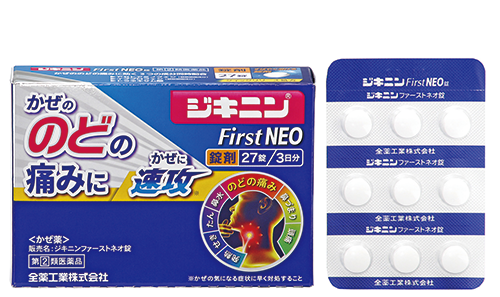
First Neo contains both acetaminophen and ibuprofen, plus tranexamic acid. The two C products use acetaminophen without ibuprofen or tranexamic acid, but C tablets and C fine granules are not identical formulas. All four are combination cold medicines with cough-suppressant and antihistamine ingredients. They are alternatives to assess individually, not products to take together.
Japanese manufacturer pages and actual package leaflets checked on October 14, 2026 (Japan time). This guide covers First Neo tablets, First Neo granules, C tablets and the C fine granules renewed on September 1, 2026. It does not cover First Neo CZ, older unqualified “Jikinin C,” children's syrup or the brand's nourishment drinks. Match the full Japanese name to your pack.
Recognize the four products
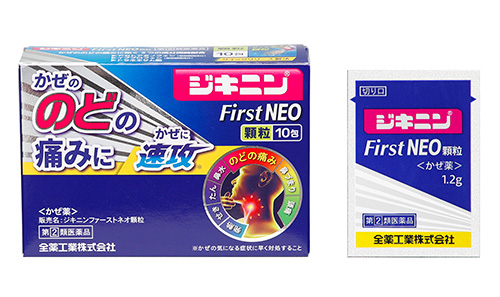
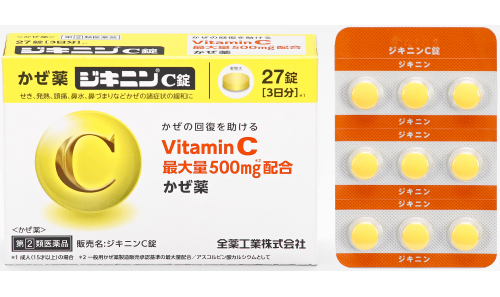
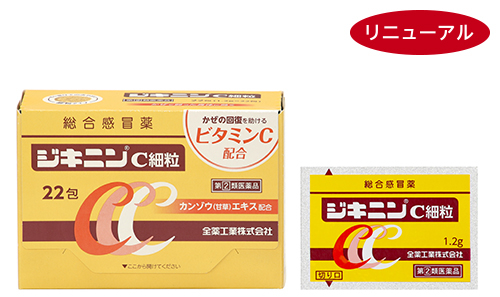
Start with the formula, then the format
- First Neo tablets or granules: options to discuss for cold symptoms including a sore throat. Both combine two pain/fever ingredients with tranexamic acid, but their ibuprofen-related restrictions are important. Do not add another painkiller or throat medicine on your own.
- C tablets or current C fine granules: combination cold medicines containing acetaminophen and vitamins C/B2. Absence of ibuprofen does not make them universally safe or suitable for someone who reacted to other cold medicines.
- Tablets versus sachets: consider what you can swallow and measure reliably. The manufacturer describes fast-dissolving First Neo formulations, but this guide does not claim the granules provide faster clinical relief than the tablets.
All four are labeled to relieve multiple cold symptoms, including fever, sore throat, cough, phlegm, runny or blocked nose, headache, sneezing, chills and muscle/joint pain. If you only have one symptom, ask whether a multi-ingredient medicine is needed at all.
First Neo: compare the same adult daily amount
The table below compares one labeled day for age 15 and over: 9 First Neo tablets or 3 granule sachets. Tablet amounts are printed per day in the leaflet. Granule amounts are calculated as three times the leaflet’s amount per 1.2 g sachet. All quantities are in mg; they are not single-dose amounts.
| Active ingredient | First Neo tablets: 9 tablets/day | First Neo granules: 3 sachets/day, calculated |
|---|---|---|
| Acetaminophen (paracetamol) | 180 mg | 180 mg |
| Ibuprofen | 360 mg | 360 mg |
| Tranexamic acid | 750 mg | 750 mg |
| Licorice extract powder | 121.6 mg (950 mg crude herb equivalent) | 121.59 mg (950.01 mg crude herb equivalent) |
| Dihydrocodeine phosphate | 24 mg | 24 mg |
| dl-Methylephedrine hydrochloride | 60 mg | 60 mg |
| d-Chlorpheniramine maleate | 3.5 mg | 3.51 mg |
| Anhydrous caffeine | 75 mg | 75 mg |
| Glycine | 180 mg | 180 mg |
The small decimal differences come from multiplying rounded per-sachet label figures: 40.53 mg licorice extract × 3 = 121.59 mg, and 1.17 mg d-chlorpheniramine × 3 = 3.51 mg. They are not evidence that one product is clinically stronger. Similar ingredient lists also do not establish faster action or clinical interchangeability. Granules contain aspartame, a phenylalanine source; ask a pharmacist if you need to avoid it.
C tablets and renewed C fine granules: two real differences
This table uses the same adult daily basis, age 15 and over: 9 C tablets or 3 C fine-granule sachets. Ingredient quantities are in mg. The vitamin C entries name the exact chemical form; 500 mg calcium ascorbate is not presented as 500 mg ascorbic acid.
| Active ingredient | C tablets: 9 tablets/day | Current C fine granules: 3 sachets/day |
|---|---|---|
| Acetaminophen (paracetamol) | 900 mg | 900 mg |
| Dihydrocodeine phosphate | 24 mg | 24 mg |
| dl-Methylephedrine hydrochloride | 60 mg | 60 mg |
| d-Chlorpheniramine maleate | 3.5 mg | 3.5 mg |
| Licorice extract powder | 121.6 mg (950 mg crude herb equivalent) | 288 mg (2,250 mg crude herb equivalent) |
| Anhydrous caffeine | 75 mg | 75 mg |
| Vitamin C ingredient | Calcium ascorbate 500 mg | Ascorbic acid 500 mg |
| Riboflavin (vitamin B2) | 12 mg | 12 mg |
The renewed fine granules contain a different amount of licorice extract, as well as a different vitamin C form. That is a formulation difference, not a reason to call one “better.” The fine-granule leaflet specifically includes swelling among reasons to consult before use, and lists pseudoaldosteronism/myopathy among rare serious reactions. Do not stack licorice-containing medicines or use the C products as daily vitamin supplements. Their indications are relief of cold symptoms, not prevention of infection.
How much is one dose?
The table below gives the labeled single dose. All four are taken three times daily after meals, preferably within 30 minutes, with water or lukewarm water. Ages 12–14 means at least 12 but under 15; children must be supervised by a parent or guardian.
| Product | One dose, age 15+ | Younger users |
|---|---|---|
| First Neo tablets | 3 tablets | Under 15: do not use |
| First Neo granules | 1 sachet | Under 15: do not use |
| C tablets | 3 tablets | Age 12–14: 2 tablets; under 12: do not use |
| C fine granules | 1 sachet | Age 12–14: 2/3 sachet; under 12: do not use |
Do not swallow the blister packaging. Keep each product in its original pack and out of children's reach. The C fine-granule leaflet says to fold over the opened sachet and use the remaining portion within two days when a sachet has been divided. Do not use the dose printed for a different Jikinin product.
Safety checks that apply before buying
- All four: do not use if you have reacted to the product/ingredients, or have developed asthma after a cold medicine or a pain/fever medicine. Do not drive or operate machinery after taking them. Avoid alcohol before and after dosing.
- All four: do not combine with another cold medicine, pain/fever medicine, sedative, cough/expectorant medicine or oral antihistamine medicine. First Neo also prohibits other oral medicines containing tranexamic acid.
- Breastfeeding: the leaflets say not to take the product, or to avoid breastfeeding if taking it. Ask for an appropriate alternative and individualized advice.
- First Neo specifically: do not use within 12 weeks of the expected delivery date. At other stages of pregnancy, consult first; pregnancy is also a consultation condition for the C products. Do not exceed five days of First Neo use, and never exceed the dose.
Before using any of these, get a medicine check if you are under medical or dental treatment, are older, have had medicine allergies, have a high fever or difficulty urinating, or have a chronic condition. All four leaflets include thyroid disease, diabetes, heart disease, high blood pressure, liver/kidney disease, glaucoma, respiratory impairment, obstructive sleep apnea and obesity in their consultation warnings. First Neo additionally lists blood clots or clot risk, systemic lupus erythematosus/mixed connective tissue disease, and a history of stomach/duodenal ulcer, ulcerative colitis or Crohn's disease; the C leaflets also list stomach/duodenal ulcer. Read the full leaflet with a pharmacist rather than treating this comparison as a personal clearance.
Do not wait for the box to run out
For all four, stop and consult if there is no improvement after 5–6 doses. First Neo particularly calls out fever lasting three days or more, or recurring fever. Its five-day maximum does not override the earlier 5–6-dose reassessment point. The C products must not be used continuously long term.
Stop and seek advice for suspected side effects, including a rash, nausea/vomiting, dizziness or difficulty urinating, and if constipation, dry mouth or drowsiness persist or worsen. Breathing difficulty, severe rash/blistering, jaundice, chest pain or altered consciousness need urgent medical assessment. With C fine granules, new or worsening weakness, limb stiffness or muscle pain also calls for prompt medical assessment. Do not switch to another Jikinin product to work around a suspected reaction.
Irene's takeaway
Pick by full name and formula first. First Neo contains both acetaminophen and ibuprofen; the C label means vitamins are included in a medicine, not that it is a supplement. Then check age, other medicines, driving and the exact single dose. If those checks are unclear, take a photograph of your current medicines to the pharmacist before buying.
Official sources
- Zenyaku: First Neo tablets and Japanese leaflet
- Zenyaku: First Neo granules and Japanese leaflet
- Zenyaku: C tablets and Japanese leaflet
- Zenyaku: renewed C fine granules and Japanese leaflet
Product photographs are credited to Zenyaku and show the Japanese formulations covered here. Packaging may change. This article is for informed product identification, not diagnosis or a personalized treatment recommendation.