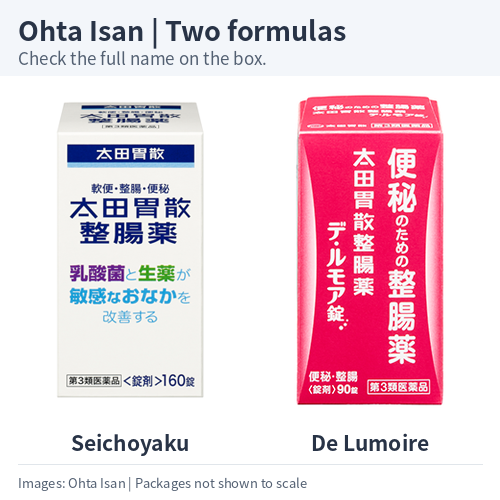

I’m Irene, a Taiwan-born, Japan-qualified pharmacist. With Ohta Isan, the words after the brand name matter. If you are shopping for irregular bowel movements, look for 整腸薬, meaning an intestinal-regulating medicine. The familiar stomach powder belongs to a different comparison.
A quick way to choose
For a formula aimed at both loose stools and constipation, start by comparing Ohta Isan Seichoyaku. If recurring constipation is the main problem, De Lumoire is the more constipation-focused option in this pair. Both are Japanese Class 3 OTC medicines, both include bacterial preparations plus other active ingredients, and both are labelled from age five.
- Ohta Isan Seichoyaku, 太田胃散整腸薬: the white-and-blue pack. Combines bacteria with geranium and mallotus extracts, gentian and a digestive enzyme.
- Ohta Isan Seichoyaku De Lumoire tablets, 太田胃散整腸薬デ・ルモア錠: the pink/red pack. Combines bacteria with magnesium hydroxide, cassia seed extract and citrus peel.
- Severe or unusual symptoms: do not let a package comparison delay medical advice. The warning signs below take priority.
De Lumoire is not restricted to women. Choose by symptoms and suitability, rather than the colour of its box. Neither product is an IBS diagnosis or a promise of immediate relief.
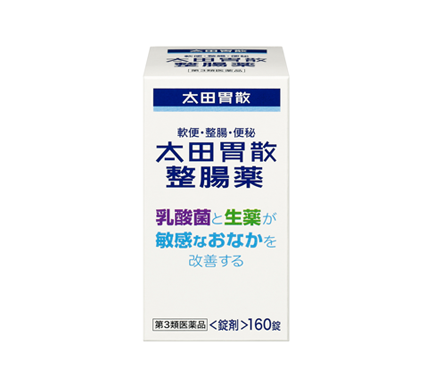
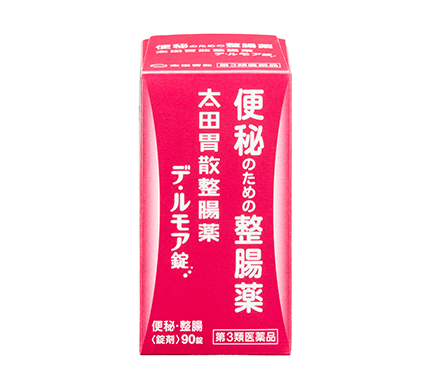
Same age bands and schedule, different formulas
| Point | Ohta Isan Seichoyaku | De Lumoire tablets |
|---|---|---|
| Japanese category | Class 3 OTC medicine | Class 3 OTC medicine |
| Labelled uses | Loose stools, bowel regulation, constipation, abdominal bloating | Constipation, bowel regulation, loose stools, abdominal bloating |
| Practical emphasis | Broader loose-stool/constipation choice | Constipation-focused choice |
| Adult dose, age 15+ | 3 tablets per dose, 3 times daily after meals | 3 tablets per dose, 3 times daily after meals |
| Adult total per day | 9 tablets | 9 tablets |
| Current pack sizes | 160 or 370 tablets | 90 or 180 tablets |
| A key pre-use check | Medical treatment or previous medicine-related allergy | Medical treatment or diagnosed kidney disease |
The approved uses overlap; the different order of symptoms is not proof that one works better for everyone. Pack sizes are options within each formula, not extra products with different doses. If your main concern is heartburn or heaviness after eating, see the separate Ohta Isan S and A guide.
What is actually in the tablets?
All quantities below are in the adult daily amount of nine tablets, not one dose. Bacterial ingredient weights are not live-organism counts, and comparing these milligrams cannot establish which medicine has “stronger probiotics.”
| Active ingredient, per 9 tablets/day | Seichoyaku | De Lumoire |
|---|---|---|
| Bifidobacteria | 30 mg | 60 mg |
| Lactomin (Lactobacillus gasseri preparation) | 30 mg | 60 mg |
| Butyric acid bacteria | 90 mg | 30 mg |
| Geranium extract, ゲンノショウコ | 102 mg; equivalent to 1,020 mg crude herb | Not included |
| Mallotus extract, アカメガシワ | 63 mg; equivalent to 504 mg crude herb | Not included |
| Gentian powder | 51 mg | Not included |
| Biodiastase 1000, a digestive enzyme | 60 mg | Not included |
| Magnesium hydroxide | Not included | 1,200 mg |
| Cassia seed extract, ケツメイシ | Not included | 150 mg; equivalent to 1,500 mg crude herb |
| Citrus peel powder, チンピ | Not included | 300 mg |
Seichoyaku's geranium and mallotus components support its bowel-regulating formula; gentian and the enzyme add digestive roles. De Lumoire uses a different combination built around constipation, with cassia seed extract and magnesium hydroxide alongside the bacteria.
The magnesium is a reason to check kidney health, not to call De Lumoire a magnesium supplement. Its leaflet specifically asks people diagnosed with kidney disease to consult before taking it. Do not assume you can freely add another magnesium-containing constipation medicine or antacid; have a pharmacist check the full combination.
Tablet appearance and everyday use
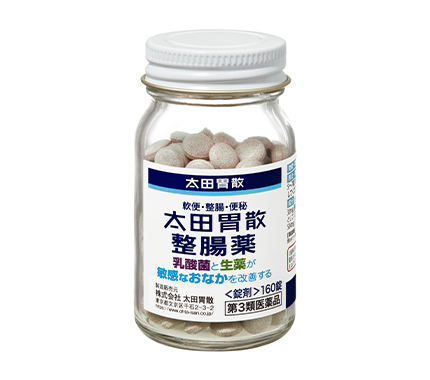
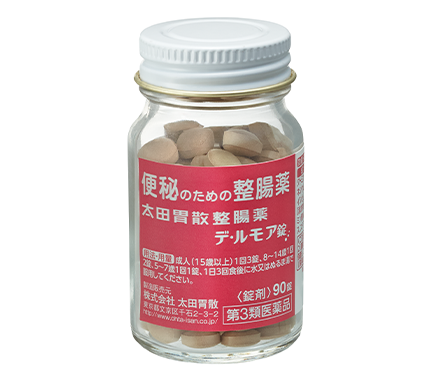
Both are bottled tablets taken with water or lukewarm water after meals. The speckles visible in the tablets come from their ingredients. Appearance does not tell you the dose, and the two bottles should not be mixed together.
| Age | Tablets per dose, either product | Doses per day | Total tablets per day |
|---|---|---|---|
| 15 and over | 3 tablets | 3, after meals | 9 tablets |
| 8–14 | 2 tablets | 3, after meals | 6 tablets |
| 5–7 | 1 tablet | 3, after meals | 3 tablets |
| Under 5 | Do not use | Do not use | Do not use |
- Check the exact product name, age band and expiry date. A child must take it under a parent or guardian's supervision.
- Take the appropriate number of tablets after meals with water or lukewarm water. These are not waterless chewable products.
- Discard the bottle's packing material after first opening; it protects the tablets during transport. Keep the tablets in their original bottle, tightly closed in a cool, dry place away from sunlight and children.
- Handle tablets with dry hands. Do not return tablets touched with wet hands to the bottle, and do not use an expired product. Once opened, use it promptly rather than assuming the printed expiry alone guarantees quality indefinitely.
For constipation, meals, fluids, movement and a regular toilet routine also matter. Follow any fluid restriction you have been given for a medical condition.
Before taking it, and when to stop
For either product, consult before use if you are receiving medical treatment. In addition:
- Seichoyaku: consult first if you have previously had an allergic reaction to medicines or similar substances. Stop immediately and consult if you develop a rash, redness or itching after taking it.
- De Lumoire: consult first if you have been diagnosed with kidney disease. Diarrhoea can occur; stop and consult if it persists or gets worse.
- Both: stop and consult if symptoms have not improved after about two weeks. This is a review point, not an instruction to wait two weeks while symptoms worsen.
Seichoyaku contains lactose as an additive. If you have an ingredient allergy or an intolerance that affects medicine choice, show the complete label to a pharmacist. Do not assume lactose intolerance and milk-protein allergy are the same condition.
The leaflets do not give a separate pregnancy or breastfeeding dose. If you are pregnant, breastfeeding or choosing medicine for a child with recurring symptoms, ask a pharmacist or clinician which option fits your situation rather than treating the general age table as an individual recommendation.
Seek medical assessment for blood in the stool, unexplained weight loss, a new persistent change in bowel habits or recurring symptoms. Bloating with vomiting or inability to pass stool or gas needs urgent assessment; sudden severe abdominal pain needs emergency care. Do not simply add an intestinal regulator for these symptoms.
Irene’s shelf check
Find 整腸薬, then check which formula matches your concern: Seichoyaku for the broader loose-stool/constipation comparison; De Lumoire when constipation is the main issue, with its kidney-disease precaution in mind. The shared dosing schedule makes the bottles look similar, but their ingredients and stop-use instructions still need separate attention.
Sources
- Ohta Isan Seichoyaku: official product information
- Seichoyaku: Japanese leaflet
- De Lumoire: official product information
- De Lumoire: Japanese leaflet
- NHS: constipation
- NHS: bloating and symptoms needing medical help
Product information checked on 14 October 2026. The age bands and doses above are for these Japanese products; follow the label on your own pack.