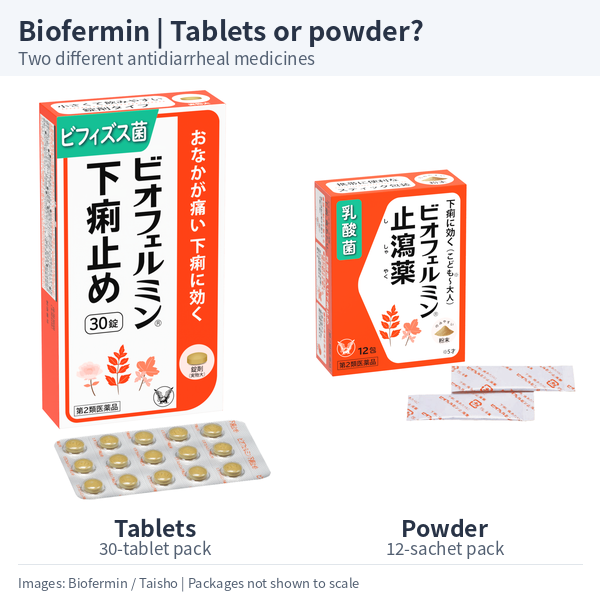

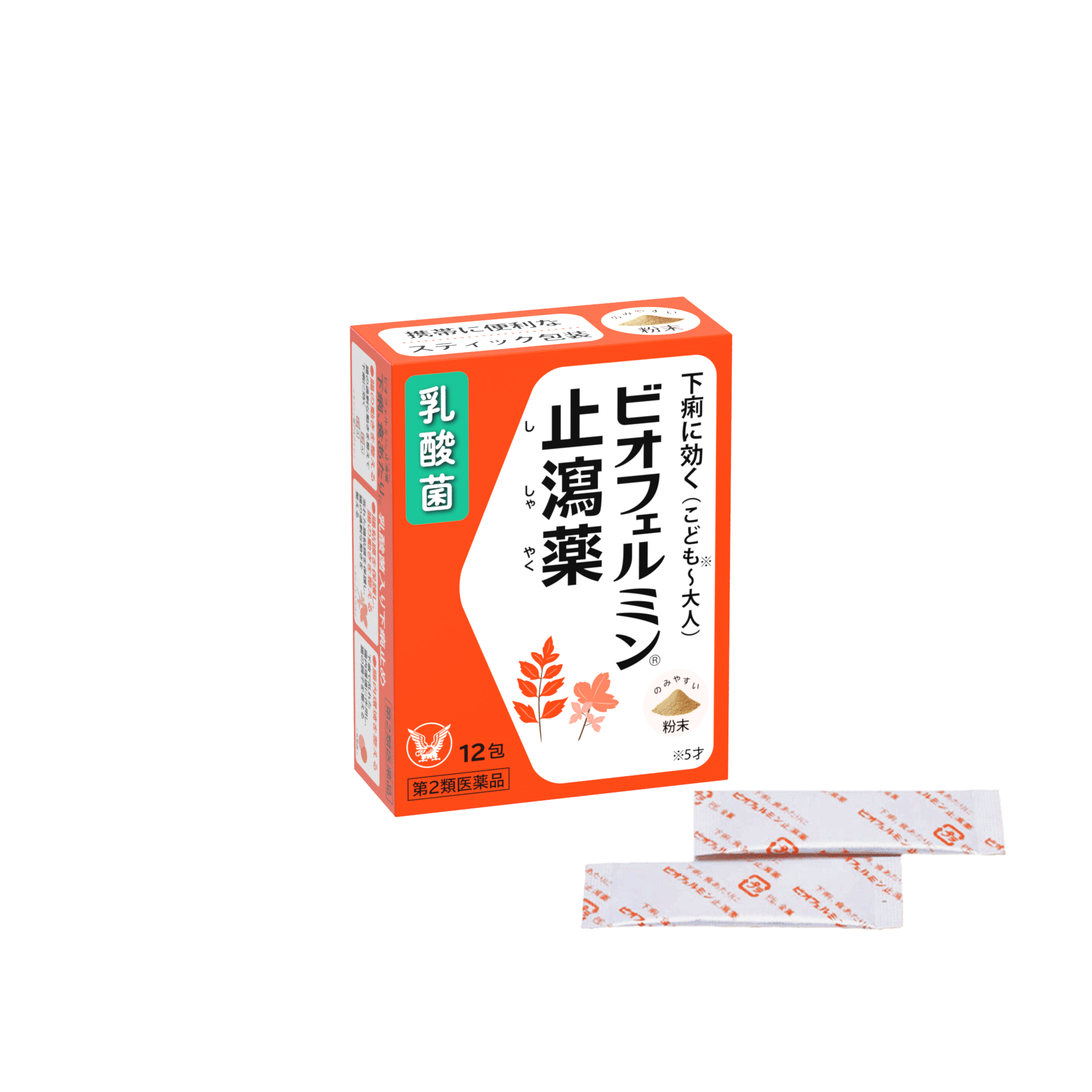
I’m Irene, a Taiwan-born, Japan-qualified pharmacist. Biofermin is a familiar name in the intestinal-care aisle, but these two orange boxes need a closer look: ビオフェルミン下痢止め is a tablet medicine, while ビオフェルミン止瀉薬 is a different antidiarrheal formula in powder sachets.
Choose by age, ingredients and safety before format
The tablets are labelled from age 11; the powder from age five. Both are Class 2 OTC antidiarrheal medicines containing scopolia extract, with driving and medicine-combination restrictions. They are not simply interchangeable probiotic formats.
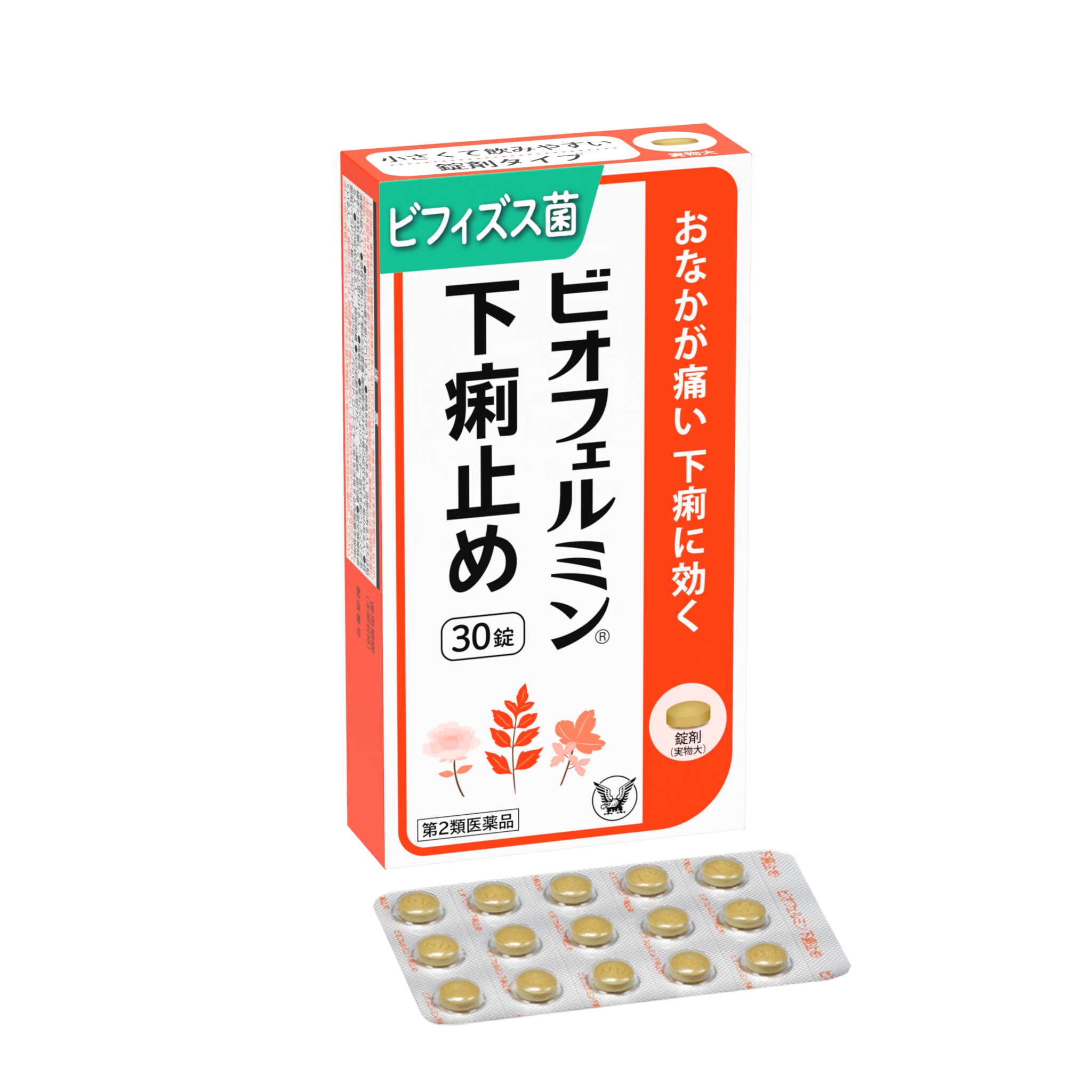
- Prefer tablets and meet the age/safety conditions? Look for ビオフェルミン下痢止め (Biofermin antidiarrheal tablets), a 30-tablet blister pack.
- Prefer powder, or need to discuss an option for a child aged 5–10? Look for ビオフェルミン止瀉薬 (Biofermin Shishayaku). The child's dose is a fraction of a sachet, not a whole adult sachet.
- Milk allergy: do not take the powder. Its label also prohibits use after an allergic reaction to the product or one of its ingredients.
- Fever, blood in the stool, persistent mucus, severe diarrhoea or significant abdominal symptoms? Get advice before trying to stop the diarrhoea.
Neither replaces fluids and salts lost through diarrhoea. For a child, discuss the symptoms with a pharmacist or clinician before choosing a medicine; being above the package's minimum age does not settle the cause or severity.
First, make sure it is the right Biofermin family
These products treat diarrhoea symptoms, including diarrhoea with abdominal pain, indigestion-related diarrhoea and loose stools. The labels also list food/water-related diarrhoea and vomiting with diarrhoea. Those indications do not mean that every suspected infection should be self-treated.
If you meant an intestinal regulator such as S or S Plus, see the separate Biofermin S/S Plus guide. This article covers the two antidiarrheals only; do not use their dose tables for S products or a daily supplement routine.
| Point | Biofermin antidiarrheal tablets | Biofermin Shishayaku powder |
|---|---|---|
| Japanese name | ビオフェルミン下痢止め | ビオフェルミン止瀉薬 |
| Japanese category | Class 2 OTC medicine | Class 2 OTC medicine |
| Minimum labelled age | 11 years | 5 years |
| Pack | 30 tablets in push-through blisters | 6 or 12 sachets; 1.2 g per sachet |
| Adult dose, age 15+ | 3 tablets per dose, 3 times daily after meals | 1 sachet per dose, 3 times daily after meals |
| Adult daily amount | 9 tablets | 3 sachets, 3.6 g in total |
| Important format-specific check | Remove tablets from the blister before swallowing | No use with milk allergy; children's doses require dividing sachets |
How the formulas differ
The following are adult daily quantities, not amounts in one tablet or one sachet.
| Active ingredient | Tablets: per 9 tablets/day | Powder: per 3 sachets/day (3.6 g) |
|---|---|---|
| Berberine tannate | 300 mg | Not included |
| Albumin tannate | Not included | 2,700 mg |
| Geranium extract, ゲンノショウコ | Dry extract 420 mg, from about 4,200 mg crude herb | Extract 600 mg |
| Scopolia extract, ロートエキス | 33 mg | 33 mg |
| Peony extract, シャクヤク | 125 mg, from about 500 mg crude herb | Not included |
| Bacterial preparation | Bifidobacteria 30 mg | Enterococcus faecalis powder 180 mg |
The tablets combine berberine tannate, geranium and antispasmodic herbs with bifidobacteria. The powder uses albumin tannate, geranium and scopolia with a different bacterial preparation. A larger ingredient weight does not make the powder stronger, and the bacterial milligrams are not live-bacteria counts.
Scopolia is especially important to the safety check: it has an anticholinergic effect and brings precautions that a shopper may not expect from a probiotic-associated brand. Neither product should be taken as a routine long-term intestinal supplement.
Exact age-based doses
For either product, take the permitted dose three times a day after meals with water or warm water. The daily totals below simply add the three labelled doses; do not take the daily total all at once.
| Age | Tablet dose each time | Tablet total per day | Powder dose each time | Powder total per day |
|---|---|---|---|---|
| 15 and over | 3 tablets | 9 tablets | 1 sachet | 3 sachets |
| 11–14 | 2 tablets | 6 tablets | 2/3 sachet | 2 sachets |
| 8–10 | Do not use | Do not use | 1/2 sachet | 1½ sachets |
| 5–7 | Do not use | Do not use | 1/3 sachet | 1 sachet |
| Under 5 | Do not use | Do not use | Do not use | Do not use |
- Check the full name and age band. For children, a parent or guardian must supervise. Ask the pharmacist how to measure a fractional sachet accurately; do not substitute a whole sachet or a smaller tablet dose.
- For tablets, press the raised part of the blister to push the tablet through the foil. Take only the tablet; swallowing a cut blister can injure the throat or oesophagus.
- For powder, take the measured portion with water or warm water. Fold the opening of a partly used sachet and use the remainder within two days, following the child's correct dose.
- Store in a cool, dry place away from sunlight and children. Keep tablet blister foil undamaged and do not take discoloured tablets. Record when the inner aluminium bag was opened and use tablets within six months of opening, or before the printed expiry if sooner. Do not transfer tablets into another container or use expired medicine.
Do not skip these restrictions
Do not drive a vehicle or operate machinery after taking either medicine. Blurred vision or unusual sensitivity to light can occur.
While taking either, do not take gastrointestinal pain-relieving antispasmodic medicines, other stomach/bowel medicines containing scopolia extract, or motion-sickness medicines. Do not combine these two Biofermin products with each other: both contain scopolia. Show all your medicines to the pharmacist if an ingredient name is unfamiliar.
If breastfeeding, do not self-start either product. The leaflets say not to take it, or to avoid breastfeeding if taking it, because ingredients can pass into milk and speed up an infant's pulse; milk production may also decrease. Ask a clinician about an appropriate alternative rather than interrupting breastfeeding on your own.
Before either product, consult a doctor, pharmacist or registered OTC medicine seller if you are pregnant or might be pregnant, are older, are under medical treatment, have a history of medicine-related allergy, have trouble urinating, or have heart disease or glaucoma. Consultation is also required with oral medicines containing anticholinergic ingredients, such as belladonna alkaloids, isopropamide iodide or scopolia extract.
When diarrhoea needs a different next step
Both leaflets require advice before use for diarrhoea with fever, blood or continuing mucus, acute severe diarrhoea, or diarrhoea accompanied by abdominal pain, bloating or nausea. Even though abdominal-pain-associated diarrhoea is an approved indication, these consultation warnings still apply. Forcing diarrhoea to stop can make some illnesses worse.
Take small, frequent sips of fluid if you feel sick. Ask a pharmacist about a suitable oral rehydration solution to replace lost water and salts. Fruit juice and fizzy drinks can make diarrhoea worse.
Seek urgent help for bloody diarrhoea, repeated vomiting that prevents drinking, or signs of serious dehydration such as much less urine or persistent dizziness on standing. Sudden severe abdominal pain, confusion, difficulty waking or breathing problems need emergency assessment. Children and older adults can dehydrate more easily.
Stop-use symptoms and the review point
- Both products: stop immediately and consult for rash/redness/itching, headache, difficulty urinating, facial flushing or unusual sensitivity to light.
- Both products: stop and consult if dry mouth or blurred vision persists or worsens.
- Powder: rare anaphylaxis is listed. Sudden hives/itching, hoarseness, sneezing, throat itching, breathlessness, palpitations or clouded consciousness after a dose require immediate medical help.
- Both products: stop and consult if not improved after 5–6 days. Do not wait that long when symptoms are severe, worsening or accompanied by the warning signs above.
My final check is simple: exact box, correct age, milk-allergy check, medicine check, and hydration. The easiest format to carry is only useful when the medicine is appropriate for the person and the episode.
Sources
- Taisho: Biofermin antidiarrheal tablets
- Tablets: current Japanese leaflet
- Taisho: Biofermin Shishayaku powder
- Powder: current Japanese leaflet
- NHS: diarrhoea and vomiting
- NHS: dehydration
Product information checked on 14 October 2026. Doses and age limits are from the exact Japanese labels; general hydration advice does not replace individual assessment.