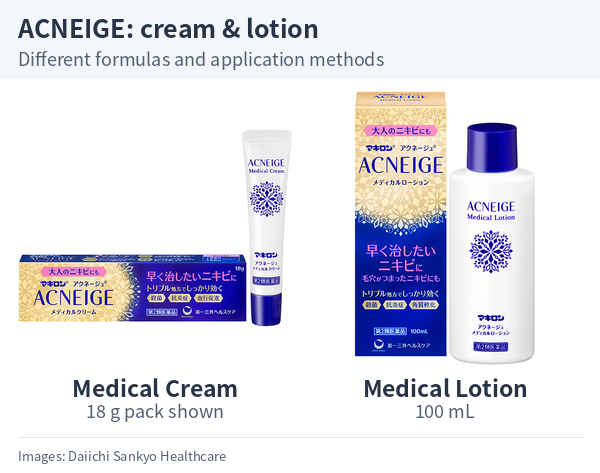

I'm Irene, a Taiwanese-born, Japanese-licensed pharmacist working in a Japanese drugstore. ACNEIGE's cream and lotion share a blue-and-gold look, but choosing between them takes more than deciding which texture you like. Their active formulas, application methods and review points differ.
A quick way to choose
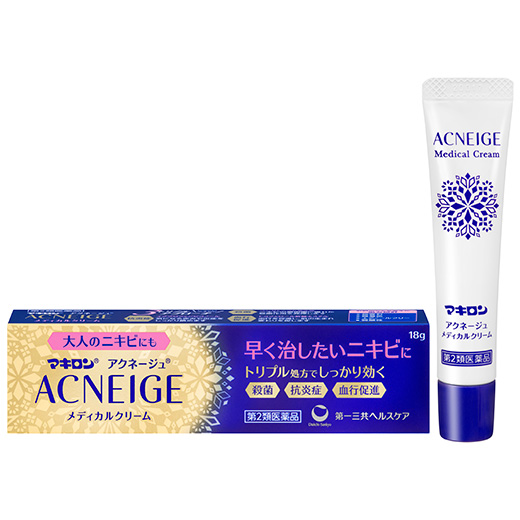
- Medical Cream is the manufacturer's option for individual red, swollen pimples, including spots around the chin and mouth. Its narrow tube helps apply a small amount to the affected spot.
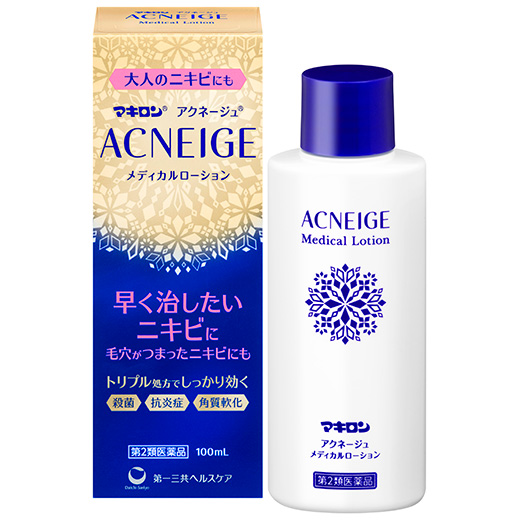
- Medical Lotion is positioned for early, clogged-pore acne, including clusters on the forehead or upper chest. It contains salicylic acid and is applied with cotton or gauze held against the skin for two to three minutes, morning and evening.
- Neither is an everyday all-over skincare product. If the affected area is extensive, or skin is severely weeping or eroded, ask a healthcare professional before choosing either.
These are Japanese Class 2 OTC acne medicines. The Makiron name also appears on wound products; look for the complete マキロン アクネージュ メディカルクリーム or メディカルローション name.
The differences that matter
| Point | Medical Cream | Medical Lotion |
|---|---|---|
| Pack size | 18 g or 28 g | 100 mL |
| Labelled use | Acne and pimples | Acne |
| Active ingredients, per 100 g of product | Benzethonium chloride 0.05 g; ibuprofen piconol 3 g; tocopherol acetate 0.5 g | Benzethonium chloride 0.05 g; allantoin 0.2 g; salicylic acid 0.5 g |
| Application | Appropriate amount to affected spots after washing; several times daily | Wet cotton/gauze, hold on affected skin 2–3 minutes; twice daily, morning and evening |
| No-improvement checkpoint | Stop and consult after 5–6 days | Stop and consult after about 2 weeks; sooner if it worsens |
The lotion's ingredients are expressed per 100 g, even though the bottle contains 100 mL. Do not treat the table as a quantity to apply or as the exact total in one bottle. The cream's two sizes contain the same formula; 28 g is a larger pack, not a stronger medicine.
Both contain the antiseptic benzethonium chloride. The cream pairs it with anti-inflammatory ibuprofen piconol and tocopherol acetate, which the manufacturer describes as supporting local blood circulation. The lotion instead uses anti-inflammatory allantoin and salicylic acid to soften keratin and help with clogged pores. This is a real formula difference, not simply the same medicine made thinner.
What might they feel like?
According to Daiichi Sankyo Healthcare, the cream spreads without a sticky finish and becomes transparent on application; makeup can be applied afterward. The lotion is clear and described as fresh-feeling and non-sticky. These are manufacturer descriptions, not my personal trial results.
Both are described as fragrance-free, uncoloured and mildly acidic. The lotion is also explicitly labelled ethanol-free. None of these descriptions guarantees that sensitive or damaged skin will tolerate them: salicylic acid can still leave skin dry or irritated.
The lotion is not a toner for wiping the entire face or a pad to leave on overnight. Its specific two-to-three-minute method is part of how this medicine is meant to be used.
How to use the cream
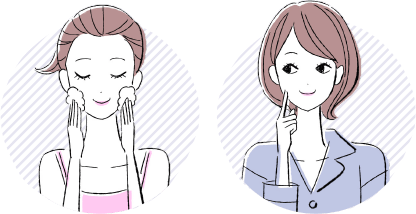
- Wash the face with soap or another suitable cleanser.
- Apply an appropriate amount only to acne or pimples, several times daily as labelled. Do not spread it over a broad surrounding area.
- Keep it out of the eyes and recap the tube after use.
The label does not give a pea-sized dose or a fixed numerical daily maximum. Do not invent one from another acne product. Use the amount needed for the affected spot and follow the instructions on your pack.
How to use the lotion
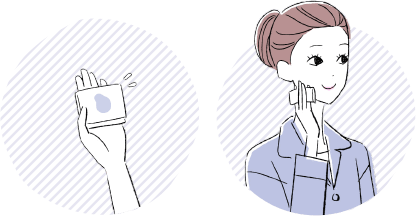
- In the morning and evening, put enough lotion on cotton, absorbent cotton or gauze to wet it thoroughly without dripping.
- Hold it against the affected skin for two to three minutes. Do not convert this into an all-night treatment.
- Keep it away from the eyes and the surrounding eye area, and close the bottle after use.
Both products are for external use only. If either enters an eye, rinse immediately with water or lukewarm water; seek an eye doctor's care if symptoms are severe.
Who should ask first?
For either product, consult a doctor, pharmacist or registered OTC medicine seller before use if you are receiving medical treatment, have had medicine-related allergies, have extensive affected skin, severe weeping or erosion, deep wounds or serious burns. The lotion additionally tells people with severe acne containing hard lumps to consult first. Do not assume that more lotion or a larger application area will deal with a more serious problem.
The manufacturer's family FAQ gives no age restriction; children must be supervised by a parent or guardian. That is not an endorsement of treating every childhood rash as acne.
The exact leaflets do not list a separate pregnancy or breastfeeding rule or a named drug-interaction list. This does not prove every combination is appropriate. If pregnant, breastfeeding or already using prescription acne treatment, ask before adding another product to the same skin.
Stop rules are different
For the cream, stop immediately and consult if you develop rash, redness, itching, stinging/burning, swelling or dry/tight skin. If symptoms have not improved after five to six days, stop and consult rather than continuing indefinitely.
For the lotion, stop immediately and consult for rash, redness or itching. Stop and consult if acne worsens with use or has not improved after about two weeks. The leaflet also says to stop if stinging over broken skin is troublesome. For mild dryness or redness, pause use; if restarting, allow a longer interval between applications. If you cannot tell whether redness is a mild temporary effect or an adverse reaction, do not keep applying it to find out: ask a pharmacist.
The difference in review times does not mean the lotion is slower, weaker or safer for prolonged use. These are the individual products' instructions. Neither label authorises treatment of established acne scars or guarantees that scars will be prevented.
Storage and a practical final check
Keep both tightly closed, away from direct sunlight, in a cool place out of children's reach. Do not transfer them to another container. Avoid contact with furniture, glasses, plastic, synthetic fibres or painted surfaces, which the products may damage. Do not use past expiry; use promptly after opening. The lotion additionally warns against storage at 40°C or above, such as in a hot car.
My shelf-side checklist is simple: cream for a spot-focused application; lotion only if its different formula and cotton-contact routine fit the problem. Check the full product name and your stop date before buying. If you have deep lumps, widespread inflammation or repeated trouble, a professional assessment is more useful than adding another layer of medicine.
Sources
Product information checked 15 October 2026. Follow the leaflet with your pack; this article does not diagnose acne or replace individual medical advice.