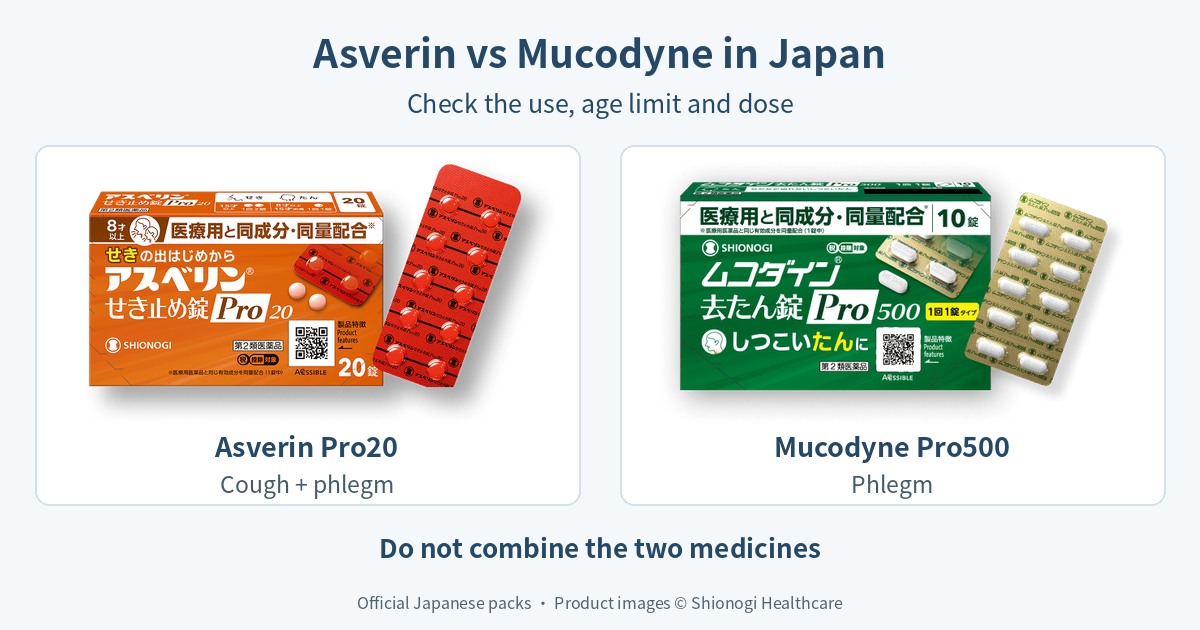

I’m Irene, a Taiwan-born pharmacist licensed in Japan, currently working in a Japanese drugstore. With these orange and green Pro boxes, the useful starting points are the full name, labelled use and age limit.
Asverin Pro20 is labelled for cough and phlegm; Mucodyne Pro500 is labelled for phlegm. They contain different medicines and have different age limits. The numbers 20 and 500 do not rank their strength, and having both a cough and phlegm is not a reason to take both.
- Comparing an option that eases coughing and helps clear phlegm? Check Asverin’s conditions of use. Its dose for ages 8–14 is lower than the dose for people aged 15 and over.
- Comparing a medicine specifically for clearing phlegm? Mucodyne has L-carbocisteine as its only active ingredient and is for ages 15 and over. A dry cough without phlegm does not match its labelled use.
- Already taking a cold or cough medicine? Show the pack or medicine list to a pharmacist first. Both products prohibit use with other cough/phlegm medicines or cold medicines.
Use this comparison to understand the labels, rather than to diagnose a cough. Seek urgent medical care for difficulty breathing, chest pain, coughing up blood or a rapidly worsening cough. A cough lasting three weeks or longer needs assessment rather than repeated switches between OTC cough products.
Checked 18 October 2026. This guide covers the Japanese Class 2 OTC products, not their prescription namesakes. Read the leaflet supplied with your own pack before use.
Recognise the full name on each box
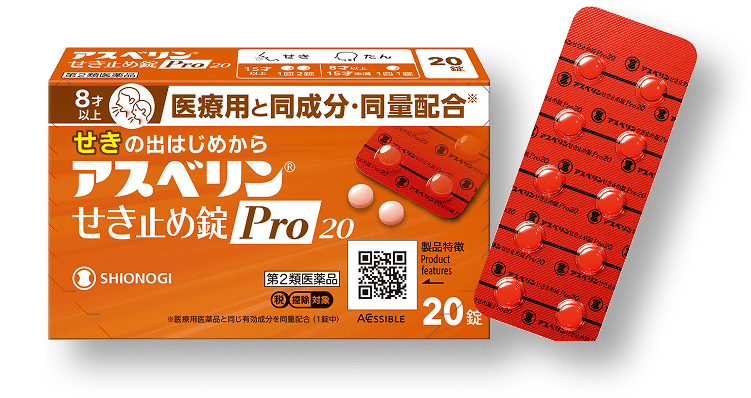
Orange: アスベリンせき止め錠Pro20
Asverin’s Japanese OTC cough tablets launched on 5 March 2026. The 20- and 40-tablet packs contain the same medicine. Look for the full Japanese name, the “8才以上” age marking and “第2類医薬品” Class 2 marking. The tablets are pale orange.
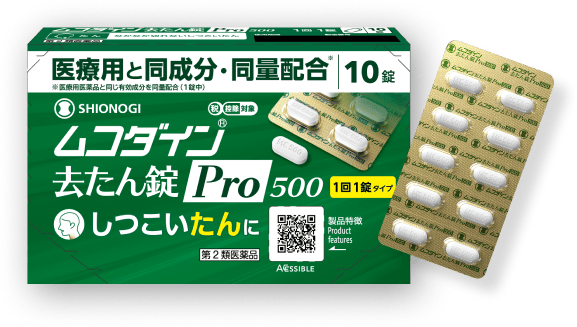
Green: ムコダイン去たん錠Pro500
The words “去たん” refer to clearing phlegm. Shionogi calls this product Mucodyne Expectorant Tablets Pro 500 in English. Its current Japanese product page lists 10- and 20-tablet packs of the same formula. Each white film-coated tablet contains 500 mg of L-carbocisteine.
Both are Japanese Class 2 OTC medicines. The packaging’s comparison with prescription medicines refers to a particular ingredient and amount. It does not make a previous prescription’s directions transferable to these OTC packs. Products sold under familiar brand names in other countries may differ too.
Compare the ingredient and labelled use
| What to check | Asverin Pro20 | Mucodyne Pro500 |
|---|---|---|
| Labelled use | Cough and phlegm | Phlegm |
| Active ingredient and role | Tipepidine hibenzate (チペピジンヒベンズ酸塩): suppresses coughing and helps clear phlegm | L-carbocisteine: changes the properties of airway mucus to help clear phlegm |
| Amount in the adult daily dose | 132.9 mg tipepidine hibenzate in 6 tablets, equivalent to 120 mg tipepidine citrate | 1,500 mg L-carbocisteine in 3 tablets |
| Minimum age | 8 years, with a lower dose for children | 15 years |
The six tablets and three tablets above are whole-day adult totals, not single doses. Comparing milligrams of different ingredients cannot tell you which medicine is “stronger.” Asverin’s indication is not limited to dry cough, and Mucodyne is not a combination cold remedy.
How many tablets per dose?
| Age | Asverin Pro20 per dose | Mucodyne Pro500 per dose |
|---|---|---|
| 15 years and over | 2 tablets | 1 tablet |
| 8–14 years | 1 tablet, under a parent or guardian’s supervision | Do not use |
| Under 8 years | Do not use | Do not use |
1. Three doses a dayUse the correct age-based amount above. Do not increase the dose.
2. At least four hours apartThis is a minimum interval, not permission to keep adding doses every four hours.
3. Swallow with waterWater or lukewarm water is specified. Remove the tablet from the blister first.
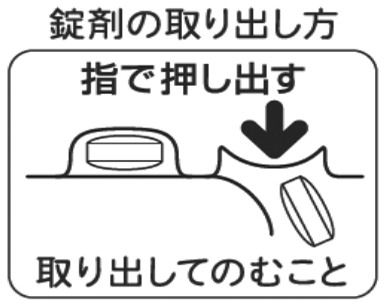
Neither Japanese leaflet specifies a before- or after-food requirement. Do not borrow an “after meals” schedule from another medicine. Keep the tablets in their original blisters in a cool, dry place away from direct sunlight and children. Do not transfer them to another container or use them after expiry.
Who needs advice before taking either?
Do not use a product if you have previously had an allergic reaction to it or its ingredients. For either medicine, consult a doctor, pharmacist or registered OTC medicine seller before use if you are under a doctor’s care, pregnant or possibly pregnant, have a history of allergic reactions to medicines or other substances, or have a high fever.
- Breastfeeding: seek advice before either product. This appears in Mucodyne’s leaflet and Asverin’s official FAQ.
- Older adults, heart disease or liver disease: Mucodyne’s leaflet specifically adds these to its pre-use consultation list. Bring details of your conditions and all current medicines.
- Other medicines: both prohibit other cough/phlegm medicines and cold remedies during use, so do not combine Asverin and Mucodyne yourself. Asverin additionally prohibits sedatives and oral medicines containing antihistamines, including some allergy, rhinitis and motion-sickness medicines.
- Driving: Asverin lists drowsiness and dizziness as possible side effects. Do not treat it as a guaranteed non-drowsy option. If these occur, stop taking it, seek advice and do not drive. Your other medicines and how well you feel also matter.
No improvement after five or six doses? Stop and ask
For both products, stop and seek professional advice if symptoms have not improved after five or six doses. Take the leaflet with you. This means doses, not five or six days. Even with improvement, consult before continuing beyond two weeks; that is not a two-week trial period for a medicine that is not helping.
Stop and seek advice if you develop a rash, itching, nausea or vomiting, loss of appetite, abdominal pain, bloating, diarrhoea or dry mouth. Asverin also lists constipation, stomach discomfort, dizziness, drowsiness, insomnia and agitation. Mucodyne also lists fever, swelling and shortness of breath. Read the pack leaflet for the full symptom list.
Get immediate medical help for difficulty breathing, hives with hoarseness or changes in consciousness. Mucodyne also warns about severe skin reactions and liver problems: a widespread rash with high fever, red eyes or sore/eroded lips, or yellowing of the skin or eyes, or dark brown urine, needs immediate medical attention.
Asverin’s leaflet notes that excretion of the ingredient can make urine look reddish. If you are unsure of the cause or have pain or other unusual symptoms, do not assume it is harmless. Seek immediate medical care after an accidental overdose.
A three-point check before buying
- Match the full name: orange Asverin “せき止め錠” or green Mucodyne “去たん錠.”
- Check the age limit, your current medicines and any reasons to seek advice first. Do not take the two together.
- Know your tablets per dose and keep the leaflet. Stop and seek advice after five or six doses without improvement.
If you are looking at the purple boxes in the same range, see Medicon Pro tablets versus liquid. For a different comparison between a phlegm medicine and a multi-ingredient cold remedy, see Stona Kyotan versus Plus Gel EX. These guides help identify other products; they are not suggestions to combine them.
Official sources
- Asverin product information
- Asverin Japanese leaflet
- Asverin brand page and FAQ
- Asverin March 2026 launch announcement
- Mucodyne product information and current pack sizes
- Mucodyne current Japanese leaflet
- Mucodyne brand page
- NHS: when to seek care for a cough
Product images and the blister-removal diagram belong to Shionogi Healthcare and identify the Japanese products discussed here. Packaging may change. This guide does not replace diagnosis or individual medical advice.