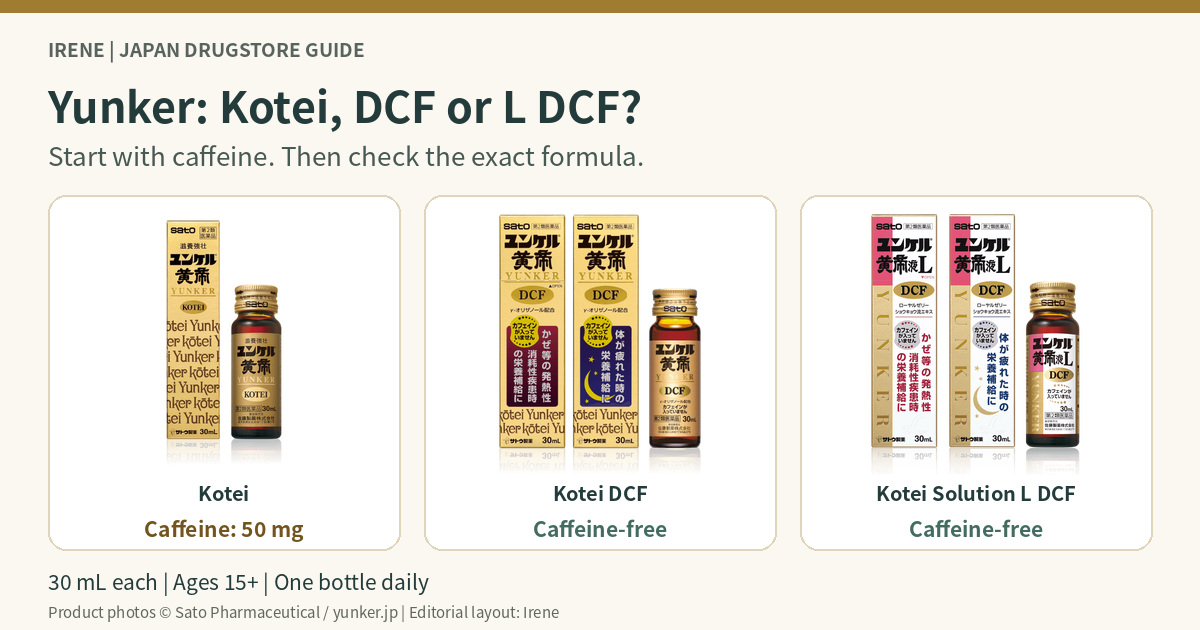

I’m Irene, a Taiwan-born, Japan-licensed pharmacist working in a Japanese drugstore. These small gold Yunker boxes can look alike. Let’s find DCF first, then match the full name.
Start with caffeine, then distinguish the two DCF formulas
Yunker Kotei contains 50 mg of caffeine per bottle. Kotei DCF and Kotei Solution L DCF are caffeine-free, with different formulas. If you want to avoid caffeine, narrow the choice to the two DCF products, then check ingredients and the maker’s taste descriptions. Sato expands DCF as “De-Caffeine”; the product still has its own complete formula. The letter L and the number of crude-drug ingredients do not establish a strength ranking.
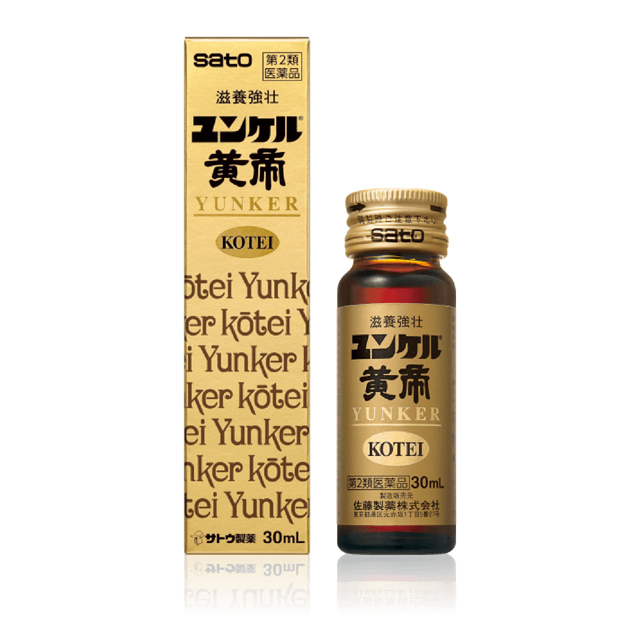
- Matching a specific gold-box product? Look for ユンケル黄帝 for Kotei. It contains caffeine; a DCF box is a different product.
- Concerned about caffeine, especially near bedtime? Look for DCF. Both Kotei DCF and Kotei Solution L DCF are caffeine-free. Neither is indicated for treating insomnia.
- Want caffeine-free and less of a sharp taste? Compare L DCF. Sato describes it as a milder-tasting formula with reduced spiciness. That describes taste, not weaker or stronger medical effects.
All three are Japanese Class 2 over-the-counter medicines: 30 mL per bottle, for ages 15 and older, one bottle daily. They have medicine doses and precautions. Do not treat them like ordinary food-category energy drinks or apply the labels of Yunker’s separate designated quasi-drug range.
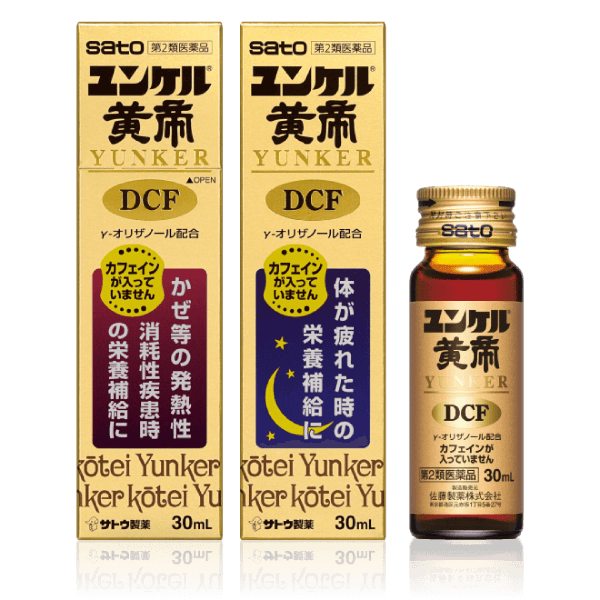
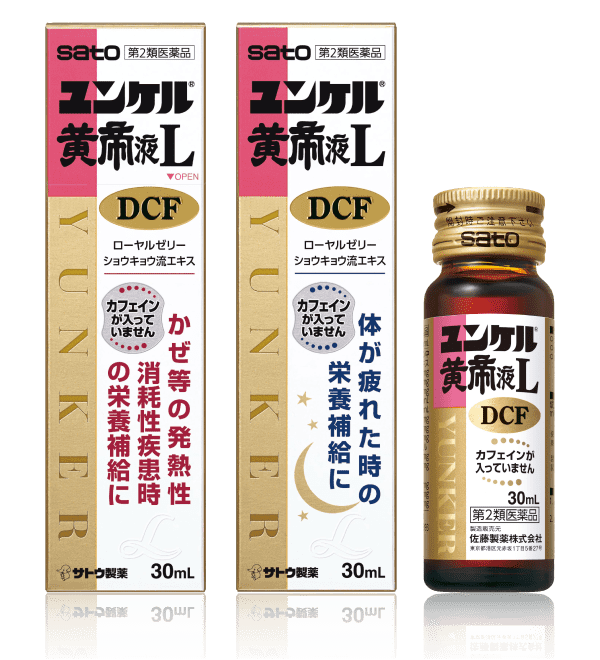
In Traditional Chinese searches, Sato Taiwan uses 勇健好黃帝液 and Sato Hong Kong uses 黃帝液. These are regional product names; do not transfer their formulas, uses or precautions to the three Japanese products here. Match the complete Japanese name.
DCF involves more than removing caffeine
Every amount below is per 30 mL bottle, both the single dose and the daily amount. Extract types are retained because unlike extracts cannot be compared simply by dividing the milligram figures.
| What changes? | Kotei | Kotei DCF | Kotei Solution L DCF |
|---|---|---|---|
| Caffeine | 50 mg anhydrous caffeine | Caffeine-free | Caffeine-free |
| Crude-drug ingredients listed by Sato | 8 | 6 | 8 |
| Ginseng ingredient | ニンジンエキス Ginseng extract 86 mg | ニンジン流エキス Ginseng fluid extract 600 mg | ニンジン流エキス Ginseng fluid extract 600 mg |
| Hawthorn dry extract | 7.2 mg | 30 mg | 30 mg |
| Rehmannia dry extract | 30 mg | 120 mg | 120 mg |
| Royal jelly | 100 mg | 100 mg | 200 mg |
| Vitamin B2 phosphate / B6 | 5 mg / 10 mg | 10 mg / 50 mg | 10 mg / 50 mg |
| Panthenol / sodium chondroitin sulfate | 10 mg / 120 mg | 10 mg / 120 mg | Neither listed as an active ingredient |
All three also list vitamin E acetate 10 mg, nicotinamide 25 mg and gamma-oryzanol 10 mg. This is a comparison of selected differences, not the complete ingredient list.
Kotei: eight crude-drug ingredients, including bezoar and eleuthero
Alongside ginseng, hawthorn, rehmannia and royal jelly, Kotei contains hanpi tincture 100 mg, civet tincture 250 mg, bezoar tincture 250 mg and eleuthero dry extract 8 mg. Hanpi, civet, bezoar and royal jelly are animal-derived ingredients. The Japanese category “crude drugs” includes more than herbs.
Kotei DCF: six crude-drug ingredients, still including animal sources
DCF retains hanpi tincture 100 mg and civet tincture 250 mg alongside ginseng, hawthorn, rehmannia and royal jelly. Bezoar, eleuthero and caffeine are not in its active-ingredient list. Ginseng’s extract type and several amounts also change. The 86 mg extract and 600 mg fluid extract are different preparations, so these numbers cannot show how many times more effective one product is.
Kotei Solution L DCF: codonopsis, ginger, citrus peel and atractylodes
L DCF’s eight crude-drug ingredients include the four in the table, plus codonopsis fluid extract 0.3 mL, ginger fluid extract 0.2 mL, citrus peel extract 20 mg and atractylodes extract 53.5 mg. Hanpi and civet are not listed, but royal jelly is still present; this is not an all-plant formula. Its 200 mg royal-jelly amount does not establish better clinical results than the other two.
What about taste? Sato describes Kotei as sharp and refreshing, DCF as moderately sweet with some spiciness, and L DCF as less spicy. These are Sato’s descriptions; taste preferences vary. Formula suitability comes first.
What “nutritional supplementation” means on these labels
The three share labeled uses: tonic support and weak constitution, plus nutritional supplementation during physical fatigue, illness and recovery, loss of appetite, nutritional disorders, fever-associated wasting illness, pregnancy and breastfeeding. The cold-and-fever wording concerns nutritional support. It does not claim to lower fever, treat an infection or replace diagnosis and treatment of the illness, nor is it a complete treatment for malnutrition.
The DCF products’ bedtime positioning reflects the absence of caffeine. Their indications do not include sedation or insomnia treatment. Ongoing tiredness, poor appetite or sleep problems call for an assessment of the cause rather than extra bottles.
Pregnant or breastfeeding? Nutritional supplementation during these periods is explicitly included in all three Japanese leaflets. This does not establish that everyone needs an extra tonic. Have your clinician or pharmacist review prenatal vitamins, other medicines and any treatment you receive. Kotei contains caffeine; the two DCF products do not, but all three contain an alcohol additive. DCF alone is not a complete suitability check.
One bottle is the whole daily dose
- 1. CheckMatch the full name, 30 mL size and expiry date. These three are for ages 15+. Under 15: do not use, including a self-adjusted half bottle.
- 2. TakeTake one 30 mL bottle once daily. Do not add DCF at night after Kotei in the morning, or combine it with Yunker tablets or granules containing overlapping ingredients.
- 3. ReassessKeep track of today’s dose. Stop and seek advice as below if symptoms persist or possible side effects appear. A multipack is not a course you must finish.
The individual leaflets do not require a particular meal time. Sato’s Q&A allows taking Yunker before or after food; avoid caffeine-containing Kotei at bedtime. Also consider caffeine from coffee, tea, energy drinks and other medicines.
Keep the original container in a cool, dry place away from direct sunlight and children. Do not transfer the contents to another container or use an expired product. All three leaflets explain that vitamin B2 phosphate may turn urine yellow and that the crude-drug extracts may cause slight cloudiness without changing effectiveness. These statements should not be used to dismiss other new symptoms or concerns about spoilage.
Allergies, other medicines and when to stop
- Rash, redness or itching: all three leaflets say to stop immediately and take the leaflet to a doctor, pharmacist or registered OTC medicine seller.
- No improvement after taking it for a while: stop and seek advice. None specifies a fixed number of days. Do not turn this into a one-week or one-month course.
- A previous allergy to royal jelly or another ingredient: all three contain royal jelly. Have a clinician or pharmacist check the complete ingredient list before trying a bottle yourself.
- A chronic condition, ongoing treatment or regular medicines: bring your medicine and supplement list to a pharmacist. Sato’s Q&A warns that overlapping ingredients may increase effects and directs medicine users to seek advice. Caffeine-free does not establish compatibility with every cold remedy or prescription.
All three list sucrose and alcohol as additives, with no more than 0.9 mL alcohol per bottle. Caffeine-free does not mean sugar-free or alcohol-free. If you must completely avoid alcohol or have dietary or treatment restrictions, check suitability first. Sato also advises against taking Yunker with alcoholic drinks. These three are not indicated for sobering up, accelerating alcohol clearance or protecting the liver.
Looking at a different shelf?
For a liquid-versus-tablet comparison, see Hepalyse Drink II and Plus II. If you prefer tablets, the Q&P Gold comparison explains caffeine and product-category differences, while the five-type Alinamin guide compares B-vitamin formulas and schedules. These links help you consider alternatives; they are not recommendations to combine them with Yunker.
My final shelf check: decide whether to avoid caffeine, match the exact name and formula, then remember ages 15+ and one bottle daily. A photo of the complete box gives shop staff much more to work with than “the gold Yunker.”
Official sources and image credits
- Sato Pharmaceutical: Yunker Kotei Japanese product information
- Yunker Kotei Japanese package leaflet
- Sato Pharmaceutical: Yunker Kotei DCF Japanese product information
- Yunker Kotei DCF Japanese package leaflet
- Sato Pharmaceutical: Yunker Kotei Solution L DCF Japanese product information
- Yunker Kotei Solution L DCF Japanese package leaflet
- Sato Pharmaceutical: Yunker questions on combinations, caffeine and timing
- Sato Taiwan: regional Chinese product name only
- Sato Hong Kong: regional Chinese product name only
Japanese product information and complete leaflets checked on 18 October 2026. Product photographs © Sato Pharmaceutical. This guide covers these three Japan-market 30 mL medicines. Overseas products, older packages and other dosage forms need their own label checks; follow the pack and leaflet you actually have.