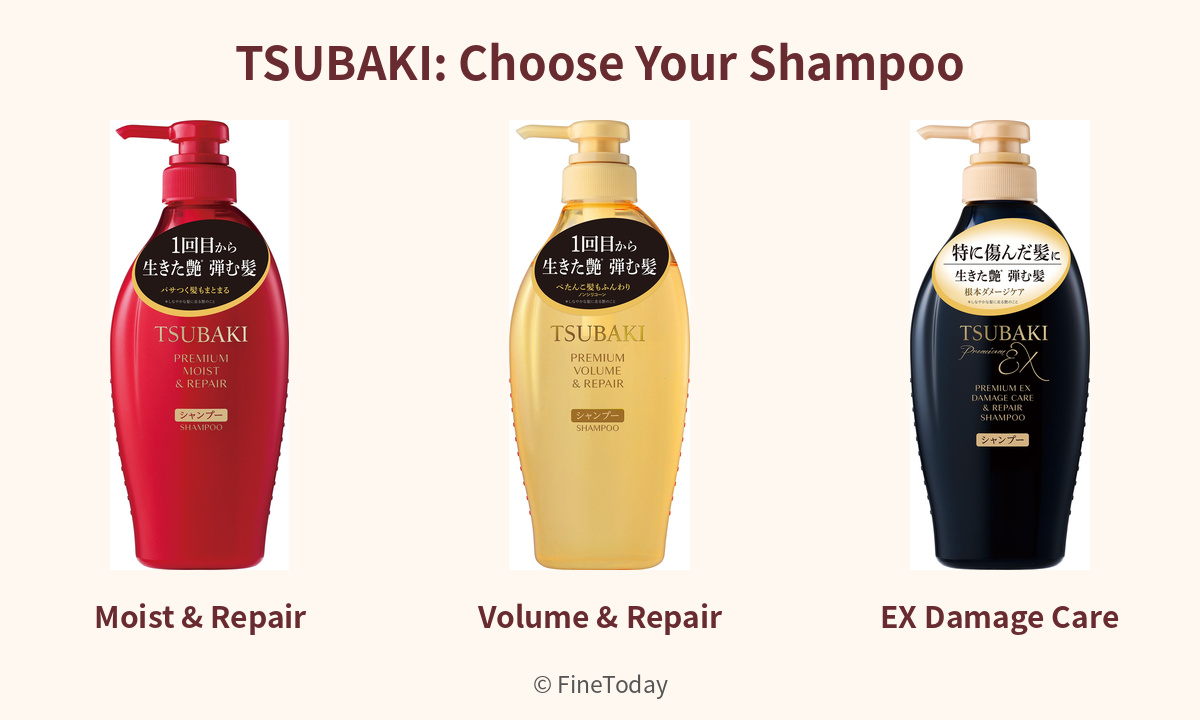
Choose Japanese TSUBAKI shampoo by your main finish goal: red Moist & Repair for dry, unruly lengths you want to keep manageable; gold Volume & Repair for an airy look at the roots; or black EX Damage Care & Repair for damaged hair and smoother-feeling ends.

I’m Irene, a Taiwan-born pharmacist licensed in Japan and working in a Japanese drugstore. I like to start with how you want your hair to feel, then check that the bottle is actually shampoo. Similar colours can hide a different step in your routine.
Checked on 19 October 2026, Japan time. This guide compares three current Japanese 450 mL shampoos, all classified as cosmetics. Finish and scent descriptions come from the manufacturer; your hair, amount used and routine can change the experience.
Overseas TSUBAKI names and formulas can differ. Use the full Japanese name and size below to identify the versions in this guide.
- Red, gold or black: where to start
- Red: moisture and manageable ends
- Gold: body and an airy root finish
- Black: damaged hair and smoother ends
- Floral camellia does not guarantee identical scents
- Check that the matching bottle is shampoo
- How to wash: a suitable amount, not a universal pump count
- Ingredients and precautions worth checking
- Official sources and images
Red, gold or black: where to start
| Japanese shampoo | Main reason to compare it | Fragrance / size |
|---|---|---|
| Premium Moist & Repair Red | Dryness and unruly lengths; a moisturized, manageable finish | Floral camellia; 450 mL |
| Premium Volume & Repair Gold | Hair lacking body; an airy finish from the roots | Floral camellia; 450 mL |
| Premium EX Damage Care & Repair Black | Particularly damaged hair, including after colouring or perming; smooth, glossy ends | A differently described floral camellia scent; 450 mL |
If your hair feels dry but also looks flat, choose the concern you most want to address first. Start with Moist when manageable lengths matter more, or Volume when lift at the crown is the priority. This is a shopping inference from the maker’s positioning, not a rule that one hair texture must use one colour. Black is not automatically the best option for everyone.
Red: moisture and manageable ends
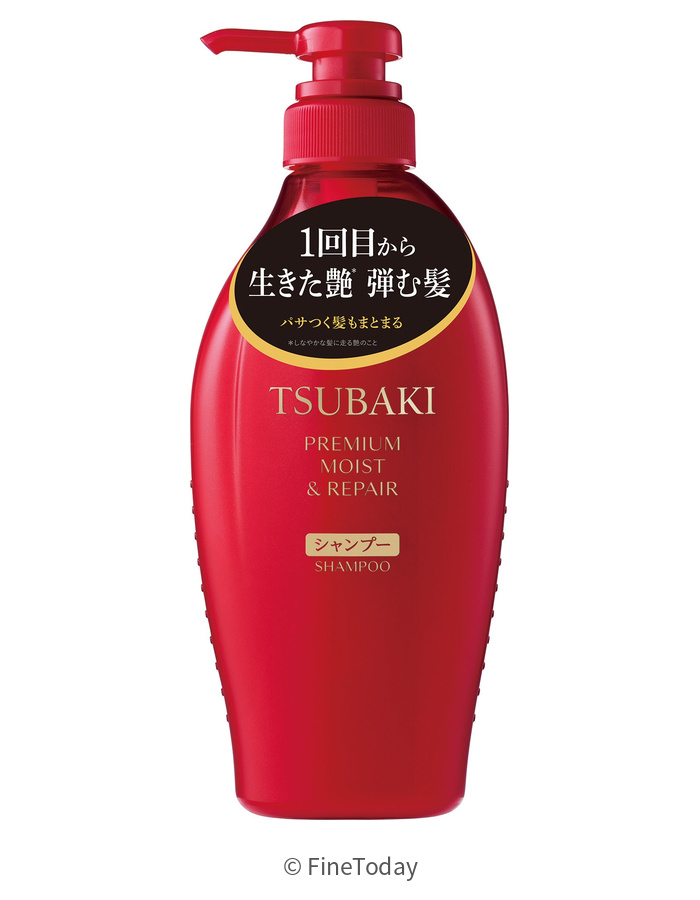
Japanese name: TSUBAKI プレミアム モイスト&リペア シャンプー
450 mL; JAN 4550516485236.
Consider this when dry, spreading lengths are what bothers you most. FineToday emphasizes moisture, manageability and shine, and identifies sodium acetylated hyaluronate and soybean seed extract as moisturizing ingredients. These are formulation details, not proof that the shampoo suits every dry or sensitive scalp.
Gold: body and an airy root finish
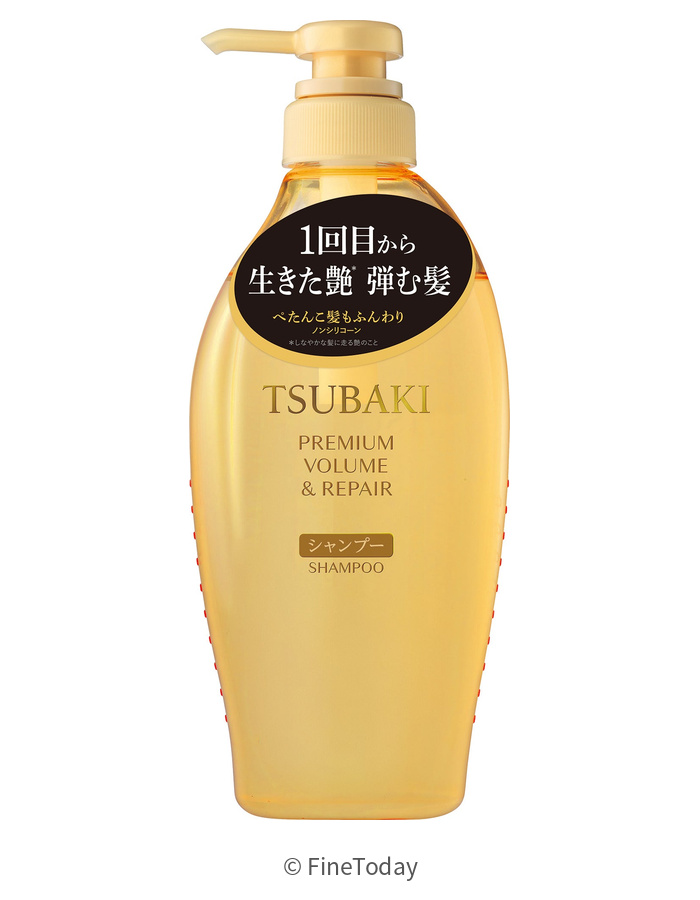
Japanese name: TSUBAKI プレミアム ボリューム&リペア シャンプー
450 mL; JAN 4550516485410.
Gold focuses on hair that lacks body and resilience. The maker highlights taurine, aspartic acid and polyquaternium-11 for that finish. Its styling explanation also notes that lifting the roots while blow-drying makes it easier to create volume at the crown.
Volume describes the look and feel of your hair, not new follicles or hair-loss treatment. Choose it for the finish you want rather than expecting a hair-growth shampoo.
Black: damaged hair and smoother ends
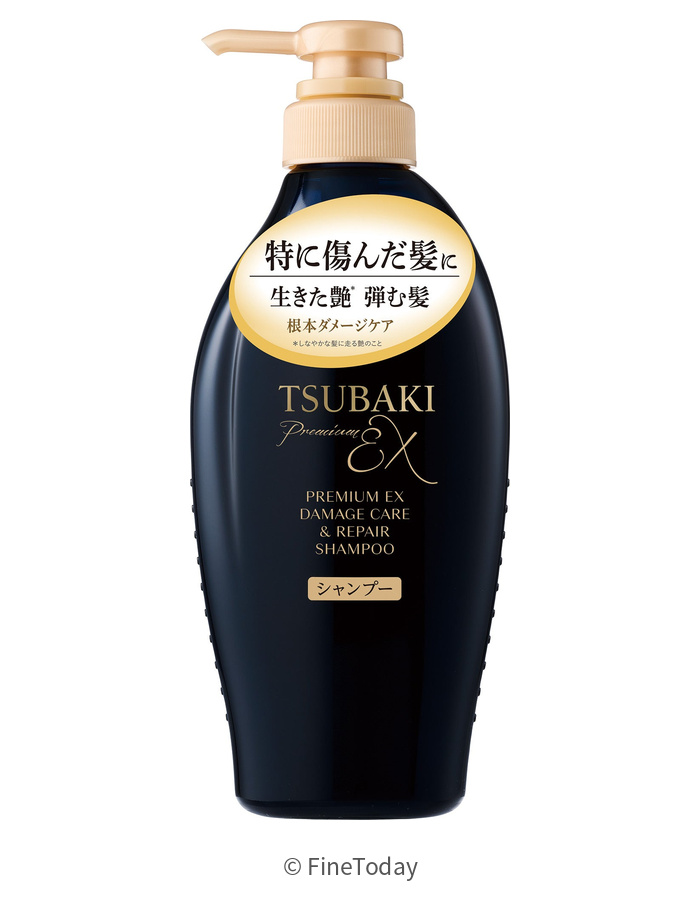
Japanese name: TSUBAKI プレミアムEX ダメージケア&リペア シャンプー
450 mL; JAN 4550516485830.
FineToday positions this line for particularly damaged hair, including damage after colouring or perming. It highlights an Ion EX conditioning complex and smooth, glossy ends. The other two lines also make cosmetic repair claims; EX is not a promise of permanently restored split ends.
You may remember the older black bottle as Intensive Repair. FineToday confirms its renewal to Damage Care & Repair, including an updated formula. Match the current full name and 450 mL size when repurchasing. An older name or photograph alone does not establish that a product is counterfeit.
Floral camellia does not guarantee identical scents
Moist and Volume share the maker’s uplifting floral-camellia description. EX uses a calming floral-camellia description instead. Those words describe the scent concept, not a therapeutic effect on your mood.
All three ingredient lists include fragrance. None is the fragrance-free choice. The shared camellia wording does not establish identical scent, intensity or longevity; if a scent sample is available, use it to check your preference.
Check that the matching bottle is shampoo
- For shampoo: look for シャンプー / SHAMPOO. All three selected bottles hold 450 mL.
- Red and gold companions: the matching 450 mL bottles are conditioners, labelled コンディショナー / CONDITIONER. Separate 160 g treatment tubes are not extra shampoo variants.
- Black companion: the official full name includes コンディショナートリートメント, or Conditioner Treatment, and it is classified as a hair treatment. Look for TREATMENT on the bottle. It is also 450 mL and is used after shampooing, then rinsed out.
The current shampoo back labels identify ridges on the pump head and bottle side as shampoo markers. Read the product words first and use the ridges as an additional check. Colour and volume alone cannot distinguish shampoo from its companion.
How to wash: a suitable amount, not a universal pump count
- On first opening, hold the cap still and turn the nozzle left to raise it. If it does not rise, tighten the cap and try again. Pump until product appears.
- Wet your hair and scalp thoroughly. Spread a suitable amount through your hair and work up a good lather to wash.
- Rinse thoroughly, then use whichever rinse-out conditioner or treatment you need.
Priming until product appears is a first-use instruction, not a washing dose. The shampoo directions do not prescribe two pumps for everybody, a waiting time or a mandatory second wash.
If you actually want care after washing, see the separate fino guide to rinse-out masks and leave-in milk or oils. Shampoo, rinse-out conditioning and leave-in care serve different steps; you do not need to buy one of everything.
Ingredients and precautions worth checking
All three current Japanese lists start with ingredients including water, sodium laureth sulfate and cocamidopropyl betaine, and all list camellia seed oil and fragrance. These are formulated shampoos, not pure camellia oil. A plant-oil ingredient does not establish low irritation. Check each full official list below if you have a known ingredient reaction.
- Avoid eye contact. If product gets in your eyes, rinse immediately with water or lukewarm water.
- Watch for skin abnormalities such as wounds, swelling or eczema. Stop use and consult a dermatologist if the product does not suit your skin or a reaction develops. Switching between these three cosmetics is not a treatment for scalp disease.
- Keep out of reach of infants and young children. For hygiene, the maker recommends replacing the bottle after two or three refills.
My shopping order: choose manageable moisture, airy body or care for damaged ends; then confirm SHAMPOO, the full name and size. Your scent preference and how the finish works for your own hair can guide the next purchase.
Official sources and images
Product photographs: FineToday Japan. Images retain the complete bottles; the cover is an editorial arrangement, not a scale comparison. Follow the label on the Japanese product you buy.