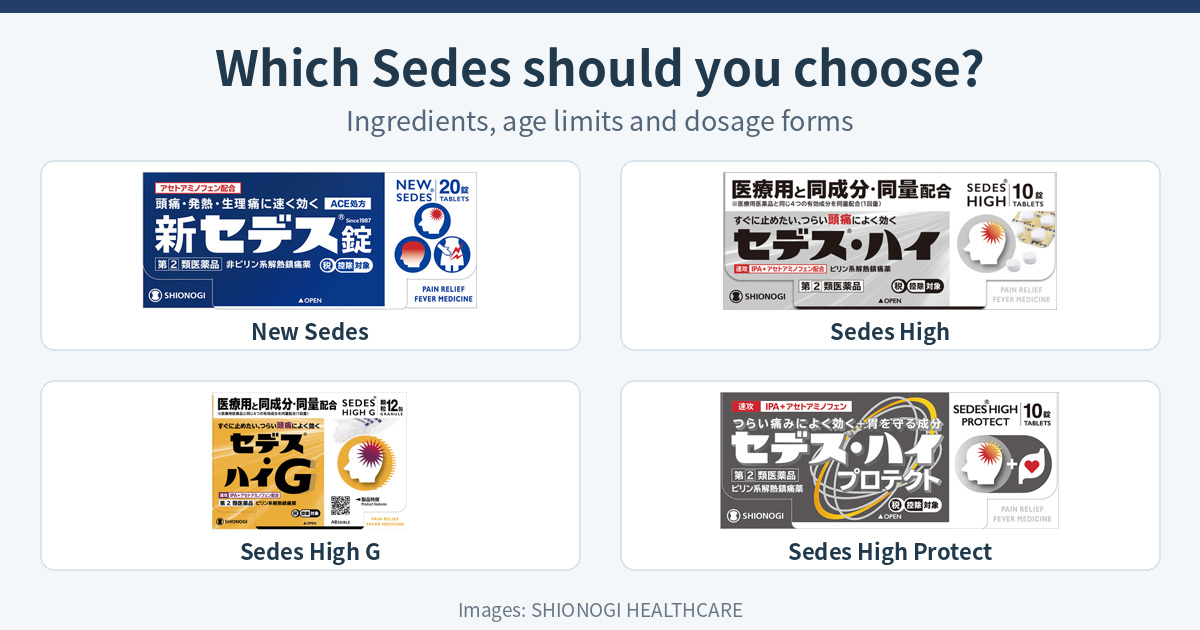
Choosing between New Sedes, High, High G and High Protect? Start with the ingredients and whether you need to drive. New Sedes has a different formula. High tablets and High G granules deliver the same adult-dose amounts of four active ingredients; Protect adds a stomach-protective ingredient. All four contain a sedating ingredient and prohibit driving or operating machinery after use.

I’m Irene, a Taiwan-born, Japan-licensed pharmacist working in a Japanese drugstore. With similar Sedes boxes on the shelf, I find it helps to separate the formula from the dosage form, then check who will take it and what else they have taken.
Japan-market information checked on 19 October 2026, Japan time. This guide covers four products only. Japan’s official comparison also lists Sedes V; this is not a guide to the entire Sedes range.
Narrow your choice first
- Checking the non-pyrine option: New Sedes Tablets contain ethenzamide and paracetamol, without the High range’s IPA. That does not make them allergy-proof or non-drowsy.
- Considering an IPA-containing tablet: Sedes High is the tablet option. Check your allergy history and other medicines before choosing it.
- Prefer granules to tablets: High G is taken with water. It is not a higher-dose version of High or a water-free, orally dissolving tablet.
- Concerned about stomach discomfort: Protect adds a stomach-protective ingredient. It is not an automatic safe substitute if you have an ulcer, kidney disease or another condition requiring advice.
Planning to drive? None of these four is suitable for taking before driving. Caffeine does not cancel the leaflet’s driving prohibition. Feeling alert is not permission to drive after a dose.
Compare one adult dose, not one tablet
All four are designated Class 2 OTC medicines in Japan. The quantities below are for one dose for a person aged 15 or over, not one tablet or a daily total. Paracetamol is also called acetaminophen.
| Product / Japanese pack name | One adult dose and its active ingredients | Main difference |
|---|---|---|
| New Sedes Tablets 新セデス錠 | 2 tablets: ethenzamide 400 mg; paracetamol 160 mg; allylisopropylacetylurea 60 mg; anhydrous caffeine 80 mg | Non-pyrine formula. A separate labeled dose is available for ages 7–14. |
| Sedes High セデス・ハイ | 2 tablets: isopropylantipyrine (IPA) 150 mg; paracetamol 250 mg; allylisopropylacetylurea 60 mg; anhydrous caffeine 50 mg | IPA-containing tablets. Ages 15 and over only. |
| Sedes High G セデス・ハイG | 1 sachet (1 g): IPA 150 mg; paracetamol 250 mg; allylisopropylacetylurea 60 mg; anhydrous caffeine 50 mg | Same adult-dose active quantities as High, in granules. Ages 15 and over only. |
| Sedes High Protect セデス・ハイ プロテクト | 2 tablets: IPA 150 mg; paracetamol 250 mg; allylisopropylacetylurea 60 mg; anhydrous caffeine 50 mg; plus magnesium aluminometasilicate 100 mg | Adds an ingredient that neutralizes stomach acid and protects the stomach lining. Ages 15 and over only. |
On Japanese labels, paracetamol appears as アセトアミノフェン and IPA as イソプロピルアンチピリン. Allylisopropylacetylurea is the sedating pain-relief aid present in all four.
New Sedes is not simply a lower dose of High: one of its pain-relieving ingredients is different. Adding up milligrams of different drugs does not produce a useful strength ranking. Neither the number of ingredients nor “High” in the name tells you whether a product suits you.
Recognize the full package and dosage form
These current official Japan package images are not to scale. “20 tablets,” “10 tablets” and “12 sachets” refer to the box contents, not a single dose.
New Sedes: blue box, 20-tablet example
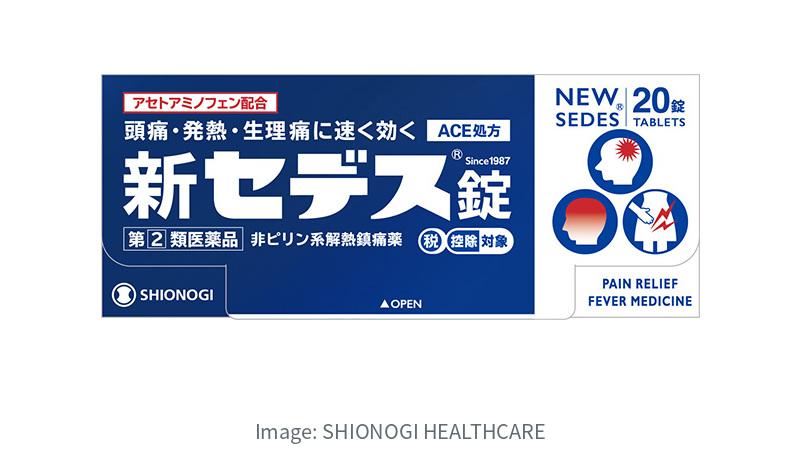
Look for 新セデス錠 and 非ピリン系, meaning non-pyrine. This is an option to assess for labeled uses such as headache, period pain and fever, after checking its ingredients and precautions. It is not a paracetamol-only medicine.
High: silver box, 10-tablet example
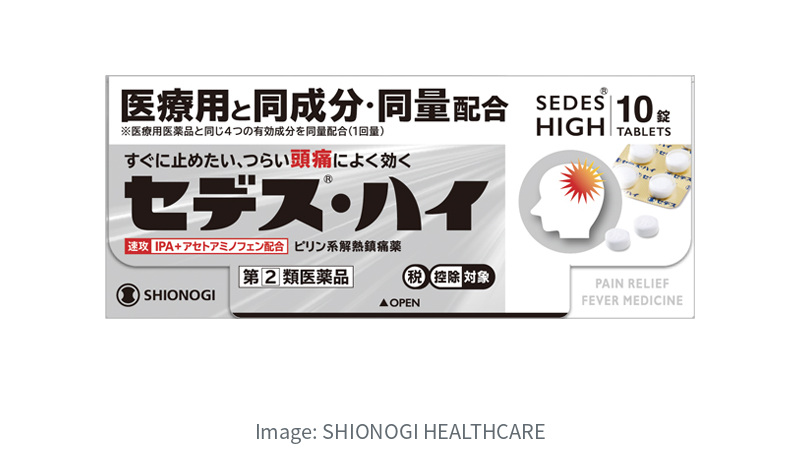
The name is セデス・ハイ, without G or Protect. The carton shows tablets and a blister strip. One adult dose is two tablets.
High G: gold box, 12-sachet example
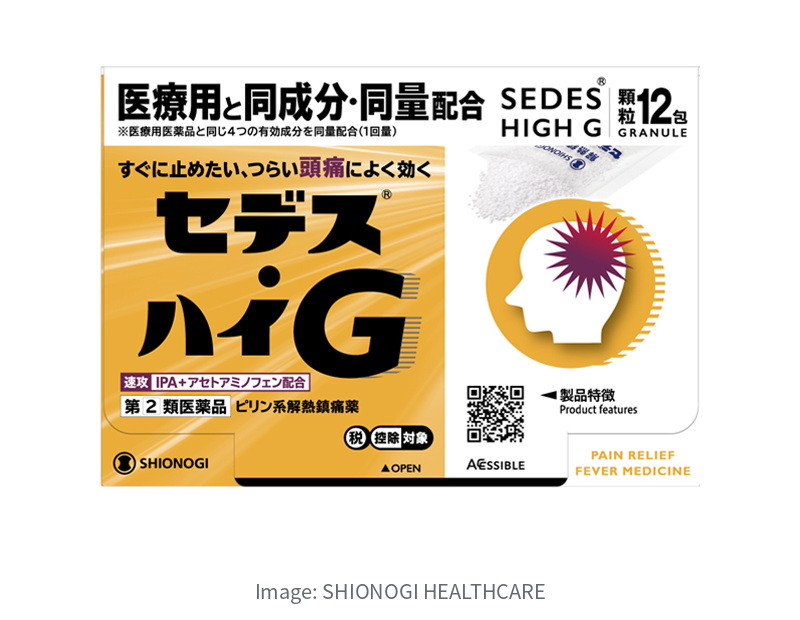
Look for G, 顆粒 (granules) and 包 (sachets). One adult dose is one sachet containing 1 g, not two sachets. The manufacturer presents granules as an option for people who dislike tablets. The format does not mean a larger drug dose or guarantee faster or better relief for everyone.
High Protect: dark gray box, 10-tablet example
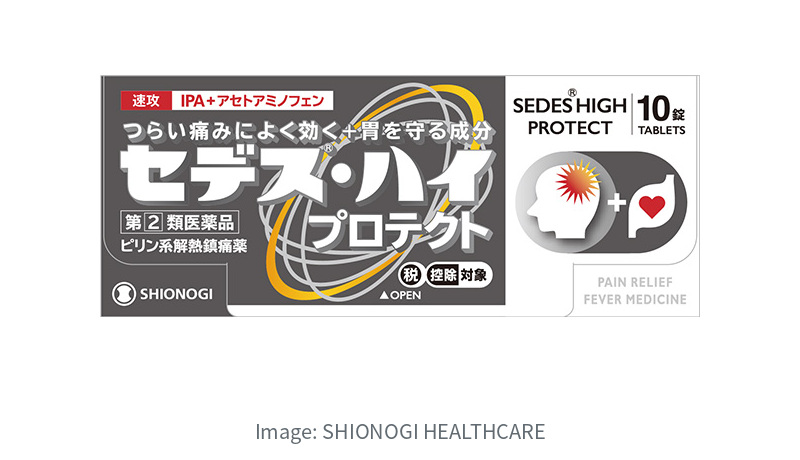
Look for プロテクト and the stomach symbol. The additional magnesium aluminometasilicate protects the stomach lining; it does not increase the adult-dose amounts of High’s other four actives. The manufacturer still warns that stomach irritation can occur.
Check the dose, interval and daily limit together
| Person / product | Single dose | Interval and daily limit |
|---|---|---|
| Ages 15+: New Sedes, High or Protect | 2 tablets of the chosen product | At least 4 hours between doses; no more than 3 doses a day. |
| Ages 15+: High G | 1 sachet (1 g) | At least 4 hours between doses; no more than 3 doses a day. |
| Ages 7–14: New Sedes only | 1 tablet, under adult supervision | At least 4 hours between doses; no more than 3 doses a day. Do not give High, High G or Protect. |
| Under age 7 | Do not give any of these four | Do not improvise a child’s dose by cutting tablets or splitting sachets. |
Take only when needed, with water or lukewarm water, avoiding an empty stomach where possible. Three doses is a limit, not a target. For adults, that means at most six tablets of a tablet product, or three sachets of High G, per day. These are product-specific limits, not universal limits for painkillers.
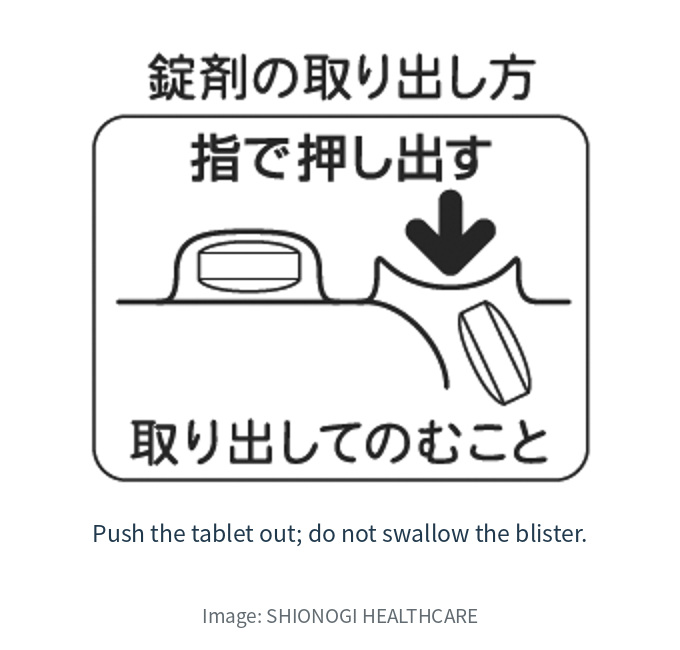
Push tablets out of the blister before swallowing them. Never swallow a cut piece of blister packaging. Take High G as one sachet with water. Recording the time on your phone can help prevent an early extra dose.
New Sedes has a child-specific warning: anyone under 15 with chickenpox or influenza, or suspected of having either, needs advice from a doctor, dentist, pharmacist or registered OTC seller before use. “From age 7” is not permission to self-treat every childhood fever.
Check allergies, combinations and medical conditions
What does pyrine versus non-pyrine mean here?
High, High G and Protect contain IPA, which the manufacturer classifies as a pyrine-type analgesic (ピリン系). Its FAQs say to avoid these three if a pyrine-type medicine has previously caused an allergic reaction. Do not confuse this Japanese category with the word aspirin. Show a pharmacist the exact medicine that caused your reaction.
All four must be avoided if you have had an allergic reaction to that product or its ingredients, or asthma triggered by an antipyretic/painkiller or cold medicine. Switching to non-pyrine New Sedes does not bypass those restrictions.
Do not combine these medicines
- Do not take any of them with another painkiller/fever medicine, cold remedy, sedative or motion-sickness medicine. Do not combine the four Sedes products with each other.
- Paracetamol products may duplicate an ingredient. A different painkiller without paracetamol is not automatically permitted either; the combination restrictions still apply.
- Do not drink alcohol before or after taking them, and do not use them continuously for a long period. The four-hour interval is not permission to switch freely between different painkillers.
Who should ask before taking them?
Ask a doctor, dentist, pharmacist or registered OTC seller first if you are receiving medical or dental treatment, are pregnant or may be pregnant, are older, have a history of drug allergy, or have been diagnosed with heart, kidney or liver disease, or a stomach/duodenal ulcer. Each product’s FAQ also recommends professional advice during breastfeeding; a fixed waiting time should not be treated as an individual safety guarantee.
Bring your prescription medicines, medicines bought abroad, supplements and a record of what you have already taken. If you want to compare single-ingredient options without added caffeine or a sedating ingredient, see the Japan Tylenol A and Calonal A label guide. Their own suitability checks still apply.
When should you stop and seek help?
For all four, stop and seek advice if symptoms have not improved after five or six doses, not five or six days. Get help sooner for severe, worsening or unexplained symptoms rather than repeatedly moving to a more elaborate box.
Stop immediately and seek advice for rash, redness, itching, nausea, vomiting, loss of appetite, dizziness or an unusually low body temperature. Persistent or worsening drowsiness also requires stopping and seeking advice. The driving prohibition applies whether or not you feel sleepy.
Seek urgent medical care for possible serious reactions such as breathing difficulty, wheezing or confusion; high fever with a widespread rash or sore/eroded lips; yellow skin or eyes and dark urine; or markedly reduced urine and widespread swelling. These are warning examples, not a complete diagnostic checklist. Take the package and leaflet with you.
One last check before packing it for a trip
Keep the original packaging and leaflet. Store in a cool, dry place away from direct sunlight and children; do not transfer the medicine to another container or use it after expiry.
My shelf-check order: suitability first, then New Sedes’ non-pyrine formula versus the High range’s IPA formula, then tablets versus granules, then the correct single dose. High G means one sachet; Protect adds a stomach-protective ingredient. Neither removes the driving or combination restrictions.
Official sources
- New Sedes: Japan product information · current Japanese package insert
- Sedes High: Japan product information · current Japanese package insert
- Sedes High G: Japan product information · current Japanese package insert
- Sedes High Protect: Japan product information · current Japanese package insert
- New Sedes Q&A
- Sedes High Q&A
- Sedes High Protect Q&A
- Japan comparison page, also listing Sedes V
This guide helps you identify Japanese products and understand their labels. It does not replace individual medical advice or the full leaflet supplied with your medicine.