
I'm Irene, a Taiwanese-born, Japanese-licensed pharmacist working in a Japanese drugstore. If you recognize “Tylenol” or “Calonal,” the next step is to check the Japanese box: a familiar name does not mean familiar overseas instructions.
The short answer: the same active amount, with different label details
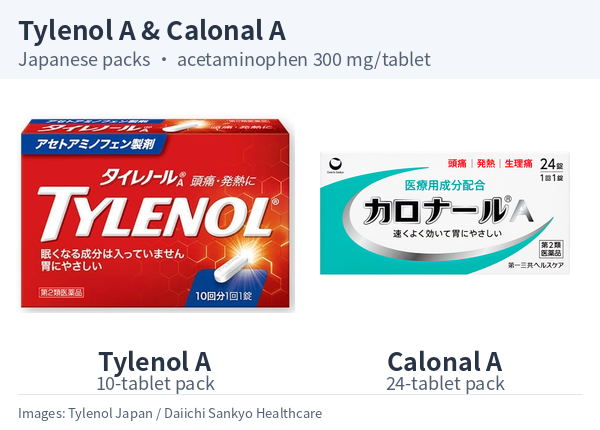
Japan's Tylenol A (タイレノールA) and OTC Calonal A (カロナールA) each contain 300 mg of acetaminophen per tablet. Acetaminophen and paracetamol are two names for the same ingredient. Both are single-active-ingredient fever and pain medicines for people aged 15 and over.
There is no need to invent a stronger winner between these two 300 mg products. The useful differences are the exact instructions about food, package sizes and inactive ingredients. Choose one appropriate product, not both together.
For either product: one tablet per dose, no more than three doses a day, at least four hours apart. Under 15: do not take. Do not increase the tablet count to match a dose you remember from another country or a prescription.
Recognize the Japanese products
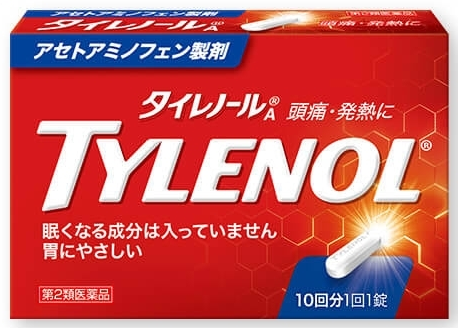
Tylenol A: 10, 20 or 30 tablets
The current Japanese product is タイレノールA, a Class 2 OTC medicine. The manufacturer lists 10-, 20- and 30-tablet packs; these are different quantities of the same 300 mg tablet, not different strengths. Its FAQ says the package color change did not change the tablets, ingredients or manufacturing method.
The manufacturer explicitly warns that Japanese and US Tylenol products have different amounts and directions. This guide covers the Japanese A product only, not imported bottles, Extra Strength, PM or cold-and-flu combinations.
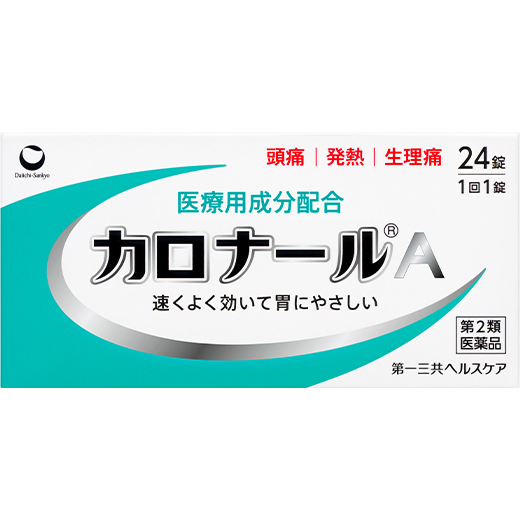
Calonal A: 12, 24 or 36 tablets
Look for カロナールA, the OTC Class 2 product. The manufacturer lists 12, 24 and 36 tablets. The photograph here shows the 24-tablet box.
The Calonal name also appears on prescription medicines. A shared name and ingredient do not make the prescription and OTC instructions interchangeable. Do not use someone else's prescription or halve these tablets to create an unlabelled children's dose.
Compare what matters before taking a tablet
| Label point | Japanese Tylenol A | OTC Calonal A |
|---|---|---|
| Active ingredient per tablet | Acetaminophen 300 mg | Acetaminophen 300 mg |
| Age | 15 years and over | 15 years and over |
| One dose | 1 tablet | 1 tablet |
| Daily frequency and spacing | Up to 3 doses; at least 4 hours apart | Up to 3 doses; at least 4 hours apart |
| Food instruction | May be taken without food; for chills/fever from a cold, avoid an empty stomach where possible | Avoid an empty stomach where possible |
| Pack sizes listed | 10 / 20 / 30 tablets | 12 / 24 / 36 tablets |
The maximum under these exact labels is three tablets, or 900 mg per day. That is the product-specific limit, not a universal paracetamol maximum or a recommendation to take all three doses.
Calonal A's additives include lactose, menthol and fragrance. Tylenol A has a different additive list. If you have had an ingredient reaction, check the complete leaflet with a pharmacist instead of assuming that matching active ingredients makes every tablet identical.
What are they for?
Both Japanese labels cover pain such as headache, period pain, toothache and pain after tooth extraction, sore throat, backache, joint, nerve and muscle pain, painful stiff shoulders, earache, bruising, sprains, fractures and injuries, as well as lowering fever with chills.
These are symptom-relief indications. They do not mean that a fracture, a persistent tooth infection or unexplained severe pain should be managed only with an OTC tablet. Treating pain does not establish its cause.
Neither formula adds a sedative active ingredient or caffeine. That does not mean side effects cannot occur: dizziness is listed, for example. Do not interpret “gentle on the stomach” as suitable for everyone or safe at a larger dose.
How to use the blister pack
- Check other medicines first, especially cold-and-flu products and painkillers. The ingredient may appear as アセトアミノフェン, acetaminophen or paracetamol.
- Press one tablet out through the foil of the blister sheet. Never swallow the sheet or a cut-out piece with the tablet inside; it can injure the throat or oesophagus.
- Take one tablet. Calonal A specifies water or lukewarm water. Follow the food instruction for the particular product above.
- Write down the time if needed. Leave at least four hours before another dose and do not exceed three doses a day. Do not take Tylenol A and Calonal A together or alternate them as a way around the limit.
Important checks before use
Do not take either product if you have had an allergic reaction to it or its ingredients, or asthma after a pain/fever medicine or cold medicine. While using it, do not take another pain/fever medicine, cold medicine or sedative. Do not drink alcohol before or after taking it, and do not use it continuously for a long period.
Ask a doctor, dentist, pharmacist or registered seller before use if you are receiving medical/dental treatment, are pregnant or may be pregnant, are older, have had medicine-related allergies, or have heart, kidney or liver disease or a stomach/duodenal ulcer. Tell them about all prescription medicines and supplements. If breastfeeding, ask about your own situation rather than treating the absence of a separate prohibition in these leaflets as a guarantee.
If you have accidentally exceeded the package instructions or combined products containing paracetamol, seek prompt medical advice. Too much can damage the liver. Bring the boxes and details of what and when you took; do not simply continue with the next scheduled dose.
When to stop or get medical help
If symptoms have not improved after 5–6 doses, stop and consult. This means doses, not days. Seek help earlier for worsening, severe or unexplained symptoms.
Stop and consult if you develop a rash, redness, itching, nausea, vomiting, poor appetite, dizziness or an unusually low body temperature. The leaflets also warn of rare serious reactions requiring immediate medical care, including:
- Trouble breathing, wheezing, hoarseness, hives, palpitations or confusion
- High fever with widespread rash, blistering/pustules, red eyes or sores on the lips/mouth; swollen glands with a widespread rash
- Yellow skin/eyes, dark urine, marked fatigue or appetite loss
- Reduced urine or swelling; new persistent breathlessness, dry cough or fever
These examples are a recognition aid, not a complete diagnostic checklist. Keep the leaflet and show it when seeking care.
Which box should go in your travel bag?
If the medicine is suitable for you, choose a convenient pack size and follow that exact product's food and dose instructions. The most useful comparison is same active amount, one product at a time, Japanese directions. A bigger pack does not justify longer continuous use.
Store in a cool, dry place out of direct sunlight and children's reach. Keep the original packaging, do not transfer to another container, and observe the expiry date.
Sources
Japanese product information checked October 15, 2026. The NHS source is used only for the general overdose/liver-risk advice, not for doses, alcohol rules or healthcare routing in Japan.