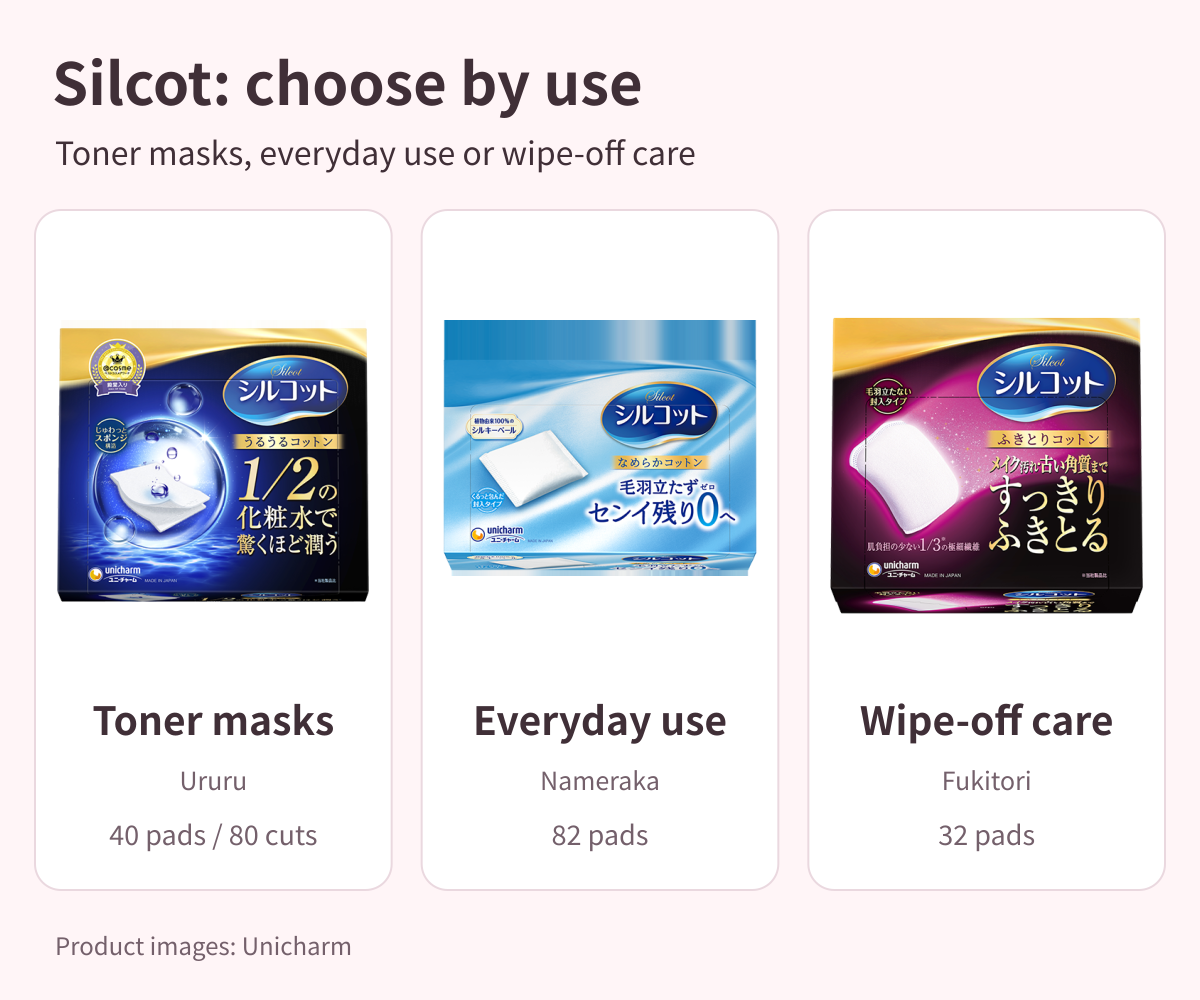
Choose Japanese Silcot pads by the job first: Ururu for applying toner and splitting pads for a local toner mask; Nameraka for a general-purpose option that can also be used with a suitable makeup remover; Fukitori for an existing wipe-off skincare routine. The box advertising “1/2” is not automatically the best replacement for every pad.

I’m Irene, a Taiwanese pharmacist licensed in Japan and working in a Japanese drugstore. Similar-looking boxes can hide different uses and counting systems. This guide connects the Japanese names with the routine you already have, rather than asking you to buy all three.
Japanese official information checked: October 21, 2026. Scope: Ururu, Nameraka and Fukitori Cotton. This is not a whole-range ranking; Vitamin C PLUS+, Urunobi, Premium and facial towels are outside this comparison.
- Start with the skincare product you already use
- What does the “1/2 toner” claim compare?
- Makeup removal and toner masks need different decisions
- 82 pads, 80 pads and 80 cuts are not the same count
- Does “Cotton” mean 100% natural cotton?
- A few practical checks before using a pad
- The short answer
- References and image credits
Start with the skincare product you already use
Toner and split-pad masks
Ururu Cotton — うるうるコットン
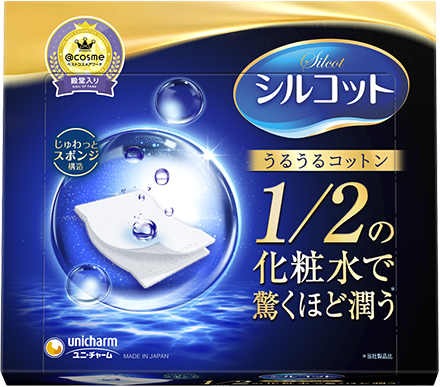
Unicharm describes a sponge structure designed to release the toner held in the pad. Each pad separates along a perforation into two pieces for a local toner mask. Consider it if splitting pads or leaving less toner behind in the pad matters to you.
Check the small print: “1/2” is a manufacturer comparison, not an instruction to halve every toner’s recommended amount.
One everyday, multipurpose option
Nameraka Cotton — なめらかコットン
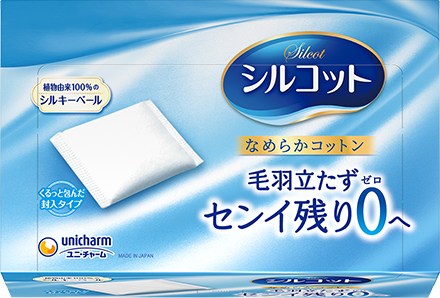
Its enclosed construction is designed to reduce loose fibers and loss of shape. Official uses include applying toner or emulsion and wiping with a wipe-off toner or cleansing product.
Why shortlist it: you use pads at different steps but do not particularly need split-pad masks. You still do not need to switch every skincare step to a pad.
An existing wipe-off routine
Fukitori Cotton — ふきとりコットン
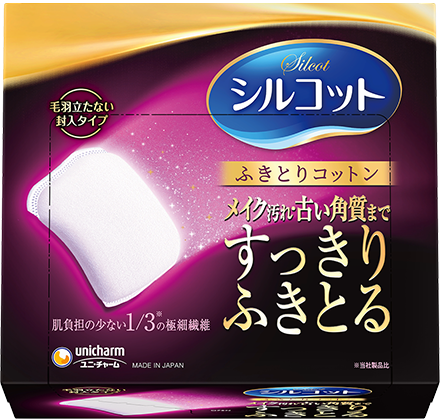
The fine-fiber surface is positioned for wipe-off care. Unicharm’s directions call for plenty of toner and gentle gliding across the skin, not scrubbing.
Check first: is your liquid actually intended for wiping? Buying a wipe-off pad is not a reason to add more exfoliation to your routine.
What does the “1/2 toner” claim compare?
The Japanese Ururu page names Nameraka Cotton as the comparator. Its liquid-release comparison uses the same amount of toner in each pad and is a Unicharm test. That is not a guarantee of cutting everyone’s skincare bill in half, or of identical results with every toner.
In practice, follow your toner’s directions and evenly moisten the part of the pad touching your skin. Do not deliberately leave dry edges rubbing against your face just to reach a fixed half-dose.
Makeup removal and toner masks need different decisions
For makeup removal, the cleansing product comes first
Nameraka’s official uses expressly include use with a cleansing product. If your remover calls for a cotton pad, it is a candidate; follow the remover’s own amount, contact-time and rinsing instructions.
These three products are not ready-soaked makeup-removing wipes. Their names do not mean that water alone will remove every kind of makeup. “Fukitori” means wiping: claims about a pad collecting residue are not a substitute for the cleansing ability of the liquid. For waterproof eye makeup, check the remover’s label rather than relying on the pad name.
For a local toner mask, easy splitting does not mean longer is better
Ururu is the option here designed to split into two pieces. But a pad suitable for masking does not make every liquid suitable for prolonged skin contact. Check whether your toner permits this use and for how long. Do not turn a wipe-off or acid product into a prolonged mask on your own, and do not sleep with the pads on.
82 pads, 80 pads and 80 cuts are not the same count
- Read the full Japanese name. The current Japanese Nameraka page lists 82 pads. Older articles and overseas listings may show 80 pads or “なめらか仕立て.” A similar box color does not establish the exact version.
- Separate whole pads from cut pieces. Ururu 40枚 / 80カット means 40 pads that divide into 80 pieces—not 80 whole pads in the box. The official page also lists an 80-pad / 160-cut pack.
- Compare cost for the same job. If you use one whole pad each time, price divided by whole-pad count is a useful starting point. If you split pads for masks, account for how you actually use the pieces. Do not rank 82 pads, 80 cuts and 32 pads as if they were equivalent units.
Taiwanese and Japanese packaging, translated names and pack sizes may differ. Match the full Japanese product name rather than remembering only “the blue box,” and use the actual pack label as the final check.
Does “Cotton” mean 100% natural cotton?
Not necessarily. Ururu’s Japanese pack lists pulp and rayon; Nameraka’s official page also identifies rayon as its inner fiber. If material matters to you, read the material label rather than treating the word “Cotton” as a pure-cotton guarantee.
A few practical checks before using a pad
- Unicharm’s basic technique is to wet the contact area evenly and gently press or smooth the pad over the skin—not slap or scrub.
- A reduced-lint design does not guarantee that every skin condition will tolerate a pad. Stop if it feels uncomfortable; extra wiping is not a useful way to chase a “clean” feeling.
- Ururu’s package says to close the lid after opening, keep the pads clean and protected from dust or debris, and avoid direct sunlight, heat and humidity. Check the precautions on the actual pack for the other versions too.
The short answer
Ururu for toner application and split-pad masks; Nameraka for everyday flexibility, including use with a suitable remover; Fukitori for a wipe-off routine you already follow. Choose the use you really need. There is no requirement to collect all three or add extra skincare steps.
References and image credits
This guide is based on Japanese official information, not personal use, hydration or makeup-removal testing. Product descriptions and numbers come from the manufacturer; the decision sequence is our editorial synthesis.
- Silcot Japan: Ururu Cotton—counts, separation and comparison conditions
- Silcot Japan: Nameraka Cotton—82 pads and stated uses
- Silcot Japan: Fukitori Cotton—32 pads and wiping directions
- Silcot Japan: basic cotton-pad technique
- Unicharm official shop: Ururu 40-pad pack and back-of-pack precautions
Product photographs: current Unicharm Japan product pages. Packaging can change; check the complete name and label when purchasing.