Picking up the familiar green Utamaro soap in Japan? Before choosing the bar or the bottle, check the clothes you want to wash. White, off-white and coloured garments need different considerations; a liquid bottle alone does not tell you which product fits.

I’m Irene, a Taiwan-born pharmacist qualified in Japan. This guide uses the manufacturer’s information to help you identify two clothing products, rather than reporting a hands-on stain-removal test.
At the shelf: match these two names
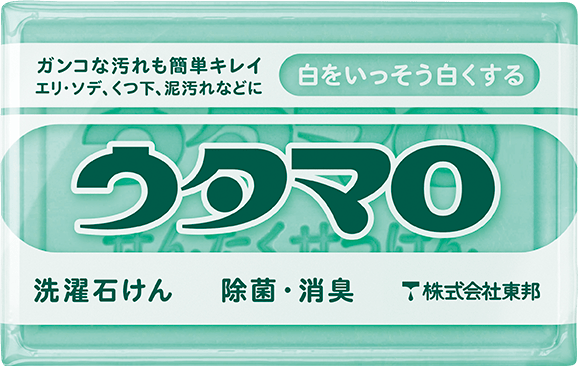
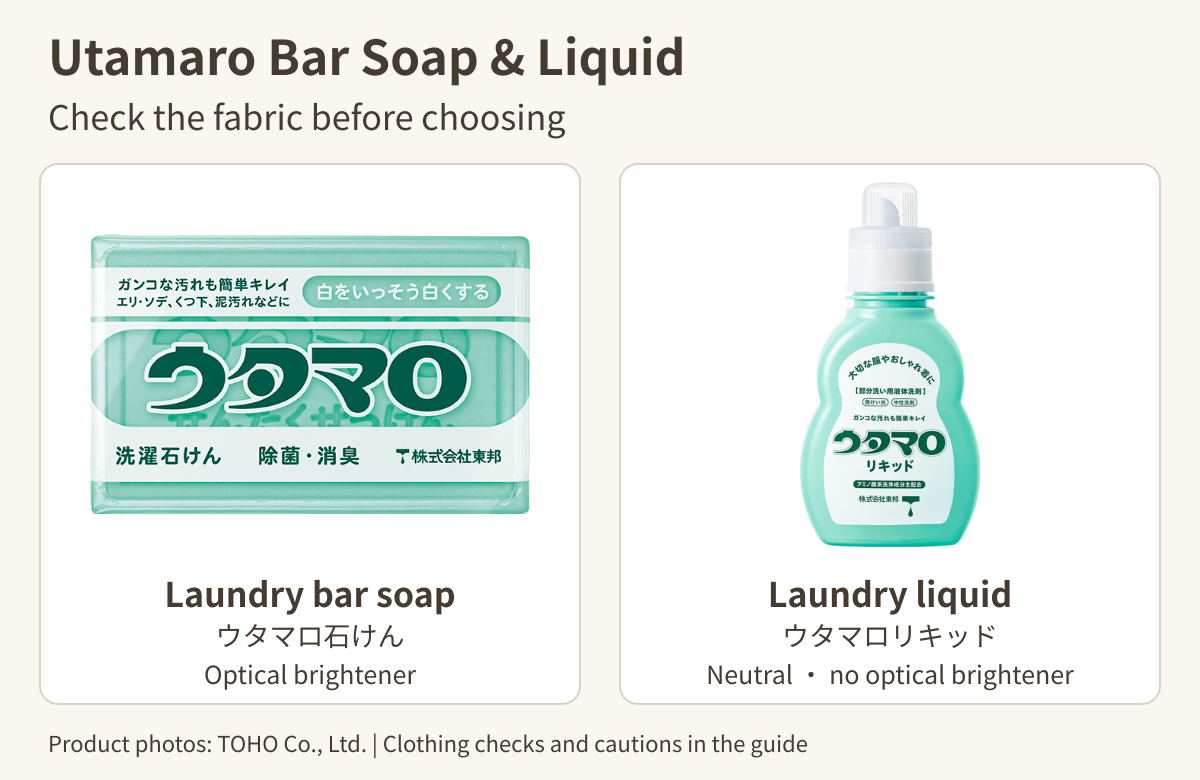
ウタマロ石けん (Utamaro soap) is laundry soap for treating stained areas. The bar weighs 133 g at manufacture. It is mildly alkaline and contains an optical brightener (蛍光増白剤).
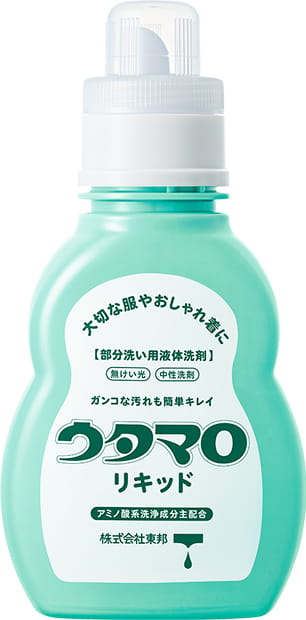
ウタマロリキッド (Utamaro Liquid) is a neutral-pH laundry detergent without optical brighteners (中性・無けい光). The bottle holds 400 mL. It is presented for spot-washing coloured garments and delicates, subject to its exclusions below.
A useful name check: クリーナー is the household-cleaning product; キッチン is for dishes. Those are different uses, not substitutes for the two clothing products here.
“Looks white” is not enough
For suitable white laundry, the bar is the option the manufacturer associates with restoring whiteness. But きなり (unbleached natural-colour fabric) and off-white clothing may become whiter than intended. Coloured or patterned items may fade or change colour; the official FAQ generally advises against using the bar on them.
So think about the colour you want to preserve before convenience or packaging. A cream blouse should not automatically go into the same decision as a white sock. Check the garment’s care label and the product instructions, including whether optical brighteners are allowed: being white does not by itself establish suitability.
Liquid: check exclusions before a colour test
Neutral pH and no optical brightener do not guarantee that a dye will stay put. For an otherwise suitable item, the official check is to apply undiluted Liquid to an inconspicuous area, wait five minutes, then press with a white cloth. Items that transfer colour are included in the product’s “cannot use” list. Do not treat washing separately as permission to continue.
Toho also excludes silk, rayon and cupro bearing both a do-not-wash symbol (crossed-out washtub) and a dry-cleaning indication; leather and fur; materials with special finishes or decoration such as embroidery or embossing; and garments prone to losing their shape, including coats, suits, ties and kimono. Follow any do-not-wash label rather than attempting home washing.
A successful colour check does not override a care label or a material exclusion. If you cannot establish that the garment is suitable, do not use this guide as a reason to try it.
These products belong in a washing routine
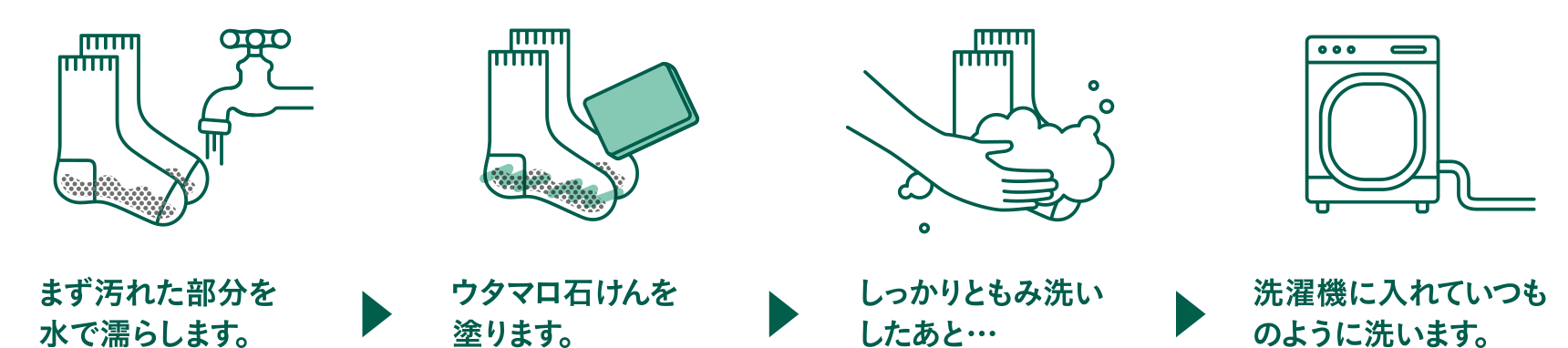
For suitable garments, the soap FAQ says to wet the stained area, apply the bar and rub-wash until its green colour disappears, then put it into the washing machine with the suds still on and the usual laundry detergent. If hand-washing has already removed the dirt sufficiently, the FAQ also allows rinsing without machine-washing.
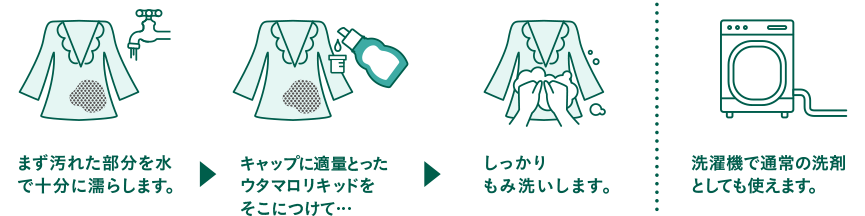
The diagrams show why these should not be packed as water-free stain-removal products. Plan for washing facilities and follow the current package and garment instructions. This is a selection guide, not a complete guide to machine doses, soaking or every fabric. Stain removal varies with the type of stain and how long it has been there.
Official sources and image credits
- Utamaro: soap — product identification, optical brightener and colour cautions; photograph and use diagram.
- Utamaro: Liquid — product identification, suitability, exclusions and five-minute colour check; photograph and use diagram.
- Utamaro: official Q&A — choosing between the two products and the soap’s washing/rinsing instructions.
- Utamaro: product range — distinguishing clothing, household and dish-cleaning uses.
- Japan Consumer Affairs Agency: care-label symbols — meaning of the crossed-out washtub.
Information checked 26 October 2026 (Japan time). Product photographs and use illustrations in this article and cover are official images from 株式会社東邦 (Toho Co., Ltd.), used to identify and explain these products; the cover layout is editorial. Copyright and trademarks belong to their respective owners. Attribution does not imply permission or endorsement.