Japan-market official product information, linked leaflet and FAQ checked: 1 November 2026. This guide concerns treatment decisions for head hair, not self-diagnosis or treatment of other body areas.
Does “shampoo” mean daily use—and do specks still attached to the hair mean you should add another dose? Japanese Sumithrin L Shampoo-type is a lice medicine, not an ordinary cleansing shampoo. Treatment days, normal hair washing and removing attached material are different jobs.
I’m Irene, a Taiwan-born, Japan-licensed pharmacist working in a Japanese drugstore. Before choosing this bottle, I would ask what you are treating, where it is, and what medicine you have already used—not suggest more simply because something is still visible.
Read the full name, not just KINCHO
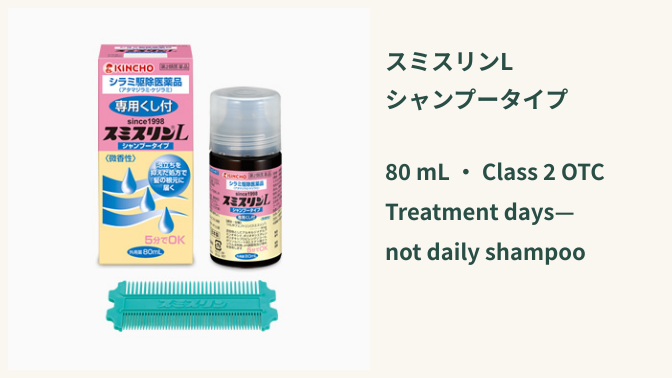
The photograph shows Japan’s スミスリンLシャンプータイプ, 80mL (Sumithrin L Shampoo-type), a Class 2 OTC medicine. It contains phenothrin 4mg per mL and comes with a special comb. It is an external-use lice treatment: do not swallow it or use it for routine hair cleaning.
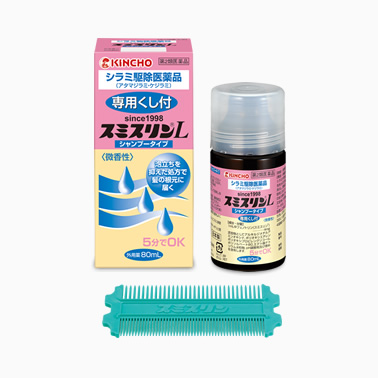
The brand also sells Shampoo Premium. This is not an effectiveness comparison, and instructions for Premium, powders or a prescription lotion must not be substituted for L. Show the complete product name and explain the intended body area. Suspected pubic lice or problems elsewhere require advice rather than following this head-hair guide.
Seen Earth Shiramitori Lotion labelled “insecticide-free”? Read how its dimeticone formulation works and its use boundaries. It is not a liquid version of this ingredient, and its directions differ. Do not combine or switch treatments yourself; bring the current products and treatment history to a doctor or pharmacist.
“Once a day” does not mean every day
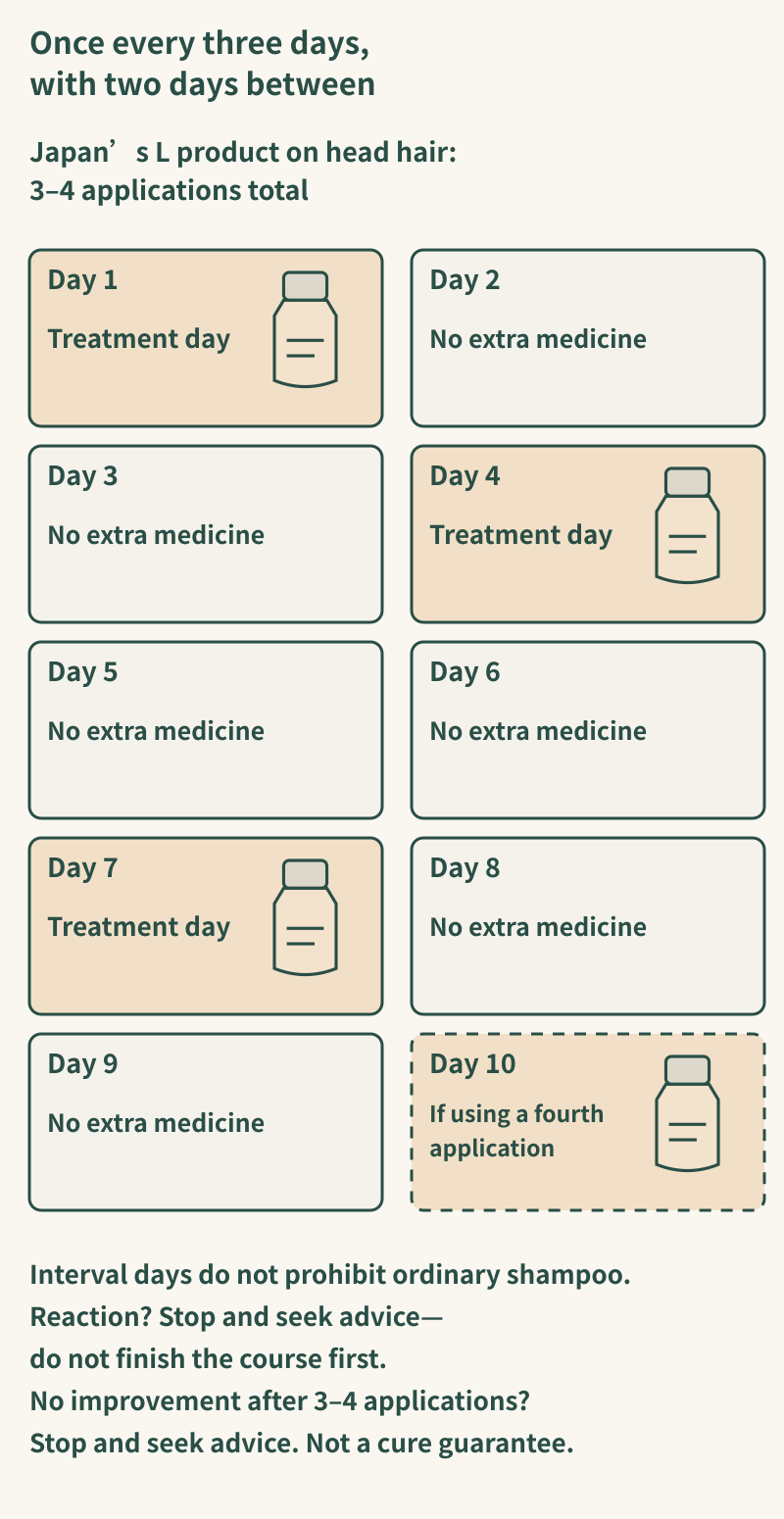
The Japanese leaflet specifies one application on a treatment day, once every three days—with two days between applications—for 3–4 applications total. For example: day 1, day 4 and day 7; if a fourth application is used, it is on day 10. This does not mean 3–4 times in one day or daily use.
The spacing targets lice after eggs hatch. It is not a promise that everyone will be cleared in 7–10 days. Do not add applications, increase the amount, leave it on longer or keep restarting courses yourself. If travel plans interfere, ask the pharmacist rather than doubling up.
The head-hair amount and basic requirements
The amount for head hair is approximately 10–20mL per application, measured using the cap markings. Following the instructions, wet the hair slightly with water or lukewarm water, distribute the measured dose evenly through the scalp and hair to the hairlines, lather, wait five minutes and rinse thoroughly. This summary does not replace the full leaflet. In particular, keep it out of the eyes, ears, nose and mouth; ask the pharmacist if you are unsure how to avoid runoff.
Being able to wash normally is not permission to use this lice medicine daily. Do not add water or other liquids to the bottle or improvise combinations with other lice products.
Attached material is not a reason to add doses
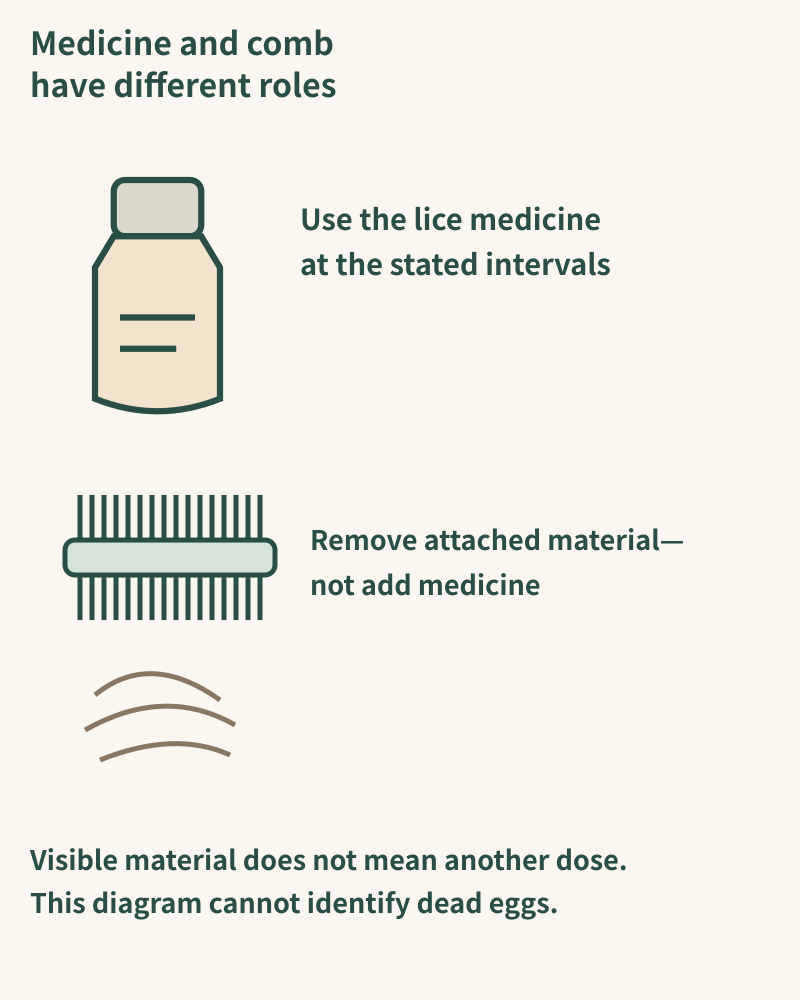
Dead eggs or empty shells can remain firmly attached even after live lice have been treated. This medicine does not wash those attachments away. The official instructions explain removal with the supplied comb; removing material and increasing medicine use are not the same thing.
Do not use this article to decide that every remaining speck is dead. If you cannot tell what it is or whether live lice remain, or if there is no improvement after 3–4 correctly spaced applications, stop using this medicine, do not add more applications yourself, and take the box and leaflet to a doctor, pharmacist or registered medicine seller.
When to stop or seek help
- Ask a doctor, pharmacist or registered seller before use if medicines or cosmetics have caused an allergic reaction such as a rash, redness, itching or dermatitis.
- A rash, redness, itching or dermatitis after use may be a side effect: stop immediately and seek advice with the leaflet. Do not continue merely to finish 3–4 applications.
- If swallowed, obtain immediate medical care. If it enters an eye, rinse immediately with water or lukewarm water; obtain immediate medical care if symptoms remain severe after rinsing.
- Children need adult guidance and supervision. This is not a whole-body wash; keep it out of the urethra, vagina and anus as well.
Wash hands and combs after use. Keep the medicine away from food, tableware, toys and ornamental fish. It may remove some hair colour and stain clothing. Store it separately from ordinary shampoo, in its original container, out of children’s reach and in a cool place away from sunlight. Do not use expired or cloudy medicine; use promptly after opening as instructed.
At the counter, explain who will use it, symptoms and body area, the full names of medicines already used, and application dates and counts. That is more useful than asking for a stronger shampoo.