Japanese official product page and nose-strip instructions checked on 1 November 2026. This guide is limited to Japan’s white, nose-only 10-sheet pack—not every pore strip.
Seeing material attached to a nose strip can make another application—or a longer wait—seem tempting. This product grips pore plugs as it dries and lifts them away when removed. Longer drying and more painful peeling do not mean better results. Understanding that action helps you know when not to continue.
I’m Irene, a Taiwan-born pharmacist working in a Japanese drugstore. For this type of product, I first check the condition of the skin, the intended area and the exact product—not a social-media photo of what came off.
Read “nose use”: not an all-face or acne patch
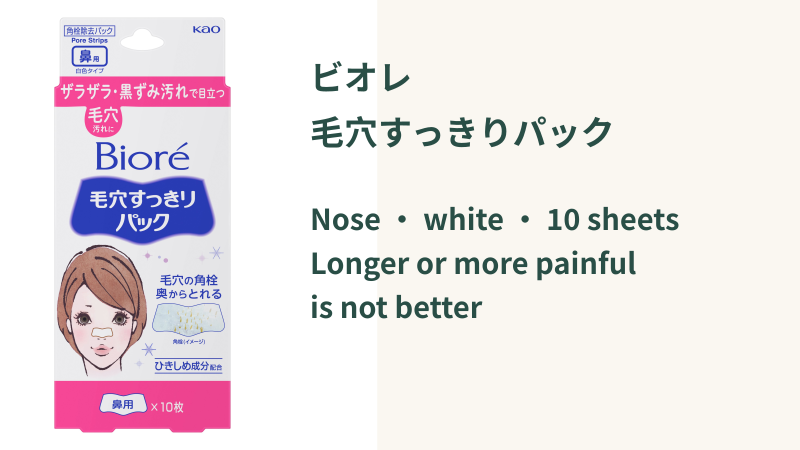
The example is ビオレ 毛穴すっきりパック 鼻用 白色タイプ, 10 sheets, JAN 4901301200211; its Japanese sales name is ビオレ毛穴すっきりパックh. The official packaging photo helps identify it. Still check the full name and instructions on the pack in front of you.
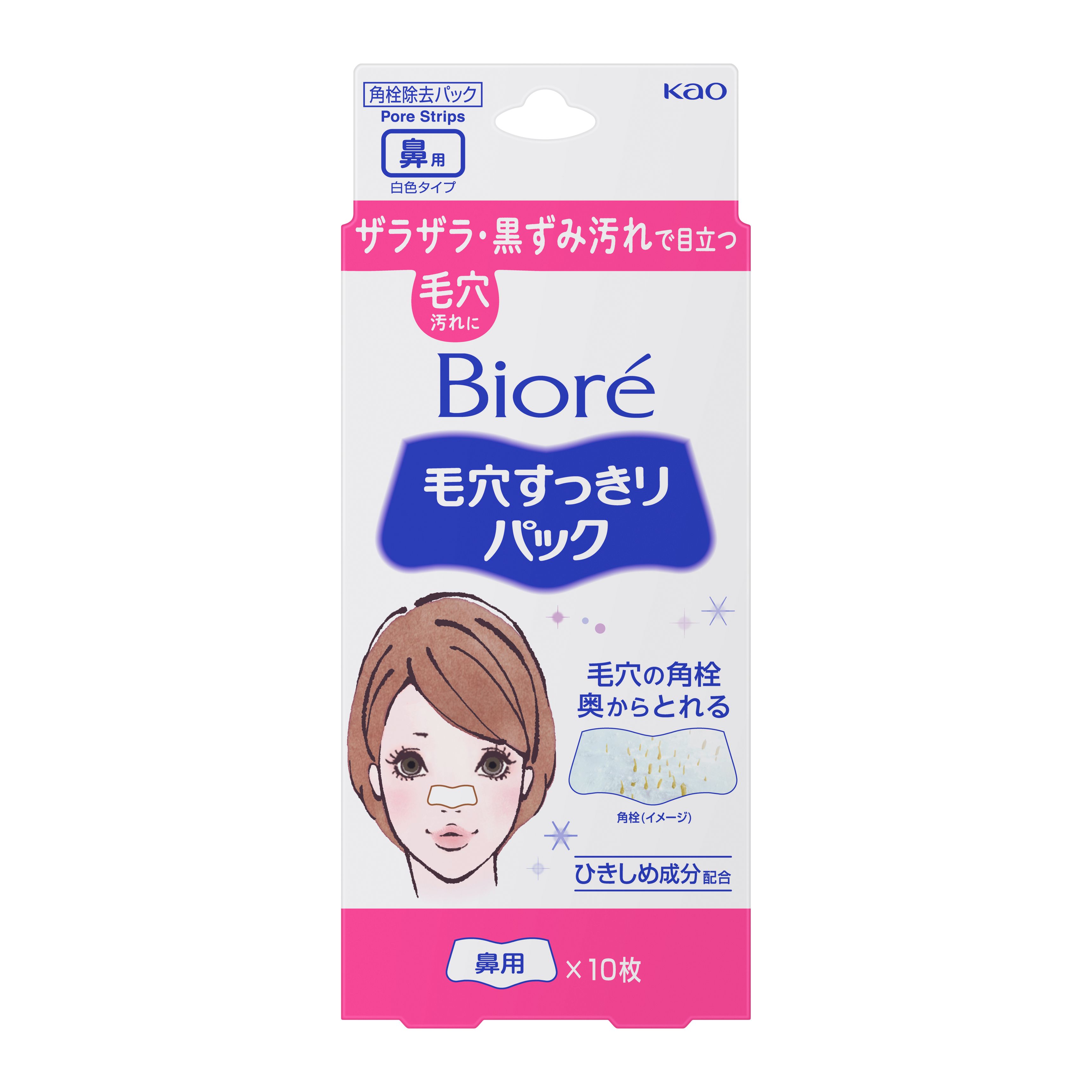
This is for the nose, not the area around the eyes or other areas. Separate nose-plus-other-areas, black, men’s and overseas products exist; do not transfer their directions to this pack. A pore strip is not an acne-treatment patch.
Why it lifts plugs—and why more is not better
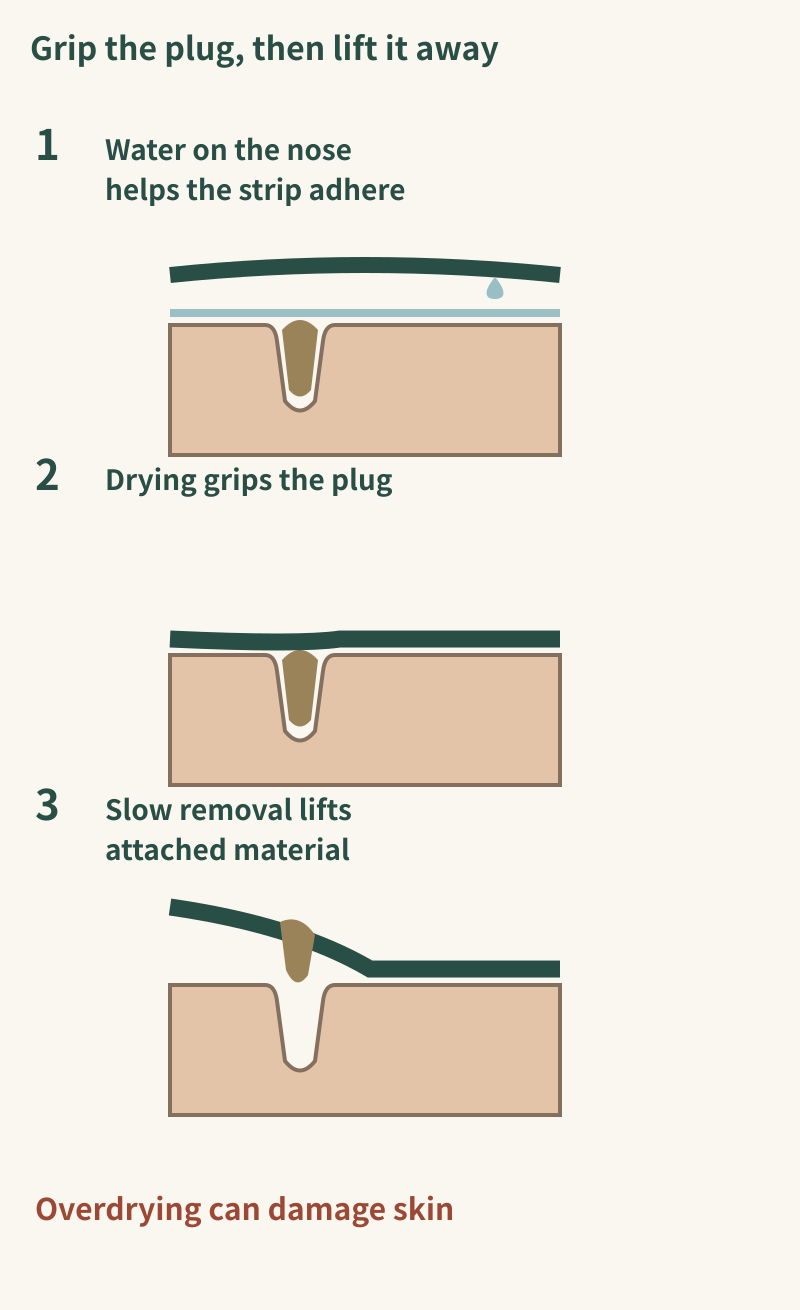
Kao describes pore plugs as solid material formed from sebum and old skin cells. Water on the nose softens the strip material so it adheres; as it dries, it grips the plugs and lifts them away during removal. This is a different process from a rinse-off face wash or gel.
Overdrying makes the strip too hard and its grip on the skin too strong. Forcing it off can peel or damage the skin. The amount removed is not a signal to increase frequency; a disappointing result is not a reason to apply another strip that day. This guide does not recommend combining exfoliants, masks and strips into an intensified routine, or promise disappearing pores, permanent shrinkage or acne treatment.
Check the skin before opening a strip
- Do not use on sun-damaged skin, wounds, swelling, pimples, eczema, dryness or other skin abnormalities.
- Do not use if adhesive bandages easily irritate your skin.
- Use only on the nose, not around the eyes or elsewhere. If the skin condition or intended use is uncertain, ask first rather than trying it anyway.
Once a week is a guideline, not an obligation
The Japanese nose-strip instructions give once a week as a guideline—not daily use or an every-three-days intensive routine. It does not mean using it on uncomfortable skin to keep to a schedule. Use each strip immediately after opening its sachet. After a bath, wait for sweating and heat to subside: otherwise the strip may not dry readily.
Wash first to remove excess oil, and do not apply toner or other skincare before the strip. Follow the pack steps: take it out with dry hands, open the cuts and remove the clear backing. Thoroughly wet the nose, not the unused strip. Dry your hands, then fit the smooth side to the wet nose, pressing out air. Wetting the strip directly before application dissolves its material and reduces its effect.
Allow it to become firm, without overdrying. The official approximate drying times are 5–10 minutes in lower humidity, such as spring, autumn or winter; 10–15 minutes in higher humidity, such as summer or the rainy season. Humidity and sweat affect drying. Do not apply one fixed time to every season, or interpret slow drying as permission to leave it on indefinitely or sleep in it. Check the complete instructions or ask if uncertain.
Two removal situations: gently peel—or stop and wet
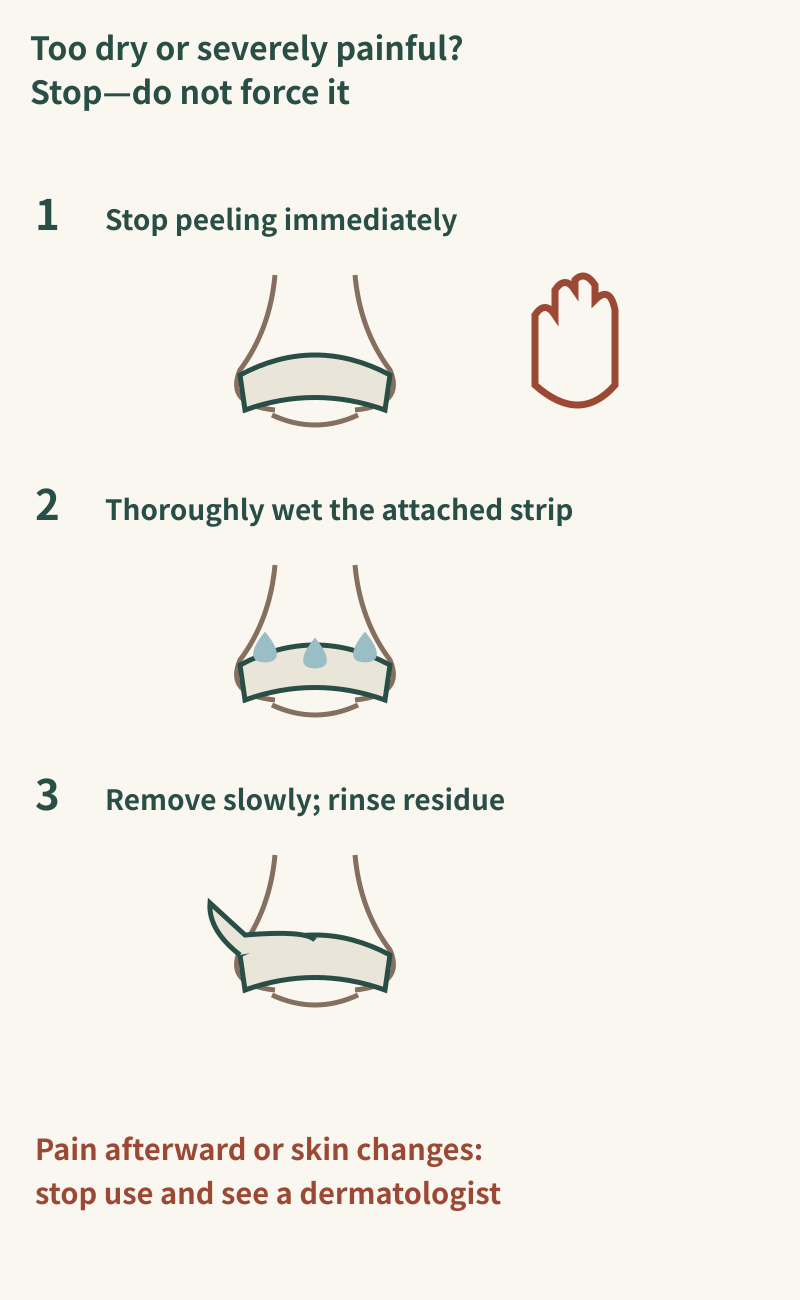
For normal removal, slowly peel a little at a time from the edges. Do not rip it off in one pull from one side. If it has dried too much or peeling is severely painful, stop peeling, thoroughly wet the strip already on the nose with water, then remove it slowly and rinse away residue. This releases the strip; it is not a technique for removing more plugs. Do not immediately reapply to make up for a lost result.
After normal removal, follow the instructions and resume usual skincare such as toner. Abnormal symptoms call for stopping, not layering products to cover them up: follow the stopping and dermatology advice listed beneath the diagram. Continuing may worsen symptoms.
Before buying, the useful questions are: “Is my skin suitable for an adhesive product now? Is this the nose-only pack? Do I understand removal and stopping instructions?” Those answers matter more than getting a bigger haul on the strip.