Japanese official information checked: November 1, 2026. The identification example is Japan’s 90-capsule alli package; this article does not determine anyone’s eligibility.
You do not need to register for a particular app first—but you cannot assume you can walk in and start taking alli. Japan’s first-purchase check separates at least three months of dietary and exercise changes from records for the most recent month. The person who will use the medicine must also discuss their health, medicines and other conditions with the selling pharmacist. Having records does not guarantee a sale or make the medicine suitable for you.
- Identify the Japanese product, not rules for an overseas namesake
- Separate three things: lifestyle changes, records and an in-person consultation
- Records and a waist measurement do not replace the full medicine check
- If use is approved, preparation time and treatment time are different clocks
- Before your next pharmacy visit
- Official sources and photograph
Identify the Japanese product, not rules for an overseas namesake
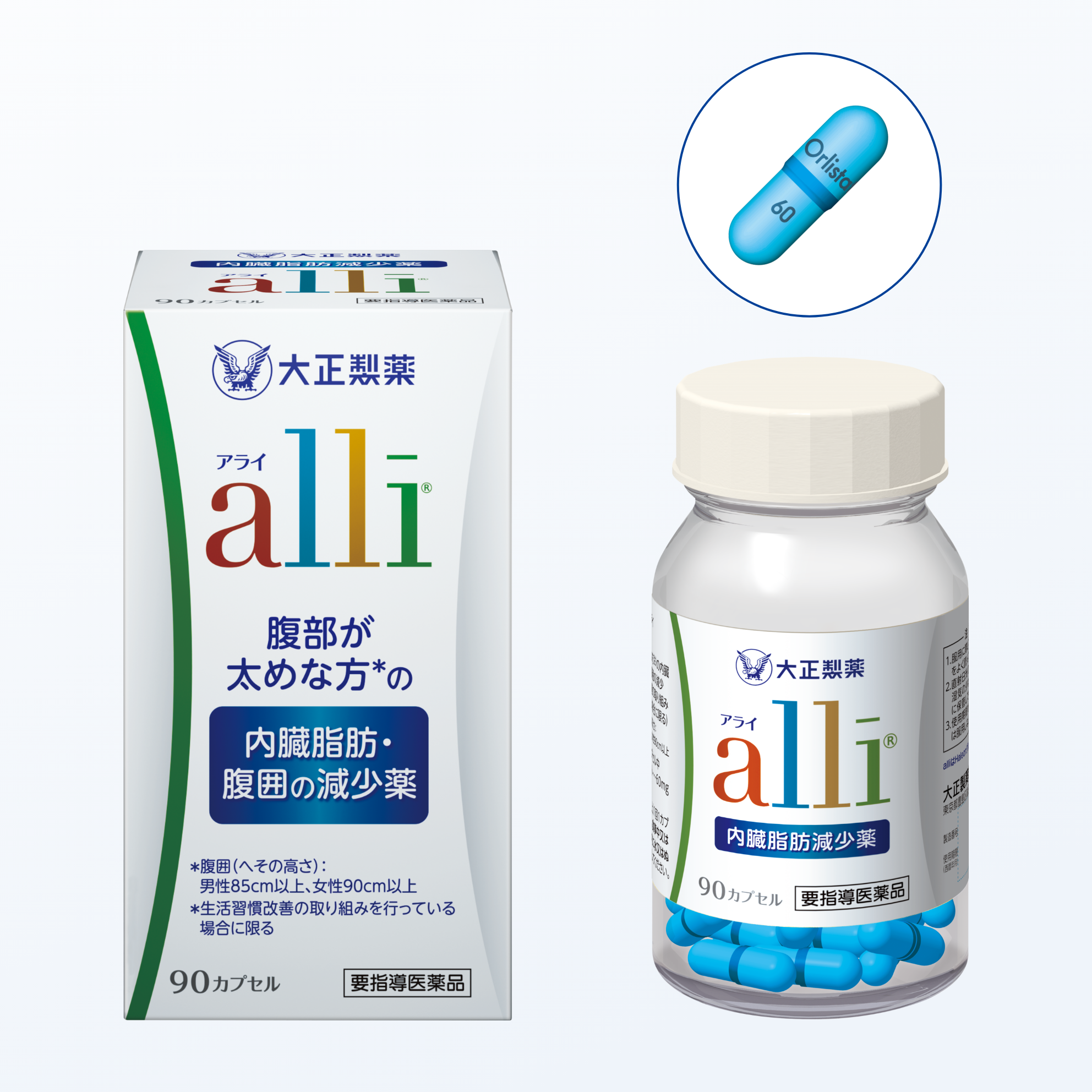
Japanese アライ (alli) is a pharmacist-guided medicine (要指導医薬品), containing 60mg of orlistat per capsule. The photograph is an official Japanese 90-capsule packaging example. Ninety is neither a single dose nor an instruction to finish a course. The enlarged capsule illustration in the photograph is not its actual size.
The Japanese indication is reduction of visceral fat and waist circumference in people meeting the specified conditions, alongside ongoing lifestyle changes. This is not a plan for rapid weight loss on a trip, cancelling out a large meal or relying on medicine alone. It is not a treatment for abnormal blood lipids. Do not substitute overseas alli instructions, online shopping advice or packaging similarities for the Japanese requirements.
Separate three things: lifestyle changes, records and an in-person consultation
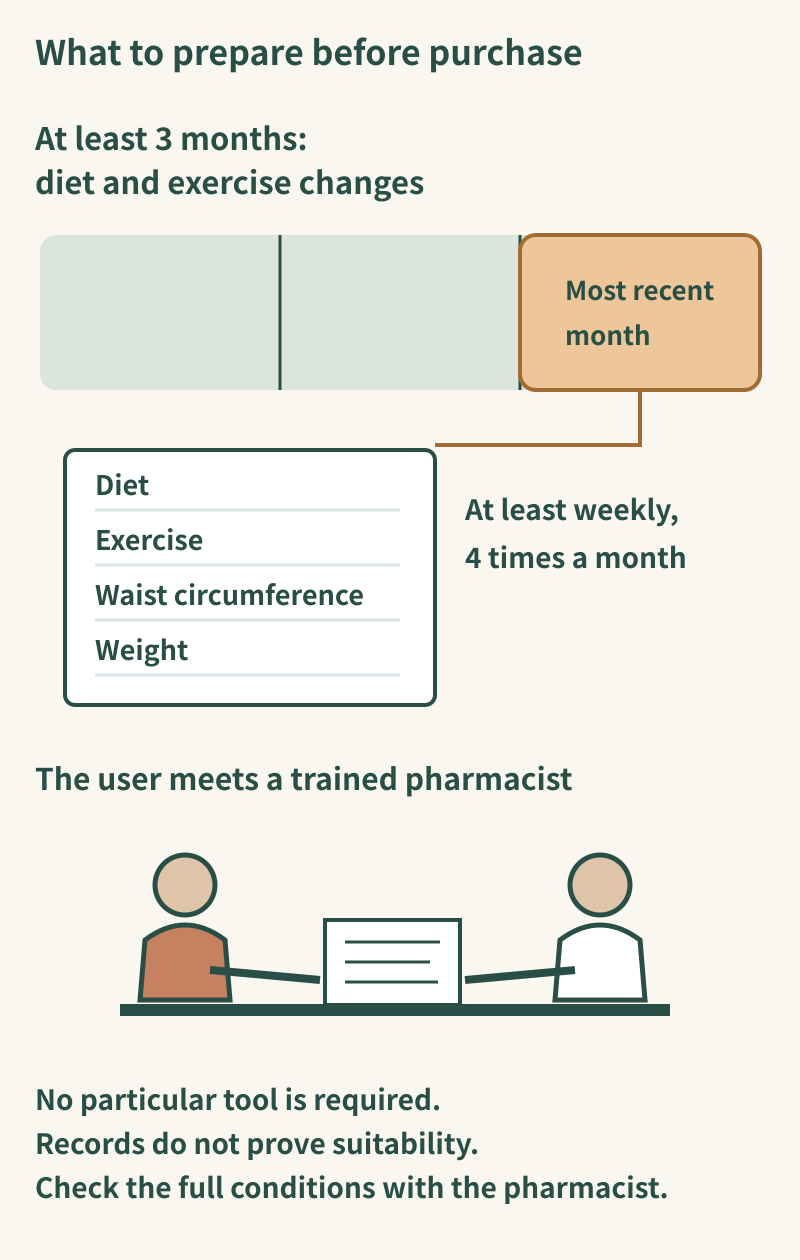
The first check concerns at least three months of changes to both diet and exercise, plus genuine records for the most recent month—not downloading an app today. Record diet, exercise, waist circumference and weight at least weekly, four times a month. No tool is prescribed; the official sheet is one option. Explain your actual changes and do not invent past measurements.
The user must visit a participating store with a trained pharmacist to review the records, medical history, medicines and full conditions. Missing preparation, unclear conditions or a need for medical care mean that “no prescription needed” does not guarantee a purchase that day.
If you already keep records in another format, contacting the store about how to show them, the trained pharmacist’s hours and stock can reduce a wasted journey. This is a practical preparation suggestion, not confirmation that a store will sell the medicine or offer service in your language. This article does not decide eligibility from nationality or length of stay in Japan.
Records and a waist measurement do not replace the full medicine check
The Japanese label specifies adults aged 18 or over and waist criteria measured at navel level—at least 85cm for men or 90cm for women—among other conditions. Meeting those numbers is not clearance to use it. Bring prescription and non-prescription medicines, supplements, medical history and health-check results for the pharmacist to review. Do not stop existing treatment yourself to try to qualify for a purchase.
Do-not-use conditions include being under 18; previous allergy to this medicine or its ingredients; pregnancy or possible pregnancy; breastfeeding; taking ciclosporin, anti-HIV medicines or anticoagulants such as warfarin; and diagnosed malabsorption, cholestasis or obesity caused by disease or medication. A BMI of 35 or above, or a BMI from 25 to below 35 together with specified diagnosed conditions, also excludes use. That list covers impaired glucose tolerance including diabetes and specified cardiovascular, liver, kidney, respiratory and joint conditions, among others. The complete official checklist must be checked item by item; this summary cannot rule out risks for you.
Consult before use if you are receiving medical treatment, have had a medicine allergy, or have pancreatitis, gallbladder disease or kidney disease. Medicines requiring consultation include amiodarone, levothyroxine, antiepileptics, antidepressants, antipsychotics including lithium, benzodiazepines and oral contraceptives. Also explain any health-check recommendation for repeat or detailed testing, or if you do not have regular health checks. A “consult first” instruction does not allow the separately listed do-not-use conditions to be waived.
If use is approved, preparation time and treatment time are different clocks
The three months of lifestyle changes before purchase are separate from follow-up after starting treatment. The Japanese directions for adults aged 18 or over are one capsule three times daily, during a meal or within one hour afterwards, with water or lukewarm water; the official FAQ requires at least four hours between doses. Do not take a dose when you skip the meal or eat a meal containing almost no fat. Do not increase or add doses yourself, or treat a 90-capsule pack as an instruction to finish it. Have the pharmacist confirm your understanding of the full directions before starting.
- No effect after at least three months of use: consult the pharmacist about whether to continue, rather than extending use yourself.
- No effect after at least six months of use: stop and take the leaflet to a doctor or pharmacist. Improvement does not mean unlimited unsupervised use; repeat purchases still involve checking records and health.
- Symptoms do not wait for three or six months: stop immediately and consult a doctor or pharmacist for symptoms such as rash, nausea or vomiting, severe abdominal pain or blood in the stool. Seek immediate medical care for serious allergic symptoms such as breathing difficulty or altered consciousness, or signs of liver problems such as jaundice. Persistent or worsening oily stools, oil leakage or diarrhoea also require stopping and seeking advice; they are not automatically reassuring proof that the medicine is working.
The medicine can also reduce absorption of fat-soluble vitamins. Do not respond by stacking high-dose supplements yourself; discuss nutrition and medicines with the pharmacist. Dietary and exercise changes must continue, and the medicine should not be used if you cannot continue them. This guide does not set personal weight-loss targets or replace medical assessment.
Before your next pharmacy visit
Prepare genuine records, a complete medicine list and health-check information—ask the pharmacist before buying an app or stockpiling medicine. The official store finder is a starting point, not a guarantee of stock or a trained pharmacist being on duty. If you do not meet the conditions, discuss appropriate health care rather than switching to an overseas namesake or adding another weight-loss medicine.
Official sources and photograph
- Taisho: Japanese alli product, 90-capsule leaflet and purchasing information
- Official purchase checklist: first purchase, repeat purchase and conditions
- Official lifestyle record sheet
- Official information for users
- Official FAQ: purchasing, records and medicine precautions
- Official participating-store finder
- Japanese brand website: source of the 90-capsule product photograph
Prepared from the Japanese originals. This does not verify every retail package, individual eligibility or each store’s services.