Japanese official product information, instructions and relevant cautions checked on 1 November 2026. This guide covers Japan’s Tomerumin, not every anti-drowsiness medicine.
You bought a coffee, then spotted mint-like anti-drowsiness tablets at a Japanese drugstore. Can you use both? The deciding factor is not the flavour—or how much of a general caffeine “allowance” seems left. It is this medicine’s own restrictions.
- Recognise the product: medicine, not a mint
- A refreshing sensation and an active ingredient do different jobs
- Coffee, tea and energy drinks: a caffeine budget is not permission
- Who must not use it—and who needs advice first?
- Refreshing does not mean you can take more
- Stop for adverse effects—do not add more to compensate
- Official sources and product photo
Recognise the product: medicine, not a mint
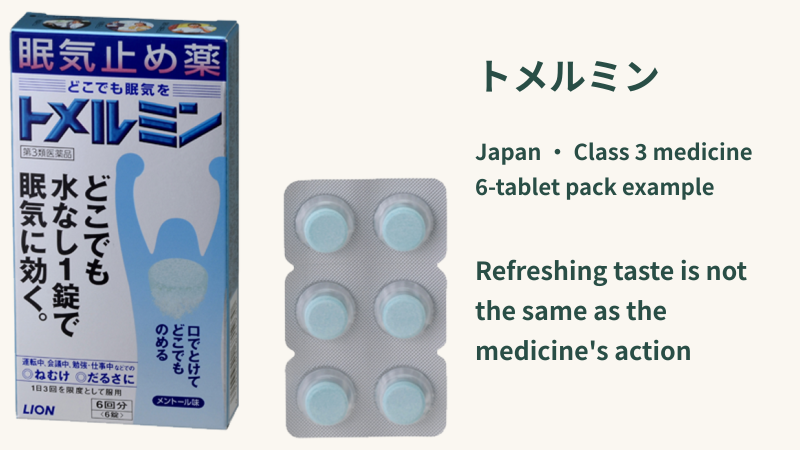
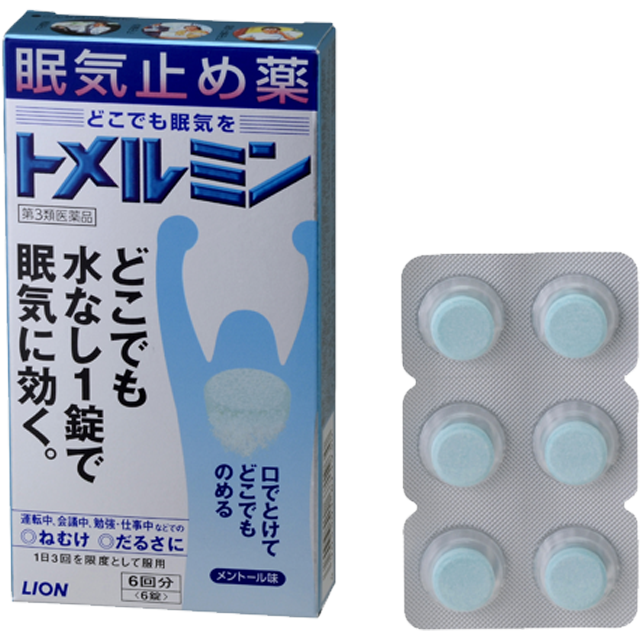
トメルミン (Tomerumin) is a Japanese Class 3 OTC medicine for relieving sleepiness and fatigue. The official packaging example shown here contains six tablets in blister packaging. It is not a sweet to keep topping up.
A refreshing sensation and an active ingredient do different jobs
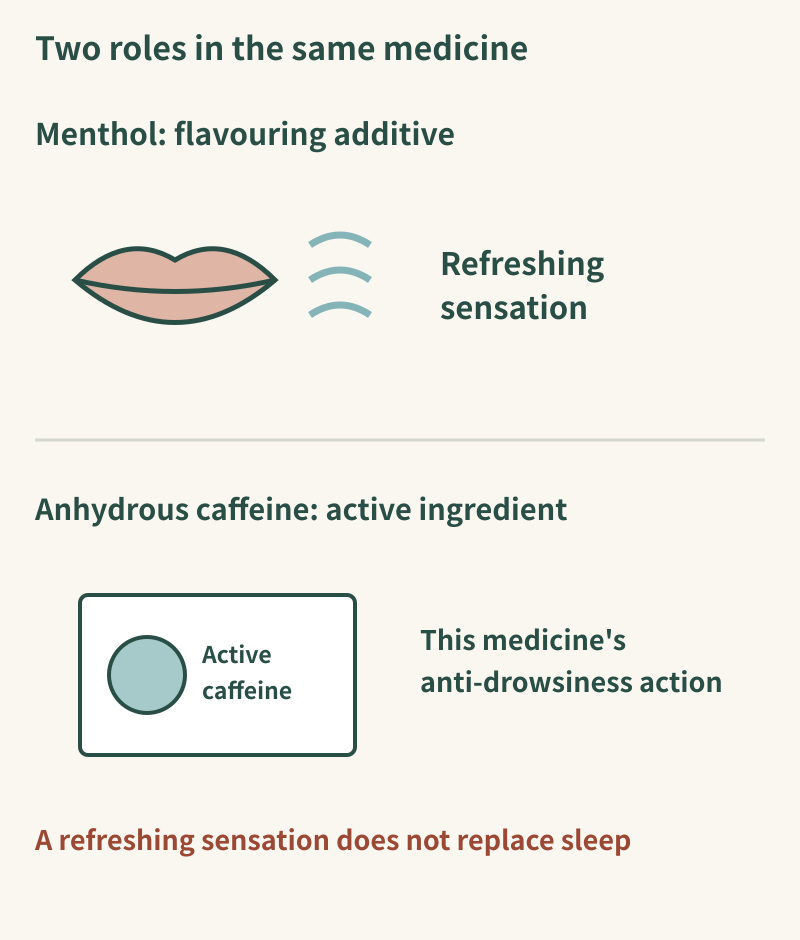
The manufacturer distinguishes two roles: menthol is an additive used for flavour, providing a refreshing sensation; anhydrous caffeine is the active ingredient responsible for the medicine’s anti-drowsiness action. The tablet breaks down in the mouth, and a coating around caffeine particles helps mask bitterness. Easy-to-take and refreshing do not mean sleep loss has been corrected, or tell you when the medicine has started working.
Coffee, tea and energy drinks: a caffeine budget is not permission
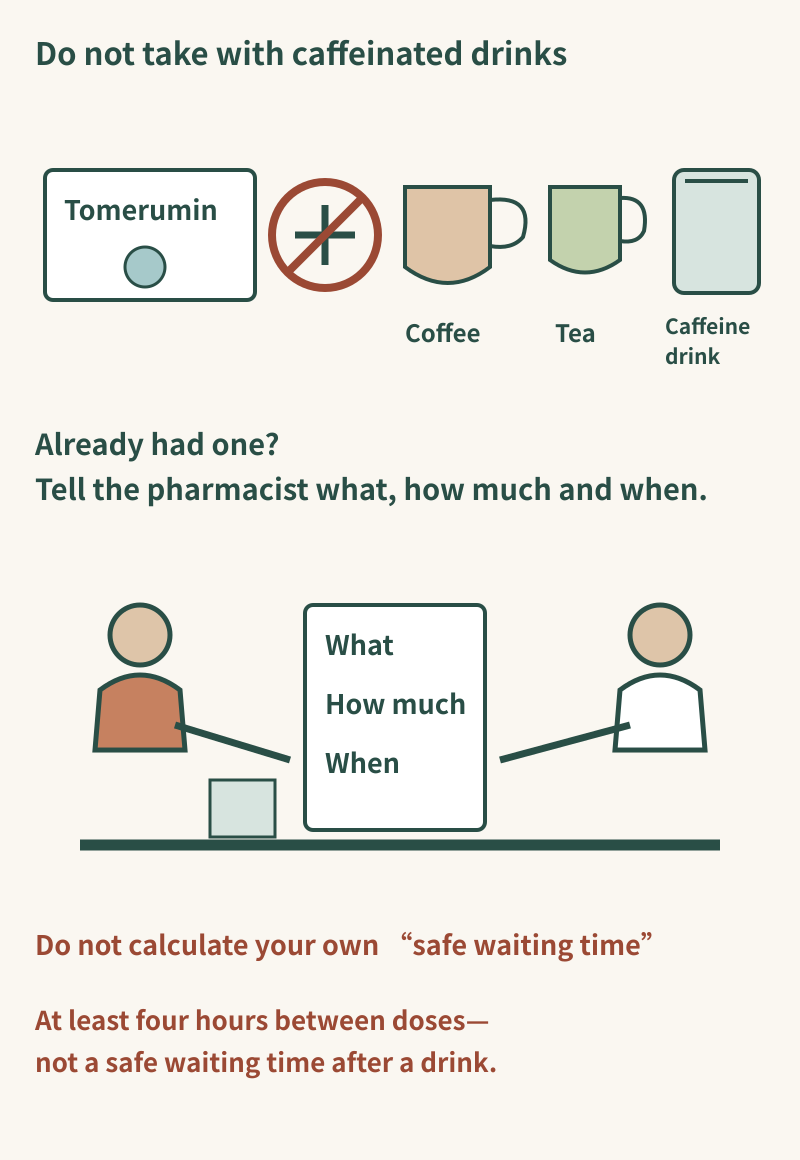
The Japanese instructions say: do not take it simultaneously with caffeine-containing drinks such as coffee or tea, and do not take other anti-drowsiness medicines while taking Tomerumin. Caffeinated energy drinks are not an exception.
The “at least four hours” instruction concerns the interval between doses of this medicine. It does not authorise taking it four hours after coffee. If you have already had drinks, medicines or supplements, tell the pharmacist their names, amounts and times rather than calculating a safe waiting period yourself. Some cold medicines and painkillers also contain caffeine and need checking; this article does not clear all other medicines for combination use.
Who must not use it—and who needs advice first?
- Do not take: under age 15; with hyperacidity; or if diagnosed with heart disease or a stomach ulcer.
- Ask a doctor, pharmacist or registered OTC seller before taking: if receiving medical treatment; pregnant or possibly pregnant; breastfeeding; or if medicines or other substances have previously caused allergic symptoms or asthma.
“Ask first” in pregnancy or breastfeeding is not a self-use safety guarantee. If you need medicine to push through sleepiness every day, do not keep taking it continuously; address sleep and the reason for the sleepiness.
Refreshing does not mean you can take more
For ages 15 and over: one tablet per dose, no more than three doses a day, at least four hours apart. Chew the tablet or let it dissolve in the mouth. Under-15s must not take it. Remove the tablet from its blister first; never swallow the packaging.
The listed 500mg of anhydrous caffeine is the total in three tablets, not in each tablet and not an instruction to take the maximum every day. Use only for a short period; do not use continuously. Do not increase the dose, shorten the interval or add drinks because it tastes refreshing or does not feel as expected.
Stop for adverse effects—do not add more to compensate
If loss of appetite, nausea or vomiting, tremor, dizziness, anxiety, insomnia, headache or palpitations occur after taking it, stop immediately and take the leaflet to a doctor, pharmacist or registered OTC seller for advice. For suspected excess caffeine with symptoms, the Japan Poison Information Center advises immediate medical attention: do not wait until the next dose is due.
Keep it cool and dry, away from direct sunlight and out of children’s reach. Do not transfer it to another container or use it after expiry. Before buying, checking medicines, drinks and supplements together is more useful than relying on an “anti-drowsiness” label alone.