Current Japanese product information checked: 1 November 2026. This guide compares the ingredients, categories and buying checks for Kawai Kanyu Drops S 300 drops and DHC DHA 20 days—not effectiveness or suitability for combined use.
Does “liver oil” on a familiar Japanese tin make you think of fish oil, DHA or EPA? A familiar name does not necessarily tell you the current ingredients. Putting Kawai S beside DHC DHA is not a contest: it is a way to check what you are actually buying.
- The yellow tin: find the full name ending in S
- The DHA pouch: check the 20-day product and its label
- Read “per how many?” before comparing numbers
- Explain your purpose before choosing a product
- The intended users and cautions differ too
- Do not wait to finish the pack if you feel unwell
- Official information and photograph sources
The yellow tin: find the full name ending in S
This example is カワイ肝油ドロップS (Kawai Kanyu Drops S), 300 drops, a designated Class 2 medicine in Japan. These details do not apply to every tin in the brand. Its current active ingredients are vitamin A and vitamin D₂. The manufacturer explains that the original fish-liver-oil raw material was replaced with vitamin ingredients meeting Japanese Pharmacopoeia standards, while the familiar name continued.
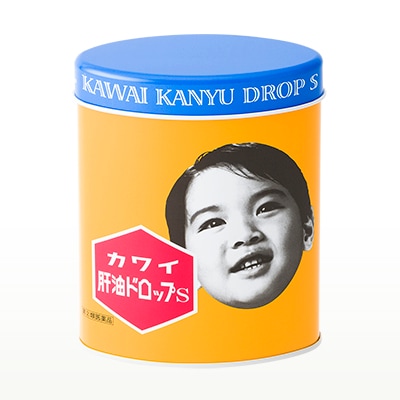
Do not treat this particular S product as a DHA/EPA fish-oil supplement just because its name contains “liver oil”. That does not mean all cod-liver oils lack DHA/EPA. Nor does the ingredient history establish that every ingredient in the tin is animal-free or suitable for someone with a fish allergy.
The DHA pouch: check the 20-day product and its label
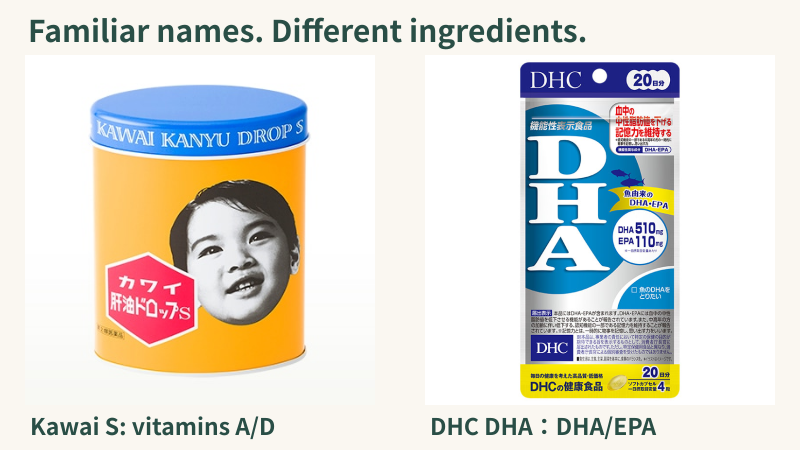
The second example is DHC DHA 20 days, 80 capsules, a Food with Function Claims (notification I408). The relevant listed ingredients are DHA and EPA. It is a food, not the vitamin A/D medicine above. The photograph is an official packaging example; store packs may differ, so check the complete name and label on the product you hold.
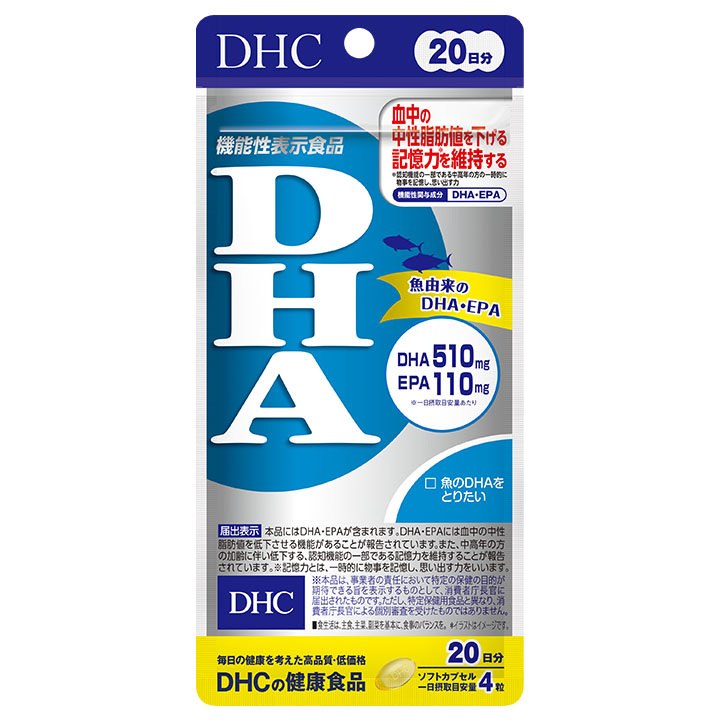
A Food with Function Claims is not a medicine for diagnosing, treating or preventing disease; its functionality and safety have not been individually evaluated by the Japanese government. This guide does not transfer its claims to Kawai S or assume that a food is suitable for everyone.
Read “per how many?” before comparing numbers
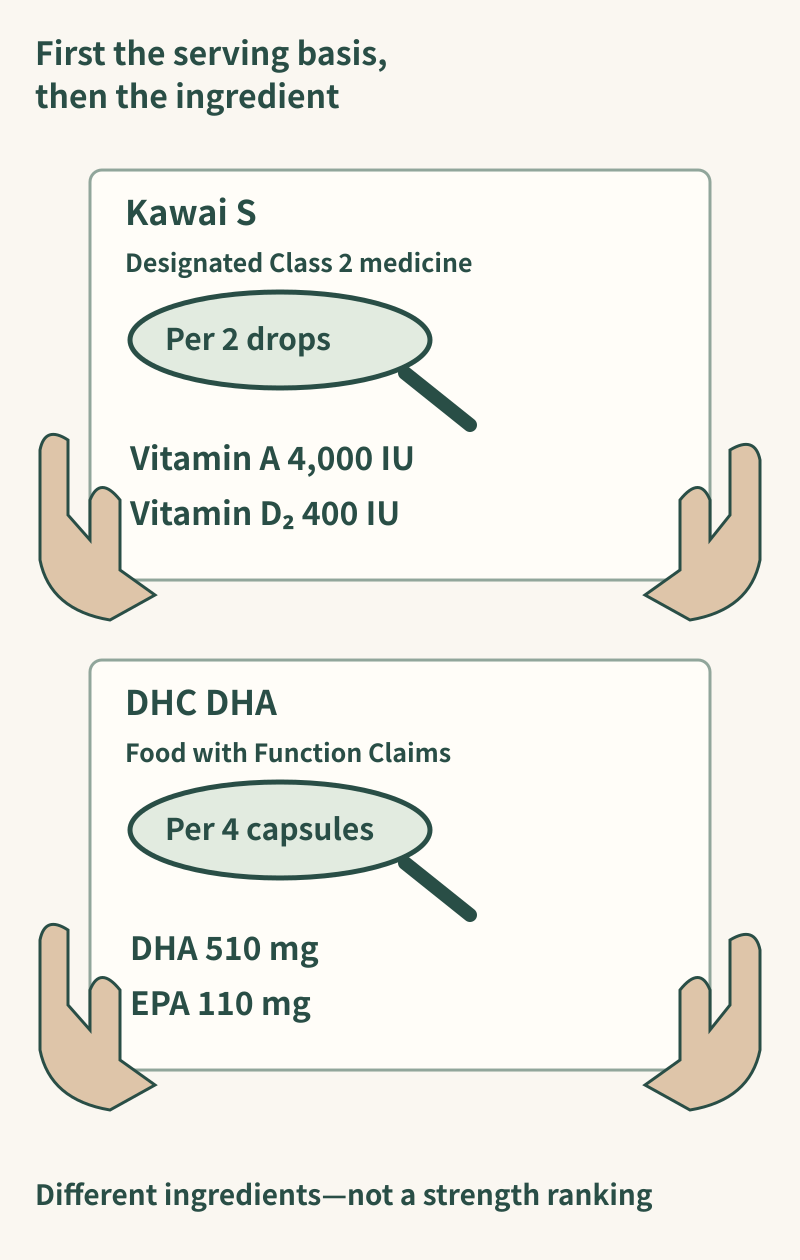
- Kawai S: two drops contain vitamin A 4,000 international units and vitamin D₂ 400 international units. The directions are two drops once daily for ages 15 and over, or one drop once daily for ages 1–14, chewed before swallowing. The two-drop ingredient panel is not a child’s one-day amount. These directions provide no dose for children under one.
- DHC DHA: the suggested daily amount is four capsules, swallowed with water or lukewarm water. Four capsules provide DHA 510mg and EPA 110mg. “20 days” is based on that daily amount, not a 20-day treatment equivalent to Kawai S.
Here, IU and mg describe different substances and different label bases. The larger number does not identify the more effective product, and the numbers cannot be added into a shared supplement allowance. The numbers of drops and capsules are not interchangeable either.
Explain your purpose before choosing a product
Kawai S’s Japanese leaflet lists specific vitamin A/D-related indications, including dry eyes and night blindness, poor bone/tooth development and prevention of rickets, and vitamin A/D supplementation during specified periods. That is not a general promise of better eyesight, height or memory. Persistent symptoms are a reason to seek advice, not to choose a medicine from an “eyes” or “bones” keyword alone.
If you wanted a DHA/EPA supplement, tell the pharmacist that rather than asking only for “liver oil”. If a clinician has instructed you to take a vitamin product, bring that product and the instructions. Do not replace it with the other product or stop a prescribed product yourself.
The intended users and cautions differ too
- Kawai S: consult a doctor, pharmacist or registered medicine seller before use if you are under medical treatment, in the first three months of pregnancy, possibly pregnant or planning pregnancy. An indication that includes supplementation during pregnancy/lactation is not an unconditional recommendation. Supervise children and take particular care about choking in infants and young children. These are not sweets to eat freely.
- DHC DHA: it was not developed for people with a disease, minors, pregnant women (including those planning pregnancy) or breastfeeding women. If you have a disease, consult a doctor; if taking medicines, consult a doctor or pharmacist. Check the ingredients and do not take it if you have a food allergy; the label includes gelatin.
- Other medicines or supplements: bring your vitamin A/D products, fish oils, multivitamins and other products for a pharmacist to check. This comparison does not establish that the two examples may be taken together, and different ingredients do not remove the need to check.
Do not wait to finish the pack if you feel unwell
Kawai S: stop immediately and seek advice if itching, nausea or vomiting occurs. Stop and seek advice for persistent or worsening diarrhoea as well. If there is no improvement after about one month, stop and seek advice; this does not mean waiting a month after an adverse reaction. DHC DHA: promptly stop taking it and consult a doctor if you experience an abnormal change in your health.
Keep both out of children’s reach and follow their own storage instructions. Store Kawai S in a cool place away from direct sunlight and moisture, do not transfer it to another container, and do not use it past its expiry date. Keep DHC away from heat, humidity and direct sunlight; close the pouch after opening and consume it promptly. Read the ingredients before buying, then check your own circumstances before taking it. A familiar name or appealing tin cannot do either check for you.