Japanese product, leaflet and launch information checked on November 1, 2026. This guide explains Japan’s エスタックビタフォース; it does not diagnose a cold or select treatment for an individual.
The new S.TAC box highlights vitamins C and B1 and support for recovery. Is this a cold medicine, or a vitamin supplement to take when you catch a cold? It is the former. S.TAC VITA FORCE (エスタックビタフォース), launched on September 8, 2026, is a Japanese Designated Class 2 combination cold medicine—not an everyday nutritional supplement.
Its seven active ingredients do not all do the same job. Separating symptom relief from vitamin replenishment makes it easier to understand the new product without reading “vitamins” or a number on the box as a promise of faster recovery.
- Recognise the new box—and what is not a new invention
- Seven ingredients, two different kinds of work
- Recovery support is not a cure countdown
- Read the nine-tablet panel, then the three-tablet dose
- Before buying: more important than “with vitamins”
- Do not wait to finish the box
- Portable packaging still needs its identity
Recognise the new box—and what is not a new invention
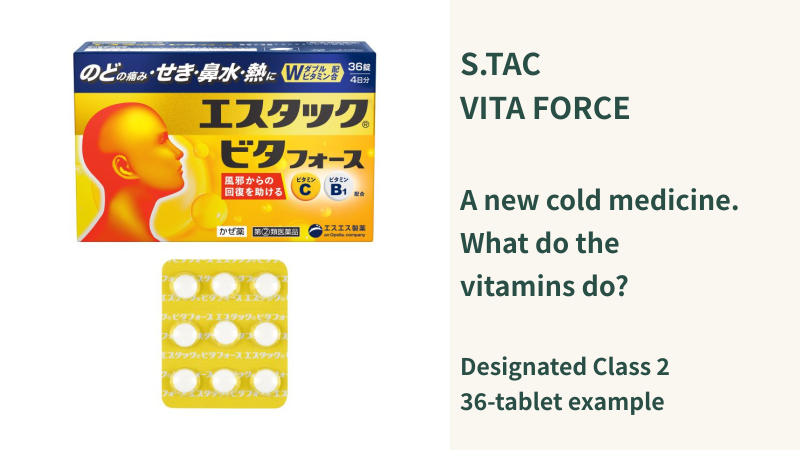
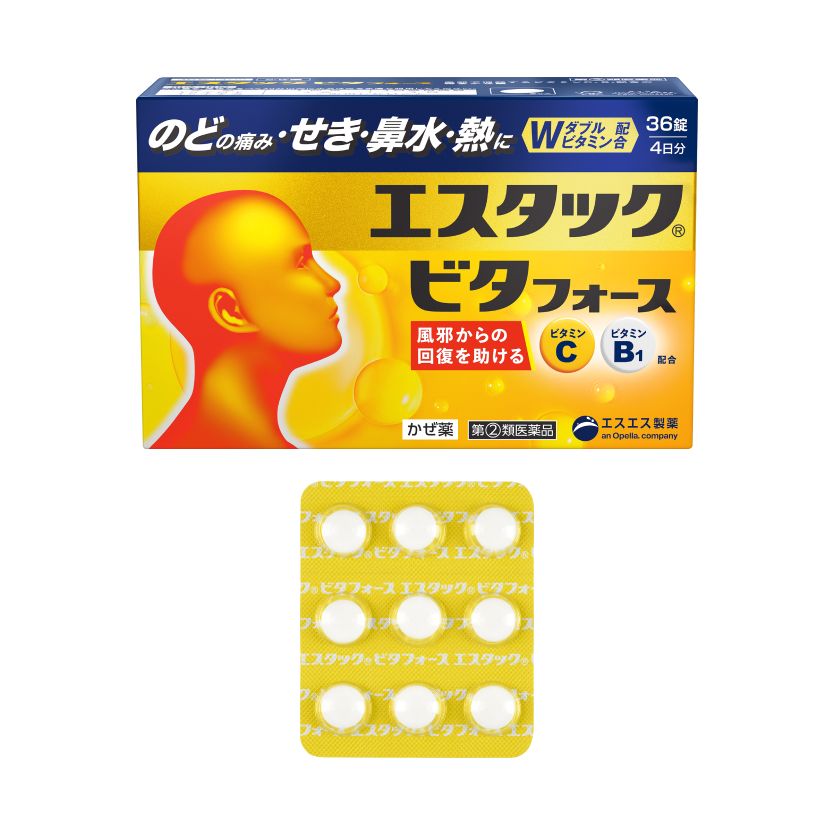
The official photograph shows a 36-tablet box and one nine-tablet blister sheet. Look for the complete Japanese name, エスタックビタフォース, rather than just the rabbit brand, yellow colour or “VITA”. The single sheet pictured is neither the whole box nor a single dose.
A new launch does not automatically mean a stronger new formula. The current Japanese S.TAC IBU (エスタックイブ) and VITA FORCE have the same seven active ingredients and adult daily amounts; IBU already contains vitamins C and B1. Different packaging does not establish different effectiveness. Use our four-product S.TAC comparison as the series entry point. Here, we unpack the new product’s ingredient roles and recovery message.
Seven ingredients, two different kinds of work
The labelled indication is relief of cold symptoms: sore throat, cough, runny nose, fever, chills, nasal congestion, sneezing, headache, phlegm, joint pain and muscle pain. The symptom-relief ingredients and vitamins have different roles:
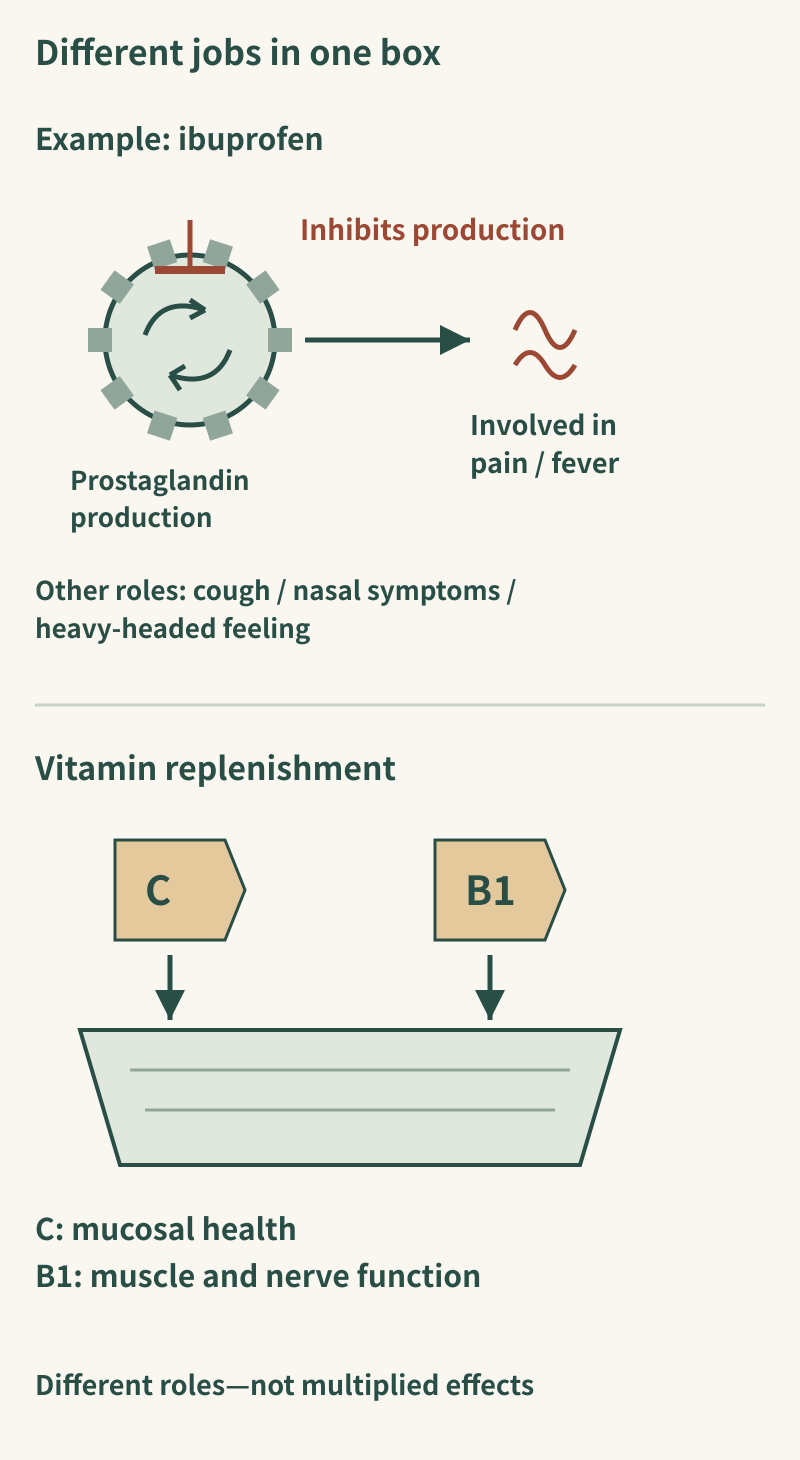
- Ibuprofen 450 mg: reduces fever, inflammation and pain. The manufacturer explains that it inhibits production of prostaglandins involved in pain and fever.
- Dihydrocodeine phosphate 24 mg and dl-methylephedrine hydrochloride 60 mg: the official product information groups these under cough suppression and helping clear phlegm. They are not vitamins—and not a reason to add another cough medicine.
- Chlorpheniramine maleate 7.5 mg: suppresses symptoms including sneezing, runny nose and nasal congestion.
- Anhydrous caffeine 75 mg: relieves a heavy-headed feeling. Its presence does not cancel the instruction not to drive after taking this medicine.
- Thiamine nitrate (B1) 24 mg and ascorbic acid (C) 300 mg: replenish vitamins that can be depleted during a cold. They are not two extra fever or pain relievers.
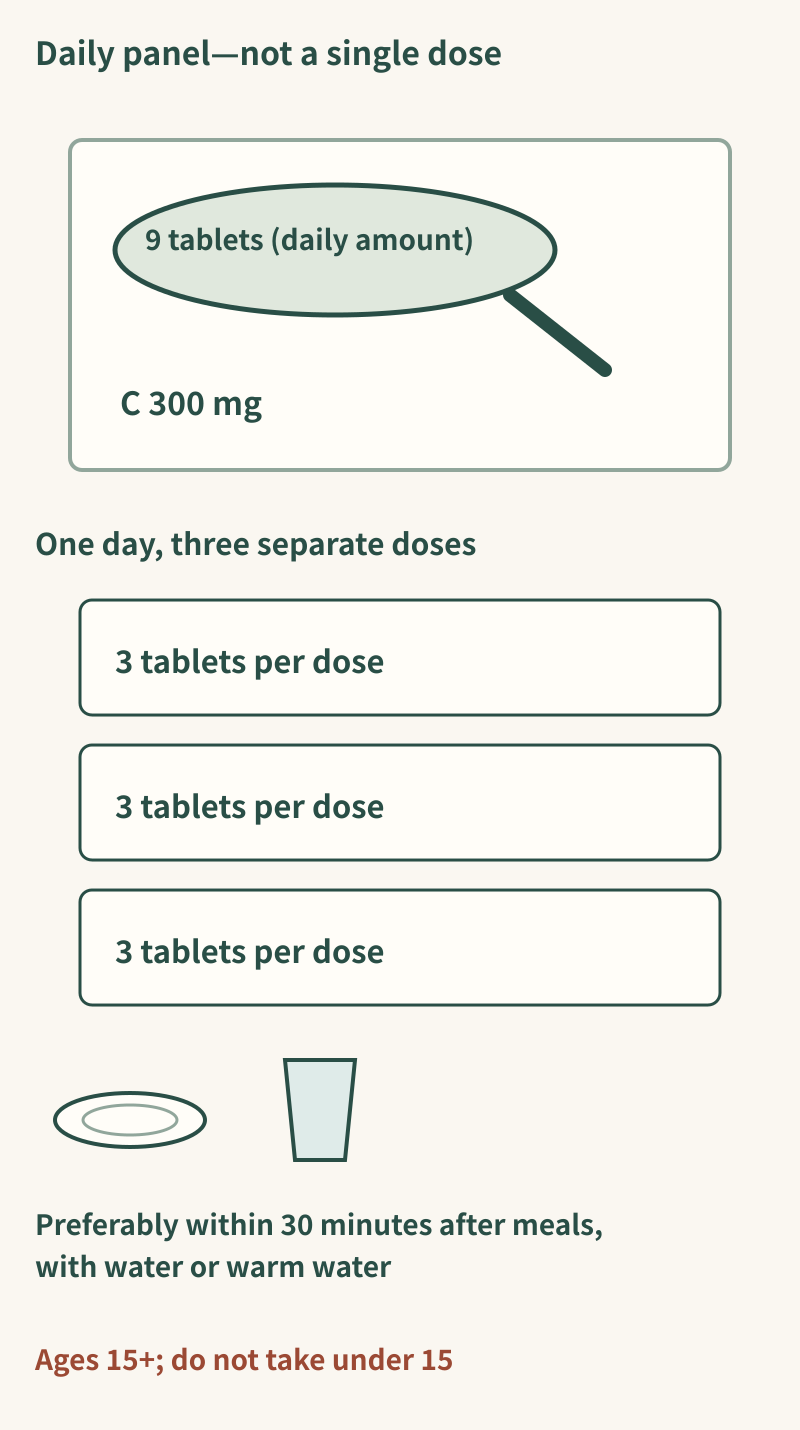
All these amounts are per nine tablets—the adult daily dose—not per tablet or per dose. Do not convert milligrams across different ingredients into a strength ranking, or add another medicine’s ingredients to this formula yourself.
Recovery support is not a cure countdown
The manufacturer describes vitamin C as a micronutrient supporting mucosal health with antioxidant activity, and B1 as a micronutrient needed to maintain muscle and nerve function. This explains why vitamins appear in a cold formula: they replenish nutrients; they do not multiply the symptom medicines’ effects.
The official material compares 300 mg of daily vitamin C with an adult recommended intake of 100 mg. This is a nutrient-quantity comparison—not “three times the effect” or “a cold that lasts one-third as long”. We do not turn recovery support into a claim of faster recovery than IBU, virus elimination, infection prevention or vitamin deficiency in everyone with a cold. Trials or formulation technology for S.TAC EX NEO cannot be assigned to this product.
If you only want everyday vitamins and have no cold symptoms, that is not a reason to choose this combination cold medicine. If you have only one symptom or are unsure whether it is a cold, show a pharmacist your symptoms and current medicines to check whether this combination is appropriate. Medicine does not replace rest.
Read the nine-tablet panel, then the three-tablet dose
The Japanese directions are three tablets per dose, three times daily for ages 15 and over, preferably within 30 minutes after meals, with water or warm water. Children under 15 must not take it. Nine tablets is the combined daily basis for the ingredient panel, not a single dose. Do not add tablets or doses because symptoms feel worse.
A 36-tablet box is a pack size, not an instruction to finish a course. If symptoms do not improve after five to six doses—particularly if fever persists for three days or more or recurs—stop and consult a doctor, pharmacist or registered seller with the leaflet. Separately, do not take it for more than five days. These are different limits: do not wait until day five to act on lack of improvement or adverse effects.
Before buying: more important than “with vitamins”
- Do not take: if you have had an allergic reaction to this product or its ingredients, asthma triggered by this or another cold medicine or fever/pain medicine, are under 15, or are pregnant within 12 weeks of your expected delivery date.
- Do not use alongside: other cold medicines, fever/pain medicines, sedatives, cough/expectorant medicines or oral medicines containing antihistamines, including rhinitis, travel-sickness, allergy and sleep/sedative products. Different brands do not mean different ingredients.
- Do not drive or operate machinery after taking it, and do not drink alcohol before or after a dose. While breastfeeding, either do not take this medicine or avoid breastfeeding while taking it; do not invent a fixed number of hours after which breastfeeding becomes acceptable.
- Consult before use: if under medical or dental treatment, pregnant or possibly pregnant, older, with a history of allergies to medicines or other substances, high fever or difficulty urinating.
- Also consult first for these diagnoses: thyroid dysfunction, diabetes, heart disease, high blood pressure, liver or kidney disease, glaucoma, systemic lupus erythematosus, mixed connective-tissue disease, impaired respiratory function, obstructive sleep apnoea or obesity; and a history of stomach/duodenal ulcer, ulcerative colitis or Crohn’s disease.
The official FAQ permits supplements, including vitamin supplements, alongside VITA FORCE; a blanket ban on all vitamins would therefore be inaccurate. But that is not an individual assessment of every medicine, formula and dose you have. Show the pharmacist the actual products or full ingredient lists. Do not stack treatments to chase faster recovery or stop prescribed medicine yourself.
Do not wait to finish the box
Stop immediately and consult with the leaflet if you develop a rash, redness, itching or bruising; nausea/vomiting, loss of appetite, stomach discomfort or pain, mouth ulcers, heartburn, a heavy stomach, abdominal pain, diarrhoea, gastrointestinal bleeding or bloody stools; dizziness, palpitations, breathlessness, difficulty urinating; or blurred vision, tinnitus, swelling, abnormal bleeding, back pain, an excessive fall in body temperature or fatigue. Persistent or worsening constipation, dry mouth or drowsiness also requires stopping and consultation.
Seek medical attention immediately for breathing difficulty, altered consciousness, squeezing chest pain with cold sweats, sudden one-sided weakness or trouble speaking, or high fever with eye/lip lesions and a widespread rash. The leaflet also describes warning signs of serious liver/kidney problems, aseptic meningitis, interstitial pneumonia, asthma, blood disorders and respiratory depression. These examples are not the complete adverse-effect list: keep and read the leaflet. Do not assume new abnormalities are simply part of the cold.
Portable packaging still needs its identity
Remove tablets from the blister as directed before taking them; never swallow the packaging. Store away from sunlight in a cool, dry place out of children’s reach, do not transfer to another container, and do not use after expiry. The full product name and leaflet help a pharmacist more than “the new rabbit-brand one”.
The takeaway: a new product is worth understanding, but the decision is not “more vitamins is better”. It is whether these seven ingredients fit your symptoms and current medicines.
Official information and photograph sources:
- SSP: September 8, 2026 launch announcement
- Current product information, ingredients and official 36-tablet photograph
- Official explanation of actions and vitamin roles
- Current Japanese package leaflet: full precautions
- Official multilingual information and supplement FAQ
- Current official S.TAC IBU ingredient panel (basis for the seven-ingredient and daily-amount comparison)