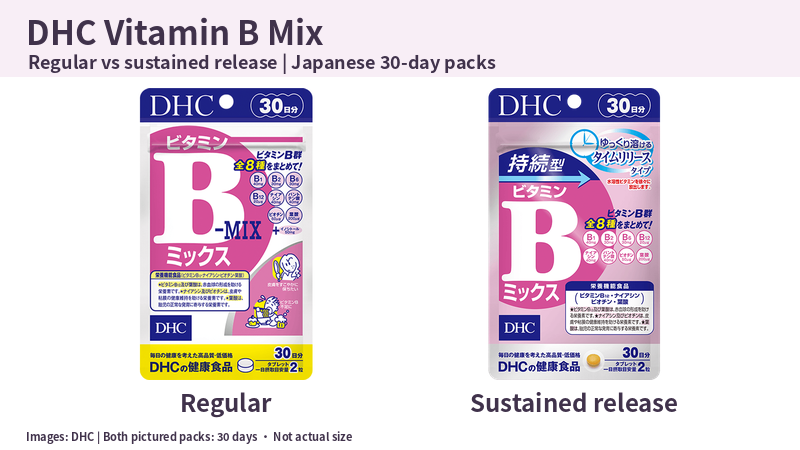
The two pink DHC B-Mix packs can look very similar on a shopping list. Both provide the same amounts of eight B vitamins in a two-tablet daily serving. The useful differences are the release formula, other ingredients and price. Here is how to choose between Japan’s regular ビタミンBミックス and 持続型ビタミンBミックス without buying both.

I’m Irene, a Taiwan-born, Japan-licensed pharmacist working in a Japanese drugstore. With these two B-complex supplements, I would start with the words above the large “B,” then check the daily serving and the supplements you already take.
Which DHC B-Mix should you choose?
- Want the lower-priced option for the same eight vitamin amounts? Consider regular B-Mix. It also contains 50 mg of inositol per daily serving. There is no need to upgrade simply to get more B vitamins.
- Specifically want a tablet designed to release its contents gradually? Consider sustained-release B-Mix. Look for 持続型 and the clock graphic. Choose it for that formulation preference; the label does not establish better symptom relief or better results for you.
- Already take a multivitamin or another B-complex product? Check it before adding either. A different product name can hide the same nutrients. Buying a supplement is optional; first consider whether there is a nutritional gap to fill.
Recognize the name, then compare equivalent pack sizes
| Compare | Regular Vitamin B Mix | Sustained-Release Vitamin B Mix |
|---|---|---|
| Japanese name | ビタミンBミックス | 持続型ビタミンBミックス |
| Package clue | Large “B-MIX”; no 持続型 heading | 持続型 heading, arrow and clock/time-release wording |
| Suggested daily serving | 2 tablets | 2 tablets |
| Reference packs pictured below | 30 days / 60 tablets | 30 days / 60 tablets |
| DHC Japan online one-time price for that pack | ¥270 including tax | ¥378 including tax |
| Main formula distinction | Includes inositol 50 mg per day | Gradual-release formulation; inositol is not listed |
These are the official online shop’s regular one-time prices checked on 13 October 2026, excluding delivery and discounts. For these 30-day packs, that is ¥9 versus ¥12.60 per day, a ¥108 difference per pack. Shop prices and pack sizes vary, so compare price divided by the labelled number of days, rather than the price of two different-sized bags.
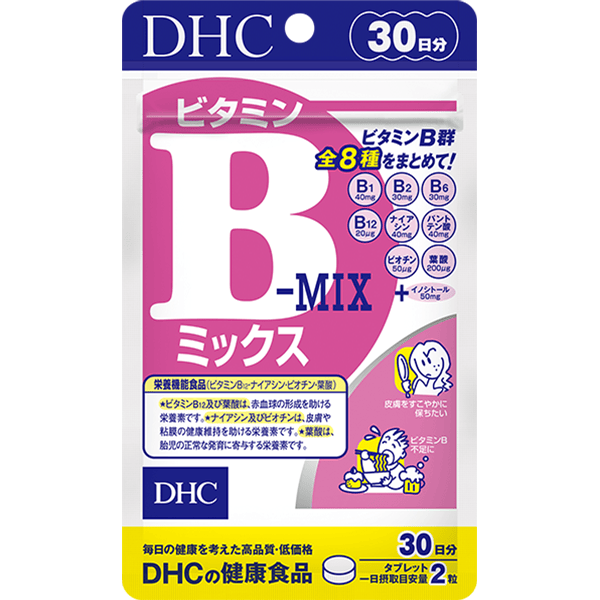
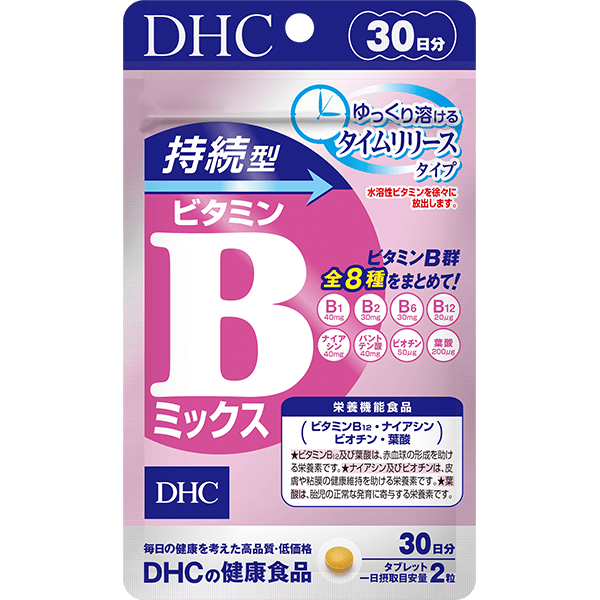
The pictures show the official online shop’s 30-day packs. DHC’s retail range pages also list regular B-Mix in 20-, 60- and 90-day packs, and sustained-release B-Mix in 30- and 60-day packs, with availability varying by store. 60 tablets means 30 days at two a day; a 60-day pack contains 120 tablets. Check both 日分 (days) and 粒 (tablets) on the pack in your hand.
What does “sustained release” actually change?
DHC explains that the sustained-release formula uses HPMC, or hydroxypropyl methylcellulose, to help the tablet dissolve gradually. Its series page describes dissolution over about eight hours and shows a laboratory demonstration in stirred warm water. That is a formulation explanation, not a promise of eight hours of energy or proof that it treats fatigue, mouth ulcers or another symptom better than regular B-Mix.
Both are two tablets per day, swallowed whole
For either product, the suggested daily amount is two tablets in total, swallowed without chewing with water or lukewarm water. Do not read this as two tablets at every meal. The products do not have a medicine-style mandatory dosing time.
DHC’s general supplement guide suggests taking supplements after food and dividing a two-tablet water-soluble vitamin serving, for example one in the morning and one in the evening. Its sustained-release FAQ also recommends dividing the daily amount. You can use that routine for either version; the sustained-release label does not reduce the daily tablet count.
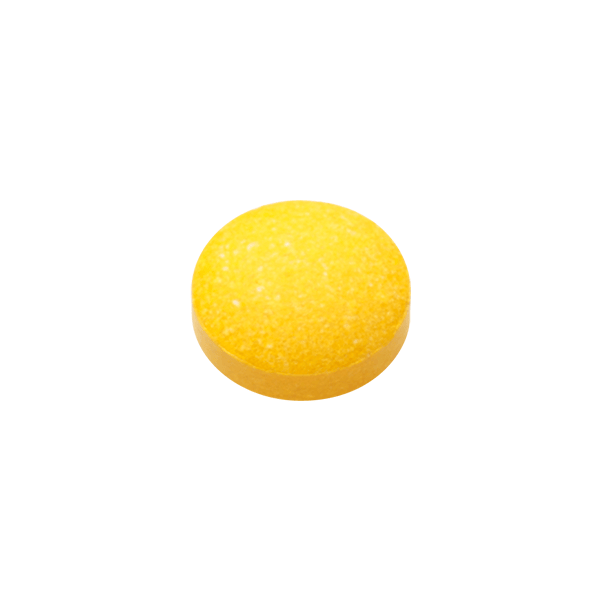
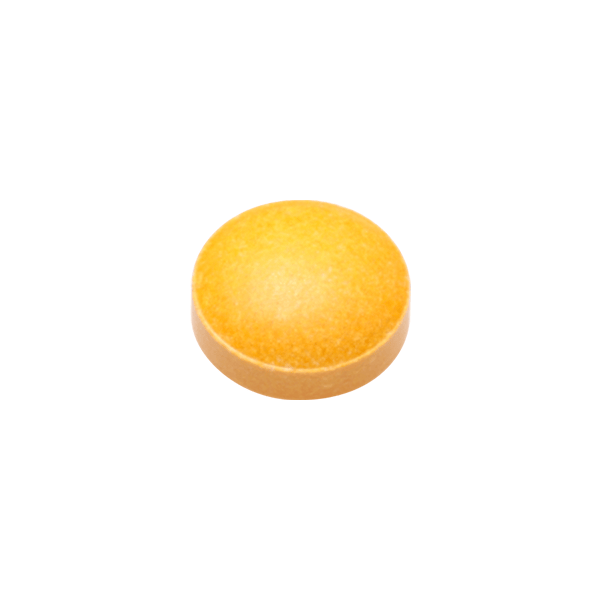
The eight vitamin amounts are the same
These figures are per full daily serving of two tablets, not per tablet. Use them to check for overlap with another supplement, rather than to rank one pack as stronger.
| Nutrient | Amount in either product per day |
|---|---|
| Vitamin B1 | 40 mg |
| Vitamin B2 | 30 mg |
| Vitamin B6 | 30 mg |
| Vitamin B12 | 20 μg |
| Niacin | 40 mg |
| Pantothenic acid | 40 mg |
| Biotin | 50 μg |
| Folic acid | 200 μg |
Regular B-Mix additionally lists 50 mg of inositol. The complete formulas also use different non-vitamin ingredients, so equal vitamin amounts do not make the tablets identical. If ingredient sources matter for an allergy or dietary restriction, check the full current list with DHC; do not assume either is vegan or allergy-free.
Taking the full serving of both products would give you 60 mg of B6 and double every other listed B vitamin. Do not combine them as a way to obtain both features. Before adding either to a multivitamin, B-vitamin medicine or other supplement, show all the labels to a pharmacist. “Water-soluble” is not a reason to ignore the daily amount.
Excess vitamin B6 can damage nerves. If you plan to use either product regularly over the long term, ask a pharmacist or doctor to review the total B6 amount from everything you take.
A few checks before buying for yourself or someone else
Both are Japanese Foods with Nutrient Function Claims (栄養機能食品) for B12, niacin, biotin and folic acid. This is a food category with standard nutrient-function statements, not individual approval by Japan’s Consumer Affairs Agency or approval as a medicine. These products are not intended to diagnose, treat or prevent disease. If your reason for buying is persistent fatigue or recurrent mouth ulcers, seek advice about the symptoms instead of choosing from customer reviews.
- Pregnant, taking medicines or receiving medical care? Consult your doctor before use. Having 200 μg of folic acid does not make either product a complete prenatal plan; taking more does not improve fetal development.
- Food allergy? Check the ingredients and follow DHC’s warning not to take the product if you have a food allergy. Ask DHC or a healthcare professional if you are unsure about a specific ingredient. Stop promptly and consult a doctor if you feel unwell after taking it.
- Buying for a child? Confirm suitability before purchase. The cited product pages do not provide a child-specific serving. Do not invent a smaller serving from the two-tablet amount.
Keep the original bag away from sunlight, heat and moisture, and out of children’s reach. Close it firmly after opening and use the contents promptly. A balanced diet remains the starting point; more tablets do not mean better health.
My quick choice: regular B-Mix if price is the deciding factor; sustained-release B-Mix if you specifically prefer gradual release. First check that another product is not already supplying the same vitamins. Whichever you choose, remember two tablets per day in total.
Also comparing the green DHC vitamin C packs? See the separate DHC vitamin C regular-versus-sustained-release guide. Its tablet counts are different; use each product’s own directions.
Official sources
- DHC Japan: Vitamin B Mix 30-day pack, ingredients and precautions
- DHC Japan: Sustained-Release Vitamin B Mix 30-day pack, ingredients and precautions
- DHC retail range: regular Vitamin B Mix pack sizes
- DHC retail range: sustained-release Vitamin B Mix pack sizes
- DHC sustained-release series: formulation and FAQ
- DHC supplement guide: daily routine and timing
- Japan’s HFNet: vitamin B6 and excess intake
Official product information checked on 13 October 2026. This guide compares products sold in Japan; follow the current Japanese package for the version you buy.