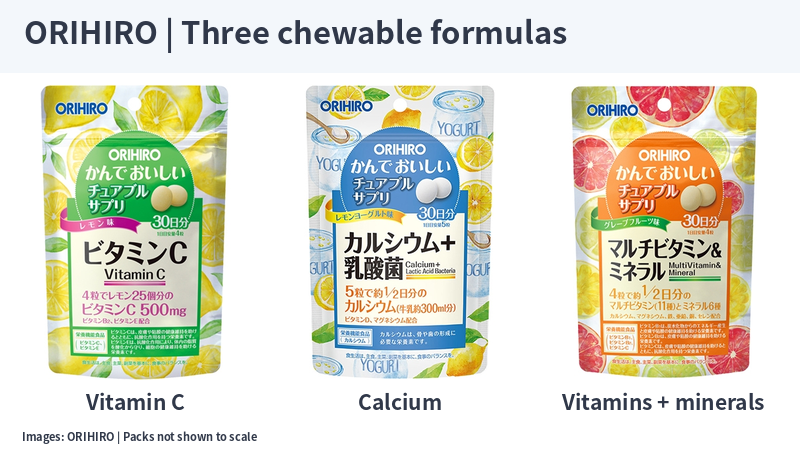
Choose by the nutrient you actually want to supplement, then check the daily tablet count. ORIHIRO’s Vitamin C and Multivitamin & Mineral chewables use four tablets a day as their adult guide; the Calcium Lemon Yogurt product uses five. Similar bags and sweet flavors do not make them interchangeable.

I’m Irene, a Taiwan-born, Japan-licensed pharmacist working in a Japanese drugstore. If swallowing capsules puts you off supplements, a chewable format may look appealing. I would still start with your food intake and existing supplements, so you do not buy three overlapping products simply because each looks useful.
Sources checked October 14, 2026, Japan time. This comparison covers the current Japanese bagged products shown below. Follow the actual bag if its formulation or directions differ.
- Start with one clear purpose
- Identify the bags on the shelf
- Compare the whole daily portion
- Check overlap before adding a second bag
- Flavor names do not reveal every ingredient
- How to take and store them
- Children, medicines and pregnancy need a separate check
- My shopping takeaway
- Official sources and image credits
Start with one clear purpose
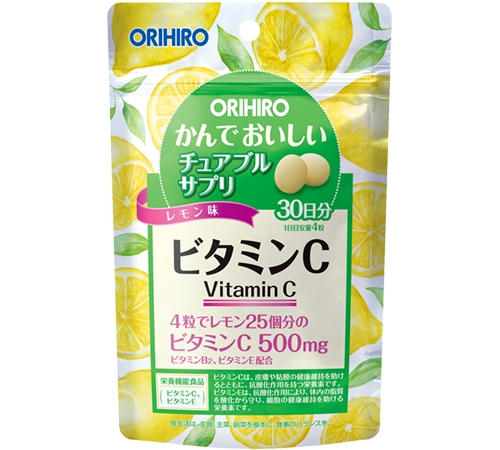
- Vitamin C: for comparing a focused vitamin C supplement; it also contains vitamins E and B2.
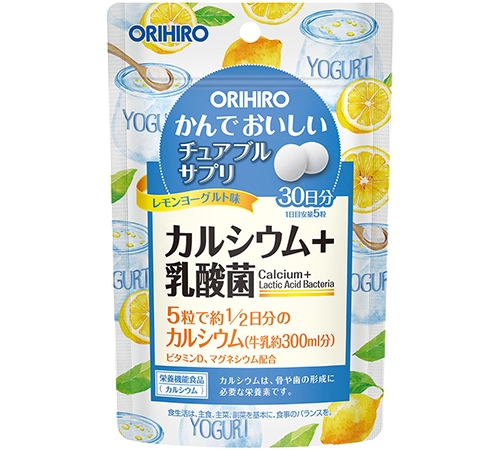
- Calcium Lemon Yogurt: for a calcium-focused option, with magnesium and vitamin D. The front also mentions lactic acid bacteria; the ingredient list specifies inactivated bacteria.
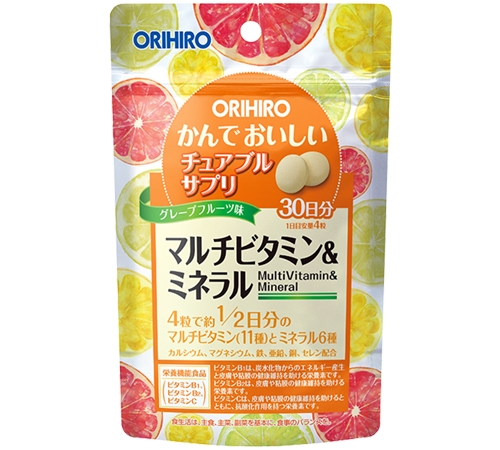
- Multivitamin & Mineral: for reviewing a broader mix, with smaller amounts of some nutrients than the focused products. A longer ingredient list does not automatically make it the best choice for you.
Identify the bags on the shelf
Compare the whole daily portion
All nutrient amounts below are per maker-guided adult daily portion: four tablets (2 g) for Vitamin C and Multivitamin & Mineral, five tablets (2.5 g) for Calcium. These are not per-tablet figures or children’s portions. Each bag provides 30 such daily portions, calculated from its tablet count.
| Exact product | Adult daily portion | Selected nutrients in that portion | Listed allergen |
|---|---|---|---|
| Vitamin C, lemon | 4 tablets | Vitamin C 500 mg; E 4 mg; B2 0.2–1.0 mg | Apple |
| Calcium, lemon yogurt | 5 tablets | Calcium 350 mg; magnesium 40 mg; vitamin D 5 micrograms | Milk |
| Multivitamin & Mineral, grapefruit | 4 tablets | Vitamin C 40 mg; calcium 80 mg; magnesium 40 mg; vitamin D 2.8 micrograms; vitamin E 4 mg | Orange |
The table highlights nutrients useful for this comparison, not the complete multivitamin formula. That product also contains vitamin A, several B vitamins and other minerals. Its vitamin A amount is listed as a range of 90–480 micrograms per four tablets. Amounts not shown in the table should not be assumed to be zero.
Check overlap before adding a second bag
Multivitamin & Mineral already supplies vitamins C and E, calcium, magnesium and vitamin D. Adding either focused product therefore repeats some nutrients. Write down the daily amounts in your existing supplements before deciding whether another one is needed. ORIHIRO specifically cautions about excess intake of some vitamins and minerals, including vitamin A; “food” does not mean unlimited portions.
These are foods with nutrient-function labeling in Japan. Their label category does not mean they have been individually approved like a medicine or that they prevent infections, treat osteoporosis or correct a diagnosed deficiency. If you have a diagnosed nutritional problem, follow the plan given by your clinician rather than substituting a sweet chewable.
Flavor names do not reveal every ingredient
The lemon Vitamin C product contains apple juice powder. The lemon-yogurt Calcium product contains skimmed milk powder and shell-derived calcium. Multivitamin & Mineral includes orange juice powder as well as grapefruit juice powder. These details matter more than the main flavor name when checking allergies or dietary restrictions.
All three list sugar as an ingredient. Vitamin C and Calcium also list aspartame, including an L-phenylalanine compound; people instructed to restrict phenylalanine should check suitability. Do not assume that “chewable supplement” means sugar-free, vegan or suitable for every allergy.
How to take and store them
- Count the adult daily portion from the exact bag. Do not use the four-tablet guide for Calcium, or the five-tablet guide for Vitamin C.
- Chew the tablets or let them dissolve in the mouth, as directed. Do not swallow them whole like ordinary tablets.
- Close the resealable bag tightly after use. Do not return tablets you have handled to the bag; moisture can affect them.
- Keep them out of children’s reach. Their candy-like taste makes supervision especially important.
Children, medicines and pregnancy need a separate check
The product-specific FAQs say children aged three or older who can chew the tablets may use them under a caregiver’s supervision, with roughly half the adult guide. That is not the same as recommending supplements for every child. The table above is for adults; check the exact product and an appropriate amount with the maker or a health professional before giving it to a child, especially when the adult count is five tablets. Watch for choking.
ORIHIRO advises people taking medicines to consult their doctor or pharmacist before use, and pregnant or breastfeeding people to consult a doctor. Bring the actual ingredient list and your other supplements. If a product causes discomfort, stop taking it and seek advice as needed.
My shopping takeaway
Pick the nutrient first, the flavor second. Then compare the daily portion and check what you already take. A chewable can make the format more convenient, but a clear reason to use it matters more than collecting the whole series.