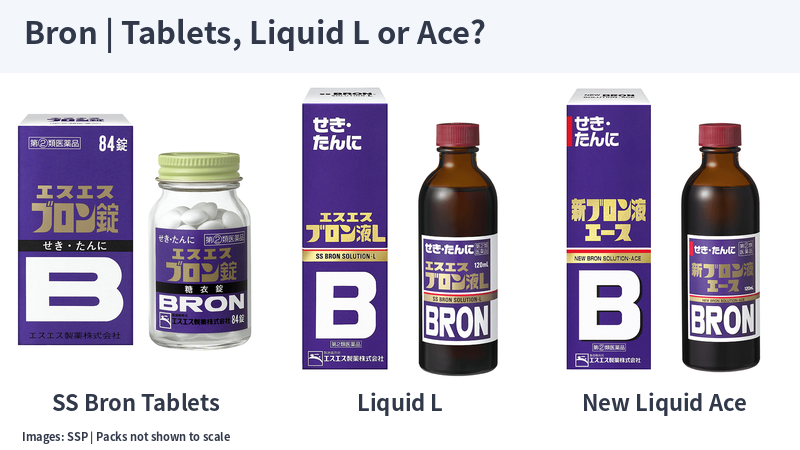
The two Bron syrups have different cough suppressants and different millilitres per dose. Bron tablets have another ingredient combination again. If you need to drive, none of these three is a suitable choice: all carry a no-driving warning after use. For everyone else, start with age, current medicines and the exact product name, not the size of the bottle.

I’m Irene, a Taiwan-born, Japan-licensed pharmacist working in a Japanese drugstore. With Bron, I especially want to separate “ingredients per 30 or 60 mL” from “how much to take now.” A familiar bottle can still have unfamiliar instructions.
Checked on 14 October 2026 (Japan time) using SSP’s current three-product lineup and complete Japanese leaflets/box instructions. This guide covers only SS Bron Tablets, SS Bron Liquid L and New Bron Liquid Ace. Read the instructions supplied with your own product.
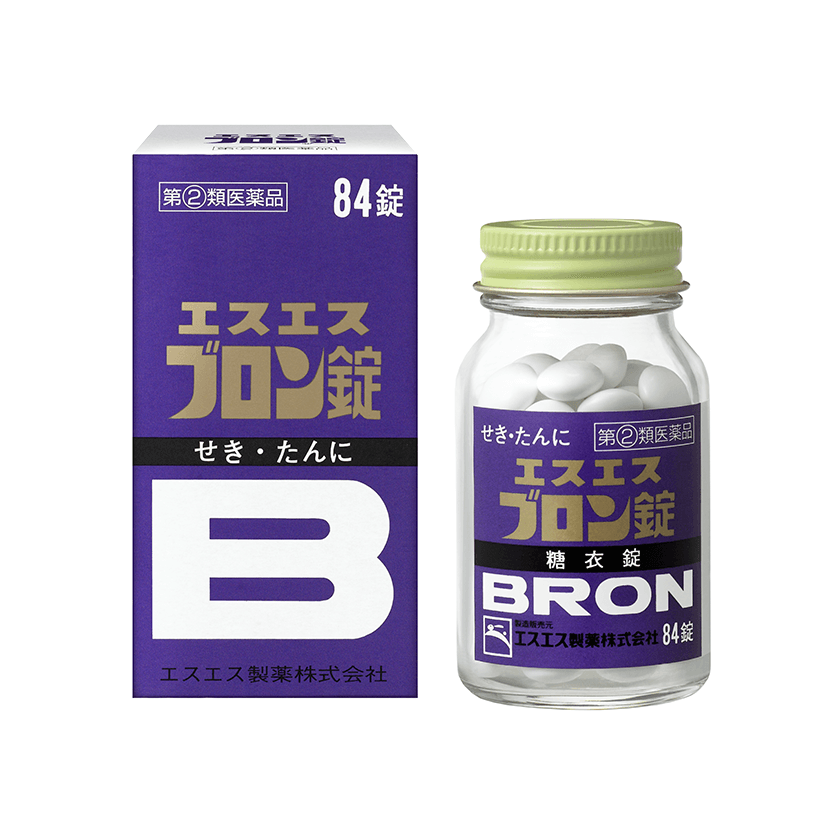
Purchase note, checked 14 October 2026: the pictured tablet pack contains 84 tablets. SSP’s purchase notice says people under 18 cannot buy this 84-tablet pack. That purchase restriction is separate from the medicine’s minimum use age of 12; it does not say every pack is unavailable to under-18s. Ask the pharmacist about the applicable purchase checks.
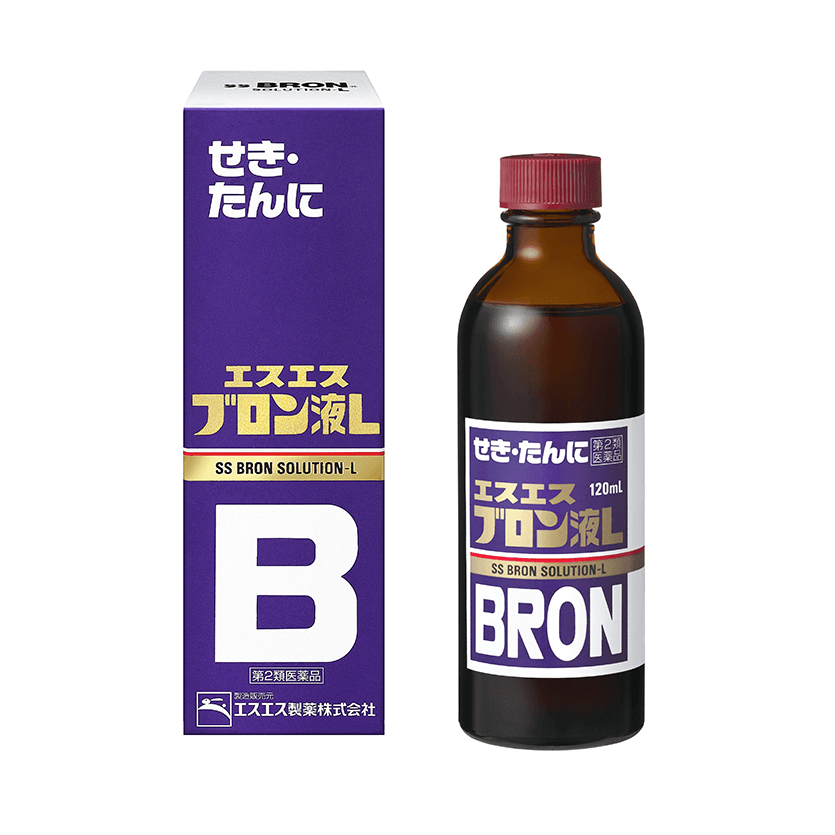
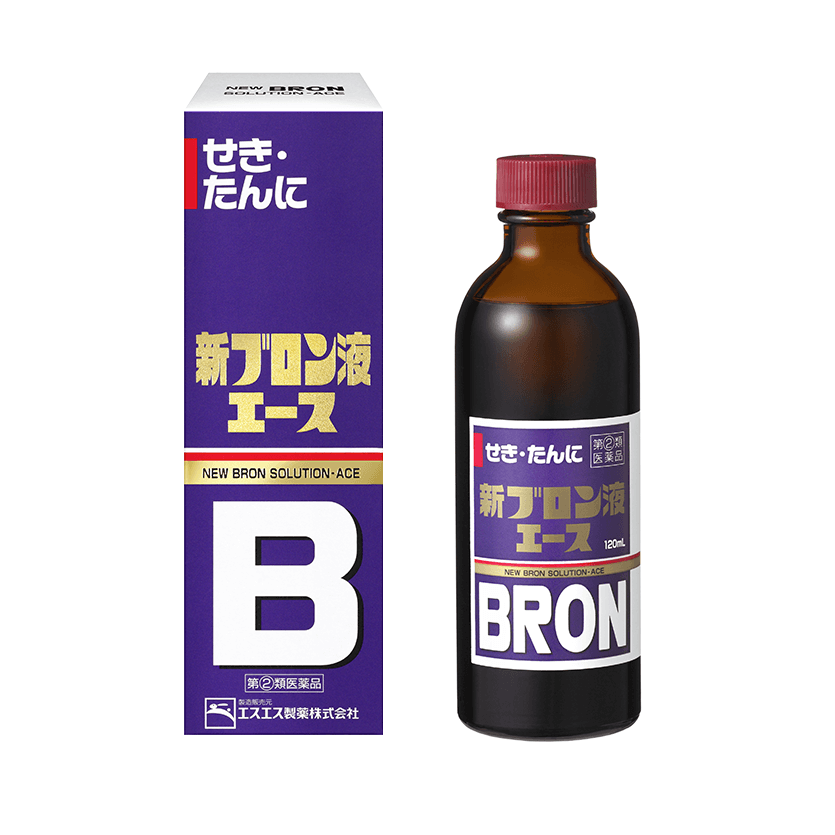
All three are labeled for cough and phlegm. The comparison below shows formulation differences and minimum labeled ages; it does not rank effectiveness or identify the cause of your cough.
| Product / Japanese shelf name | Main formulation distinction | Minimum age |
|---|---|---|
| SS Bron Tablets / エスエスブロン錠 | Dihydrocodeine plus methylephedrine, chlorpheniramine and caffeine | 12 |
| SS Bron Liquid L / エスエスブロン液L | Dextromethorphan plus guaifenesin, chlorpheniramine and caffeine | 8 |
| New Bron Liquid Ace / 新ブロン液エース | Dihydrocodeine plus guaifenesin, chlorpheniramine and caffeine | 12 |
The manufacturer prints ingredients per 12 tablets, per 30 mL of Liquid L and per 60 mL of Liquid Ace. The tablet amount equals the adult daily amount at three doses; each liquid amount equals six adult doses, not the usual three-dose daily amount. Use the separate dosing table for what to take.
| Active ingredient | Tablets: per 12 tablets | Liquid L: per 30 mL | Liquid Ace: per 60 mL |
|---|---|---|---|
| Dihydrocodeine phosphate | 30 mg | Not included | 30 mg |
| Dextromethorphan hydrobromide hydrate | Not included | 60 mg | Not included |
| dl-Methylephedrine hydrochloride | 50 mg | Not included | Not included |
| Guaifenesin | Not included | 170 mg | 170 mg |
| Chlorpheniramine maleate | 8 mg | 12 mg | 12 mg |
| Anhydrous caffeine | 90 mg | 62 mg | 62 mg |
Dihydrocodeine and dextromethorphan suppress cough; guaifenesin helps with phlegm clearance. The tablet formula instead includes methylephedrine, which helps relax bronchial muscle. All contain chlorpheniramine, an antihistamine, and caffeine. Caffeine does not cancel the sleepiness or no-driving warning. Neither syrup is a drink to sip freely, and “no dihydrocodeine” does not make Liquid L risk-free.
Amounts below are per dose, then the daily total at the usual three doses. The final column is the label’s upper-frequency allowance for syrups only, not a target. Tablets are taken three times daily with water/lukewarm water, at least four hours apart. Syrups are normally taken three times daily after meals; their labels allow up to six doses when necessary, with at least four hours between doses. Children require adult supervision.
| Product / age | One dose | Total at 3 doses/day | Syrup maximum at 6 doses/day |
|---|---|---|---|
| Tablets, 15+ | 4 tablets | 12 tablets | Not allowed: tablets stay at 3 doses |
| Tablets, 12–14 | 2 tablets | 6 tablets | Not allowed: tablets stay at 3 doses |
| Liquid L, 15+ | 5 mL | 15 mL | 30 mL |
| Liquid L, 11–14 | 3.3 mL | 9.9 mL | 19.8 mL |
| Liquid L, 8–10 | 2.5 mL | 7.5 mL | 15 mL |
| Liquid Ace, 15+ | 10 mL | 30 mL | 60 mL |
| Liquid Ace, 12–14 | 6.6 mL | 19.8 mL | 39.6 mL |
Do not give tablets or Liquid Ace to children under 12, or Liquid L to children under 8. Measure syrup with its supplied graduated cup; do not round 3.3 mL to 5 mL or 6.6 mL to 10 mL. Daily totals above are arithmetic from the label’s single doses, not additional doses to add. Stop and consult if there is no improvement after 5–6 doses, rather than continuing to increase the frequency.
Checks before taking any Bron product
- Do not combine with another cough/phlegm medicine, a cold medicine, a sedative, or an oral medicine containing an antihistamine, including some allergy, rhinitis, motion-sickness and sleep medicines.
- Do not drive or operate machinery after use.
- For tablets and Liquid Ace, the leaflet says not to take while breastfeeding, or to avoid breastfeeding if taking the medicine. Ask a professional about an appropriate alternative; do not independently change feeding arrangements.
- Liquid L must not be taken after a previous allergic reaction to it or its ingredients. Any medicine-allergy history needs professional advice for these products.
- Do not exceed the directions or keep taking them for a prolonged period.
Before any of the three, consult if receiving medical treatment, pregnant or possibly pregnant, with a history of medicine allergy, high fever, difficulty urinating or glaucoma. Tablets additionally list older people, heart disease, hypertension, diabetes, thyroid disease, impaired breathing, obstructive sleep apnea and obesity. Liquid Ace additionally lists impaired breathing, obstructive sleep apnea and obesity. Take your full medicine list, including prescriptions, to the pharmacist.
Stop after 5–6 doses if it is not helping
This threshold is doses, not days. Stop and consult with the packaging if the cough/phlegm does not improve after 5–6 doses. Stop sooner for rash, redness, itching, nausea/vomiting, loss of appetite, dizziness or difficulty urinating; Liquid L also lists breathing difficulty/shortness of breath. Stop for persistent or worsening dry mouth or drowsiness; tablets and Liquid Ace also list constipation.
All three leaflets warn of rare serious blood disorders: unusual bruising/bleeding, pallor, marked tiredness, palpitations, breathlessness, or sudden high fever/chills/sore throat need immediate medical attention. Tablets and Liquid Ace also warn of respiratory depression; Liquid L warns of anaphylaxis. Get immediate help for severe breathing trouble or severe allergic symptoms.
A cough that is rapidly worsening, chest pain, coughing blood or feeling very unwell needs urgent assessment. A cough lasting over three weeks needs medical review; do not keep taking Bron until that point.
Before putting a bottle in your bag
- Match the full name and your age band. Do not substitute one syrup’s measuring volume for the other.
- Check other medicines and driving plans. Pick one appropriate product with a pharmacist; do not stack these three.
- Wash and dry the measuring cup after use, wipe the bottle mouth and close tightly. Keep the original packaging away from children.
- Keep tablets dry and remove the bottle’s transport packing after opening.
- Buy only the amount needed for appropriate short-term use. Follow the shop’s consultation and purchase-quantity requirements; a persistent cough is a reason for assessment, not stockpiling.