
I’m Irene, a Taiwan-born pharmacist licensed in Japan, currently working in a Japanese drugstore. If several boxes say “non-stimulant,” start with the full product name and ingredients. Here’s how these three Japanese products differ.
- The quick comparison: the same main ingredient, one combination formula
- Check these points before choosing a box
- Ingredients: these amounts are per six tablets
- Recognise the complete product name
- Ages and doses: start at the lowest labelled amount
- Non-stimulant still needs safety checks
- Frequently asked questions
- Sources and scope
The quick comparison: the same main ingredient, one combination formula
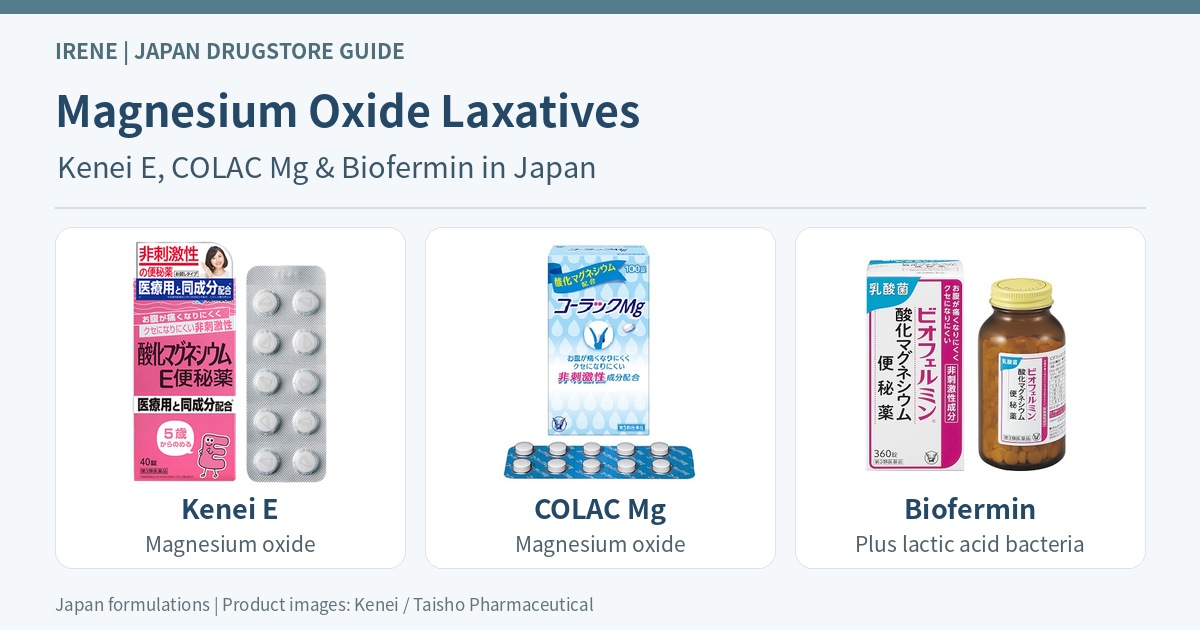
Kenei E and COLAC Mg contain magnesium oxide as their only active ingredient. Biofermin Magnesium Oxide Laxative adds lactic acid bacteria. All three are non-stimulant laxatives that help draw water into stool to soften it. That shared action matters when you are comparing products for hard stools; different brand names are not a reason to take them together.
- Comparing single-active-ingredient products? Look at Kenei E and COLAC Mg. Kenei also has a lemon-flavoured formulation.
- Looking for the formula with lactic acid bacteria? That is Biofermin Magnesium Oxide Laxative. An extra ingredient does not, by itself, establish that a product will work better for you.
- Already taking a laxative? Check your medicines before adding anything. All three leaflets say not to take other laxatives while using the product.
Check these points before choosing a box
For all three products, consult a doctor, pharmacist or registered OTC salesperson before use if you have diagnosed kidney disease, are an older adult, are pregnant or may be pregnant, or are receiving medical treatment. Severe abdominal pain, nausea or vomiting also require consultation before taking the medicine.
Constipation with persistent abdominal pain, vomiting, inability to pass gas, blood in the stool or rectal bleeding, fever, or unexplained weight loss needs prompt medical attention. Do not wait a week for a laxative to work.
Ingredients: these amounts are per six tablets
All three are Class 3 OTC medicines in Japan. The amounts below are for six tablets, the maximum labelled daily tablet count for ages 15 and over. Six tablets is not the starting dose.
| Product and Japanese name | Active ingredients per 6 tablets | What distinguishes it |
|---|---|---|
| Kenei E 酸化マグネシウムE便秘薬 | Magnesium oxide 2,000 mg | Single active ingredient; lemon flavour. |
| COLAC Mg コーラックMg | Magnesium oxide 1,980 mg | Look for Mg in the name. |
| Biofermin Magnesium Oxide Laxative ビオフェルミン酸化マグネシウム便秘薬 | Magnesium oxide 2,000 mg Lactomin (lactic acid bacteria) 20 mg | Magnesium oxide plus lactic acid bacteria. |
The amount differs slightly: COLAC Mg has 1,980 mg per six tablets; the other two have 2,000 mg. That number alone does not tell you which will work better for you. On a Japanese label, 酸化マグネシウム means magnesium oxide. These are magnesium oxide amounts, not an elemental-magnesium dose for a nutritional supplement.
Recognise the complete product name
Kenei E: a lemon-flavoured single-active-ingredient product
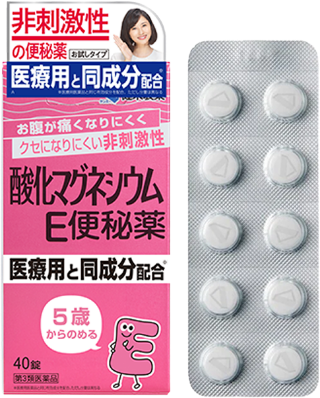
“Kenei E” is a short label used here for the Japanese product 酸化マグネシウムE便秘薬. Its leaflet lists magnesium oxide as the active ingredient, without lactic acid bacteria. The tablets have a lemon flavour and break down readily with water. Still take them with water or lukewarm water as directed.
COLAC Mg: check for Mg before using familiar COLAC instructions
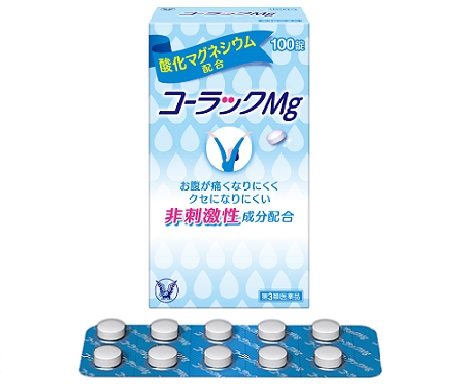
COLAC Mg contains magnesium oxide. Original COLAC and COLAC II in the pink boxes contain the stimulant bisacodyl and have different formulations and directions. Do not transfer the tablet count from one COLAC product to another. For those two products, see COLAC versus COLAC II in Japan.
Biofermin: this one contains a laxative as well as bacteria
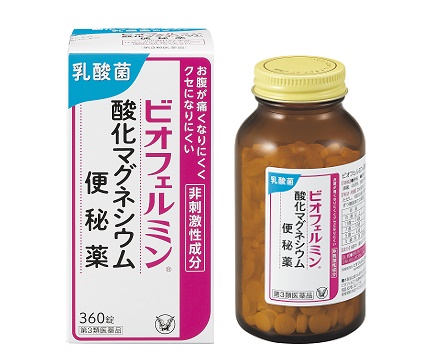
The manufacturer’s English name is Biofermin Magnesium Oxide Laxative. Its second active ingredient is lactomin, a lactic acid bacteria preparation. Do not treat it as a bacteria-only intestinal product that can automatically be added to another laxative.
New Biofermin S (新ビオフェルミンS) is a different intestinal-regulating product. If that is the range you meant, see the Biofermin S and S Plus comparison. The dosage table below is not for those products.
Ages and doses: start at the lowest labelled amount
All three specify one dose a day, at bedtime or on an empty stomach, with water or lukewarm water. Start with the lowest dose for the relevant age group, then adjust gradually within the labelled range according to bowel movements and condition. A lack of an immediate effect is not a reason to take a second dose that day.
| Product | Age 15+ | Age 11–14 | Age 7–10 | Age 5–6 |
|---|---|---|---|---|
| Kenei E | 3–6 tablets | 2–4 tablets | 2–3 tablets | 1–2 tablets |
| COLAC Mg | 3–6 tablets | 2–4 tablets | 2–3 tablets | 1–2 tablets |
| Biofermin Magnesium Oxide Laxative | 3–6 tablets | 2–4 tablets | 2–3 tablets | 1–2 tablets |
Amounts are per dose, once daily. None of the three is for children under five. A parent or guardian must supervise children’s use. For ages 15 and over, the first dose is three tablets, not six; other age groups also start at their own minimum. Remove tablets from blister packaging before swallowing. These are the directions for these exact Japanese OTC products, not a conversion guide for prescription magnesium oxide tablets.
Show the pharmacist the names and doses of your other medicines and supplements. Kenei’s official Q&A notes that interactions with prescribed medicines can change their effects and advises following the treating doctor’s instructions.
Non-stimulant still needs safety checks
Diarrhoea can occur with all three products. Stop and seek advice if it persists or gets worse. Also stop and seek advice if constipation has not improved after about a week. Repeatedly changing brands or increasing the dose is not a substitute for assessing ongoing constipation.
Magnesium oxide can cause hypermagnesaemia, or excessively high blood magnesium. PMDA-hosted safety information highlights long-term use, kidney impairment and older age as particular concerns. Normal kidney function does not remove the risk entirely. This ingredient-level warning does not replace the separate directions for these OTC products.
Stop the medicine immediately and seek professional advice for severe abdominal pain, nausea or vomiting, unusual drowsiness or reduced awareness, dizziness on standing, a slow pulse, difficulty breathing, muscle weakness or dry mouth after taking it. All three leaflets list these warning symptoms. Marked drowsiness, altered awareness, breathing difficulty or weakness may signal a serious problem, including hypermagnesaemia: seek urgent medical care rather than waiting for a bowel movement.
Frequently asked questions
Can I combine Kenei E, COLAC Mg and Biofermin?
Do not combine them on your own. They all contain magnesium oxide, and each leaflet prohibits other laxatives during use. Include any prescribed constipation medicine when checking for overlap.
Is Biofermin automatically better because it adds bacteria?
It is a combination formula, but the ingredient count alone cannot establish which product is best for an individual. First check whether self-treatment is appropriate, then compare the full ingredients and precautions.
How long should I wait before taking more?
Do not base an extra dose simply on the hours that have passed. These products are labelled once daily, starting at the lowest amount. Adjust only within the directions; pain or vomiting calls for assessment rather than another dose.
What if constipation only happens while travelling?
The travel constipation guide covers daily habits, speaking to a pharmacist and when to seek care. This comparison helps you identify three magnesium oxide medicines; they are not routine travel supplements.
Sources and scope
Product information and currently linked official leaflets checked on 18 October 2026. This guide covers products sold in Japan. Translated names help identify the box; follow the Japanese package and leaflet supplied with your medicine. This article does not replace individual diagnosis or medicines advice.
- Kenei: product information
- Kenei: leaflet currently linked by the manufacturer (Japanese PDF)
- Taisho: COLAC Mg product information
- COLAC Mg leaflet (Japanese PDF)
- Taisho: Biofermin Magnesium Oxide Laxative product information
- Biofermin Magnesium Oxide Laxative leaflet (Japanese PDF)
- Kenei Q&A: taking other medicines
- PMDA-hosted magnesium oxide safety information
- NIDDK: constipation symptoms and when to seek care